Cognitive Development Addition Worksheets for Ages 7-9
13 filtered results
-
From - To
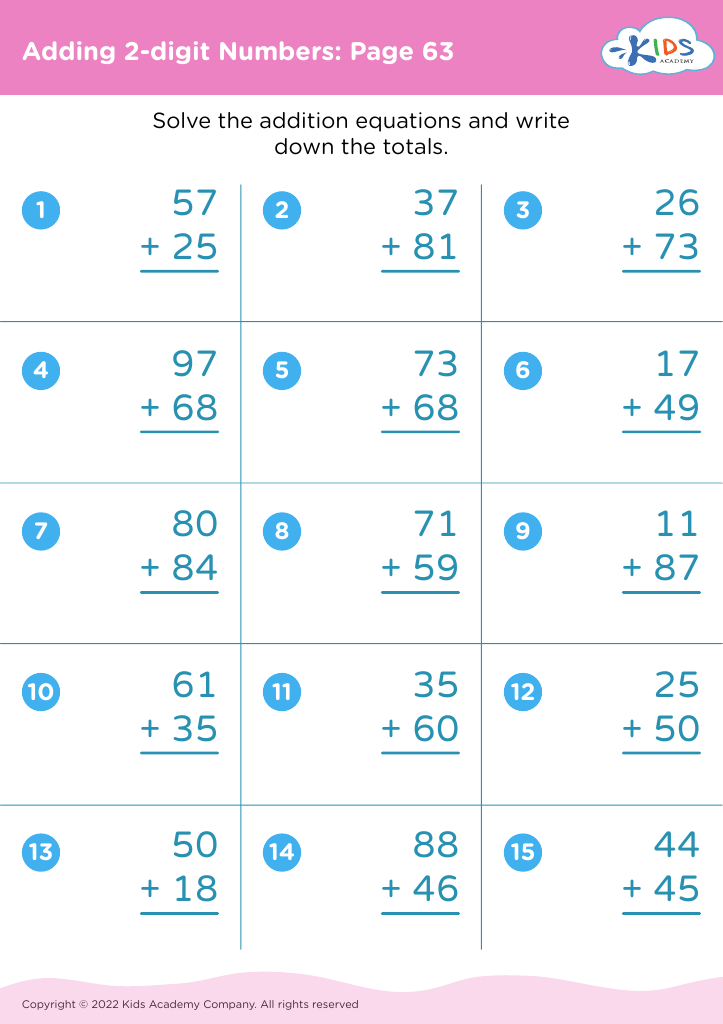
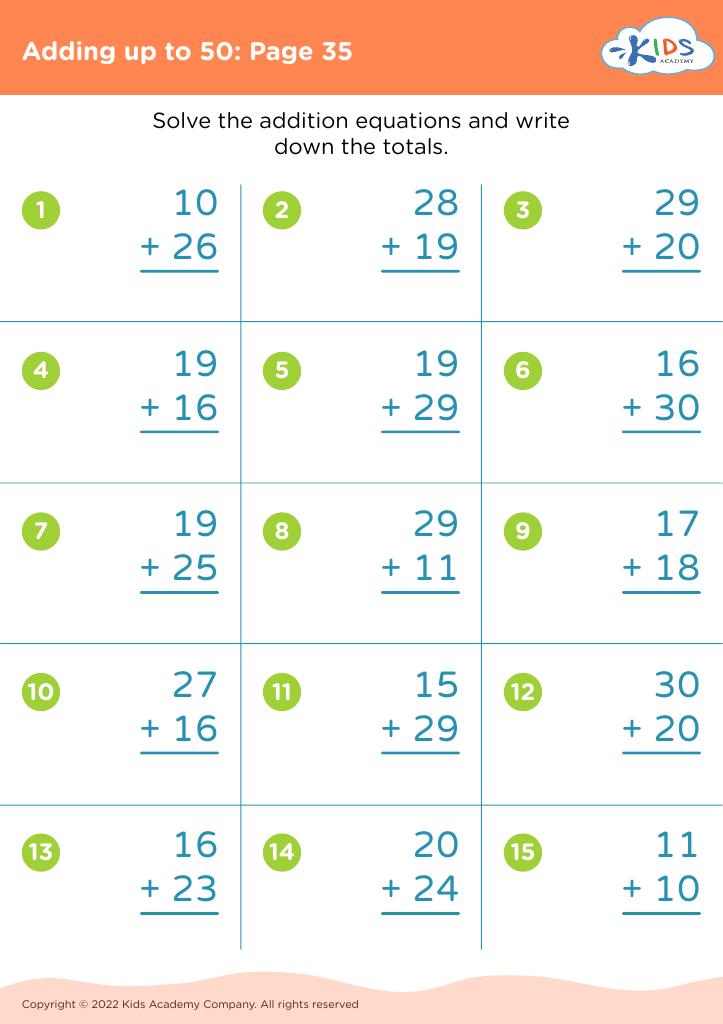
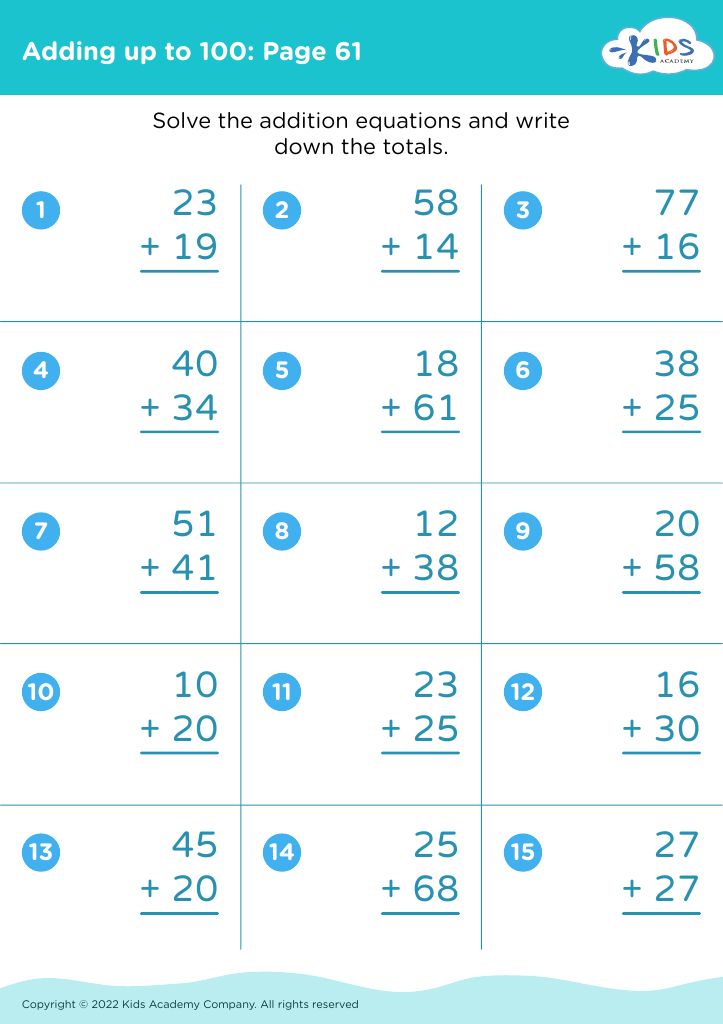
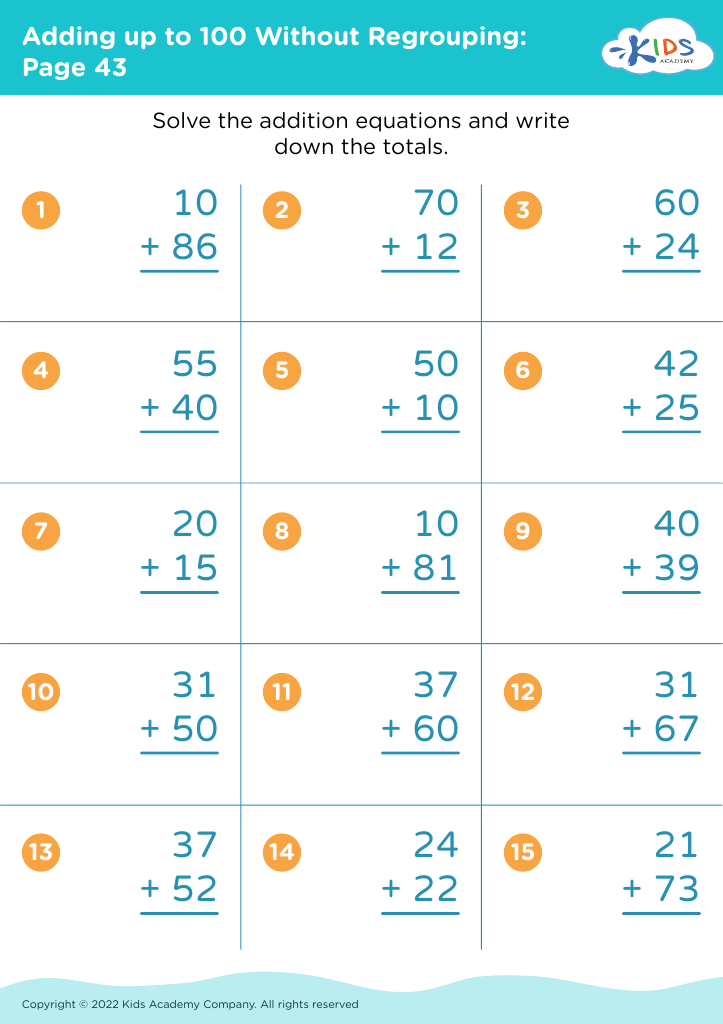
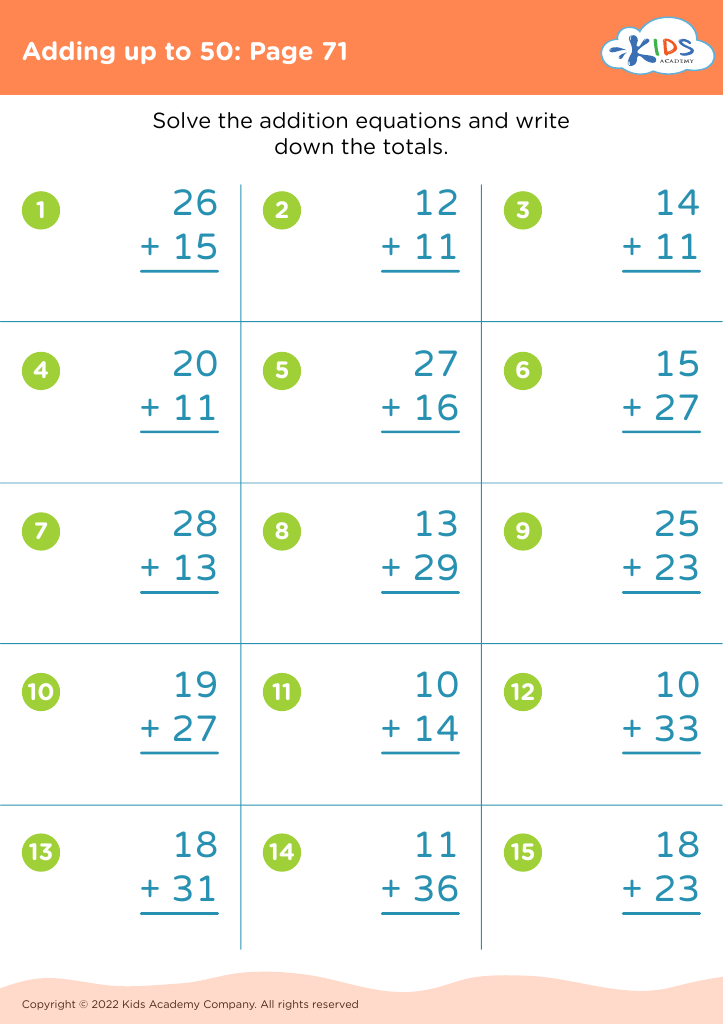
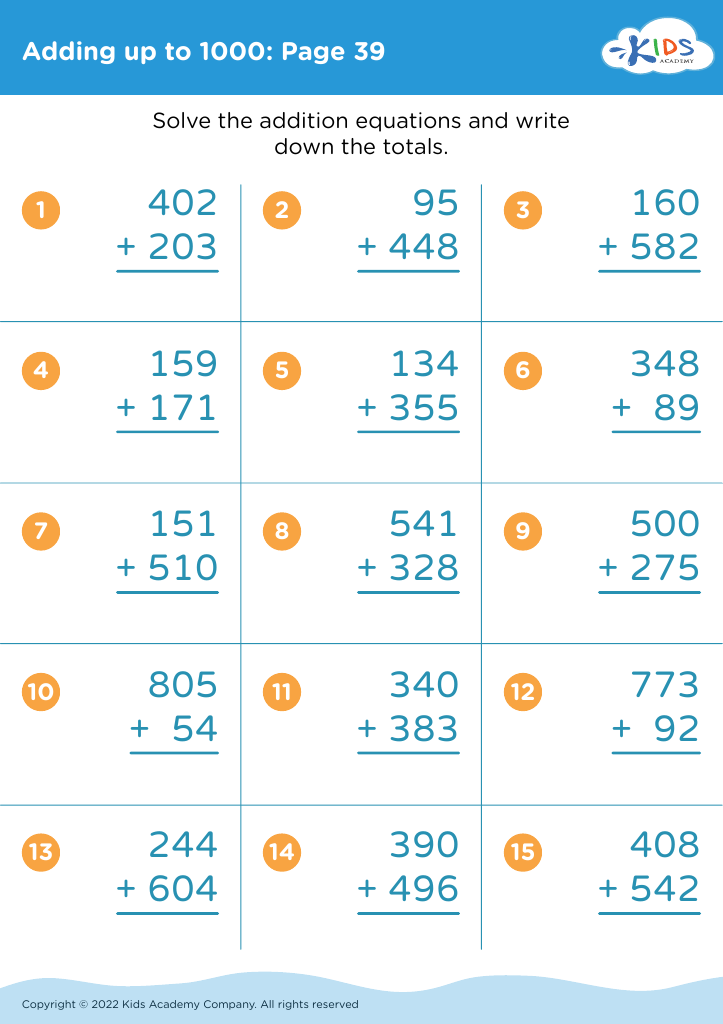
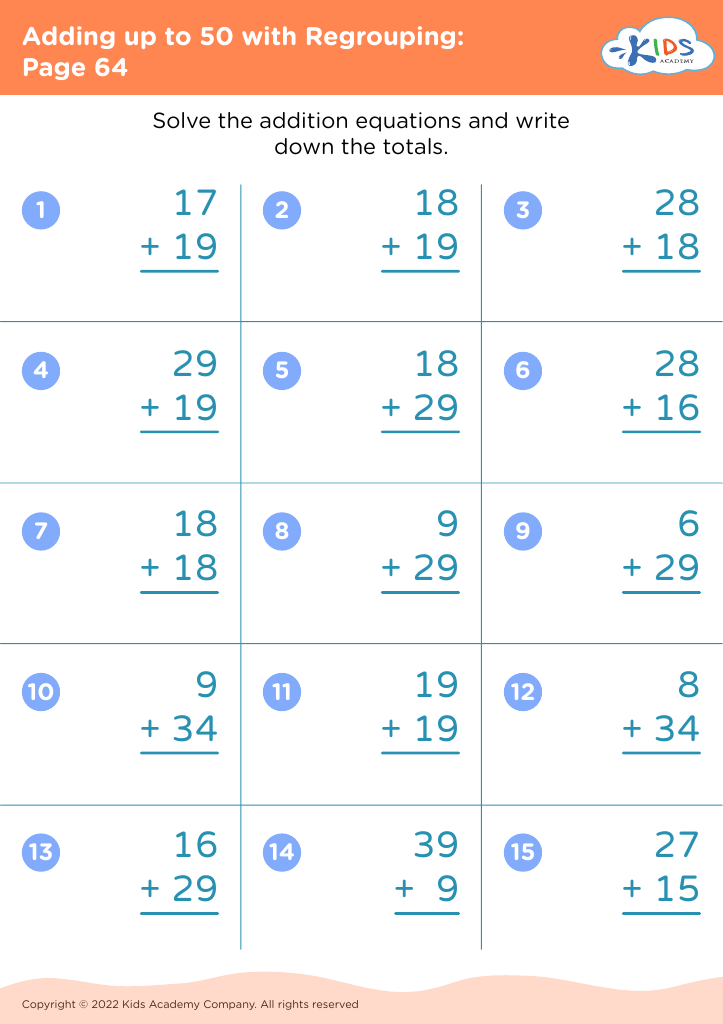
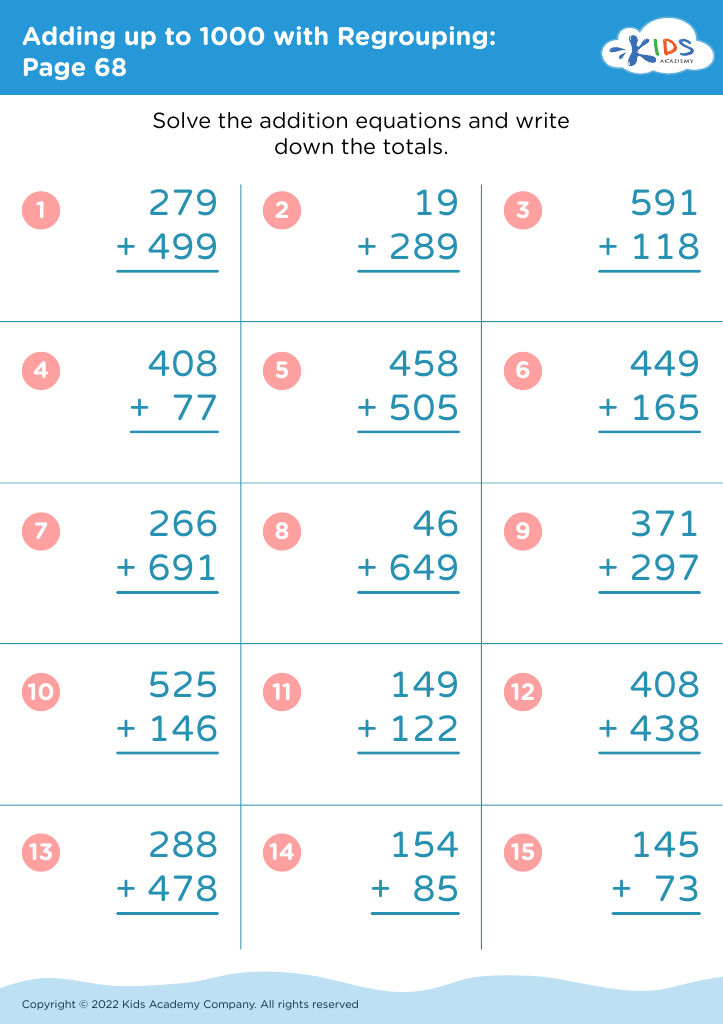
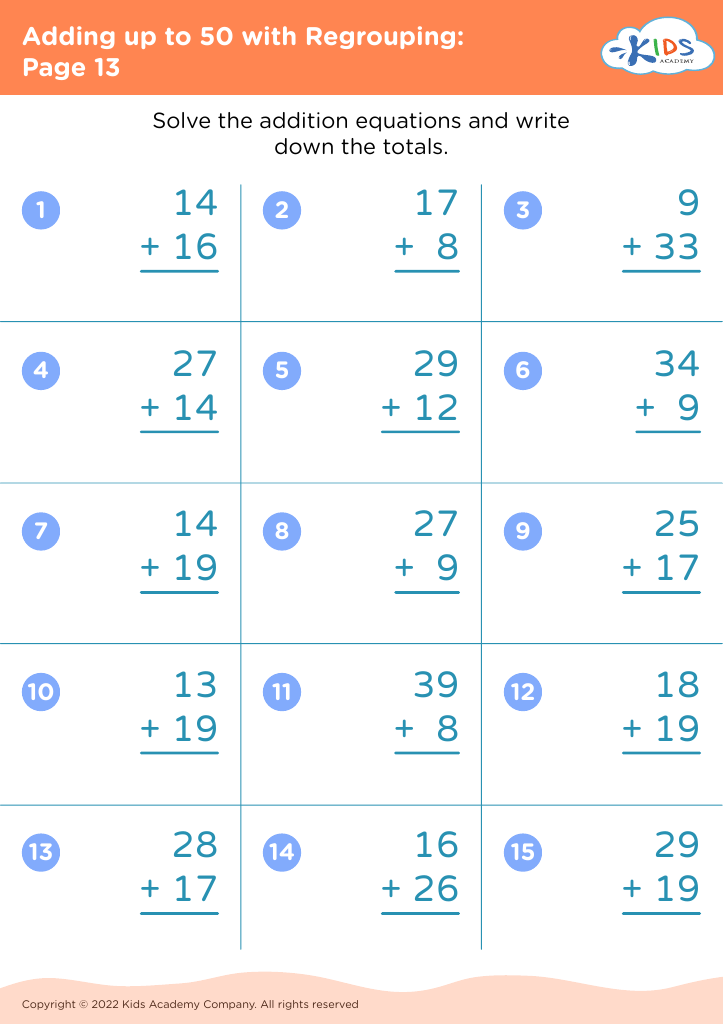
Enhance your child's cognitive skills with our engaging Addition Worksheets designed specifically for ages 7-9. These worksheets provide fun and challenging activities that promote critical thinking and problem-solving abilities while building essential math skills. Tailored to encourage logical reasoning, children will solve colorful puzzles, complete patterns, and tackle word problems that require careful analysis. Our resources foster a love for learning while supporting academic growth. Ideal for practicing addition in a structured yet enjoyable manner, these worksheets are perfect for classroom use or at-home learning. Start nurturing your child’s cognitive development today with our comprehensive collection of addition exercises!
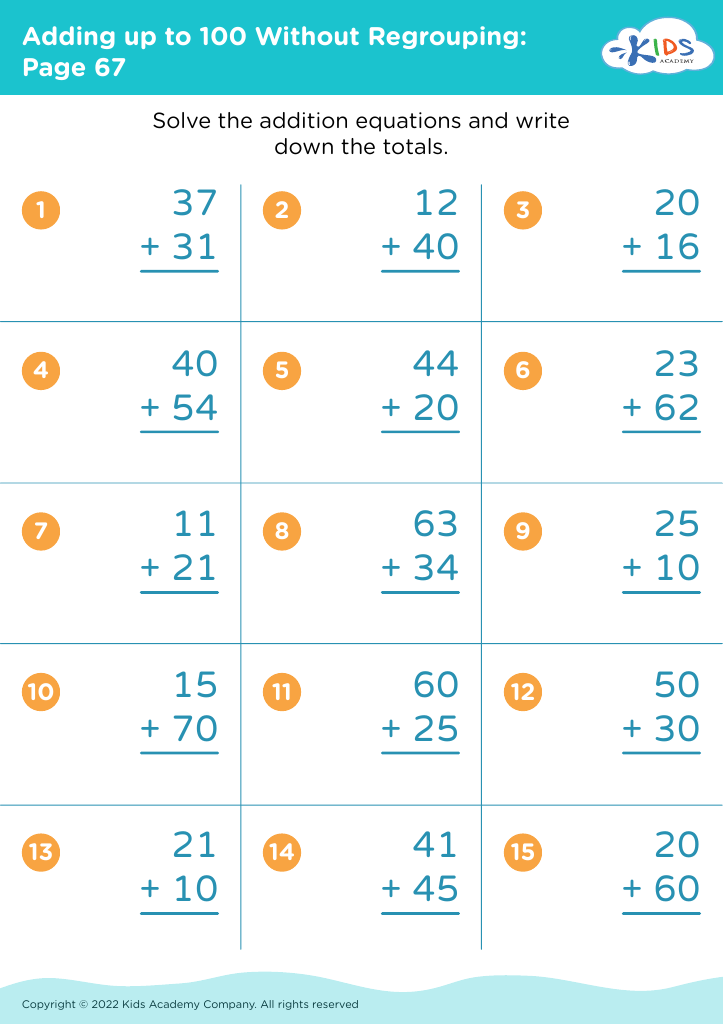
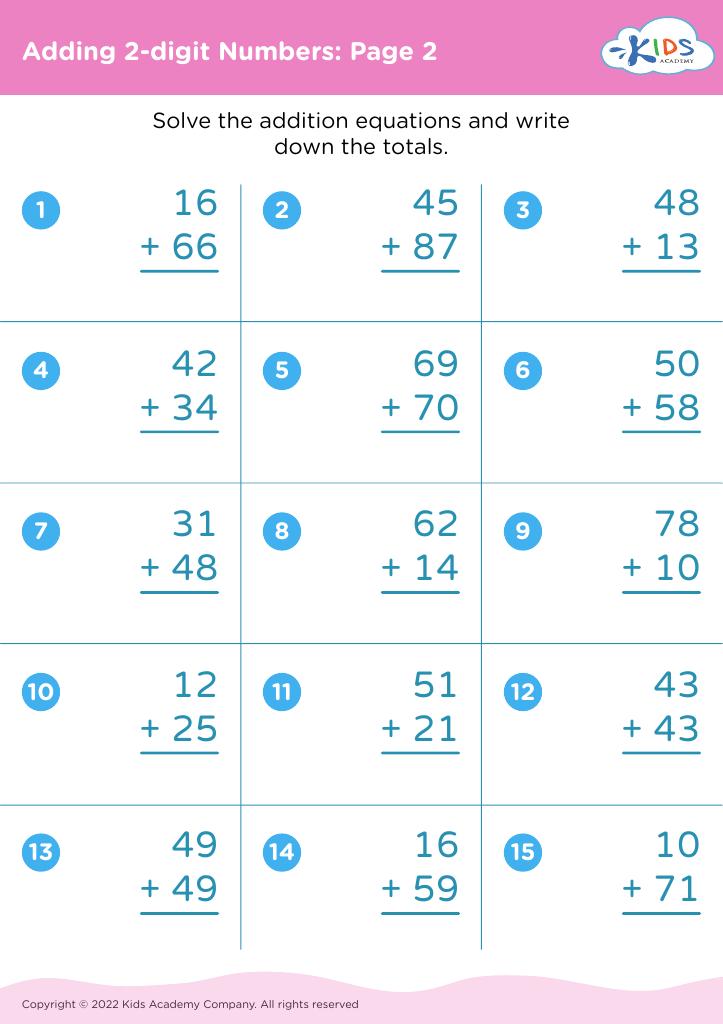
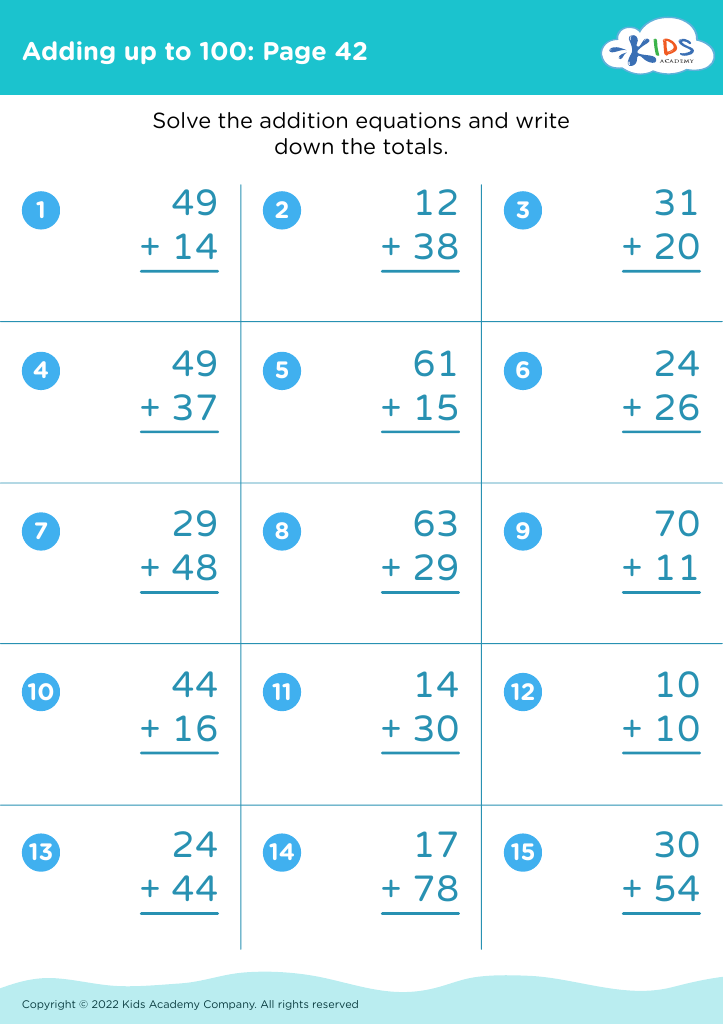
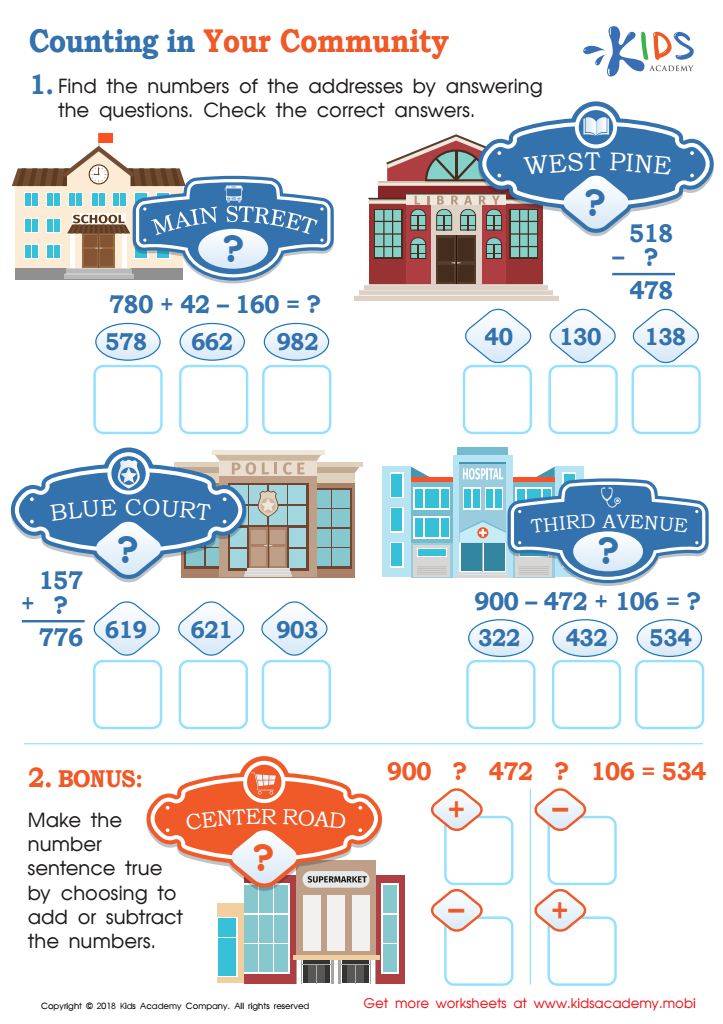
Counting in Your Community Worksheet
 Assign to My Students








Cognitive development during ages 7 to 9 is critical as children transition from concrete to more abstract thinking. At this stage, children are better equipped to understand complex concepts and engage in logical reasoning. By focusing on cognitive development, parents and teachers play an essential role in enhancing a child's problem-solving skills, creativity, and ability to process information.
This age is pivotal for math competencies, including addition, which serves as the foundation for future arithmetic and broader mathematical concepts. Mastery of addition not only helps children feel confident in their abilities but also supports their overall academic performance by fostering a positive attitude toward learning.
Additionally, cognitive development activities, such as interactive games and real-life applications, encourage social skills and collaboration among peers, which are vital for emotional intelligence and interpersonal relationships. Supporting cognitive growth also aids in developing resilience, as children learn to tackle challenges and persevere. Ultimately, prioritizing cognitive development in this age group equips children with the essential skills required for lifelong learning, setting them up for success both academically and socially. This creates a strong foundation for the next phases of their education and personal growth.








