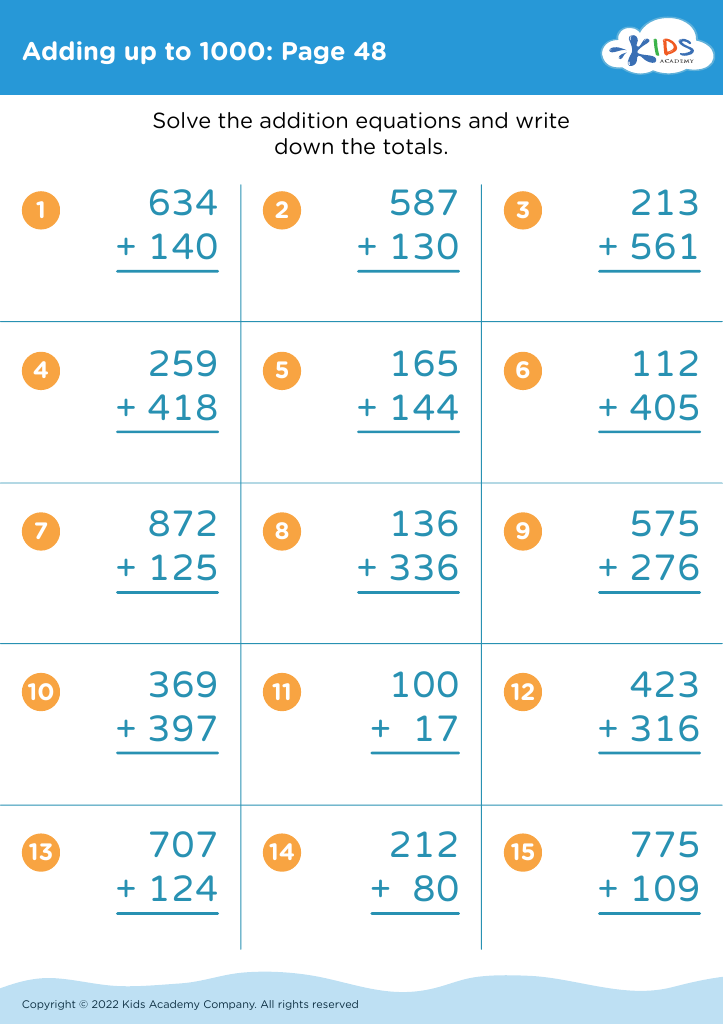
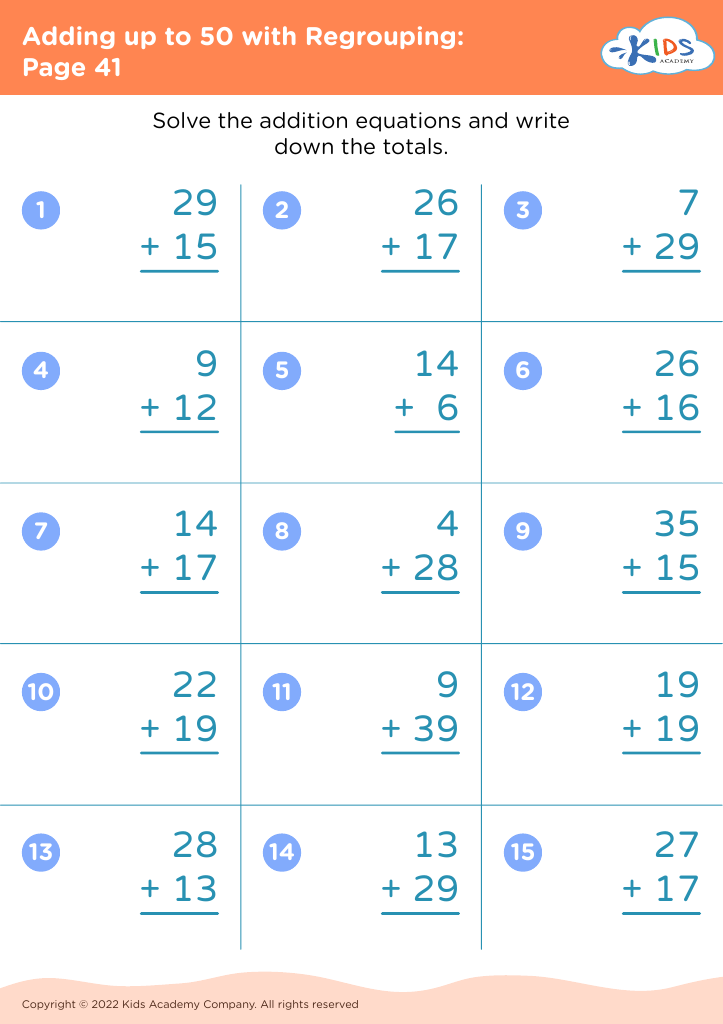
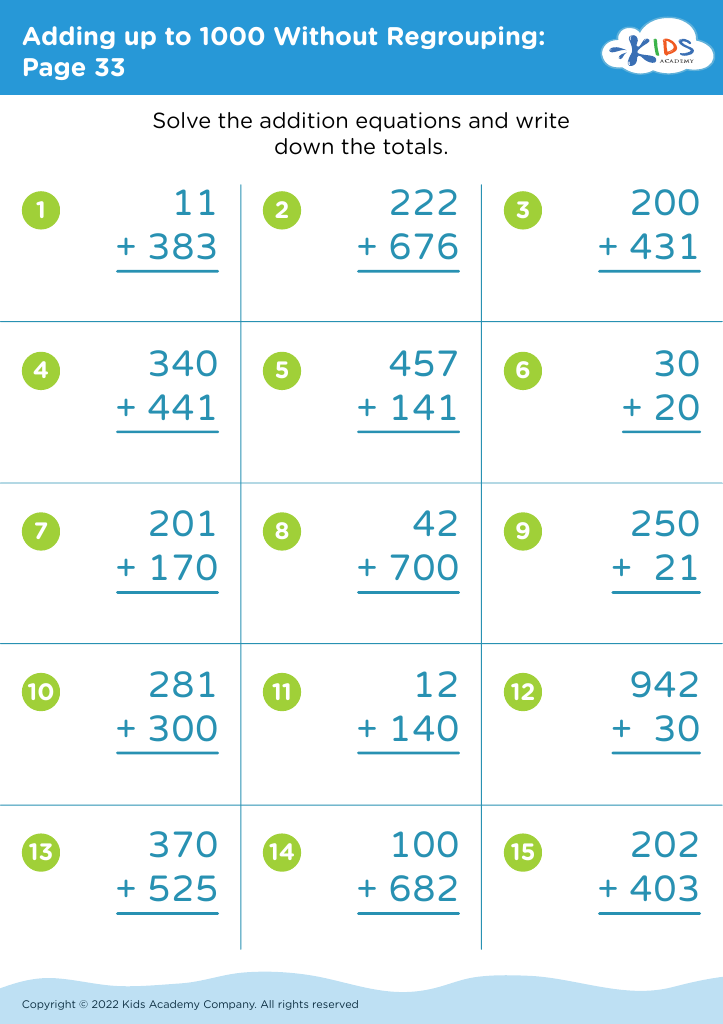
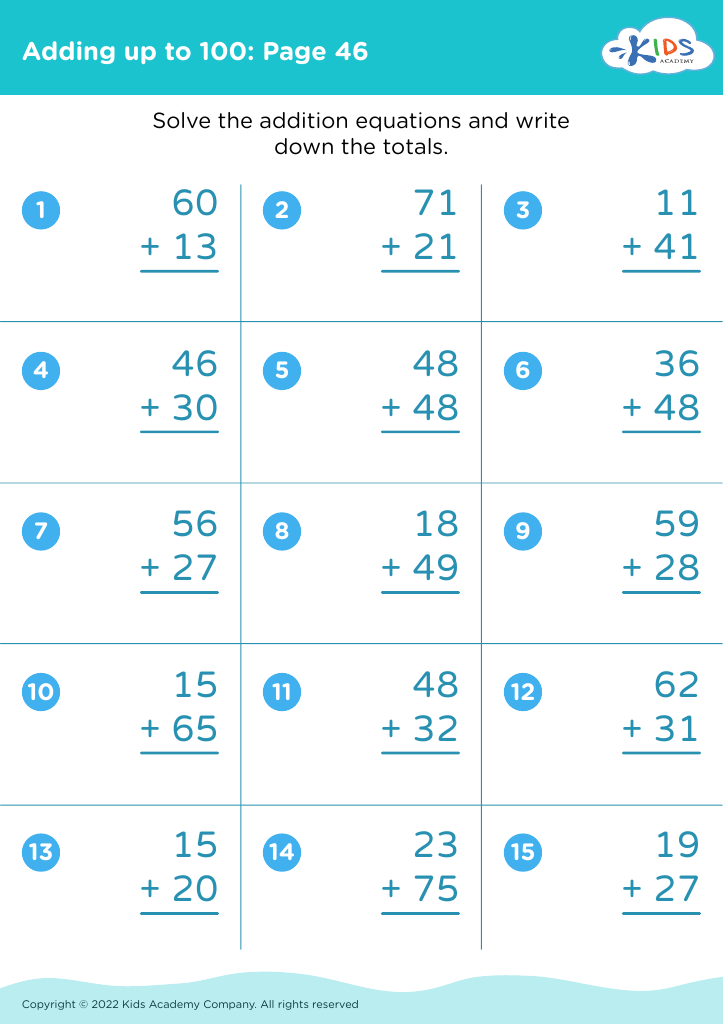








Counting practice and addition are foundational skills for children aged 7 to 9, and both parents and teachers play a crucial role in fostering these abilities. At this age, children are developing their mathematical understanding, and consistent practice helps solidify their grasp of numbers and basic operations. Mastery of counting and addition not only supports future math concepts but also builds children's confidence in their abilities.
Incorporating counting and addition practice into daily routines makes learning more engaging and relevant. Parents and teachers can utilize games, interactive activities, and real-life scenarios to make these exercises enjoyable. This approach helps children see the practical value of math beyond classroom walls, fostering a positive attitude toward learning.
Furthermore, understanding these basic principles can enhance problem-solving skills and logical reasoning. As children learn to add and manipulate numbers, they also develop critical thinking skills crucial for academic success. By emphasizing counting and addition during this essential stage, parents and teachers can contribute significantly to children’s math literacy, preparing them for more advanced concepts in later grades. Ultimately, investing time into these practices lays a solid foundation for lifelong learning and success in mathematics.








