Handwriting improvement Addition Worksheets for Ages 7-9
4 filtered results
-
From - To
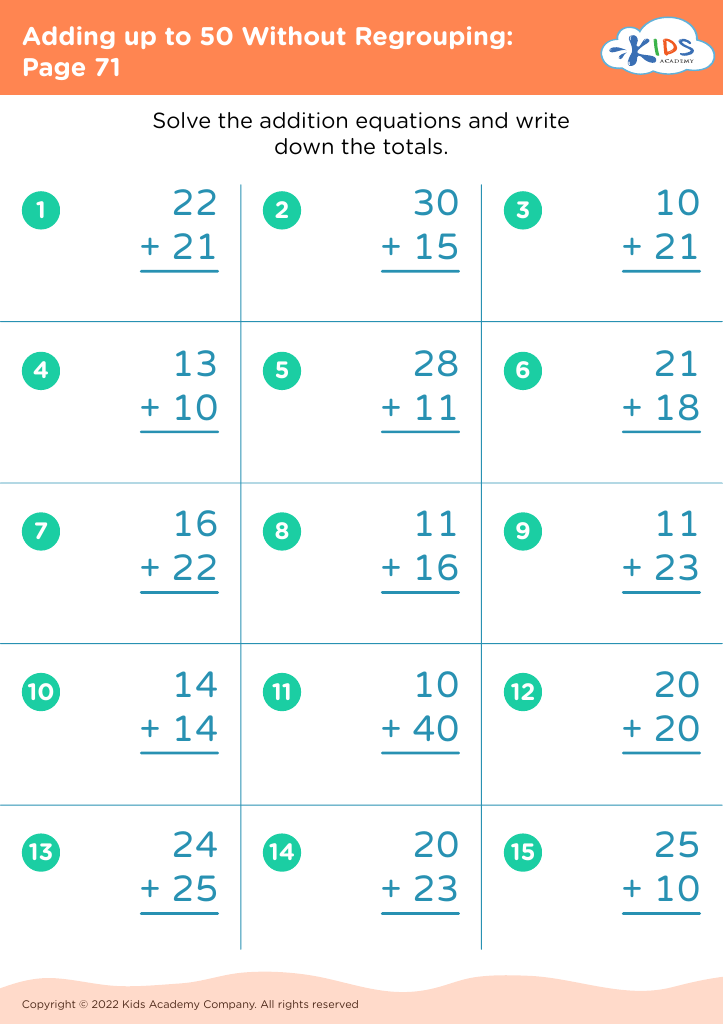
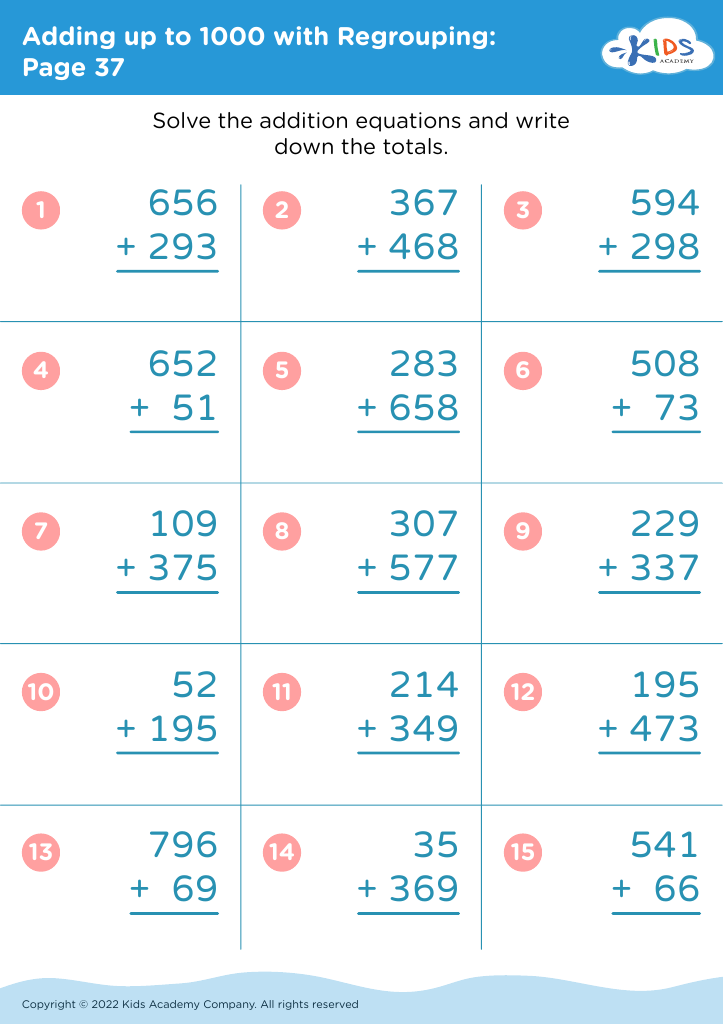
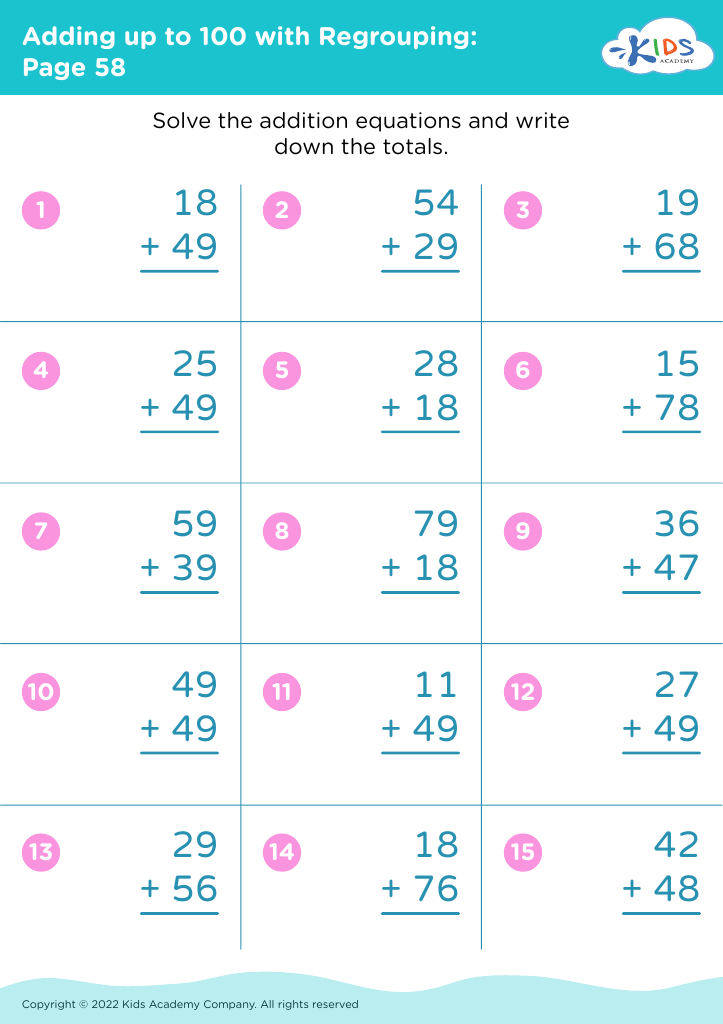
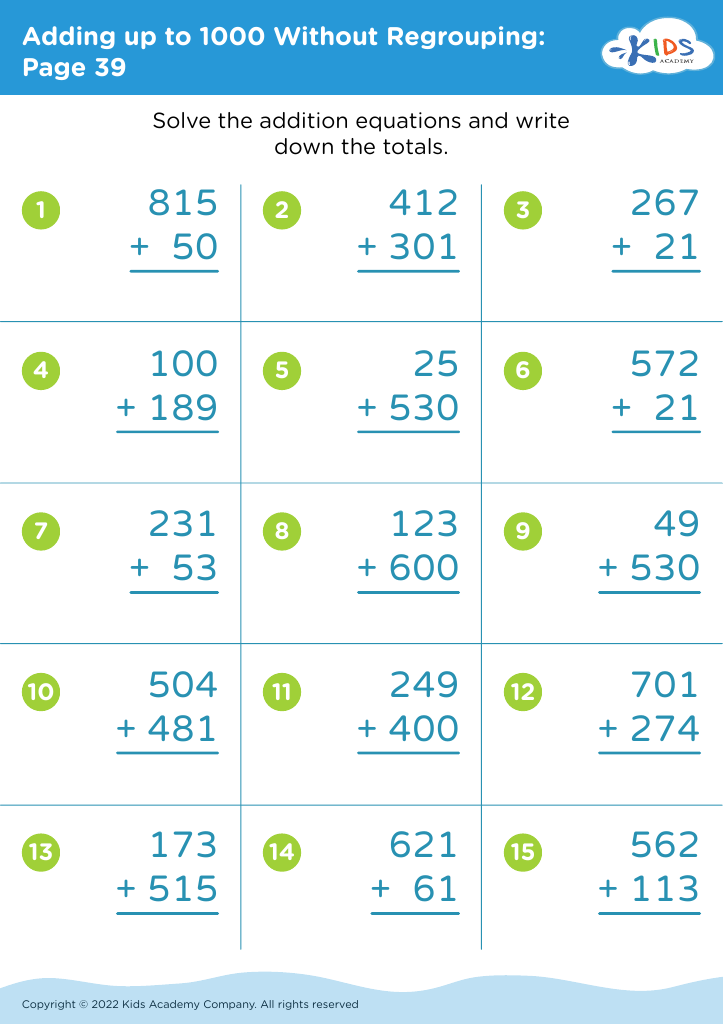
Enhance your child's handwriting and addition skills with our Handwriting Improvement Addition Worksheets designed for ages 7-9. Our carefully crafted worksheets blend arithmetic practice with penmanship exercises, ensuring that children not only strengthen their math abilities but also improve their handwriting. Perfect for young learners, these engaging and educational printables feature fun, age-appropriate addition problems alongside tracing and writing activities. The dual focus helps kids develop fine motor skills and numerical confidence, making learning enjoyable and effective. Visit Kids Academy to explore our collection and give your child the tools they need for academic success.


.jpg)





Handwriting improvement is crucial for children aged 7-9 because it forms the foundation of their future academic success. During these years, children transition from learning how to write to using writing as a tool for learning. Legible and efficient handwriting skills are essential for young students to express their thoughts clearly and perform well in school tasks such as essay writing, note-taking, and completing assignments. Poor handwriting can lead to frustration, reduced self-esteem, and reluctance to write, which may hinder overall academic progress.
Moreover, handwriting practice enhances fine motor skills, hand-eye coordination, and cognitive development. It also reinforces memory retention as the act of writing by hand engages multiple areas of the brain simultaneously, improving understanding and recall of information.
Parents and teachers should also recognize the emotional benefits of neat handwriting. Children who can write legibly often experience higher confidence and a greater sense of accomplishment. Encouraging rigorous handwriting can instill perseverance and attention to detail, valuable traits that extend well beyond classroom walls.
Finally, while technology is increasingly prevalent, the foundational skill of good handwriting remains indispensable. Well-developed handwriting allows children to neatly and effectively complete written tasks, setting a strong groundwork for their future academic and professional lives.








