Improves counting skills Addition Worksheets for Ages 7-9
4 filtered results
-
From - To
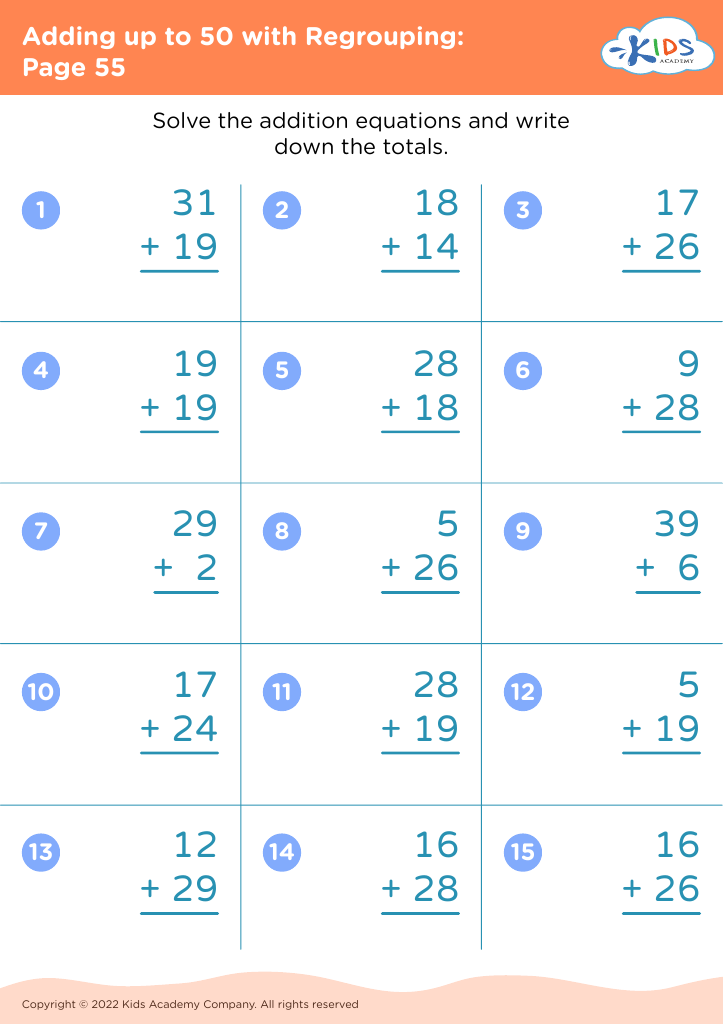
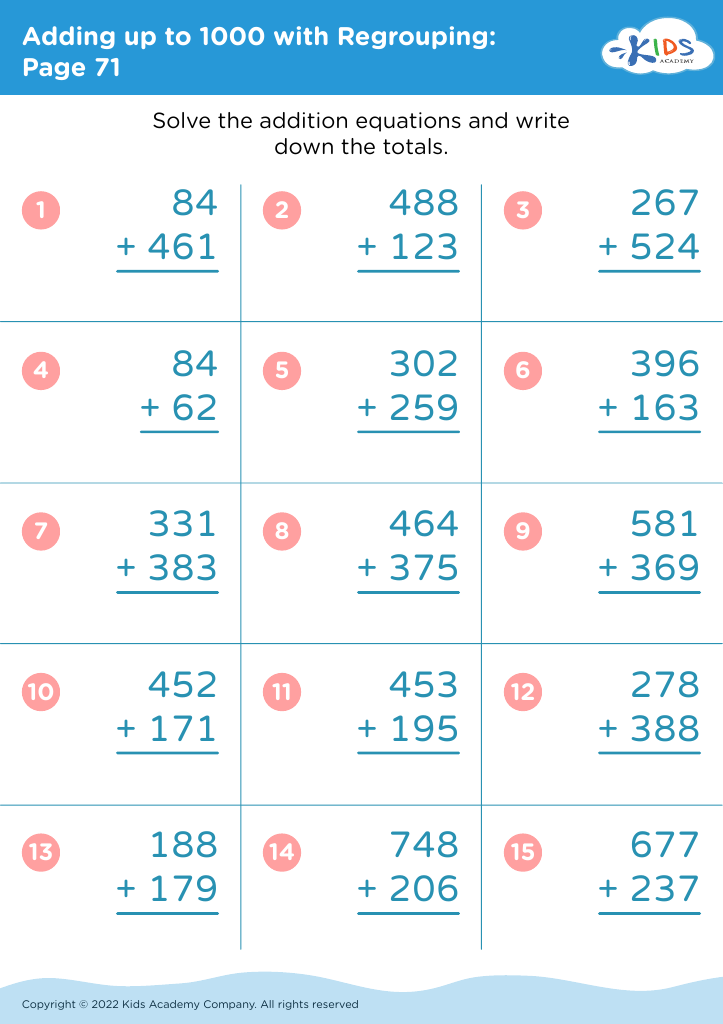
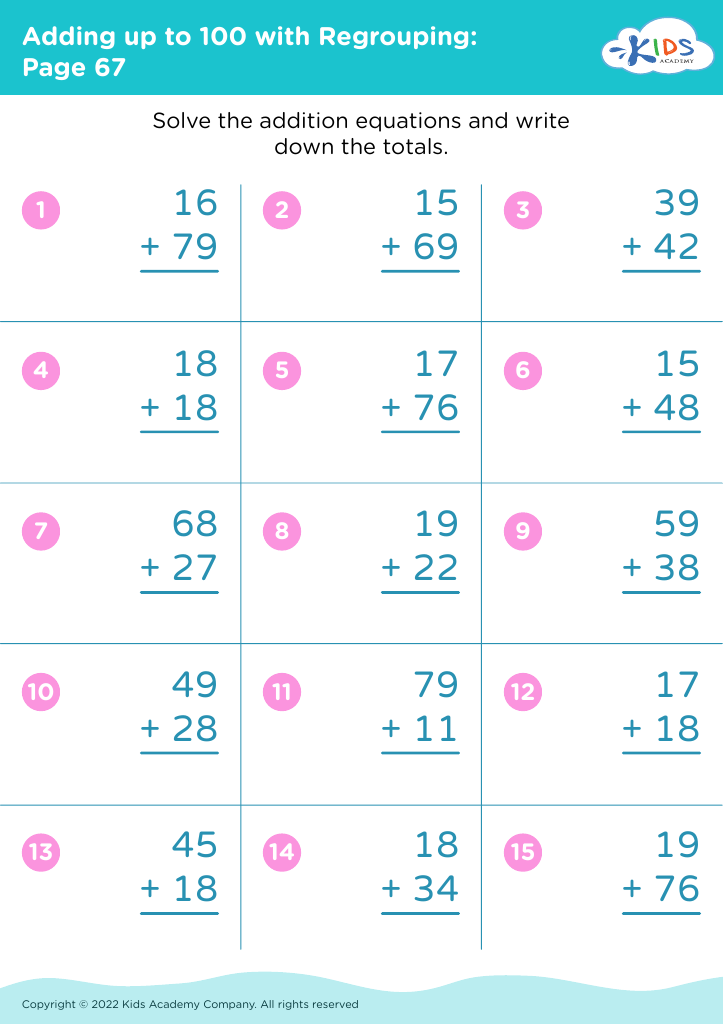
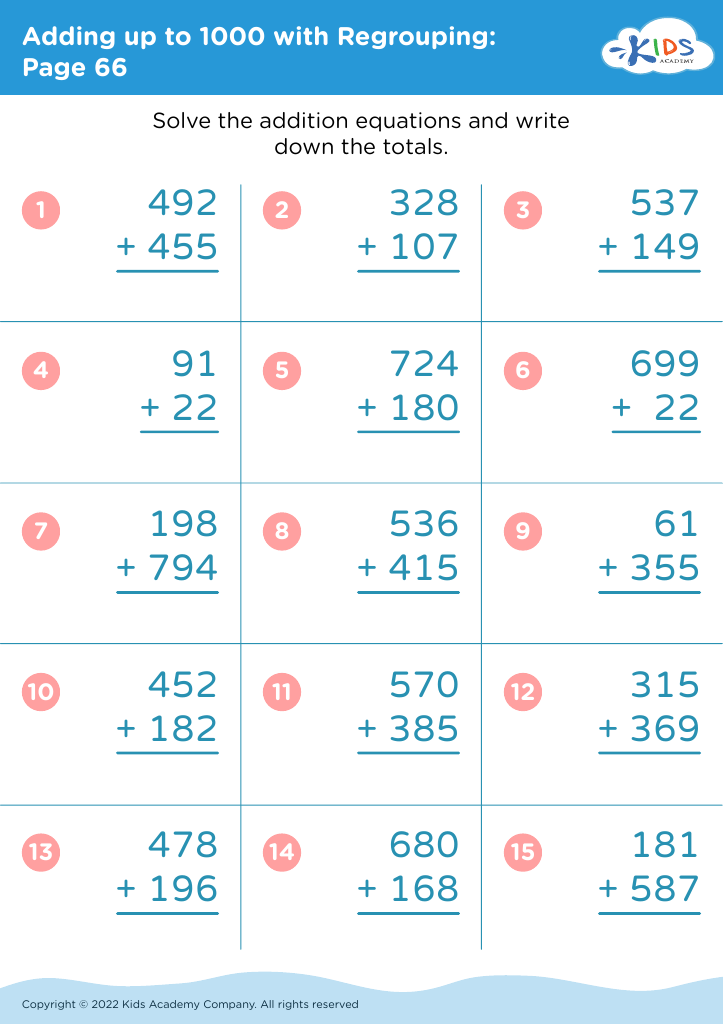
Enhance your child's counting skills with our engaging Addition Worksheets tailored for ages 7-9! These worksheets are designed to make learning fun and effective, helping children develop a solid foundation in basic math concepts. Through a variety of interactive exercises, young learners can practice counting, reinforcing their understanding of addition while boosting their confidence. Our user-friendly format encourages independent learning, making it easy for students to track their progress. With these thoughtful resources, parents and educators can support students in mastering important counting techniques, preparing them for more advanced mathematical challenges. Get started today and watch your child's skills grow!








Parents and teachers should prioritize improving counting skills and addition for children aged 7-9 because these foundational math abilities significantly impact overall academic success. At this key developmental stage, children are transitioning from basic arithmetic to more complex mathematical problem-solving. Mastery of counting and addition is essential for understanding concepts such as subtraction, place value, and even early geometry.
Strengthening counting skills enhances children's ability to estimate, compare quantities, and recognize patterns, which are vital for higher-level math. Simultaneously, solid addition skills encourage confidence and a positive attitude towards mathematics, fostering a love for learning that can influence a child's performance in other subjects.
Furthermore, proficient counting and addition skills are relevant in real-life scenarios, such as budgeting, shopping, and time management, equipping children with essential life competencies. Parents and teachers can collaborate to create engaging, hands-on learning experiences that make math enjoyable, thereby enriching children's experiences and setting them up for future academic success.
Ultimately, by investing time and resources in improving these skills now, adults can help ensure that kids have a strong math foundation, boosting their self-confidence and ability to tackle more sophisticated mathematical concepts as they progress in their education.








