Improving mathematical skills Addition Worksheets for Ages 7-9
4 filtered results
-
From - To
Enhance your child's mathematical skills with our expertly designed Addition Worksheets for Ages 7-9. At Kids Academy, we provide engaging and educational resources to help young learners master the fundamentals of addition. Our carefully crafted worksheets support different learning styles and offer a wide range of problems to build confidence and proficiency. From basic sums to more challenging exercises, these worksheets are perfect for reinforcing classroom learning or supplementing homeschooling curriculums. Visit Kids Academy to explore our selection of fun, interactive, and age-appropriate addition worksheets tailored to support your child's math journey effectively and enjoyably.
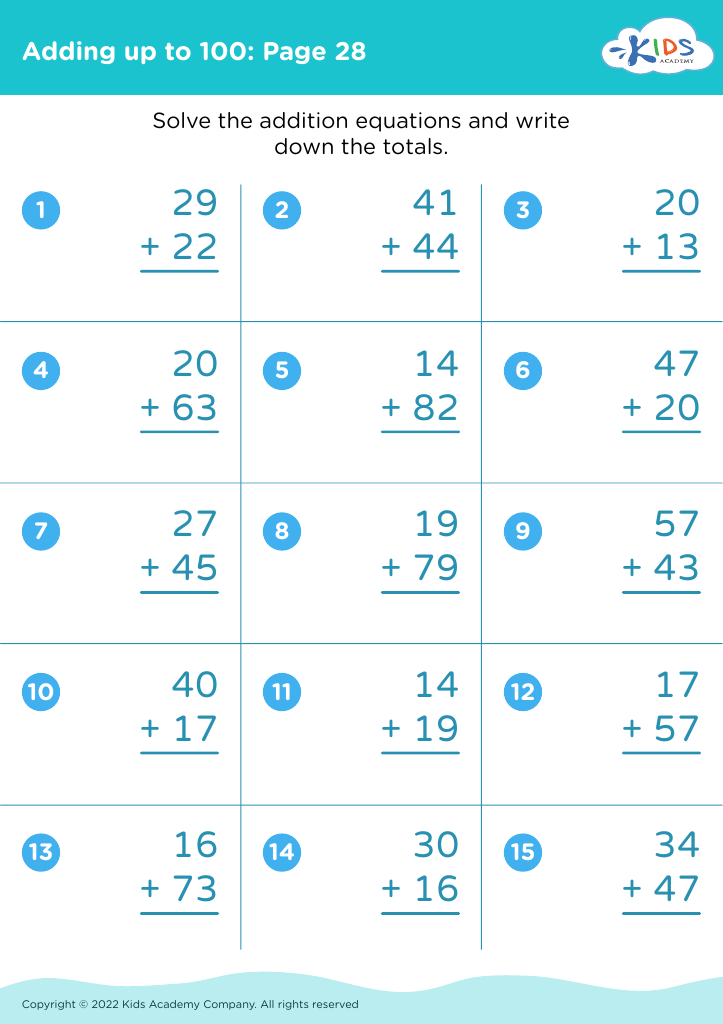
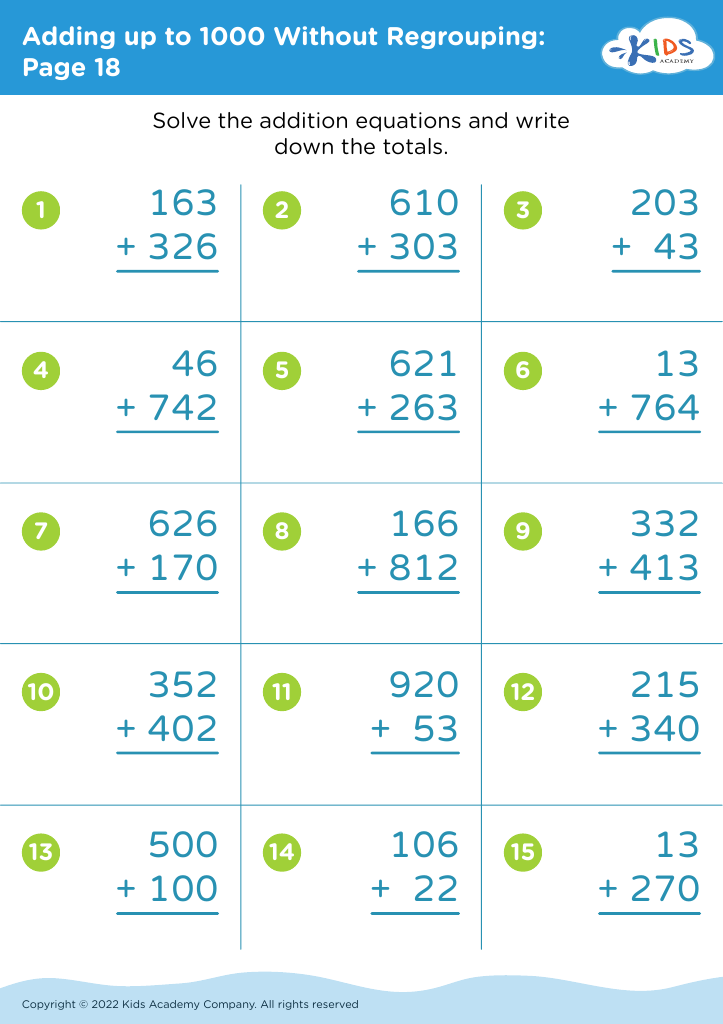
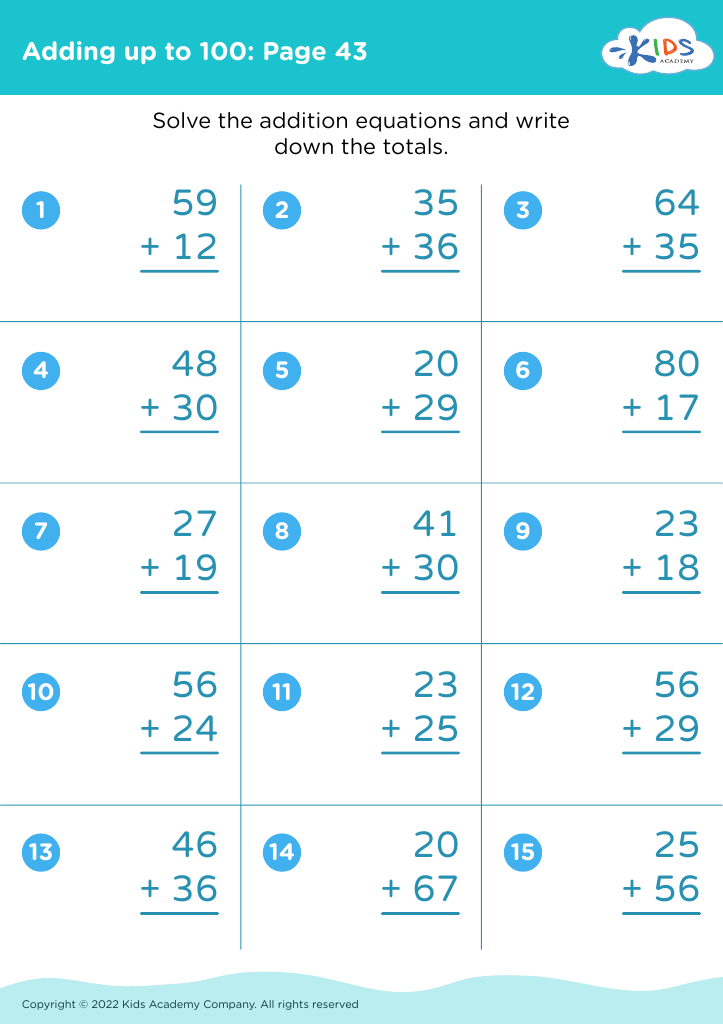
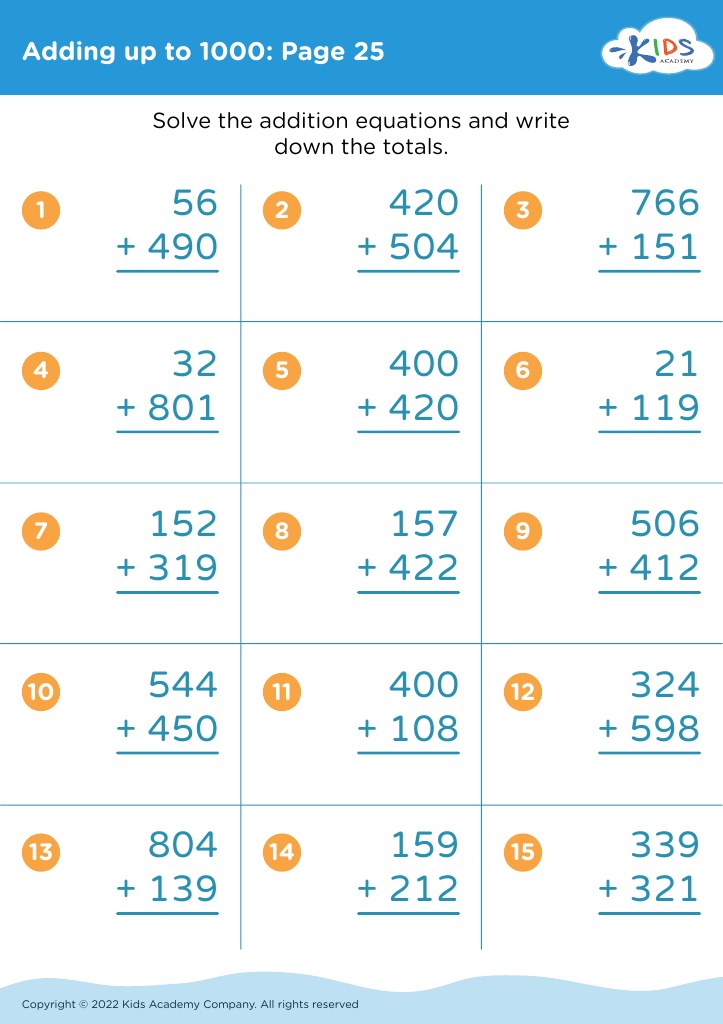








Improving mathematical skills, especially addition, for children aged 7-9 is essential for their cognitive development and future academic success. At this stage, children's brains are highly receptive to new information, making it an ideal time to instill crucial mathematical foundations. Mastery of addition is not only critical for progressing to more complex math concepts, but it also enhances problem-solving abilities and logical thinking. These skills are transferable and can improve performance in other subjects and daily life activities.
For parents and teachers, focusing on addition skills helps in creating a positive attitude toward math, reducing math anxiety that children may develop later. Early mastery of addition fosters confidence, encouraging children to engage more eagerly with mathematics. It promotes perseverance and resilience as they encounter and solve mathematical challenges.
In a broader social context, strong math skills are linked to better economic opportunities in adulthood. By prioritizing math education from a young age, parents and teachers can help children build a strong educational foundation, leading to greater employment prospects and societal contributions in the future. Consequently, dedicating effort to improving addition skills during these formative years can lead to long-lasting benefits, setting children on a path to success both academically and in everyday life.








