Enhance your child’s arithmetic prowess with our "Mental Math Skills: Addition Worksheets for Ages 7-9." Specially designed to stimulate young minds, these worksheets focus on improving mental calculation through fun and challenging exercises. By providing a variety of problems, children will develop accuracy and speed in adding numbers, fostering a strong foundation in essential math skills. Perfect for classroom settings and homeschooling alike, our printable resources are tailored to support both individual and group learning. Give your child the confidence and competence they need to excel in math with engaging, expertly crafted worksheets from Kids Academy.

Check out this FREE Trial Lesson on Addition for age 7-9!

Standard Subtraction

Favorites
With answer key
Interactive
  • 7-9
  • Mental math skills
  • Addition
Subtracting with Regrouping: Magnetism Worksheet

Subtracting with Regrouping: Magnetism Worksheet

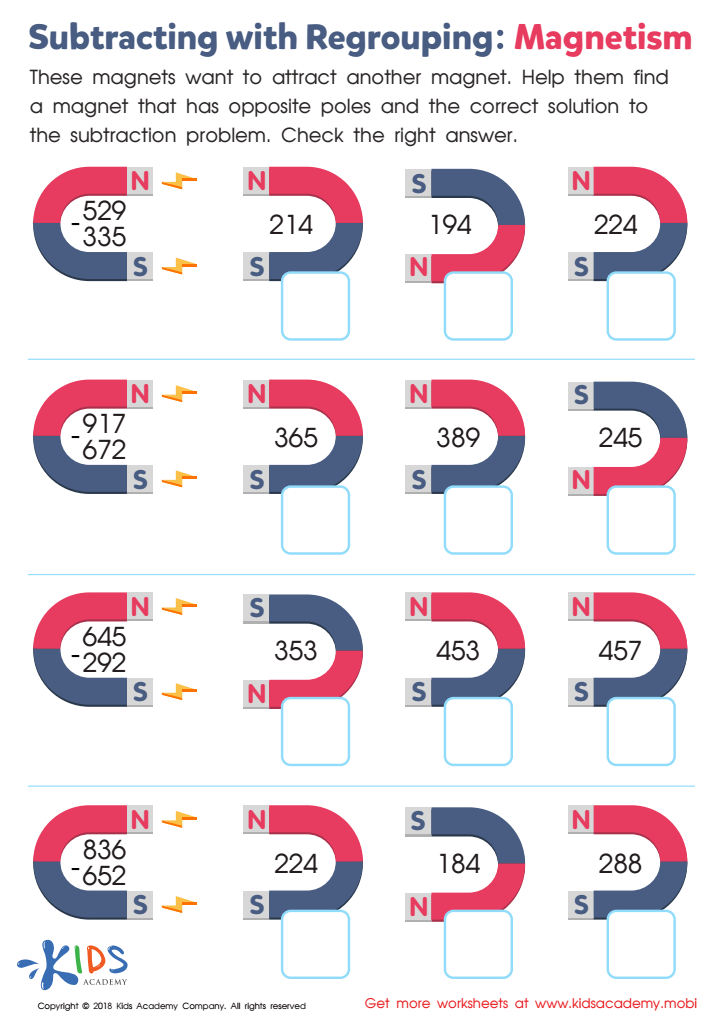
Download Kids Academy's worksheet for a fun way to review science and math! Look at the magnet and remember opposites attract. Find another with opposite poles, then solve the problem on the left and check the solution against the magnet. Check the box next to the correct answer to complete this page.
Subtracting with Regrouping: Magnetism Worksheet
Worksheet
Air Balloon Math Worksheet

Air Balloon Math Worksheet

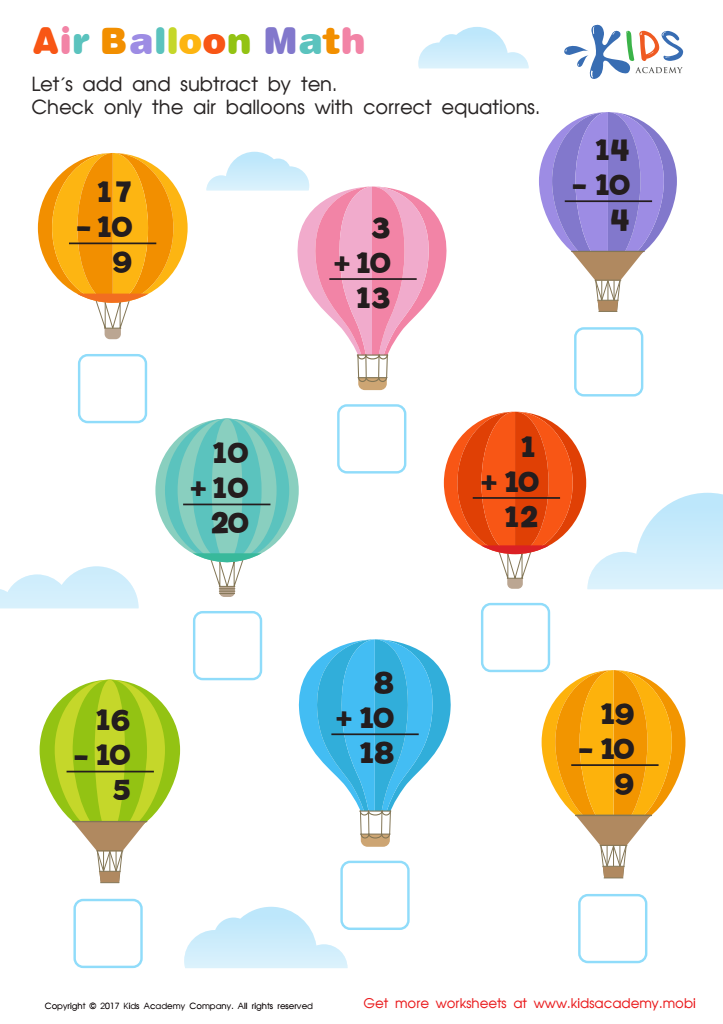
Revised: Review your child's addition and subtraction skills with this fun worksheet. Featuring hot air balloons filled with math equations, help your child add or subtract by ten before ticking the boxes with the right answers. Working through the equations one-by-one is a great way to make math practice enjoyable!
Air Balloon Math Worksheet
Worksheet
Sums and Differences Within 1 - Assessment 1 Worksheet

Sums and Differences Within 1 - Assessment 1 Worksheet

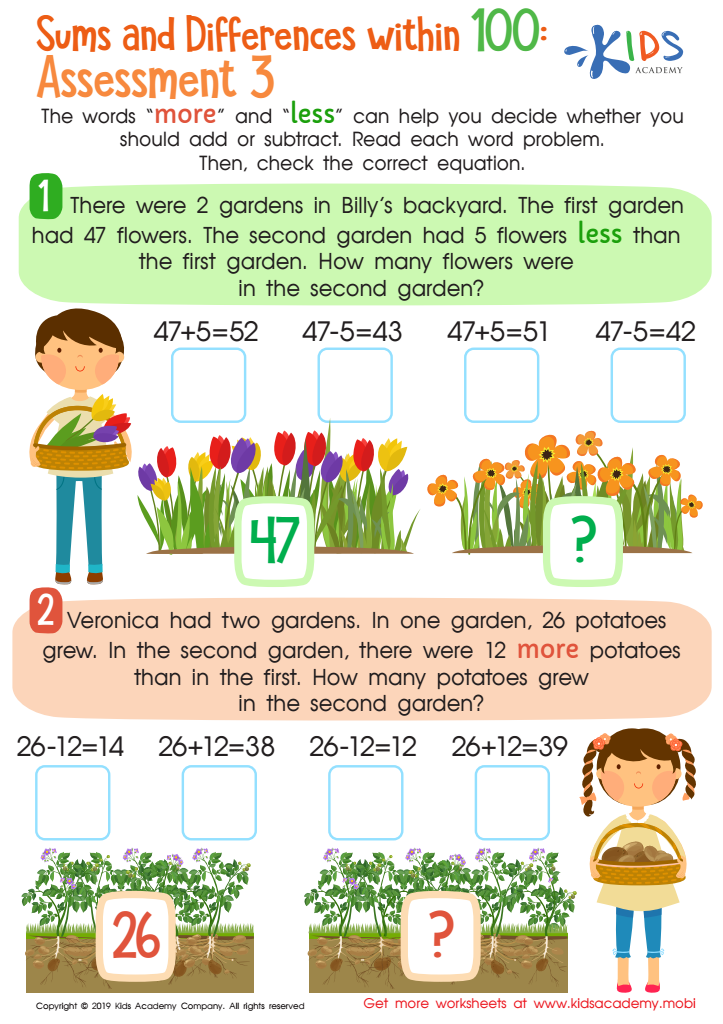
Help your child understand school topics better with your assistance. For math, go over their worksheet together and discuss the instructions and text. Solve the questions and check the right equation. This will take their learning to the next level.
Sums and Differences Within 1 - Assessment 1 Worksheet
Worksheet
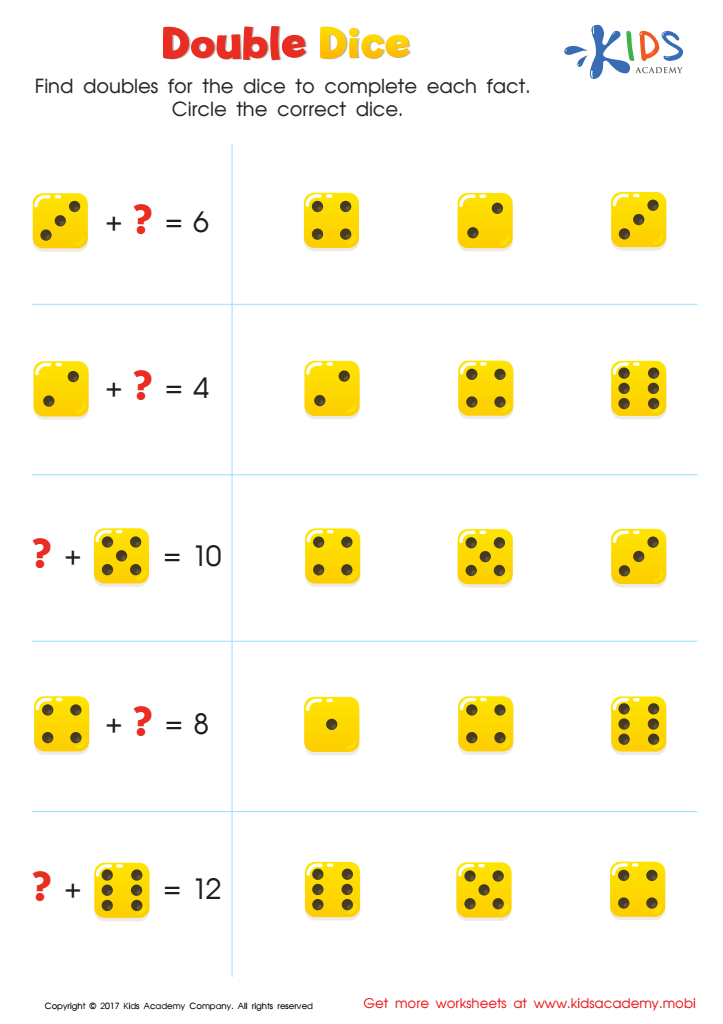
Addition Facts: Double Dice Worksheet

Addition Facts: Double Dice Worksheet

Are you looking for ways to make maths more engaging for kids? Maths can be a bore, but by teaching kids from an early age that it can be fun, they won't struggle with it. This worksheet is a great way to start: your child needs to identify the number on the left dice and find its double on the right. The sum of the two dice is also given.
Addition Facts: Double Dice Worksheet
Worksheet
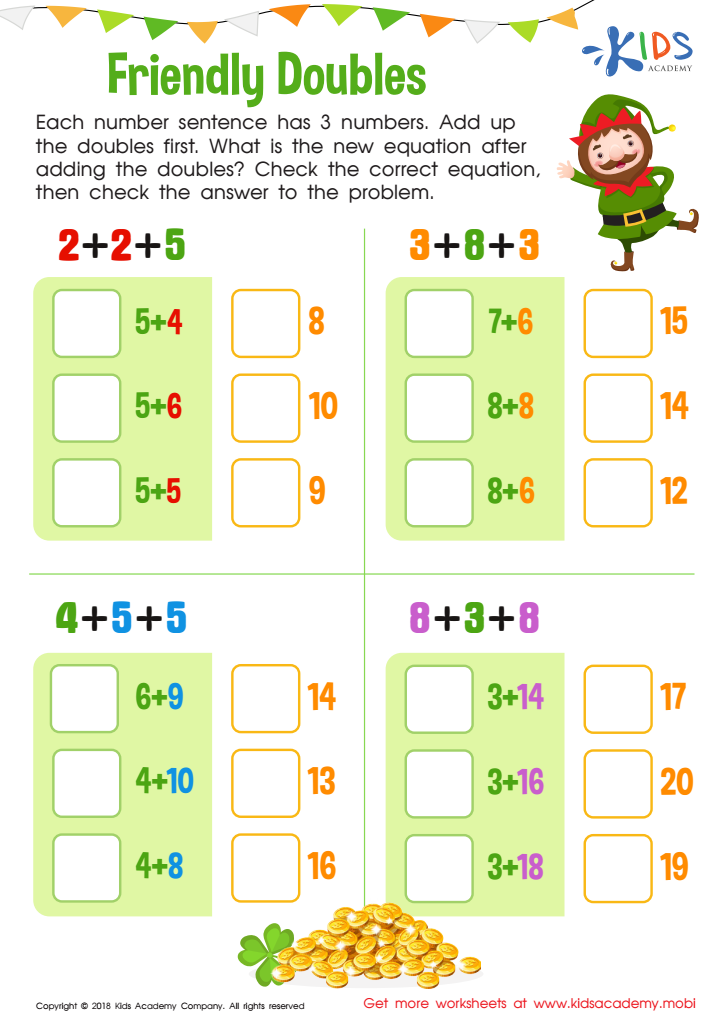
Friendly Doubles Worksheet

Friendly Doubles Worksheet

Kids will love this animated worksheet with bright colors! It helps them learn how to use doubles facts to answer three addend addition problems. It boosts their math skills, making computation easier, faster and more efficient. It also assists with adding and subtracting larger numbers. Let the power of doubles get them started!
Friendly Doubles Worksheet
Worksheet
Boomerang Addition Worksheet

Boomerang Addition Worksheet

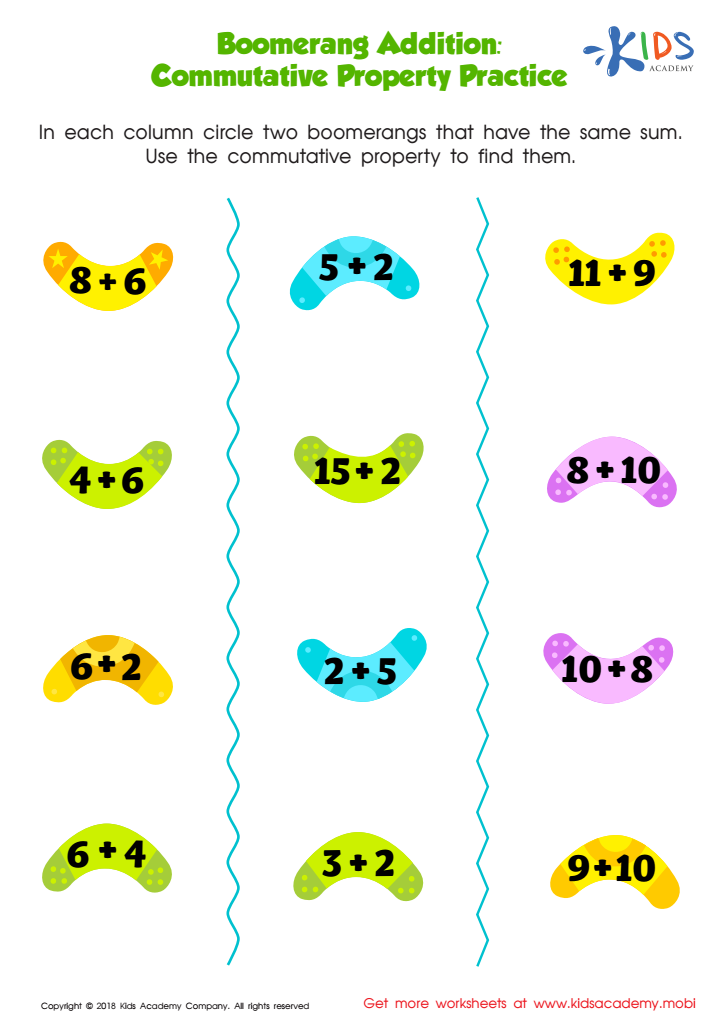
Kids know that when a boomerang is thrown, it reverses its path back. The same goes for addition: numbers can be rearranged and the sum will remain the same. Use this worksheet to find matching pairs of colorful boomerangs and equations. Look through each column and use the commutative property to find the pairs with the same sum.
Boomerang Addition Worksheet
Worksheet
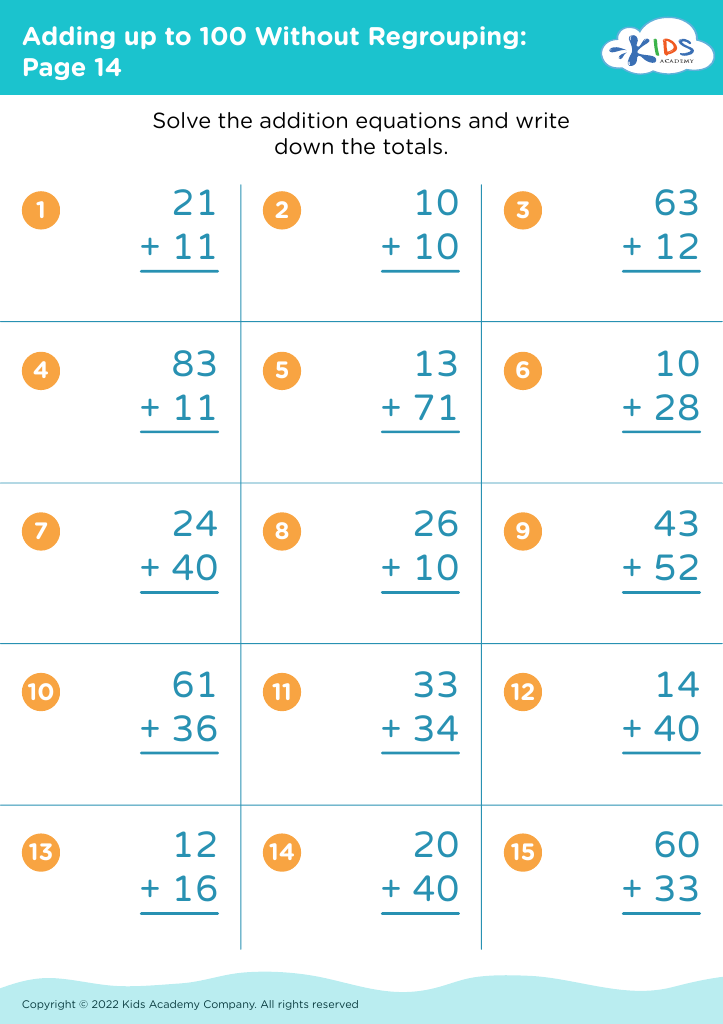
Adding up to 100 Without Regrouping: Page 14
Worksheet


Mental math skills, especially for addition, are crucial for children aged 7-9 for several compelling reasons. At this developmental stage, foundational mathematical concepts are being established, and strong mental math skills enhance cognitive abilities and problem-solving prowess. Mastering mental addition boosts numerical fluency, making math less intimidating and more enjoyable. This fluency helps kids to perform calculations quickly and accurately, which is not only useful in academic settings but also in everyday life.

Parents and teachers should recognize that mental math encourages logical thinking and mental agility. It can improve concentration, memory, and the ability to process information rapidly. Engaging in mental addition exercises sharpens the brain, fostering a more robust mathematical foundation that facilitates future learning of more complex concepts like subtraction, multiplication, and division.

Moreover, teaching mental math can instill confidence in young learners, reducing math anxiety and increasing their enthusiasm for the subject. When children see themselves excelling in addition through mental strategies, it can enhance their overall academic self-esteem.

Incorporating mental math practices at home and in the classroom is easy and interactive, often using games and real-life scenarios which make learning fun. Therefore, parents and teachers should care about mental math skills to support holistic cognitive development and a positive mathematical mindset.