
Multiplication practice Addition Worksheets for Ages 7-9
3 filtered results
Difficulty Level
Grade
Age
-
From - To
Subject
Activity
Standards
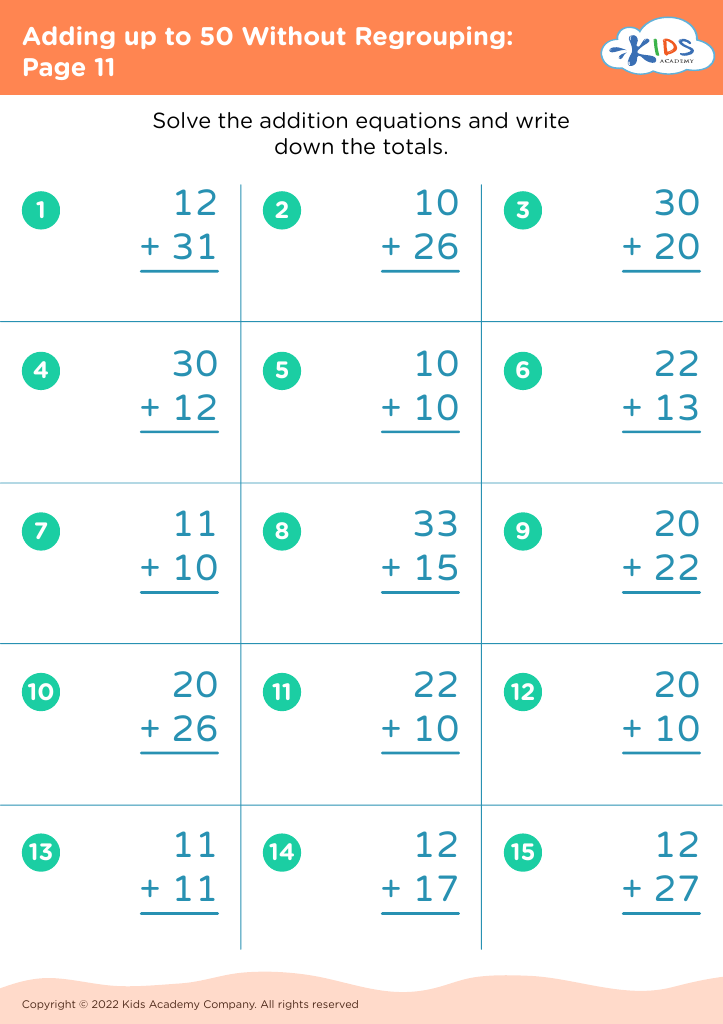
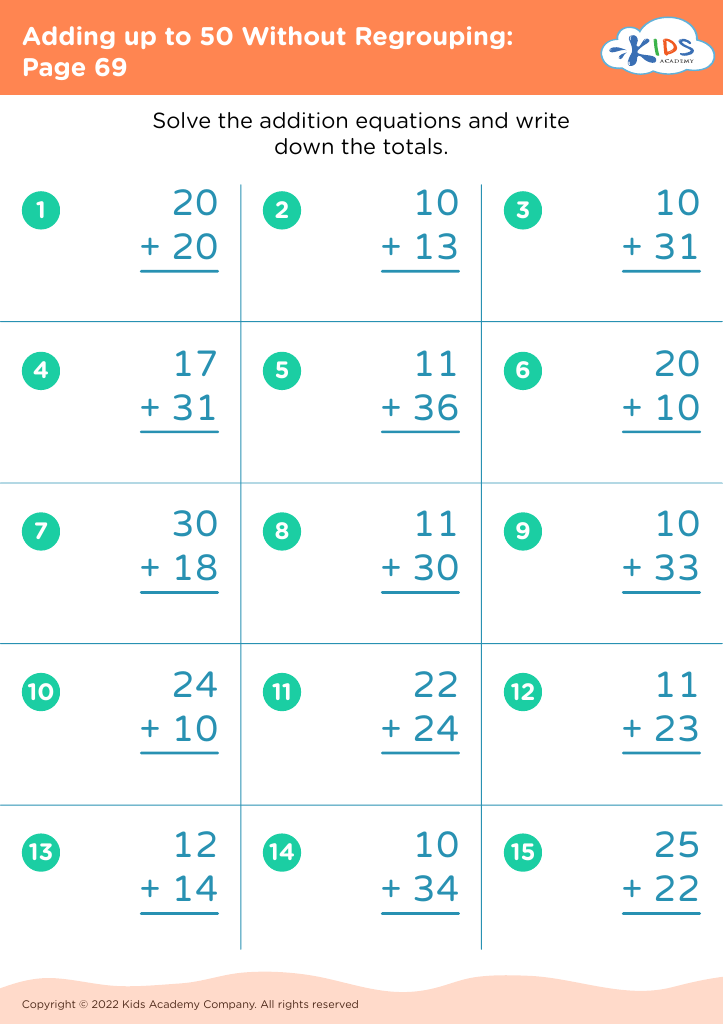
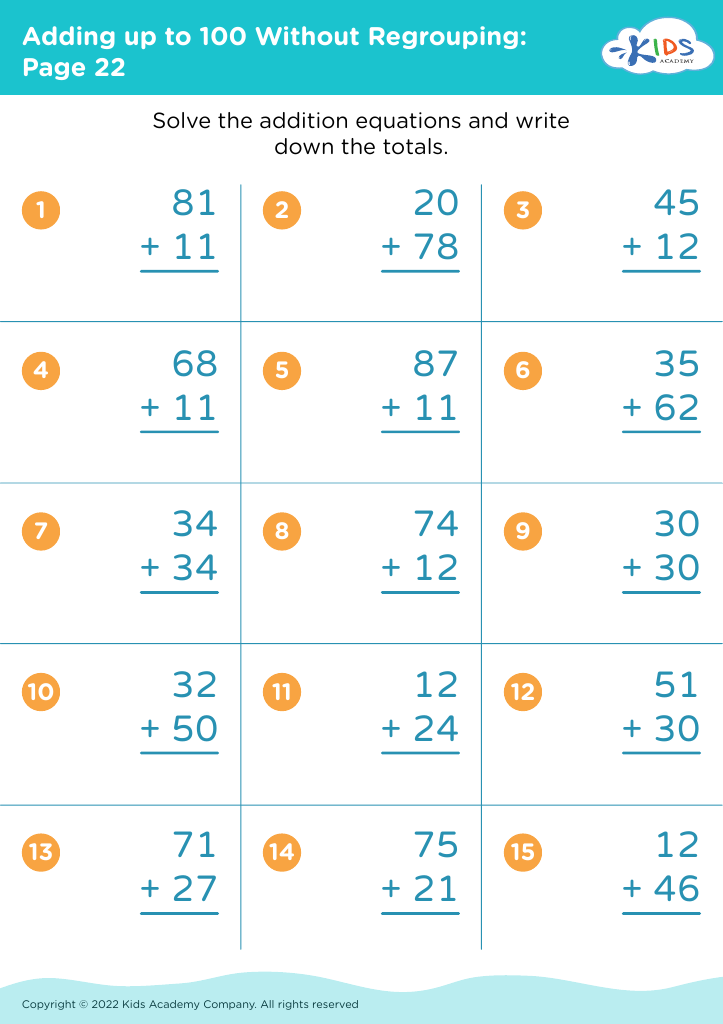
Boost your child's math skills with our "Multiplication Practice Addition Worksheets" tailored for ages 7-9! Designed to reinforce fundamental concepts, these worksheets combine fun and learning to help your child master both addition and multiplication. Each worksheet is crafted to build a strong mathematical foundation, ensuring kids engage with the material while gaining confidence with essential arithmetic operations. From simple addition to introductory multiplication, these practice sheets are perfect for home or classroom use. Empower your young learner to excel in math with our expertly designed and engaging worksheets. Download now from our multipliers and addition-focused collection.
Favorites
With answer key
Interactive
Join Kids Academy for Free
Who is primarily going to use this learning content?








Parents and teachers should emphasize multiplication and addition practice for children aged 7-9 because these foundational arithmetic skills form the bedrock of more complex mathematical concepts. Mastery of these basics in early elementary years is critical for several reasons.
Firstly, addition and multiplication are essential for day-to-day tasks, such as measuring ingredients for a recipe or calculating change at a store. Understanding these principles fosters a child’s ability to solve practical, real-life problems effectively.
Secondly, cognitive development in this age group is primed for learning. Practicing these skills sharpens their number sense, enhances memory, and builds mental math capabilities. Regular practice builds confidence and reduces math anxiety, promoting a positive attitude toward learning.
Additionally, multiplication skills, in particular, expand a child’s ability to understand proportions, scaling, and relationships between numbers. These insights are necessary for grasping more advanced topics like fractions, algebra, and geometry, which will be encountered in later grades.
Teachers and parents who focus on these arithmetic practices can ensure that children develop a strong mathematical foundation, fostering academic success and increasing their potential for future STEM opportunities. Thus, paying attention to these skills during this formative period is crucial for equipping children with the tools they need for lifelong learning and problem-solving.








