Reading clocks Addition Worksheets for Ages 7-9
3 filtered results
-
From - To
Help your child master essential time-telling and addition skills with our engaging Reading Clocks Addition Worksheets, designed for children aged 7-9. These printable worksheets combine fun clock-reading exercises with foundational addition practice to enhance both mathematical understanding and time literacy. Boost your child’s confidence as they learn to read both analog and digital clocks while solving addition problems. Perfect for classroom use or extra practice at home, our worksheets develop critical thinking, problem-solving abilities, and time management skills. Elevate your child’s learning experience today with our comprehensive 7-9-year-old worksheets!
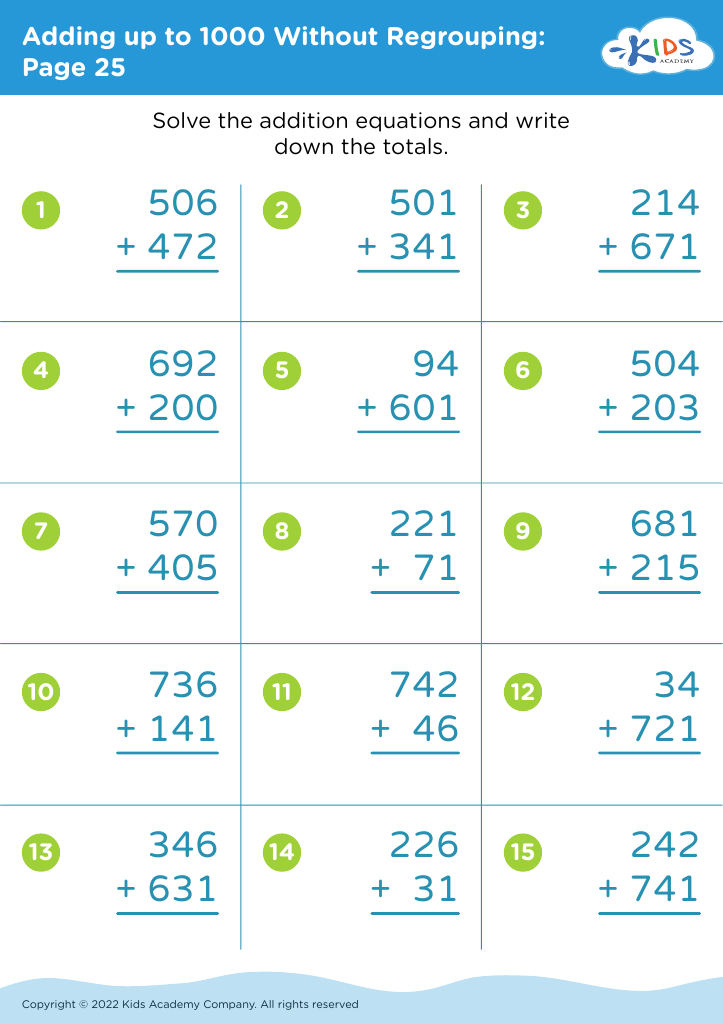
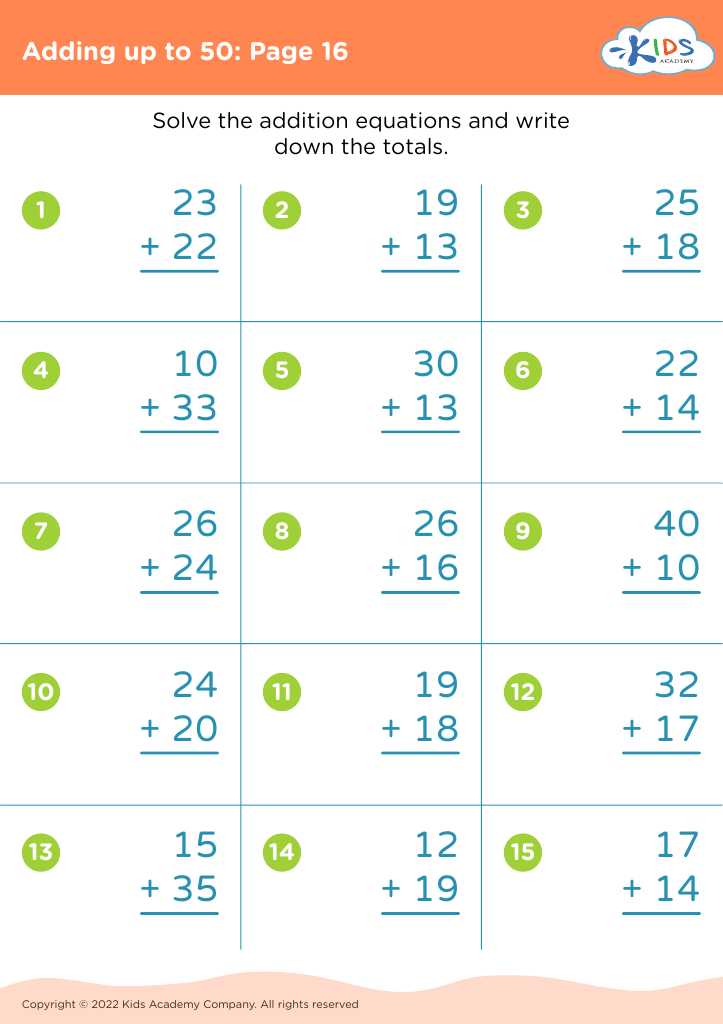
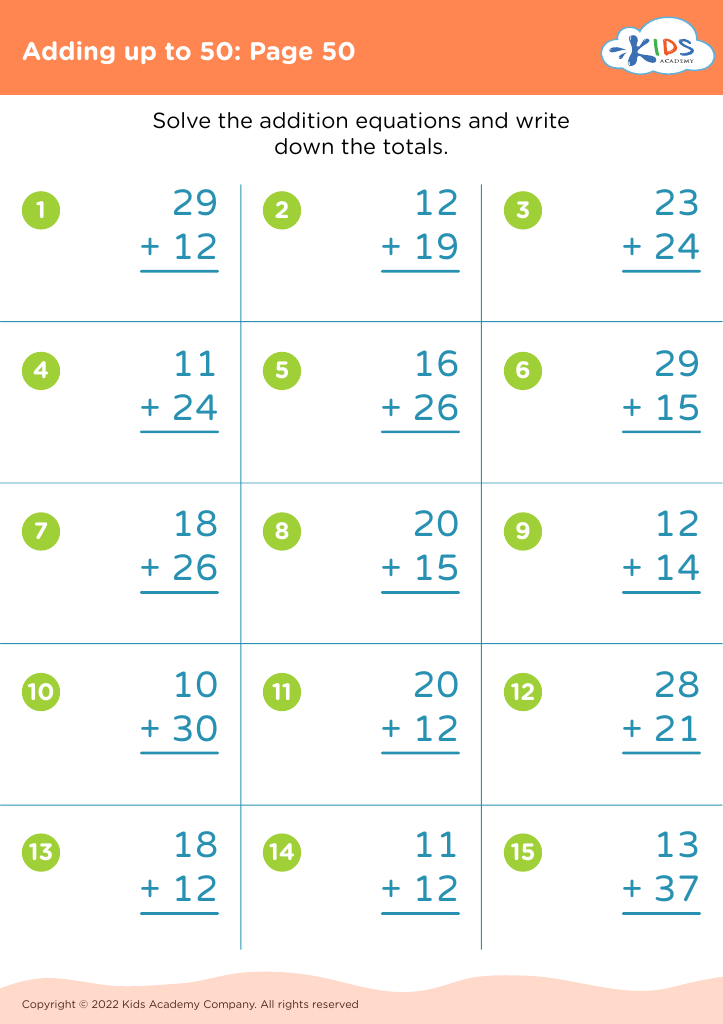








Understanding how to read clocks and practice addition is crucial for children aged 7-9 as it forms a foundation for essential life skills and future academic success. Mastering these skills enables children to manage their time effectively, which is vital for developing responsibility, punctuality, and independence. Reading both analog and digital clocks helps children understand the concept of time, correlate it with their daily routines, and prepare for scheduled activities. Additionally, grasping time management promotes better organizational skills, reducing stress and fostering a smoother daily flow.
Addition, on the other hand, is a fundamental arithmetic skill that supports more complex mathematical concepts. Practicing addition enhances cognitive development, critical thinking, and problem-solving abilities. These mathematical skills are not isolated but interwoven into various subjects and everyday situations, such as understanding money, measurements, and even logical reasoning for tasks such as planning steps in activities or games.
By investing effort in teaching children to read clocks and perform addition, parents and teachers equip them with vital tools for their future educational endeavors, engage them in practical scenarios, and build confidence. This foundational knowledge contributes significantly to their academic achievements, personal growth, and ability to navigate daily life effectively.








