Recognizing numbers Addition Worksheets for Ages 7-9
3 filtered results
-
From - To
Boost your child's arithmetic skills with our "Recognizing Numbers Addition Worksheets for Ages 7-9." These engaging, hands-on worksheets are expertly designed to help young learners identify and add numbers confidently. Perfect for reinforcing classroom learning or extra practice at home, each activity combines fun illustrations with educational exercises to captivate and challenge students. Watch as your child builds a solid foundation for math success by mastering addition through recognizing and understanding numbers. Visit Kids Academy now and give your child the tools they need to excel in math with our high-quality, kid-approved worksheets!
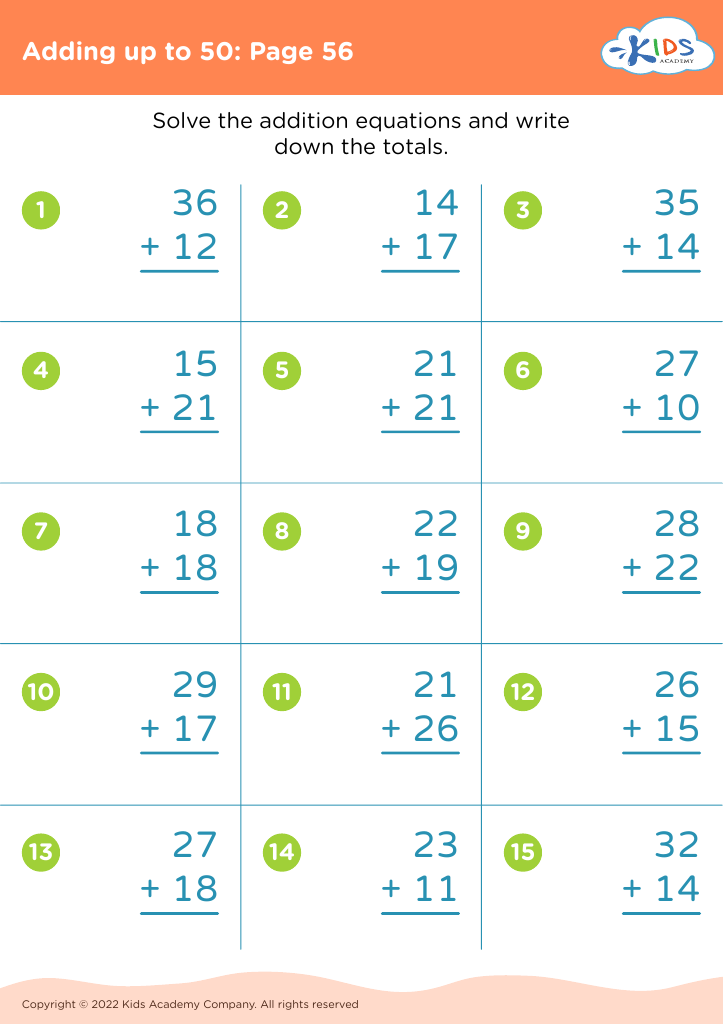
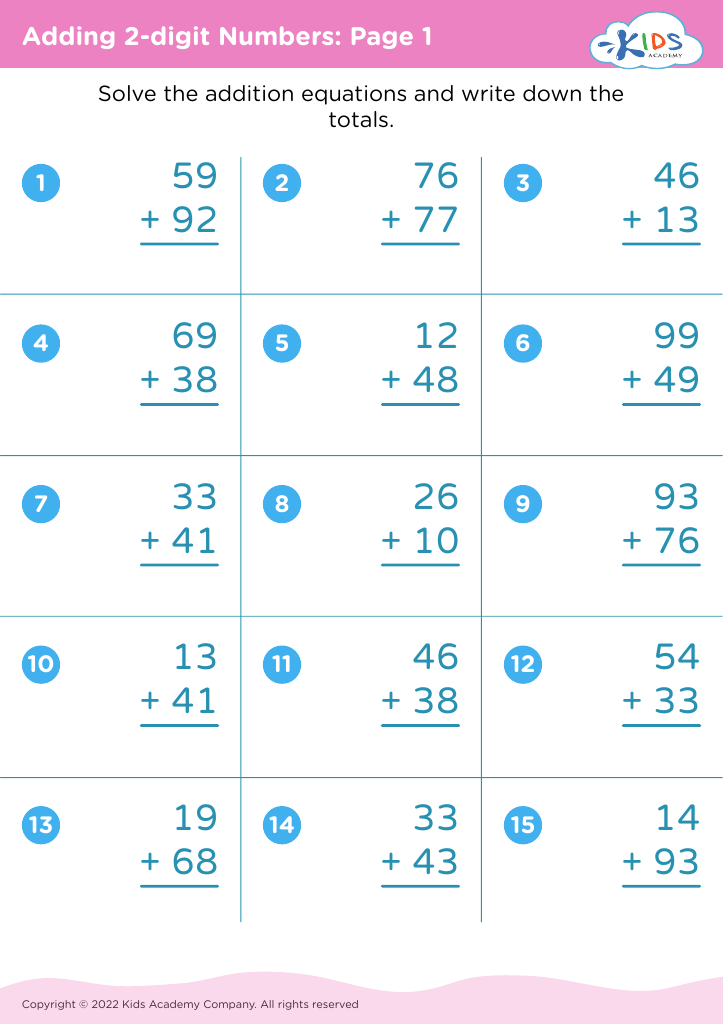
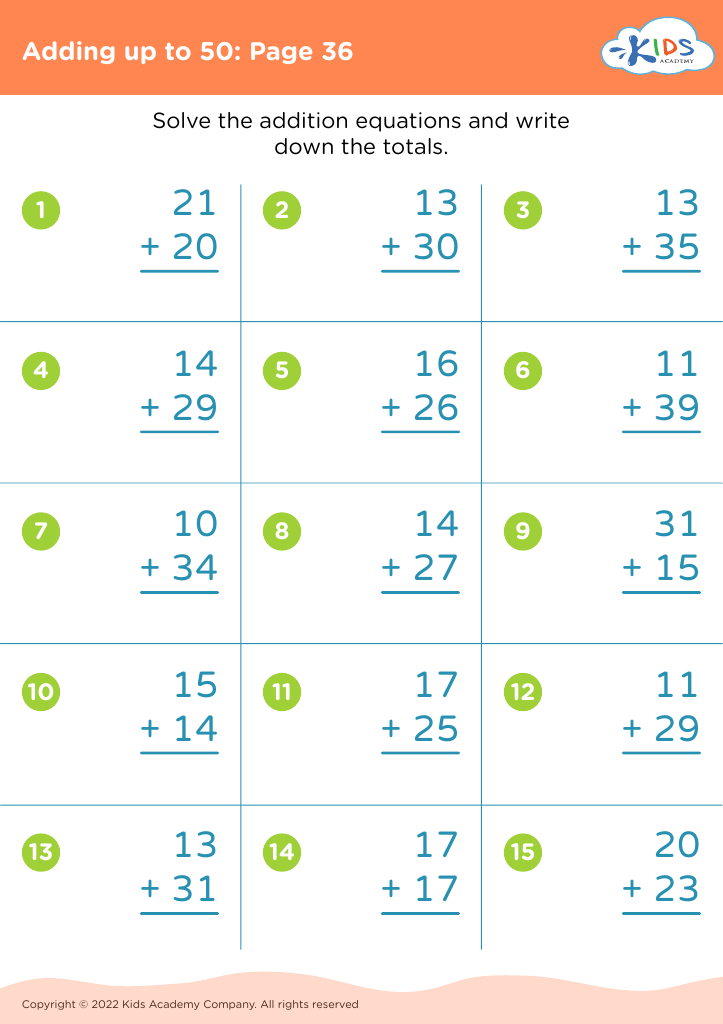








Recognizing numbers and understanding addition for children ages 7-9 is crucial for their academic and cognitive development. At this age, children are transitioning from the foundational skills learned in early childhood to more complex concepts. Mastery of basic arithmetic promotes logical thinking, problem-solving, and the ability to engage with everyday tasks like telling time and handling money.
For parents and teachers, fostering these skills early on provides children with the confidence they need to tackle more advanced math topics as they grow. Recognizing numbers is the first step in understanding relationships between figures, which forms the basis for addition. Once children grasp these connections, they can progress to more sophisticated operations like subtraction, multiplication, and division.
Moreover, preparing children with strong arithmetic skills enhances their performance in other academic areas such as science, engineering, and technology. Math competency is also linked to better organization skills and improved attention to detail, attributes that benefit children beyond the classroom.
Incorporating engaging activities such as games, flashcards, and interactive lessons can make learning enjoyable and more effective. By investing time and effort into number recognition and basic addition, parents and teachers are setting up a foundation for lifelong learning and success in many aspects of a child's future development.








