
Reinforce math concepts Addition Worksheets for Ages 7-9
3 filtered results
Difficulty Level
Grade
Age
-
From - To
Subject
Activity
Standards
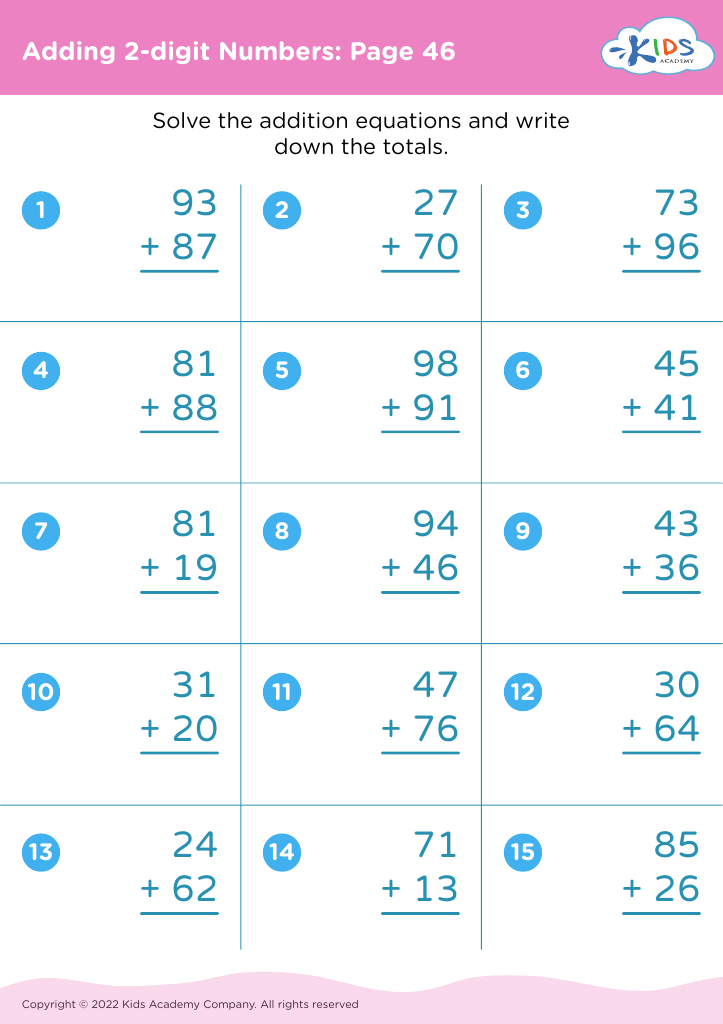
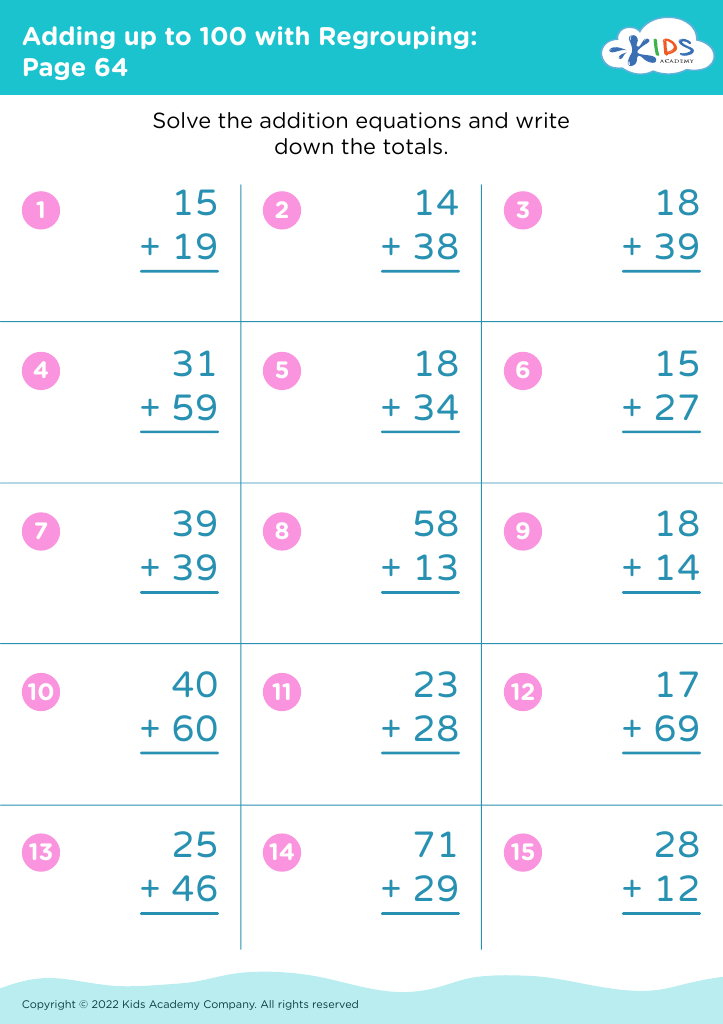
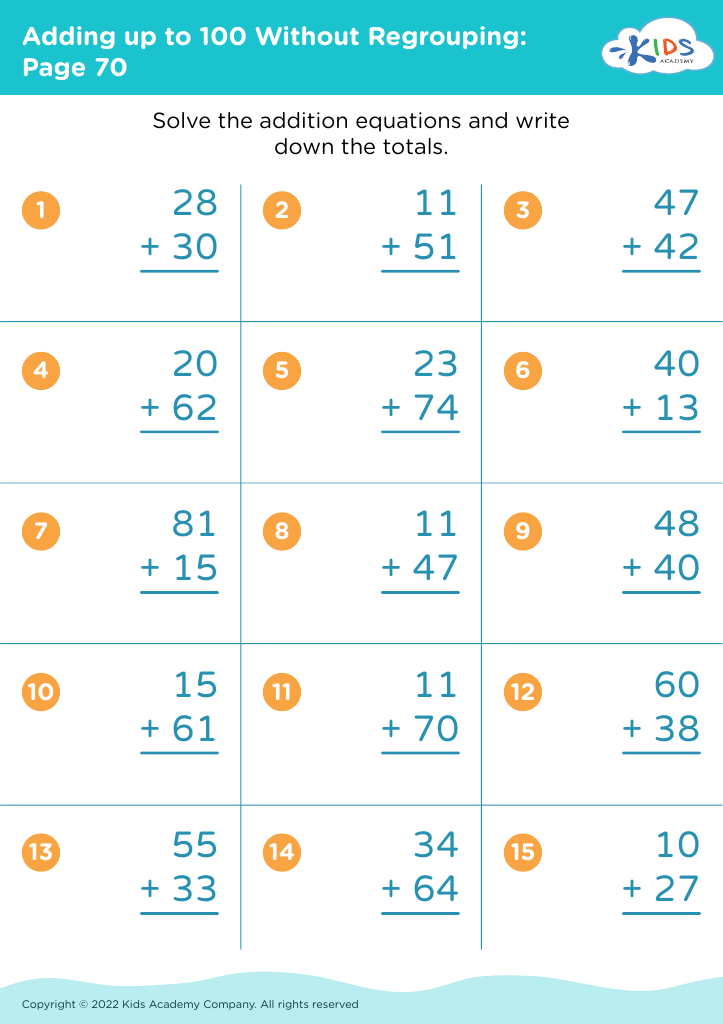
Strengthen your child's math skills with our engaging Addition Worksheets designed for ages 7-9! At Kids Academy, our collection of printable addition worksheets is tailored to reinforce key math concepts through fun, interactive exercises. These carefully crafted worksheets support skill development, promoting mathematical confidence and proficiency. From basic single-digit addition to more complex problems, our resources provide a comprehensive practice experience perfectly suited for young learners. Equip your child with the tools they need for math success, and help them build a strong foundational understanding that paves the way for future academic achievements. Visit Kids Academy today!
Favorites
With answer key
Interactive
Join Kids Academy for Free
Who is primarily going to use this learning content?








Caring about reinforcing addition concepts for ages 7-9 is crucial for several reasons. At this formative stage, children develop foundational mathematical skills that are essential for their future academic success. Mastery of addition lays the groundwork for understanding more complex math operations such as subtraction, multiplication, and division. When children have a strong grasp of addition, they gain confidence and are more likely to enjoy math, reducing anxiety and fostering a positive attitude toward learning.
Moreover, addition is used in everyday life situations, from counting money to measuring ingredients in recipes, making it a practical skill that enhances problem-solving and critical thinking abilities. Early reinforcement helps to solidify these skills, ensuring that children can apply them both in academic settings and real-world contexts.
Parents and teachers play a pivotal role in this process. Through engaging activities and consistent practice, they can tailor learning experiences to fit each child's unique needs. Family involvement in learning also reinforces the importance of education, creating a supportive environment where children feel motivated and encouraged. Therefore, focusing on addition at this age not only boosts math proficiency but also sets the stage for lifelong cognitive and practical skills.








