Understanding symmetry Addition Worksheets for Ages 7-9
24 filtered results
-
From - To
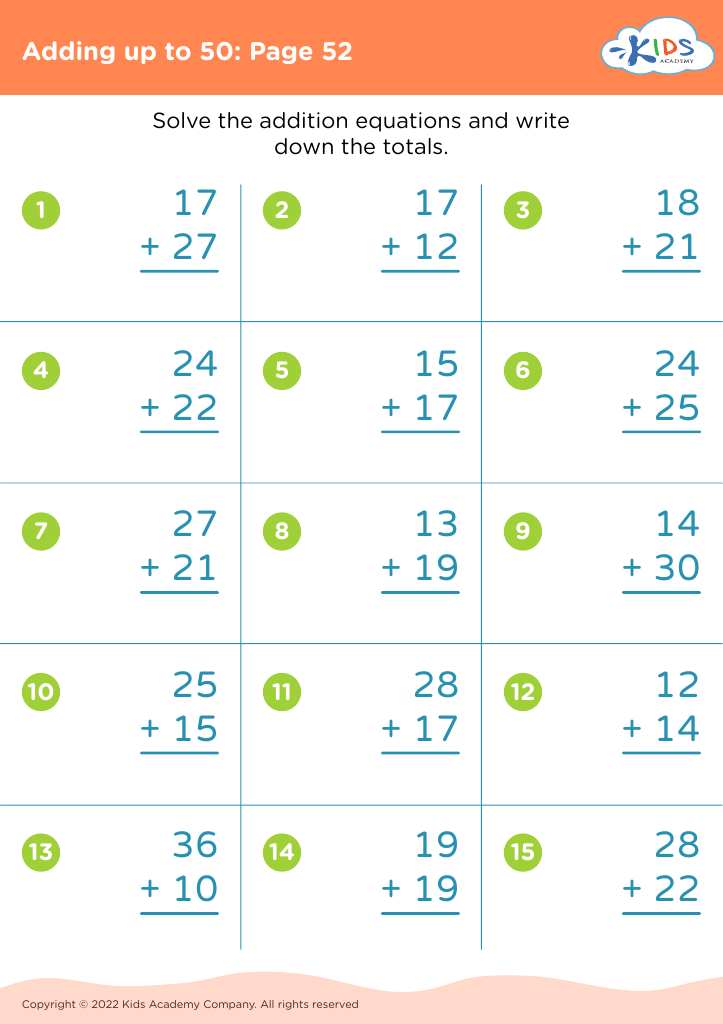
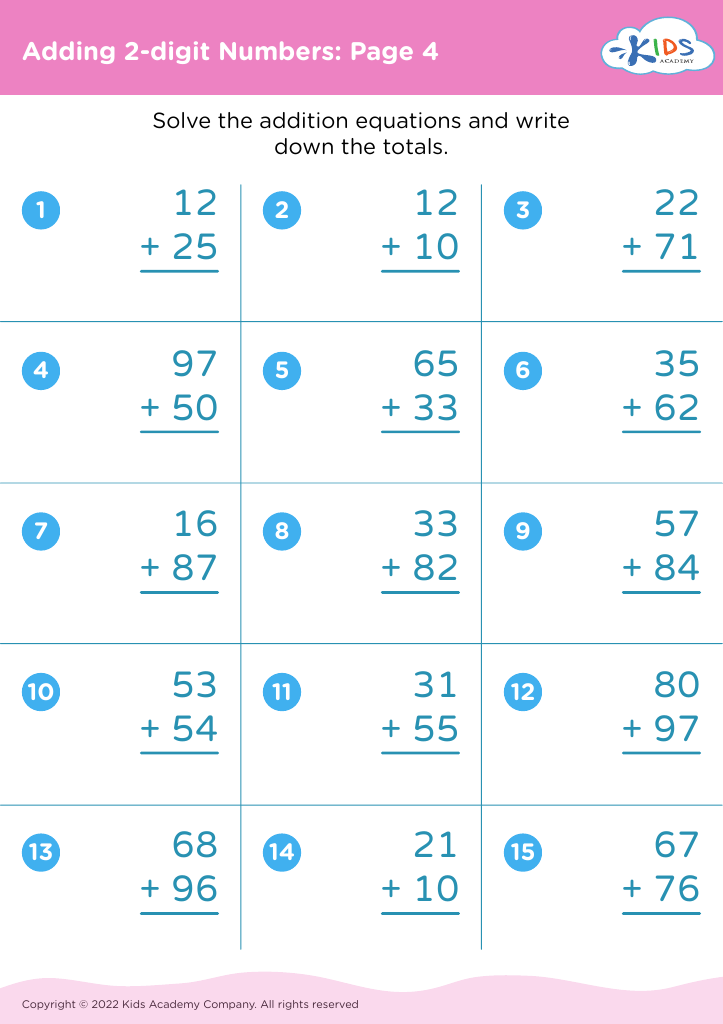
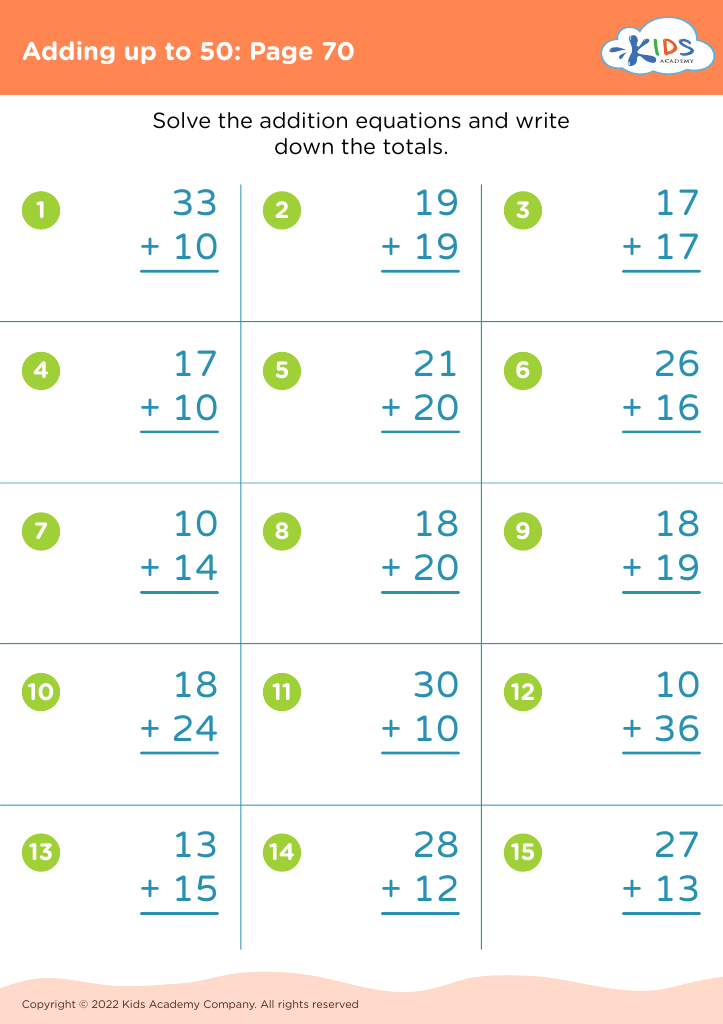
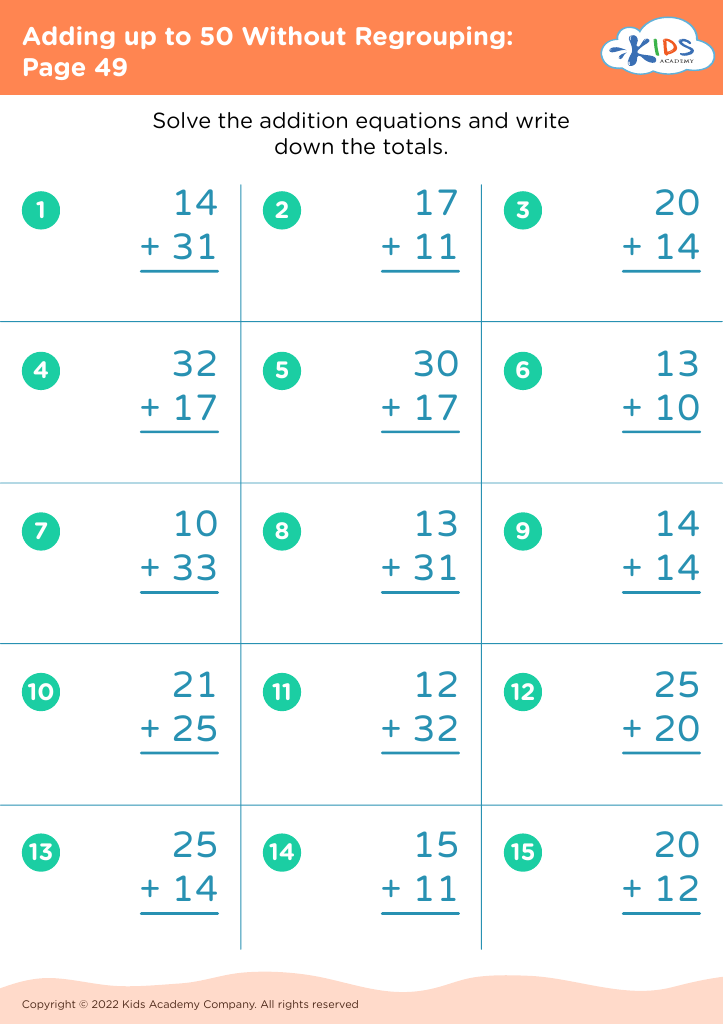
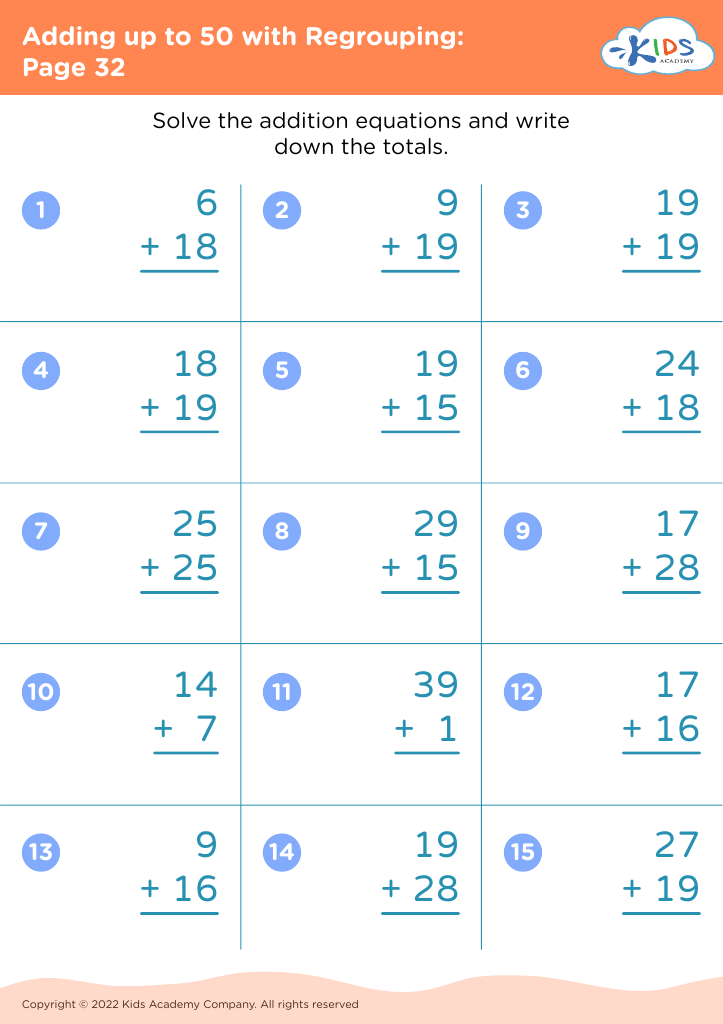
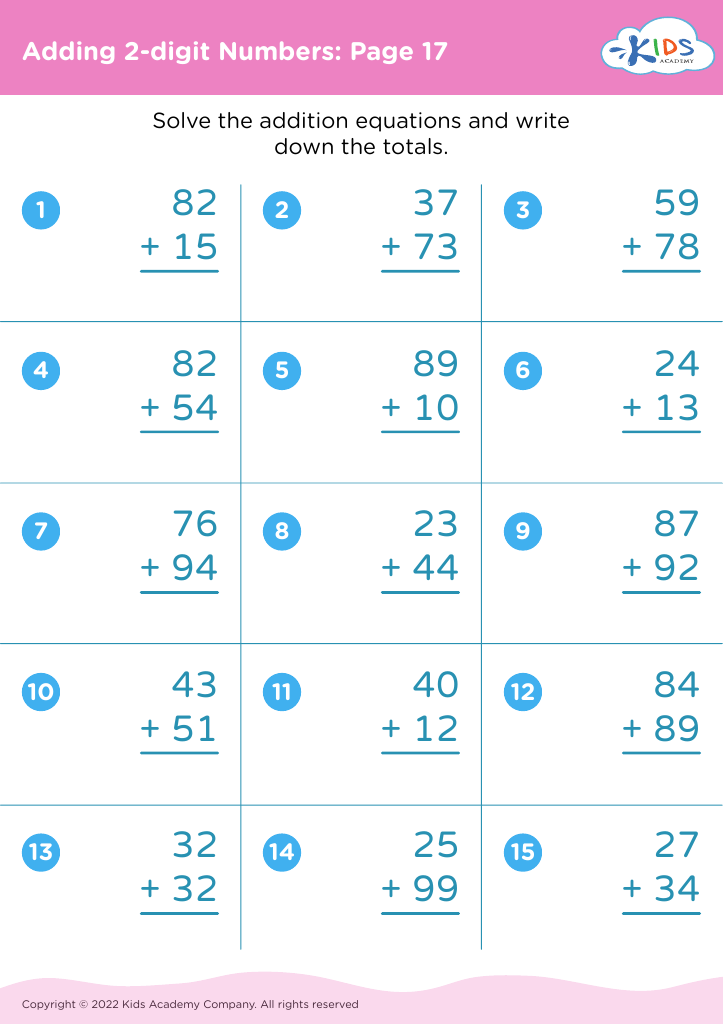
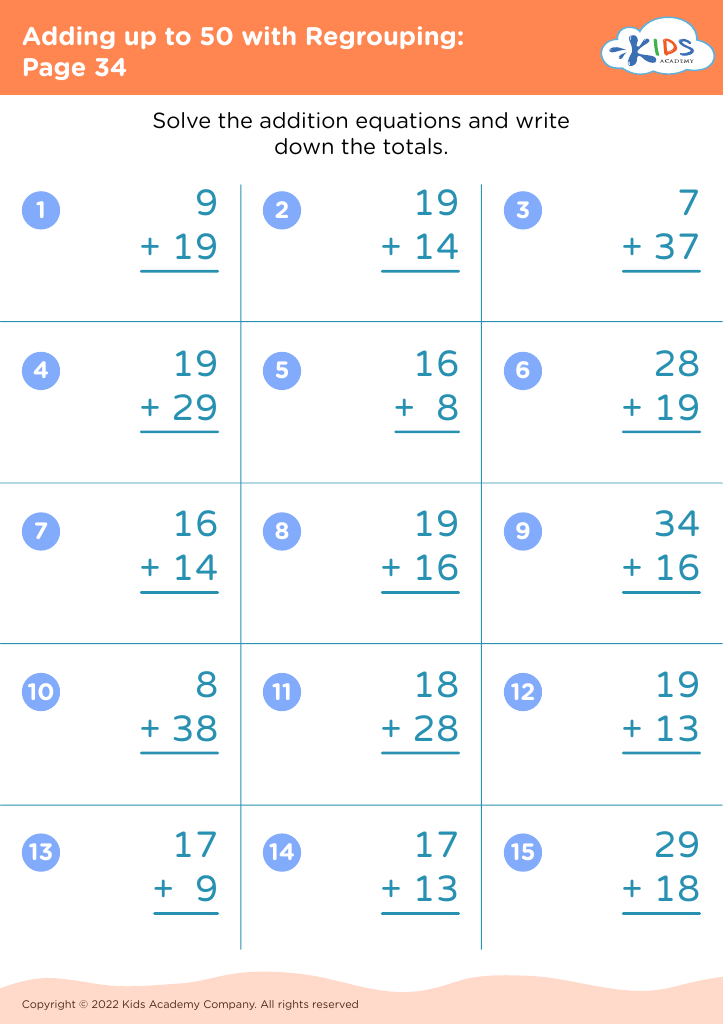
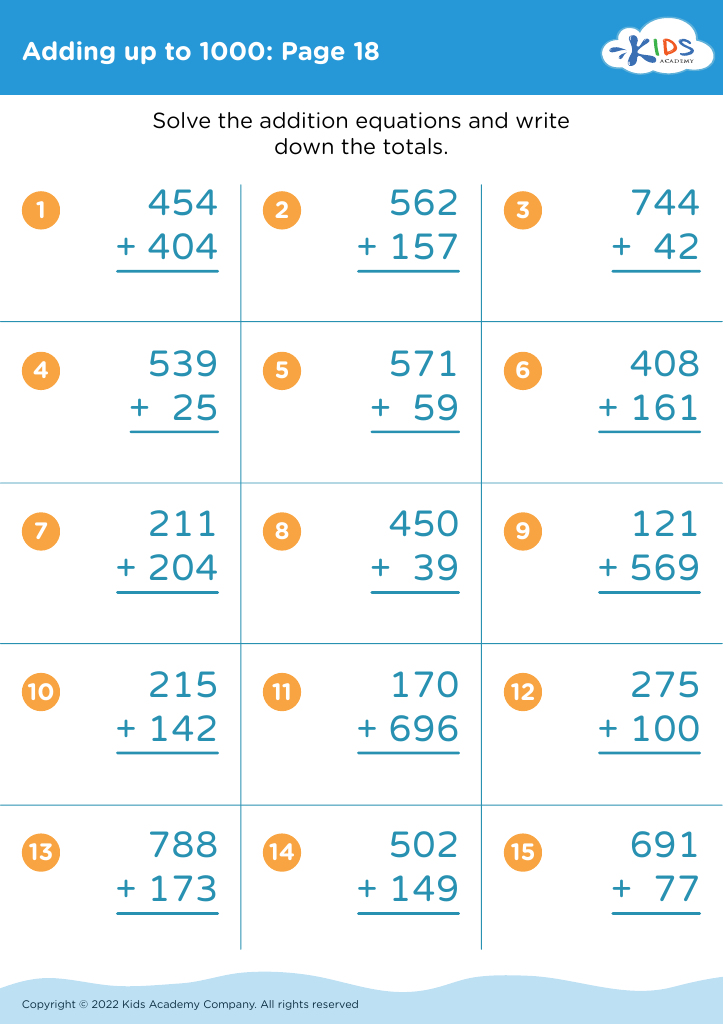
Our "Understanding Symmetry Addition Worksheets" is an engaging resource designed for children aged 7-9 to master addition while exploring the concept of symmetry. These worksheets combine math and art, allowing young learners to visualize and strengthen their understanding of symmetrical patterns through addition problems. With a variety of fun and interactive exercises, kids can practice their addition skills while recognizing shapes and balancing equations. This resource not only enhances mathematical abilities but also fosters creativity and critical thinking. Perfect for homeschooling or classroom use, these worksheets provide a unique way to make math enjoyable and meaningful for young students.
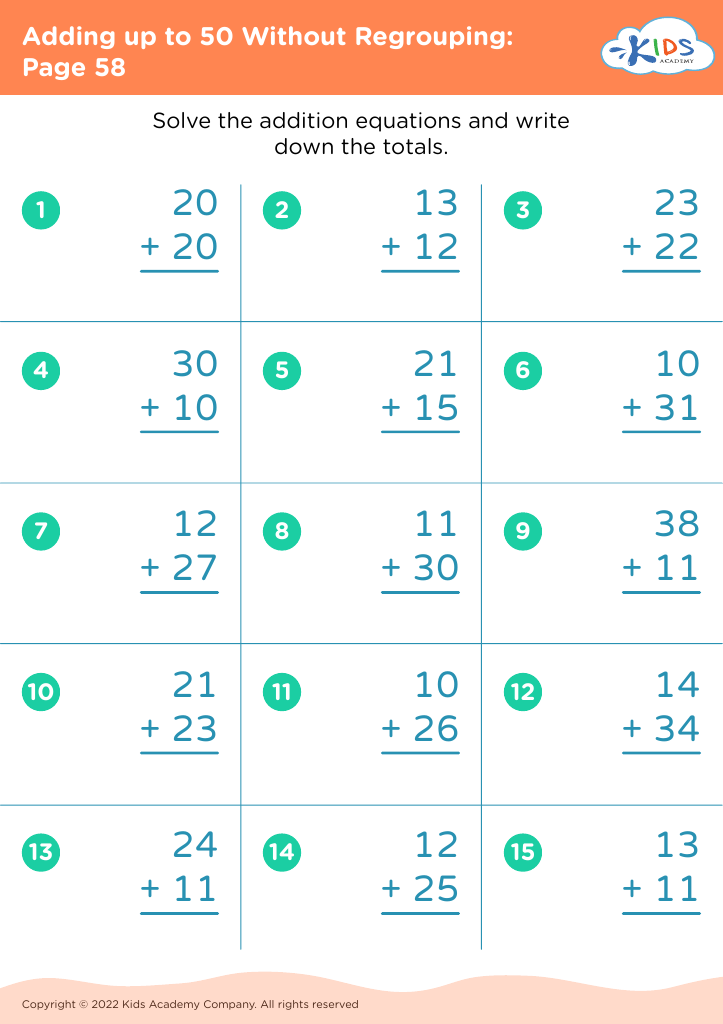
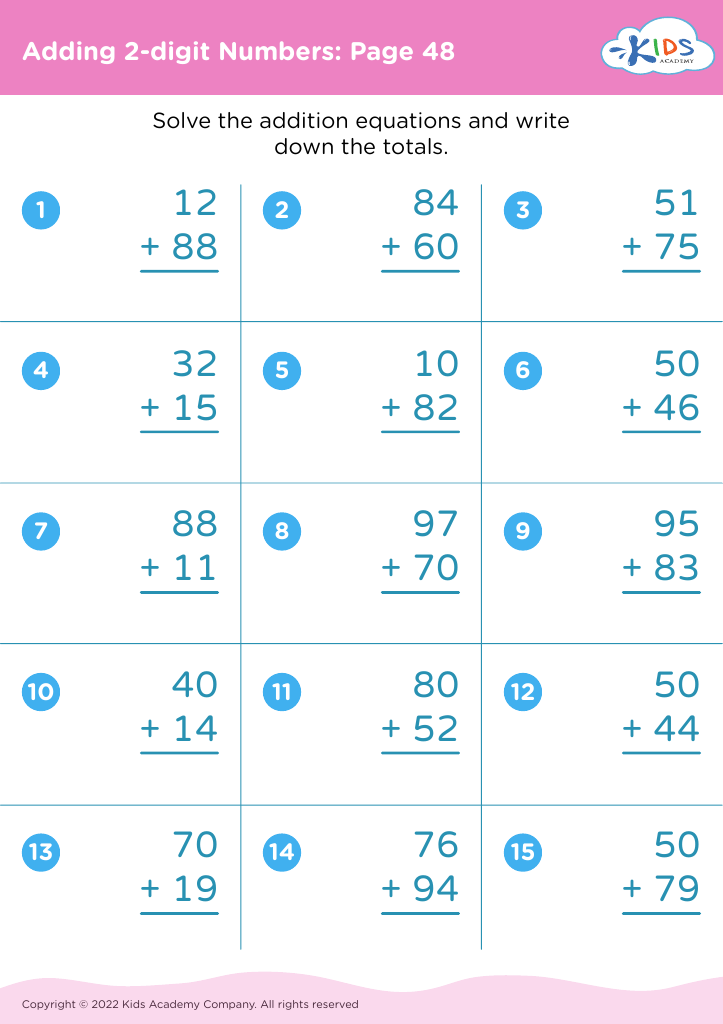
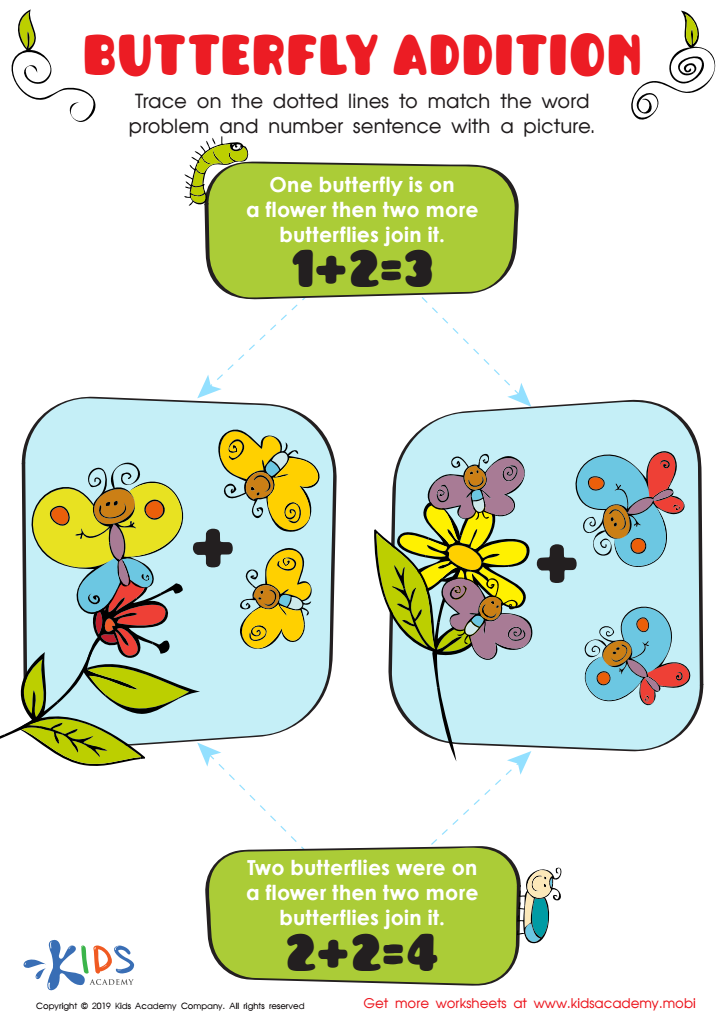
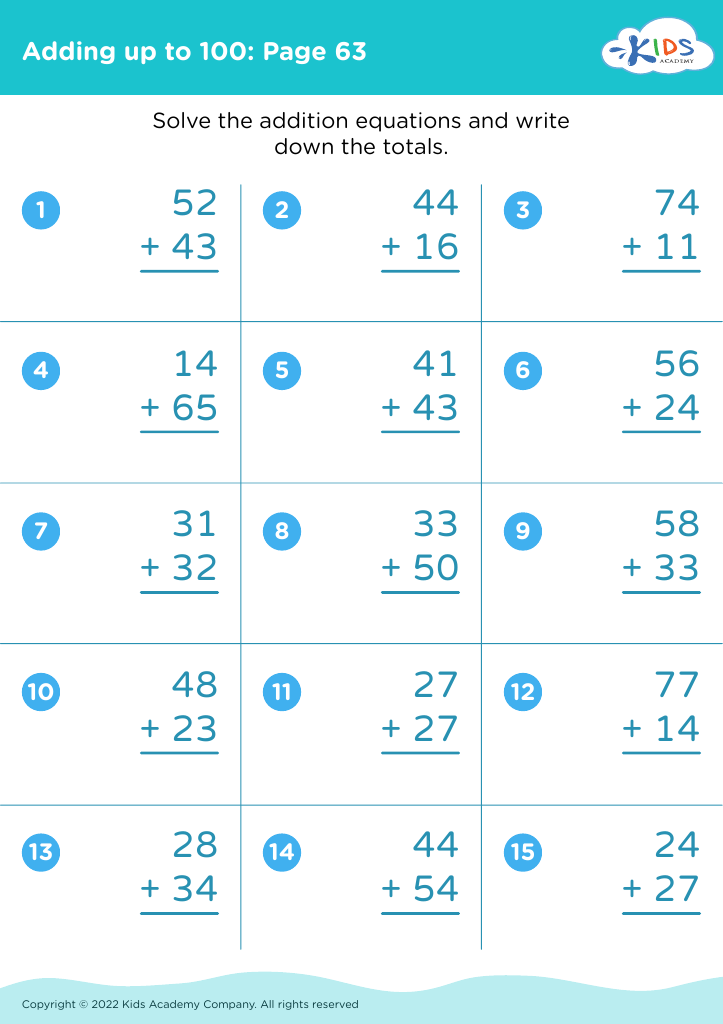
Butterfly Addition Worksheet
 Assign to My Students
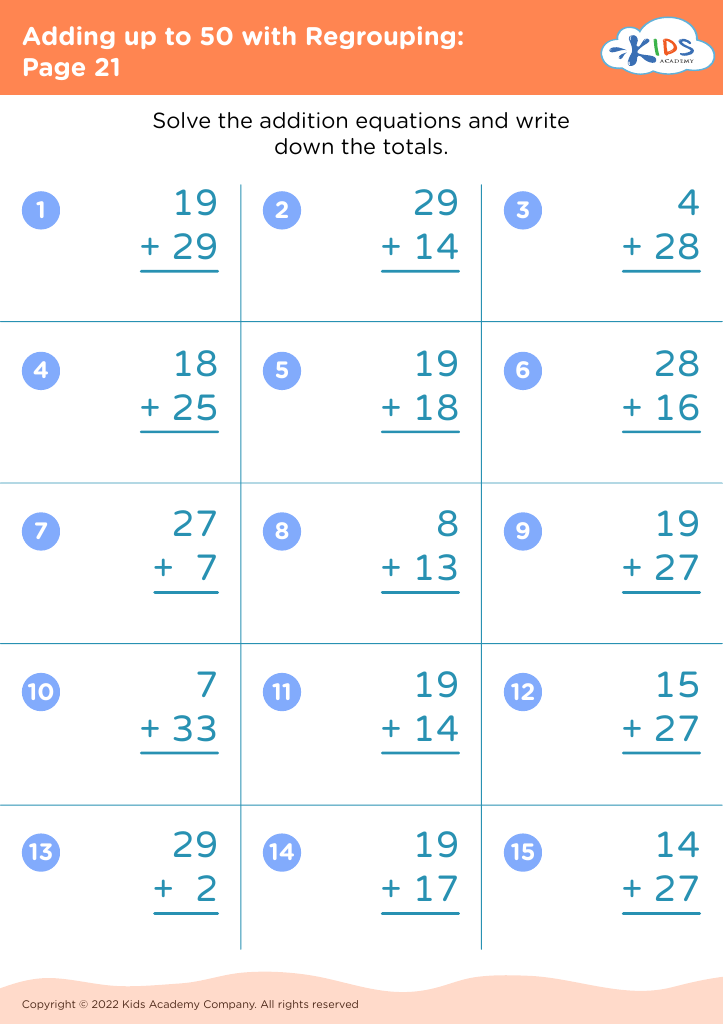
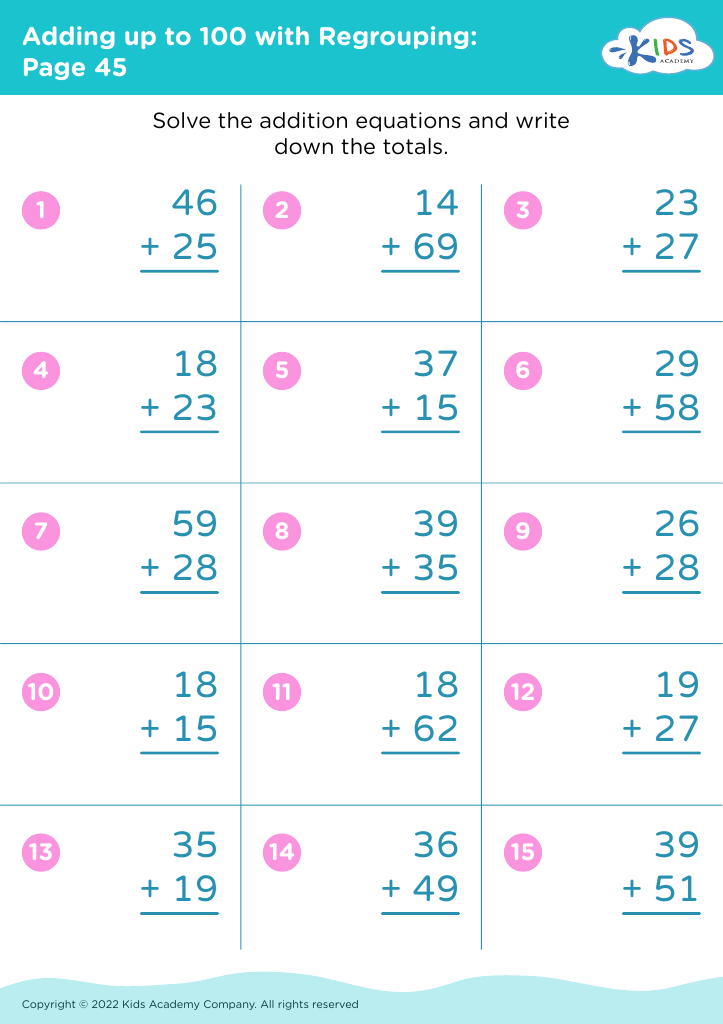
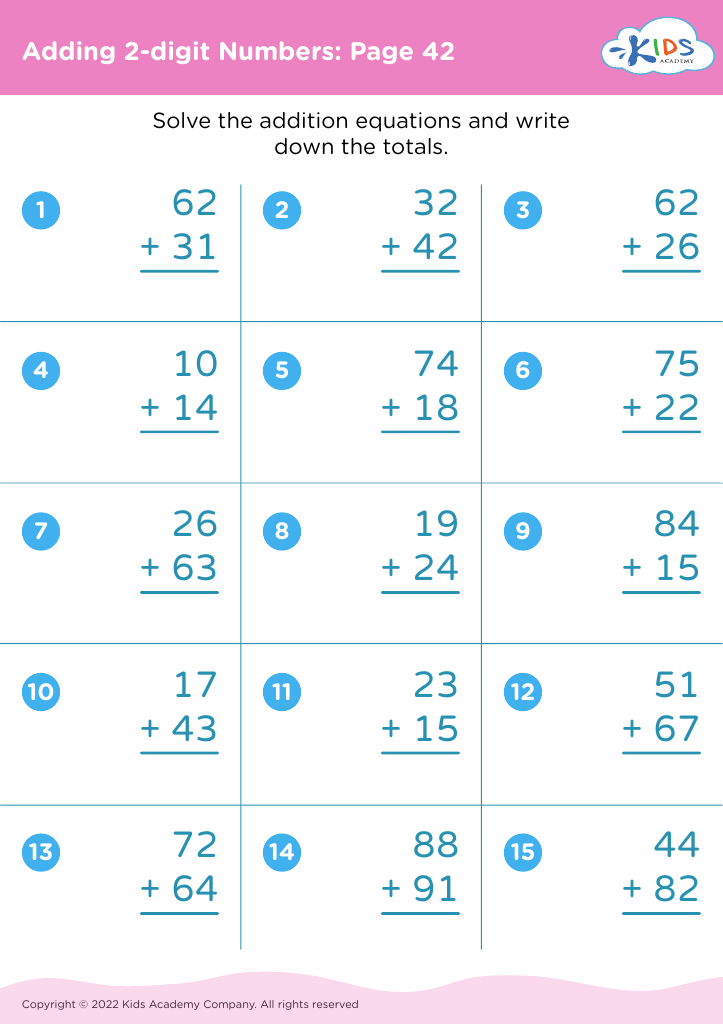
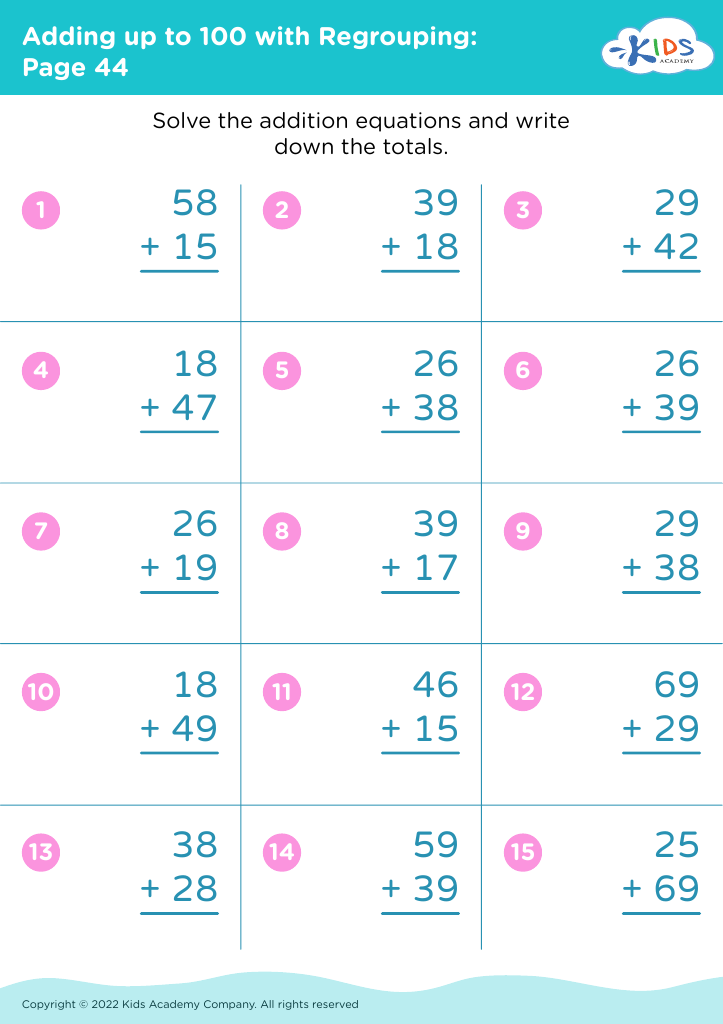








Understanding symmetry and addition for children aged 7-9 is crucial for several reasons. Firstly, it fosters critical thinking and problem-solving skills. Symmetry is not just a mathematical concept; it is found in nature, art, and architecture. By recognizing symmetric patterns, children enhance their observational skills and learn to categorize and compare shapes, which reinforces visual-spatial reasoning. This skill is foundational for advanced subjects like geometry and algebra in later education.
In addition, mastering addition through various strategies—including the commutative and associative properties—equips children with the computational skills needed for daily life. It encourages flexibility in thinking, allowing them to approach problems from different angles. Understanding how symmetry ties into addition can even lead to more engaging and interactive learning experiences, such as using symmetric patterns to solve addition-related puzzles.
Moreover, strong foundational skills in these areas can boost a child’s confidence in math, reducing anxiety about future math concepts. For parents and teachers, fostering an appreciation for symmetry and solid addition skills not only supports academic success but also enriches children's cognitive development and boosts overall learning. In an increasingly complex world, these fundamental principles are key to developing critical thinkers.








