Visual interpretation Addition Worksheets for Ages 7-9
4 filtered results
-
From - To
Empower your child’s math journey with our "Visual Interpretation Addition Worksheets" designed for ages 7-9. These engaging worksheets utilize bright visuals and interactive exercises to simplify complex addition concepts, making learning enjoyable and effective. Through eye-catching illustrations and easy-to-follow instructions, young learners can improve their addition skills and build a solid foundation in mathematics. Ideal for home or classroom use, our worksheets encourage critical thinking and problem-solving, turning math practice into a fun activity. Help your child grasp fundamental math skills with these creative and educational resources from Kids Academy.
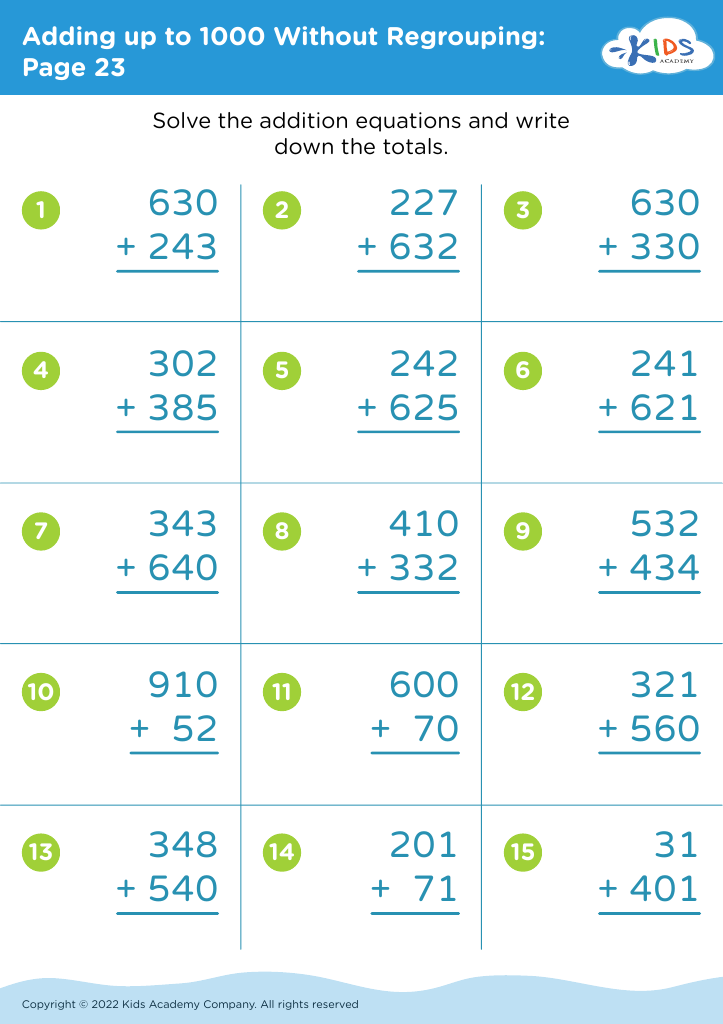
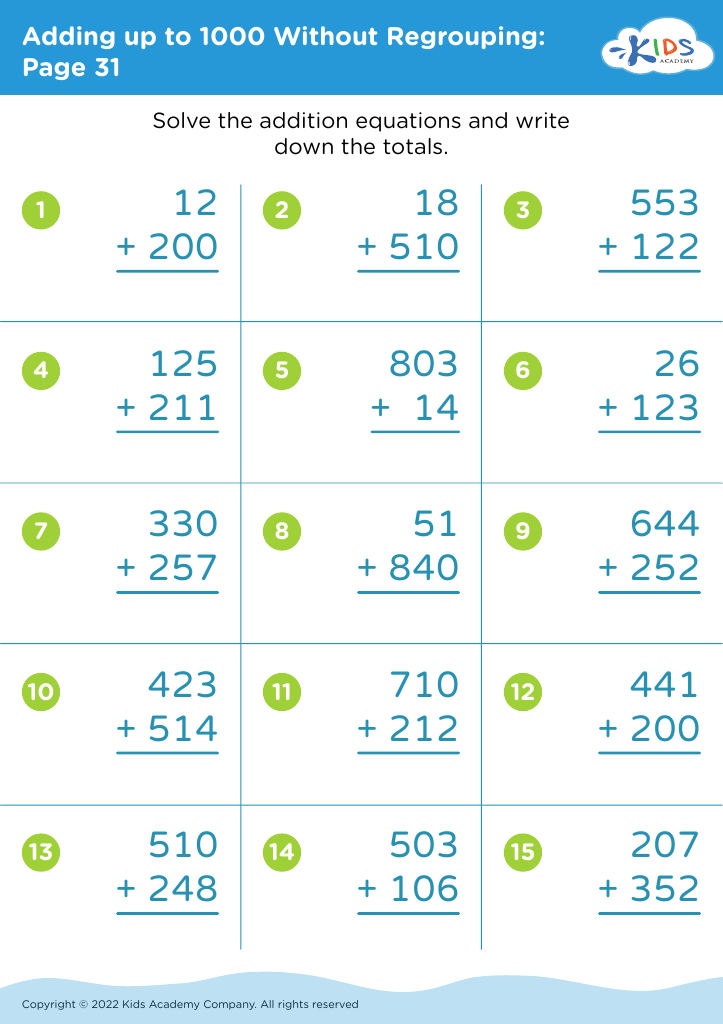
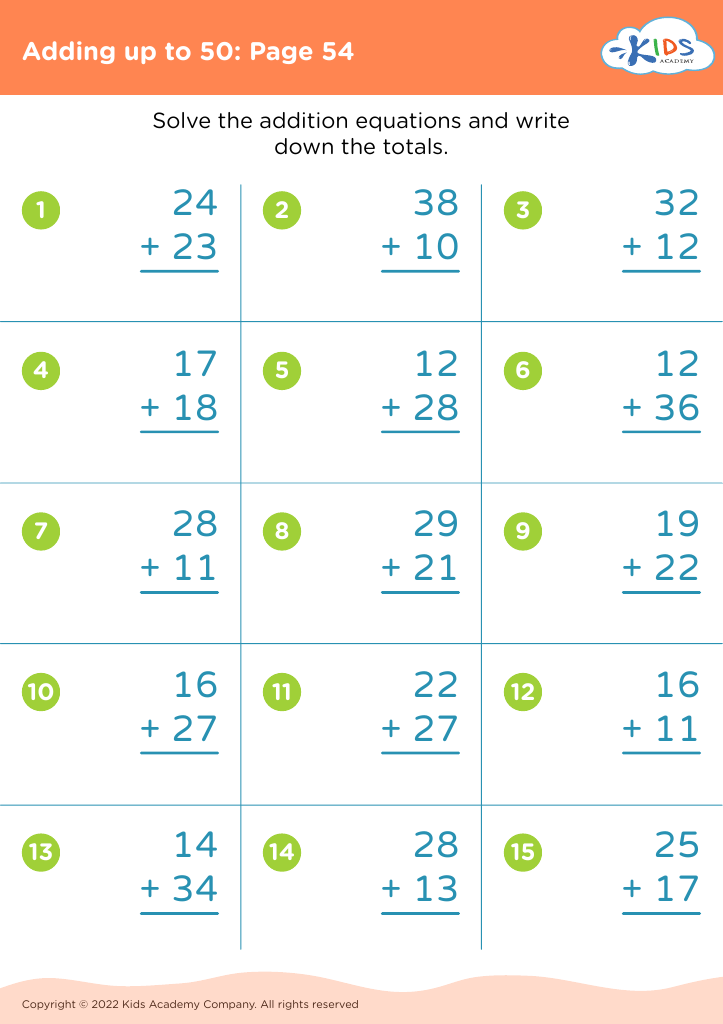
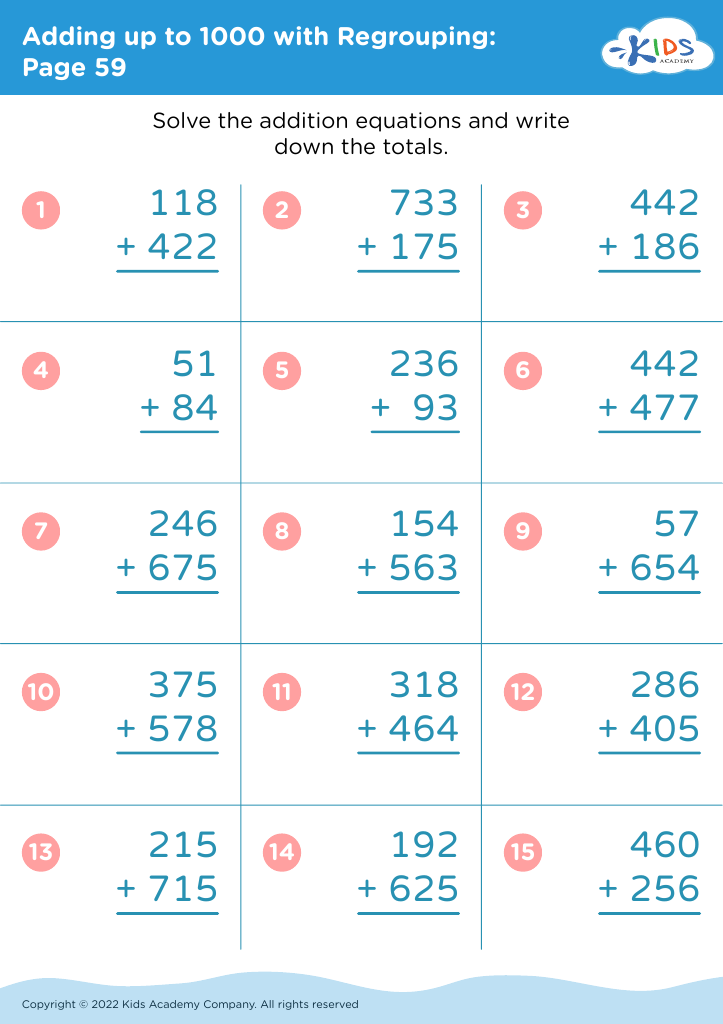



.jpg)




Visual interpretation of addition is a crucial tool for young learners (ages 7-9) and is something teachers and parents should prioritize. At this developmental stage, children are transitioning from concrete to more abstract thinking, and visual aids play a vital role in this process.
First, visual aids such as number lines, counters, and pictorial representations help children understand the basic concept of addition. They can see the relationship between numbers and how quantities combine to form larger numbers. This concrete understanding is necessary before moving on to abstract calculations.
Second, visual interpretation caters to different learning styles. Some children are more visual learners and can grasp mathematical concepts better when they see them. Using visual tools ensures that these learners are not left behind.
Additionally, visual methods can make learning more engaging and interactive. Traditional methods relying solely on numbers may seem monotonous to young children, while colorful and dynamic visual aids can turn addition lessons into fun and exciting challenges.
Finally, using visual interpretation helps in problem-solving and critical thinking. When children use visual methods to solve addition problems, they are actively engaging their brains in ways that promote deeper understanding. They learn not just to arrive at the correct answer but to understand why it is correct.
Overall, visual interpretation methods make learning addition more accessible, engaging, and effective, laying a solid foundation for future mathematical learning.








