Vocabulary development Addition Worksheets for Ages 7-9
5 filtered results
-
From - To
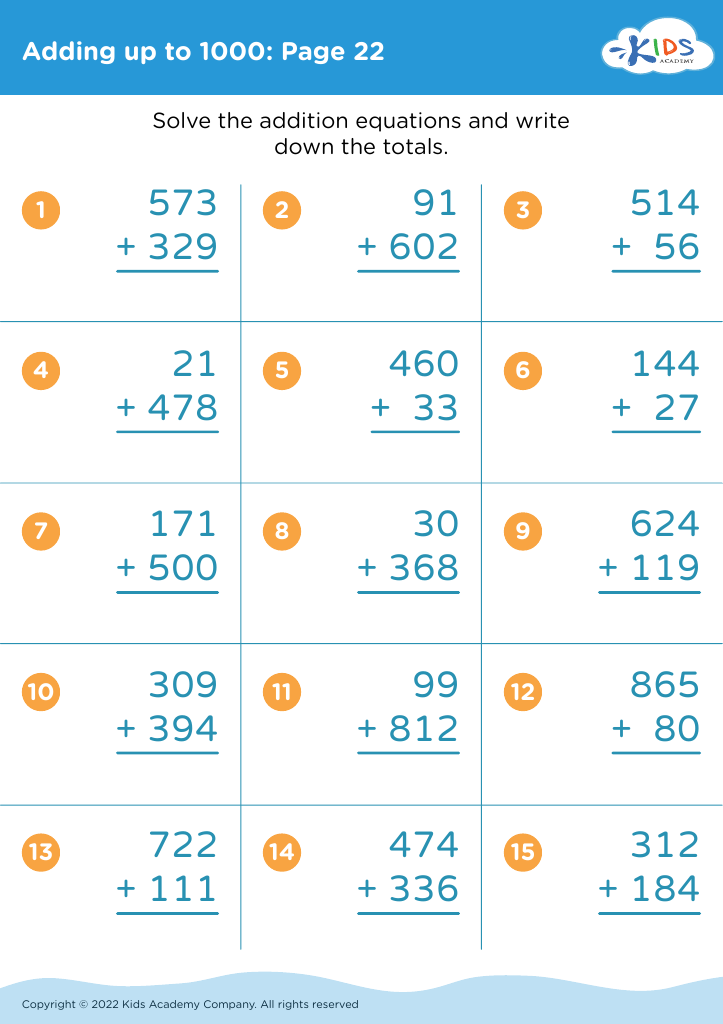
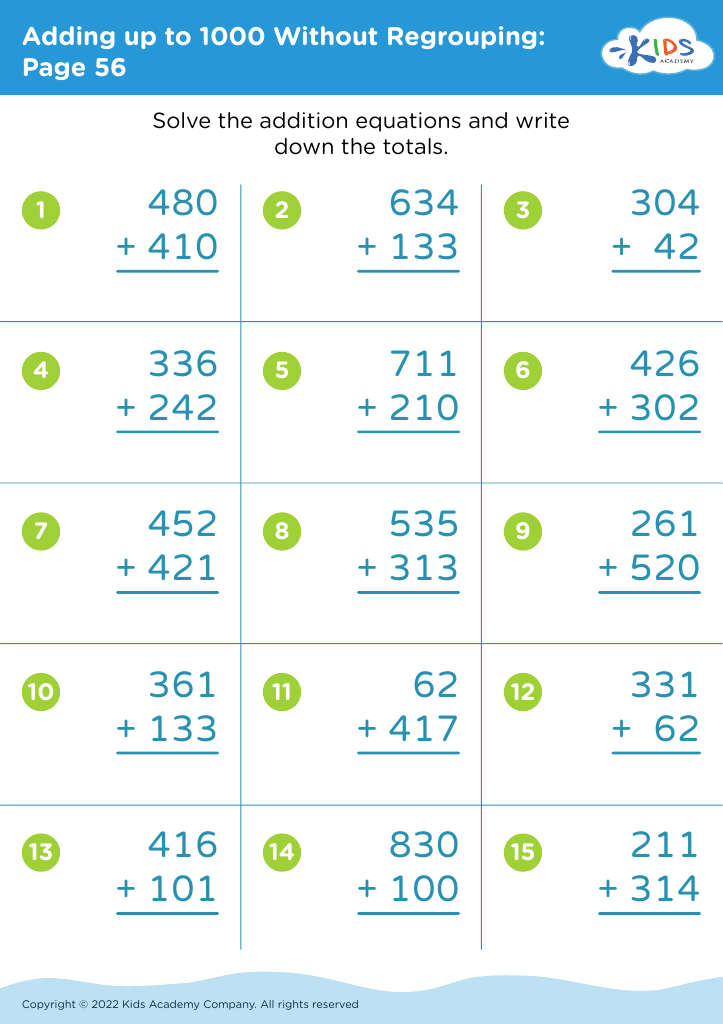
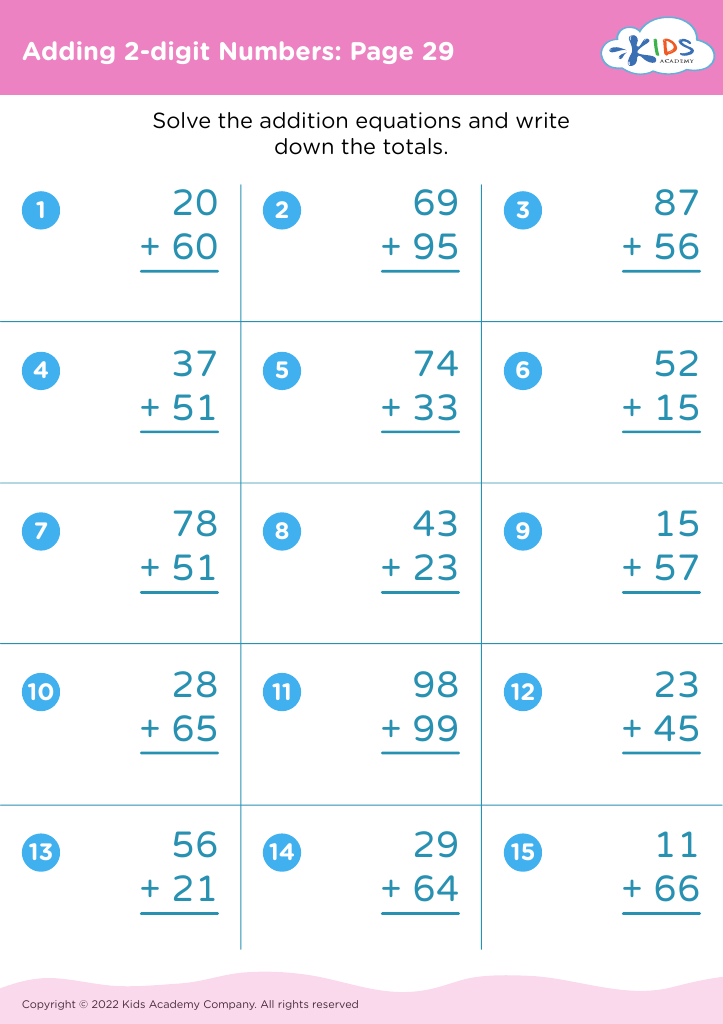
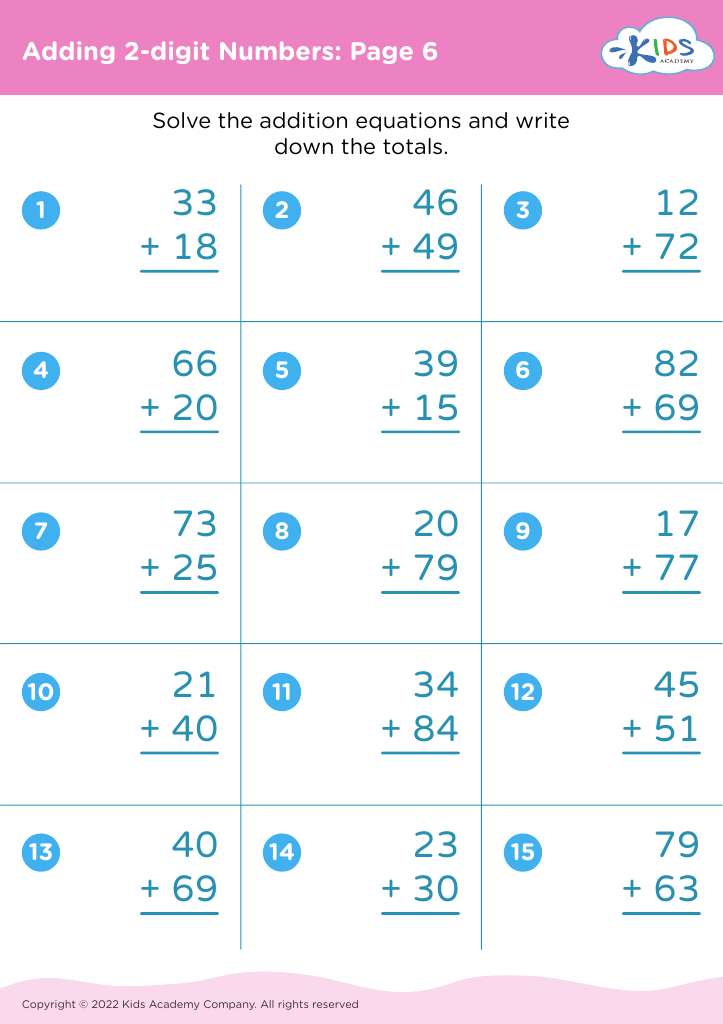
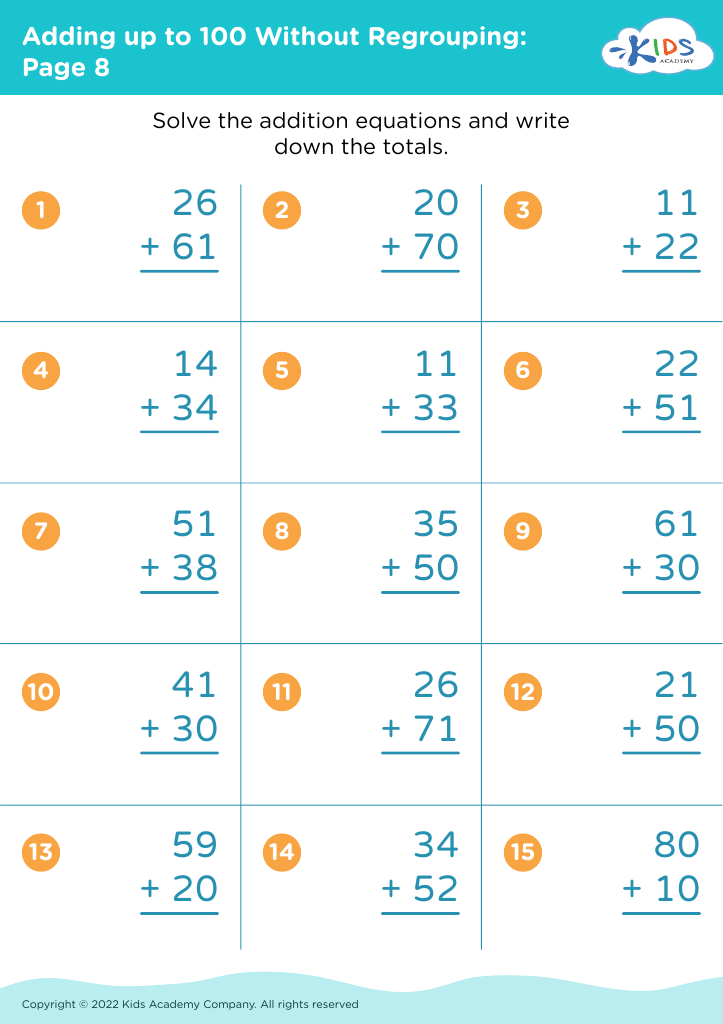
Vocabulary Development Addition Worksheets for Ages 7-9 are designed to enhance both math and language skills for young learners. These engaging resources combine fundamental addition exercises with vocabulary-building activities, helping children grasp new words while practicing their math. Each worksheet includes a variety of tasks, such as word problems and definition matching, ensuring a multifaceted learning experience. By integrating language arts and mathematics, these worksheets foster a deeper understanding of concepts, while also developing critical thinking and problem-solving skills. Ideal for classroom use or home practice, they support holistic educational growth in children ages 7 to 9.








Vocabulary development is crucial for children aged 7-9 for several essential reasons, and it's why parents and teachers should pay close attention to it and seek opportunities for enrichment. At this age, children are transitioning from learning to read to reading to learn. A rich vocabulary enables them to better understand and derive meaning from texts, which supports overall academic success.
Firstly, an expansive vocabulary enhances reading comprehension. When children understand more words, they grasp the context of stories or informational texts more effectively, making reading a more enjoyable and rewarding experience. This, in turn, fosters a love for reading, which is a fundamental skill for lifelong learning.
Secondly, vocabulary development supports expressive language skills. As children's vocabularies grow, they become more adept at expressing their thoughts, ideas, and emotions clearly, both in writing and speech. This improved communication skill is essential for successful social interactions and academic instructions.
Moreover, a strong vocabulary is linked to better problem-solving skills. As children encounter and understand more words, they can think more critically and creatively. They develop the ability to analyze situations more effectively and propose well-thought-out solutions.
Lastly, engaging with vocabulary strengthens listening skills. When children are familiar with more words, they are better equipped to follow conversations and classroom instructions, increasing their ability to participate fully in educational activities.
Therefore, focusing on vocabulary development for ages 7-9 is vital, laying the groundwork for a lifetime of improved literacy, communication, and cognitive abilities.








