Historical Knowledge Arrays Worksheets for Ages 7-9
4 filtered results
-
From - To
Discover our engaging "Historical Knowledge Arrays Worksheets" designed specifically for children aged 7-9. These worksheets combine the fun of learning mathematical concepts through arrays with fascinating historical themes. Each activity encourages young learners to develop critical thinking while exploring significant events, figures, and cultures from history. By solving array-related math problems, children enhance their arithmetic skills and deepen their understanding of notable historical narratives. Our resource-rich worksheets are perfect for classroom settings or at-home learning, ensuring interactive and enriching experiences for young explorers. Dive into a world of math and history with our thoughtfully crafted educational materials!
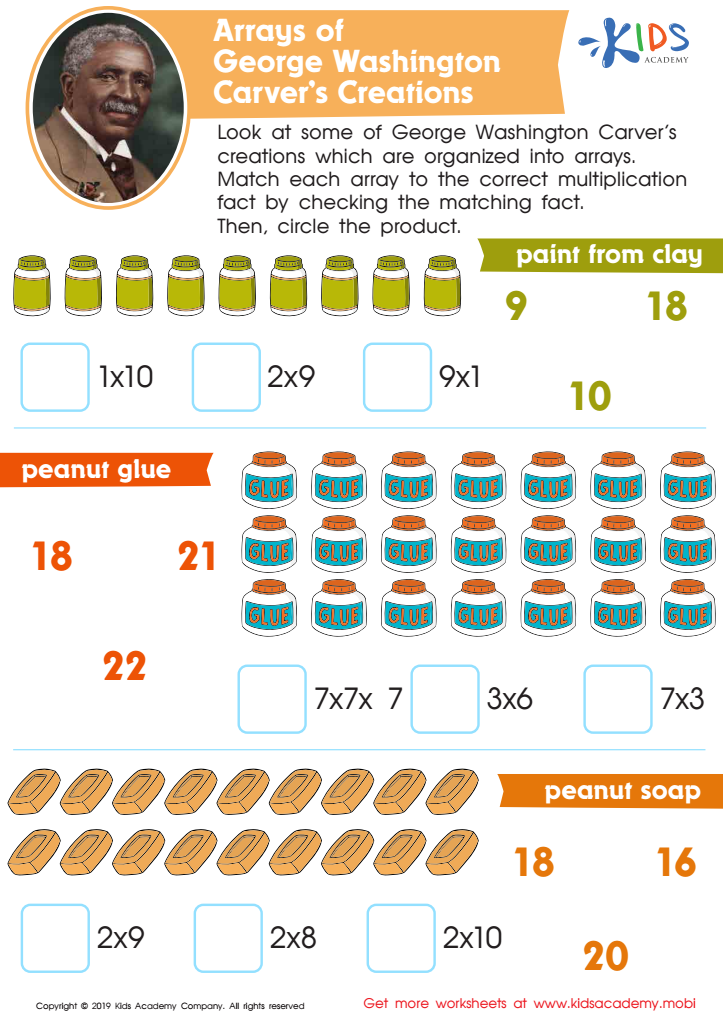
Arrays of George Washington Carver’s Creations Worksheet
 Assign to My Students
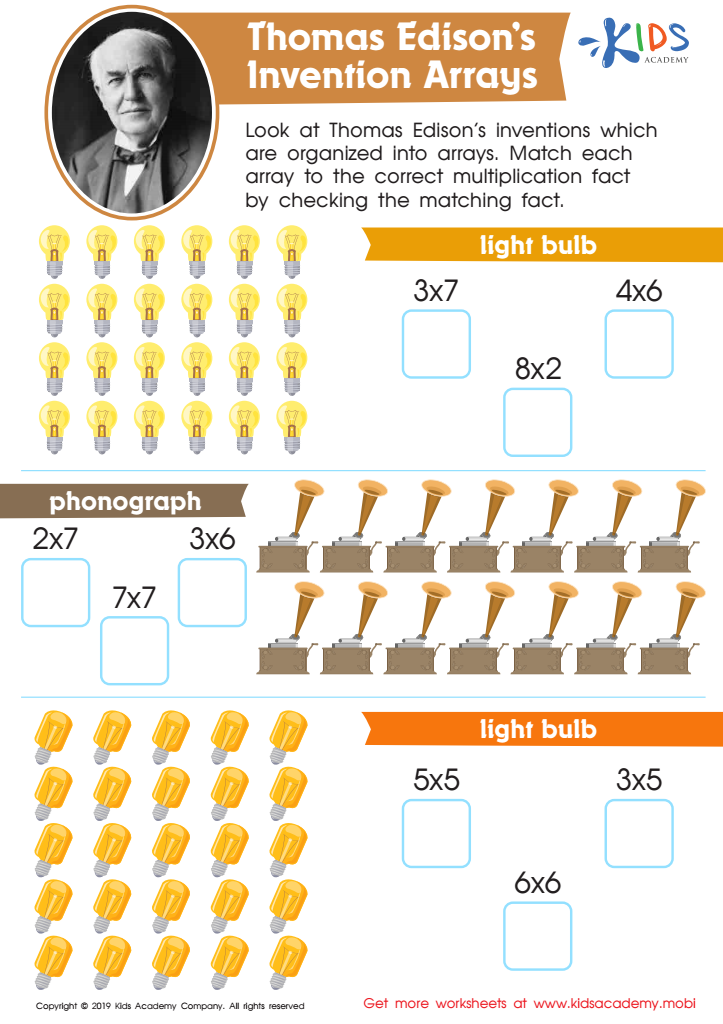
Thomas Edison’s Invention Arrays Worksheet
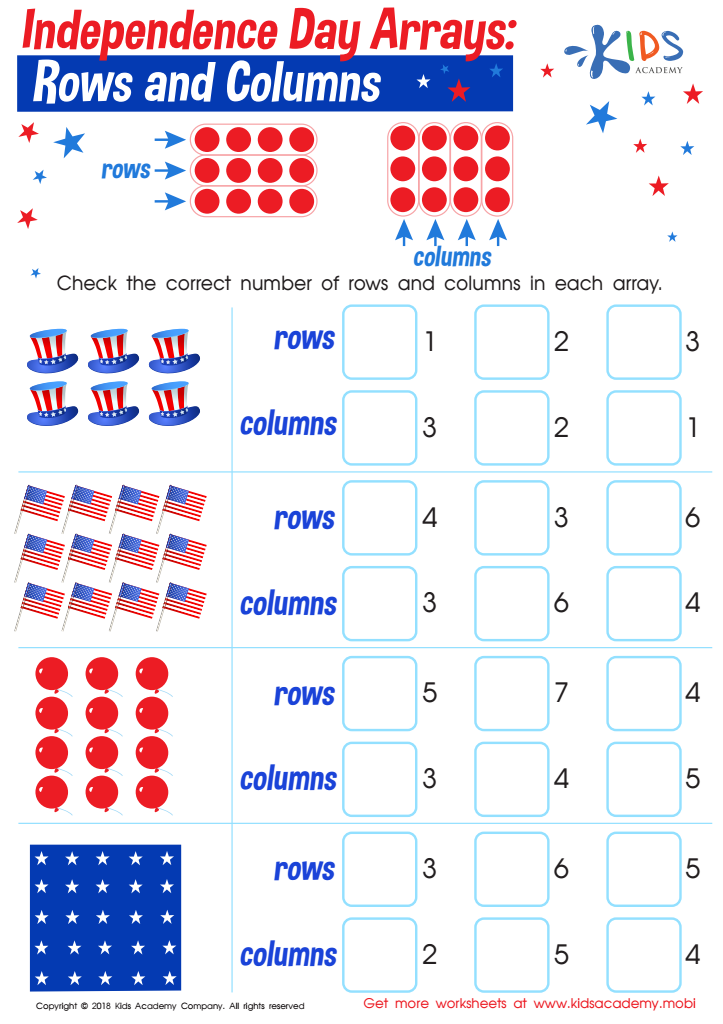
Independence Day Arrays: Rows and Columns Worksheet
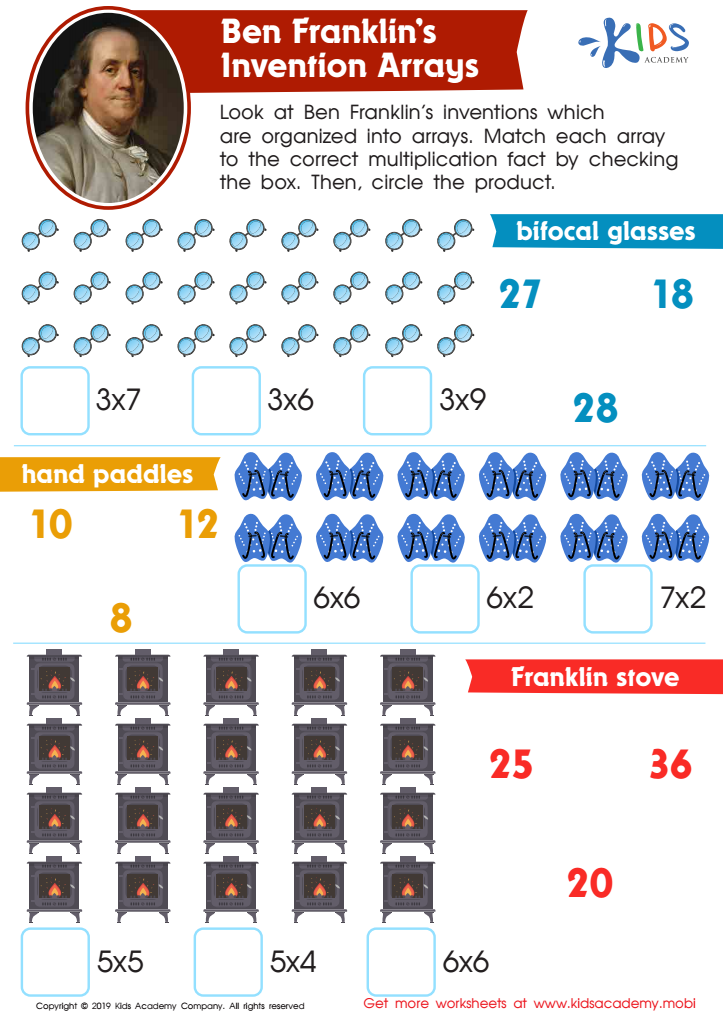
Ben Franklin’s Invention Arrays Worksheet








Parents and teachers should prioritize Historical Knowledge Arrays for ages 7-9 because they offer structured frameworks that enhance children's understanding of history. At this critical developmental stage, children are beginning to form their identities and worldviews. Exposure to historical knowledge helps them build a sense of belonging within a broader context of human experiences.
These arrays present historical information in manageable chunks, making it easier for young learners to grasp important events, figures, and concepts. When history is organized systematically, it fosters connections and helps students see relationships between past and present, thus encouraging critical thinking.
Integrating historical knowledge into the curriculum allows young learners to engage in discussions about societal values, culture, and diversity. This generation will be future leaders, and understanding history is paramount in empowering them to participate actively and thoughtfully in their communities.
Moreover, teaching historical knowledge cultivates empathy by encouraging students to appreciate multiple perspectives. As children learn about various cultures, struggles, and triumphs throughout history, they develop a sense of responsibility towards creating a more inclusive and equitable society. Ultimately, nurturing historical understanding equips the next generation with the tools they need to navigate an increasingly complex world.








