Reading comprehension Arrays Worksheets for Ages 7-9
5 filtered results
-
From - To
Enhance your child's reading comprehension skills with our engaging Arrays Worksheets designed for ages 7-9. These meticulously crafted resources blend fun and educational content, helping young learners master the fundamental concepts of arrays through innovative reading exercises. Each worksheet encourages critical thinking, promoting the ability to visualize and interpret information effectively. Children will discover how arrays relate to math, improving their problem-solving skills while boosting confidence. Our comprehensive collection caters to diverse learning styles, ensuring that every child can thrive. Perfect for teachers and parents alike, these worksheets make learning both interactive and enjoyable. Download and inspire a love for reading and math today!
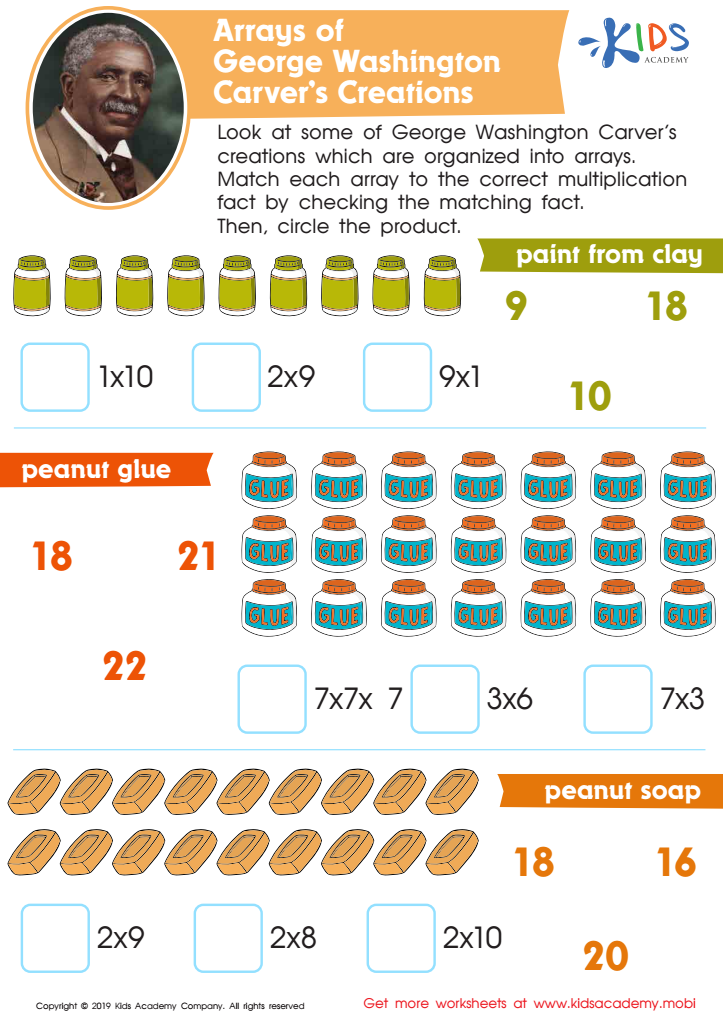
Arrays of George Washington Carver’s Creations Worksheet
 Assign to My Students
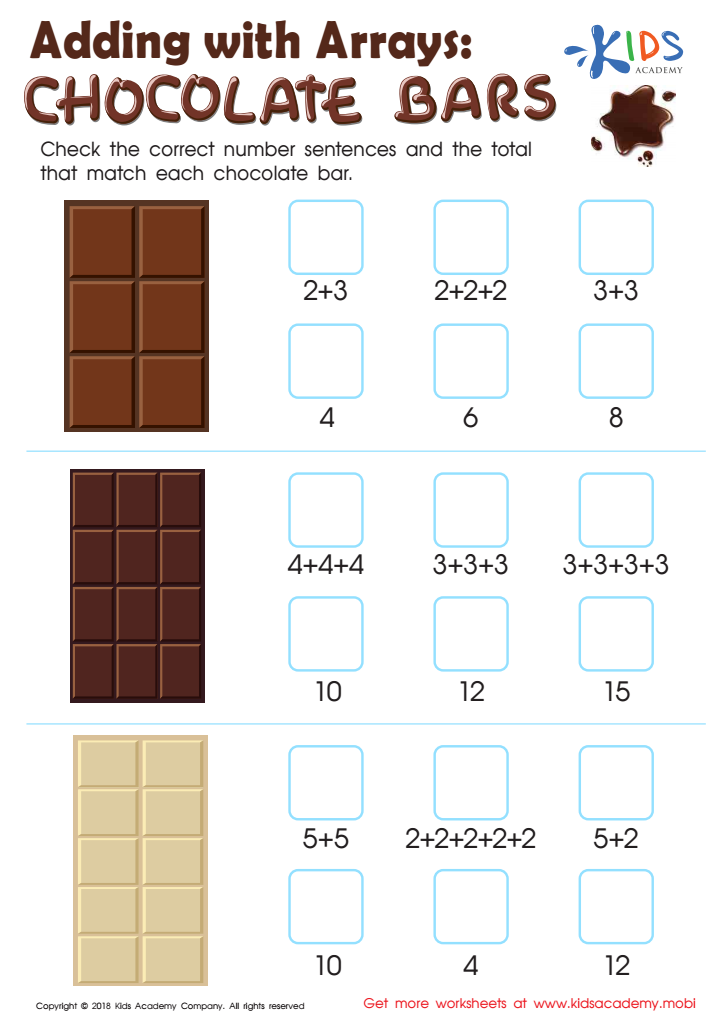
Adding with Arrays: Chocolate Bars Worksheet
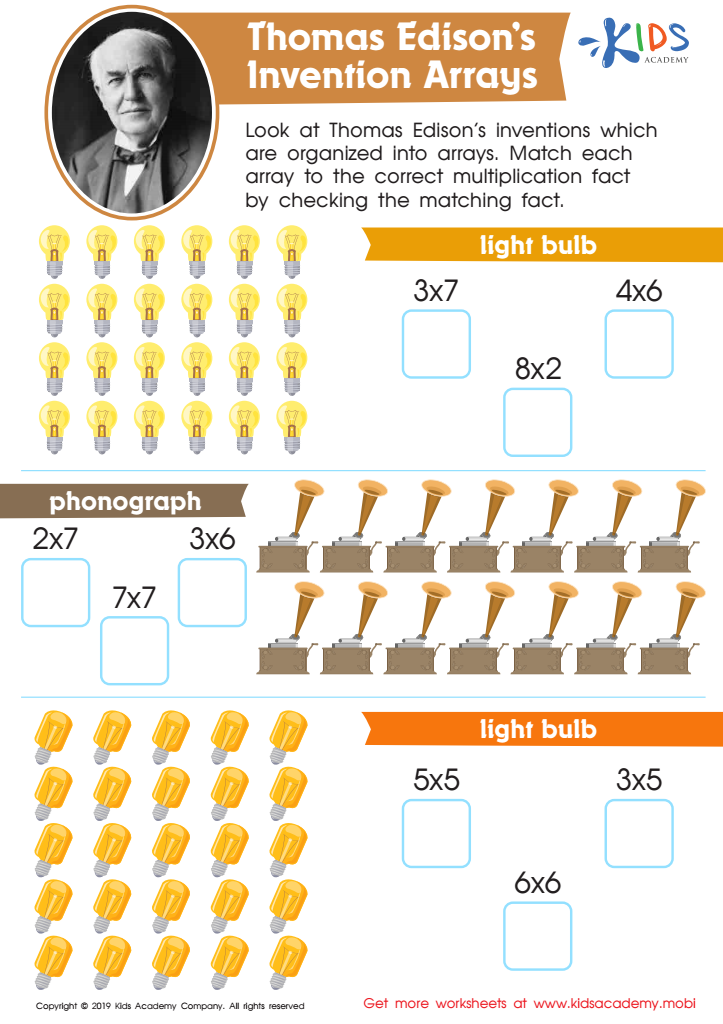
Thomas Edison’s Invention Arrays Worksheet
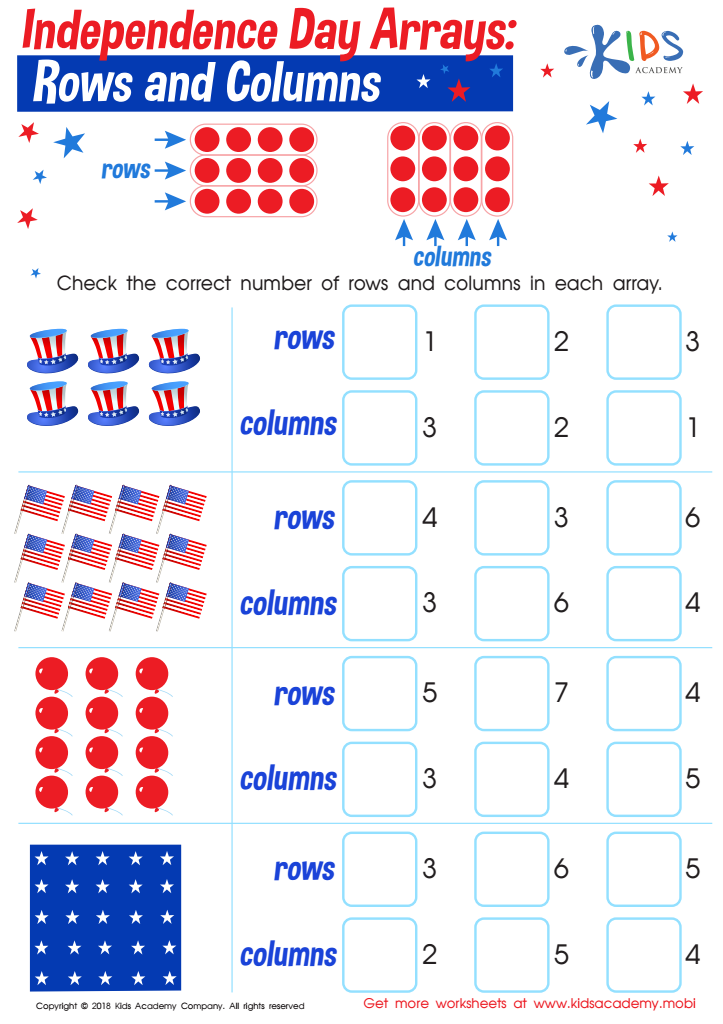
Independence Day Arrays: Rows and Columns Worksheet
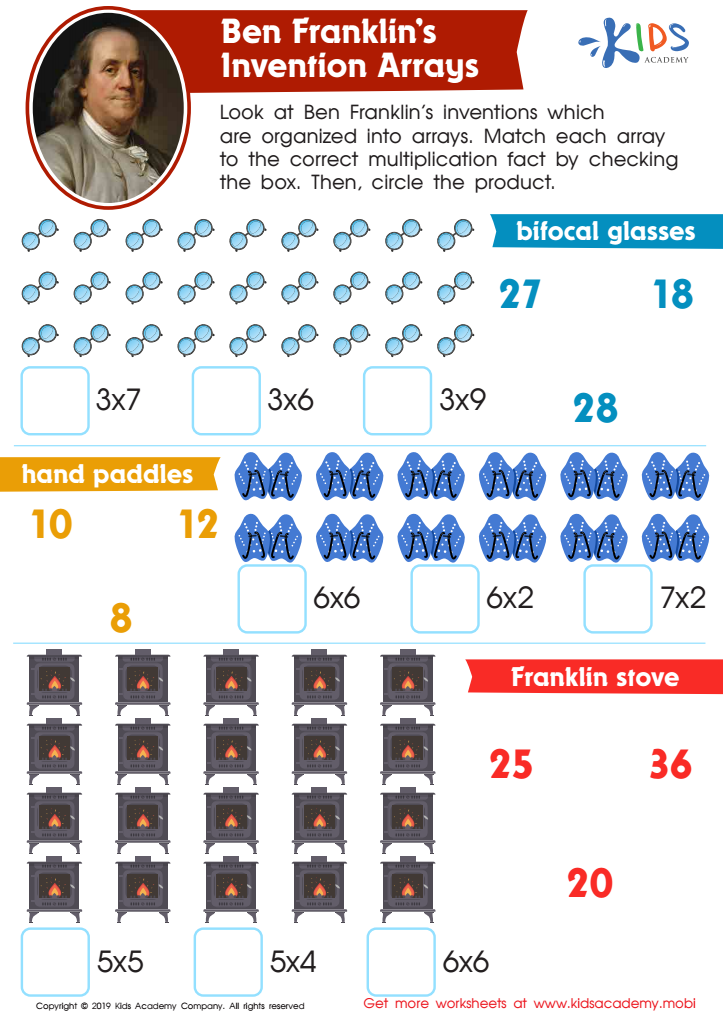
Ben Franklin’s Invention Arrays Worksheet








Reading comprehension is a foundational skill critical for academic success and lifelong learning, particularly for children aged 7-9. During this crucial developmental phase, children transition from learning to read to reading to learn, making reading comprehension arrays an essential tool for enhancing their understanding.
Firstly, reading comprehension arrays engage students in structured, relatable content. This framework allows them to visualize relationships between ideas, enhancing critical thinking and analytical skills. By organizing thoughts and improving comprehension, children gain confidence in their reading abilities, which positively impacts their overall performance across subjects.
Moreover, these arrays foster independent learning. When parents and teachers introduce these tools, they empower children to take ownership of their comprehension, equipping them with strategies to tackle more complex texts as they progress. Observing how children navigate arrays can also provide insights into their thought processes and areas for growth, enabling tailored support.
Furthermore, proficient reading comprehension is crucial in today’s information-rich environment, where literacy extends beyond academic contexts. By investing in these resources, parents and teachers can cultivate a generation of learners capable of critical thought, effective communication, and informed decision-making, laying a solid foundation for future successes.








