Understanding patterns Basic Times Tables up to 12 Worksheets for Ages 7-9
3 filtered results
-
From - To
Explore our "Understanding Patterns: Basic Times Tables up to 12 Worksheets" designed specifically for children aged 7-9. These engaging worksheets help young learners grasp the fundamental concepts of multiplication by recognizing patterns in the times tables. Through fun exercises and visual aids, students will enhance their number sense and build strong mathematical foundations. Each worksheet promotes critical thinking and problem-solving skills, guiding children as they discover how multiplication operates in various scenarios. Empower your child to master their times tables with these educational resources, ensuring a seamless transition to more advanced math concepts. Let the learning adventure begin!
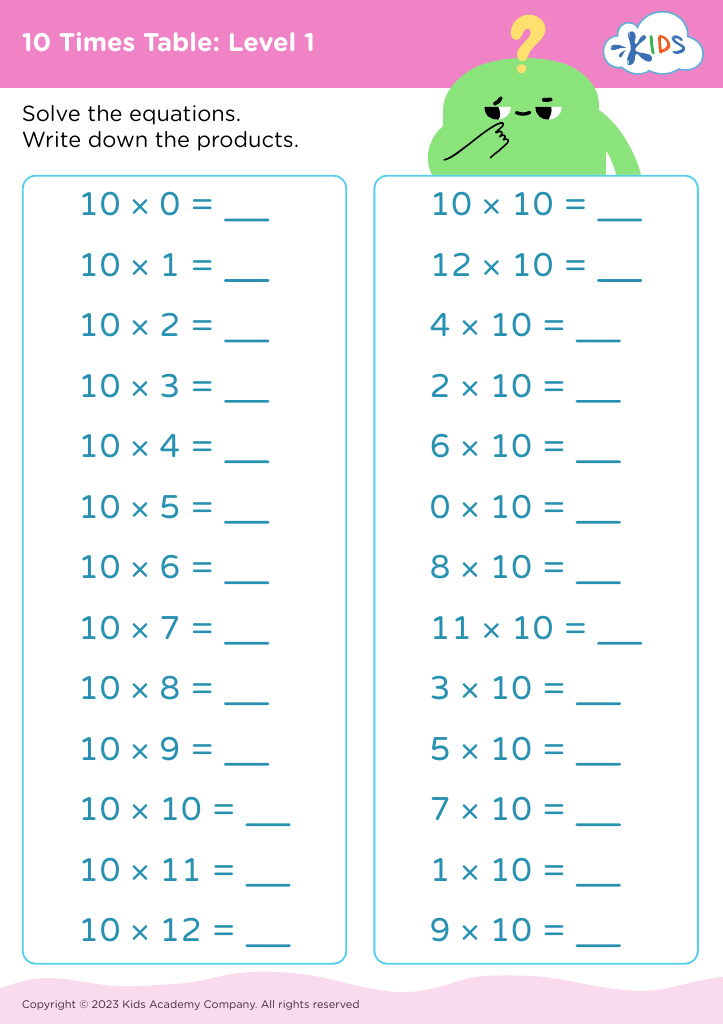
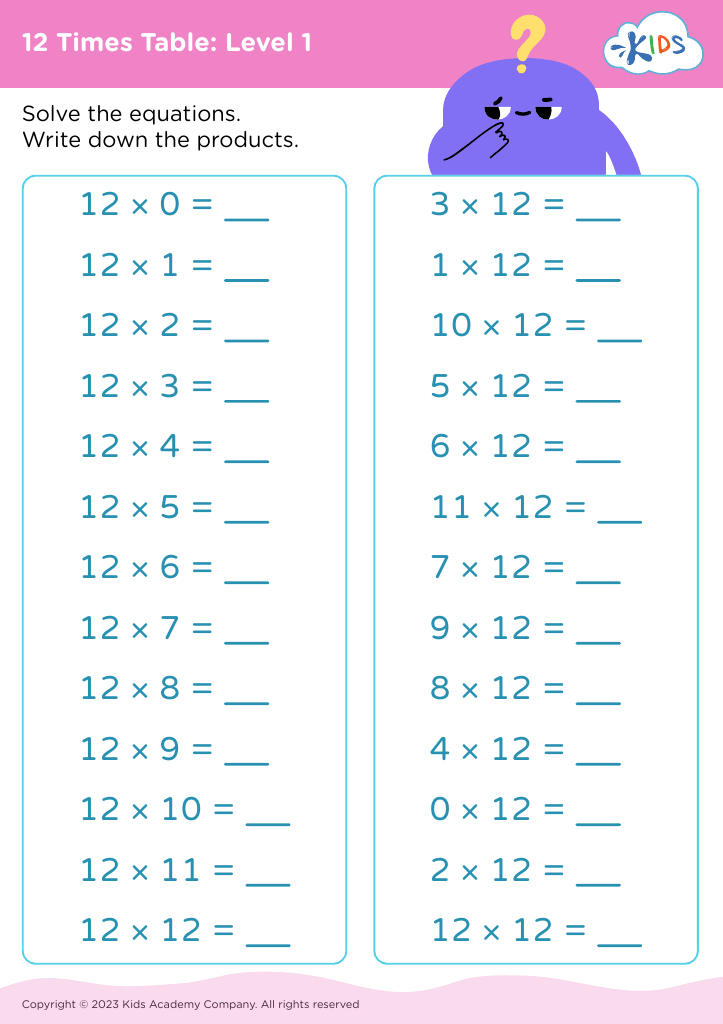
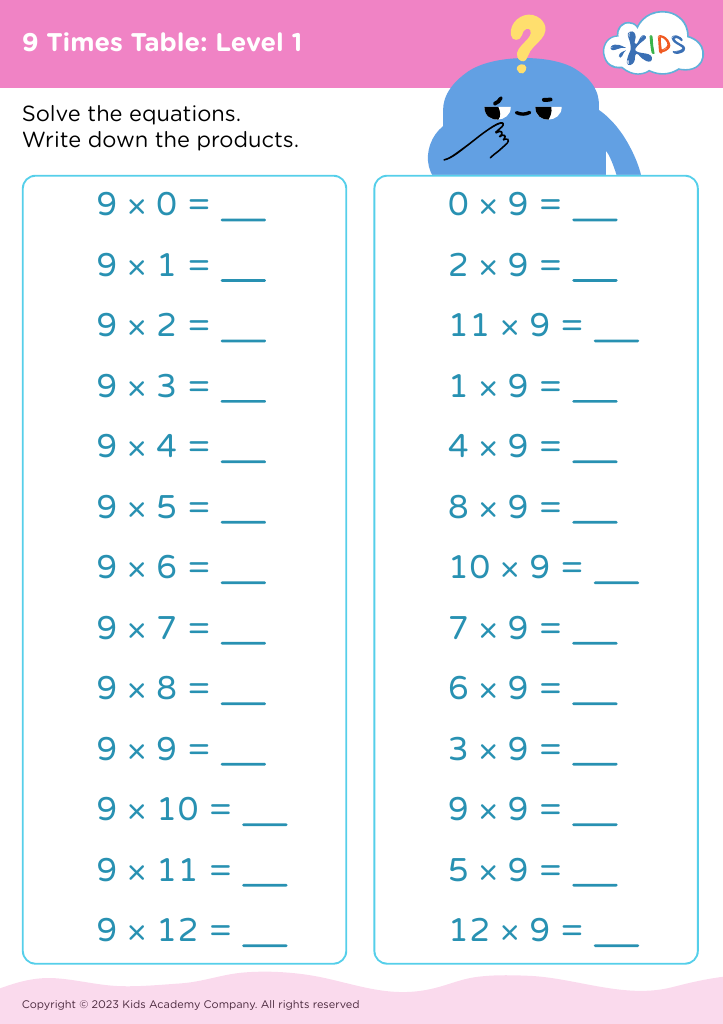


Understanding patterns in basic times tables is crucial for children aged 7-9, as it lays the foundational skills necessary for more complex mathematical concepts in the future. When children learn to recognize patterns, they develop critical thinking skills that enhance their overall learning experience. For instance, noticing that the results of multiplying by 2 are always even helps them make connections between numbers and operation outcomes, thereby strengthening their number sense.
Times tables serve as building blocks for advanced arithmetic, including division and fractions. Mastering multiplication up to 12 not only aids in completing calculations with confidence but fosters a sense of mathematical fluency that is essential in everyday situations, like budgeting and problem-solving. This proficiency can reduce anxiety around math—a common challenge for many students.
Moreover, the mastery of these tables cultivates a growth mindset. When parents and teachers support children in recognizing and practicing these patterns, they encourage persistence and resilience. Ultimately, investing time in understanding basic times tables equips children with essential skills that contribute to their academic success and boosts their self-esteem, which is vital for lifelong learning.








