Financial literacy Money Worksheets for Ages 7-9
4 filtered results
-
From - To
Discover our engaging Financial Literacy Money Worksheets designed for children ages 7-9! These fun, printable resources aim to enrich young minds with essential money management skills. Through interactive activities, kids will learn about counting money, understanding coins and bills, making change, and budgeting basics. Our worksheets promote practical financial knowledge in an age-appropriate manner, empowering children to become responsible decision-makers. Ideal for classroom settings or at-home learning, these resources foster critical thinking and reinforce essential math concepts while preparing children for a financially literate future. Start building your child's confidence in handling money with the support of our delightful worksheets!
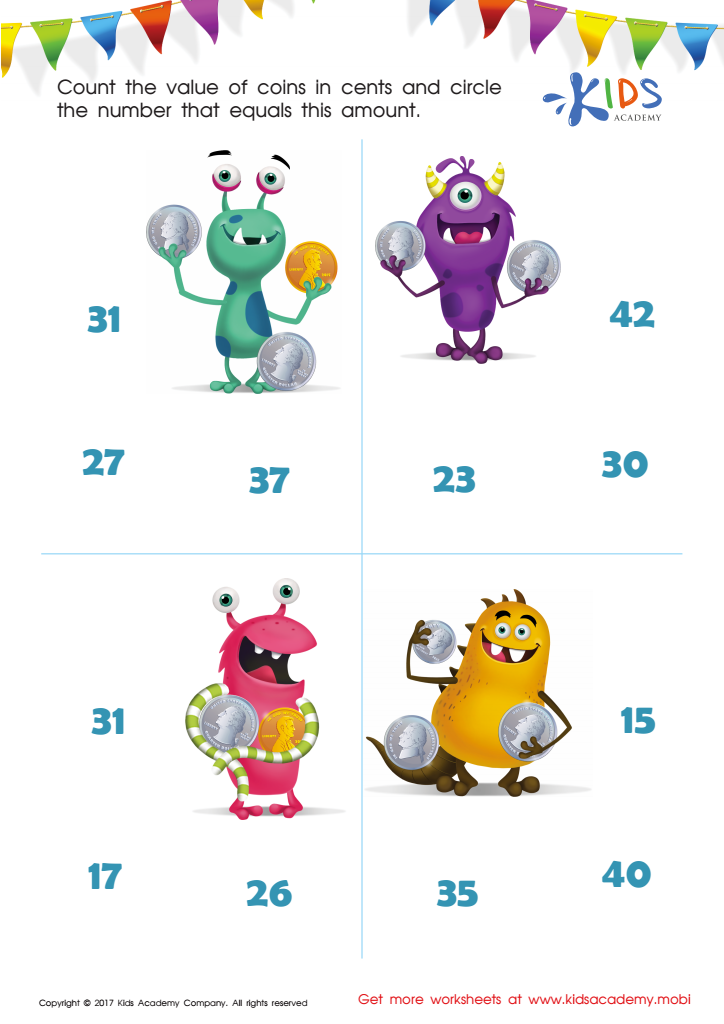
How Many Coins Money Worksheet
 Assign to My Students
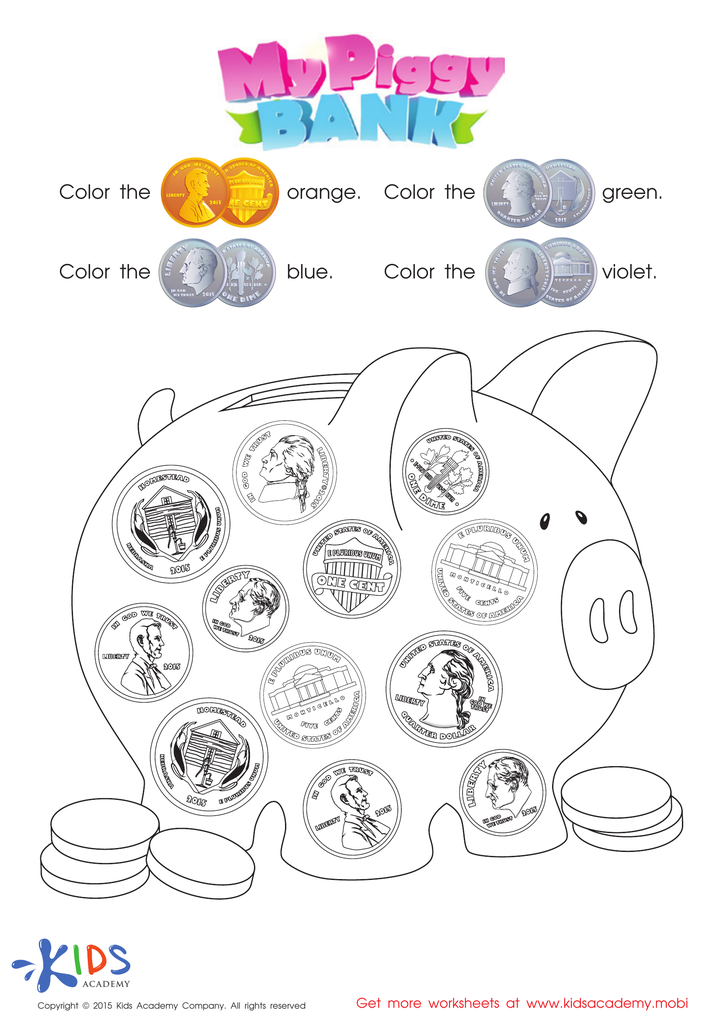
Recognizing Money Money Worksheet
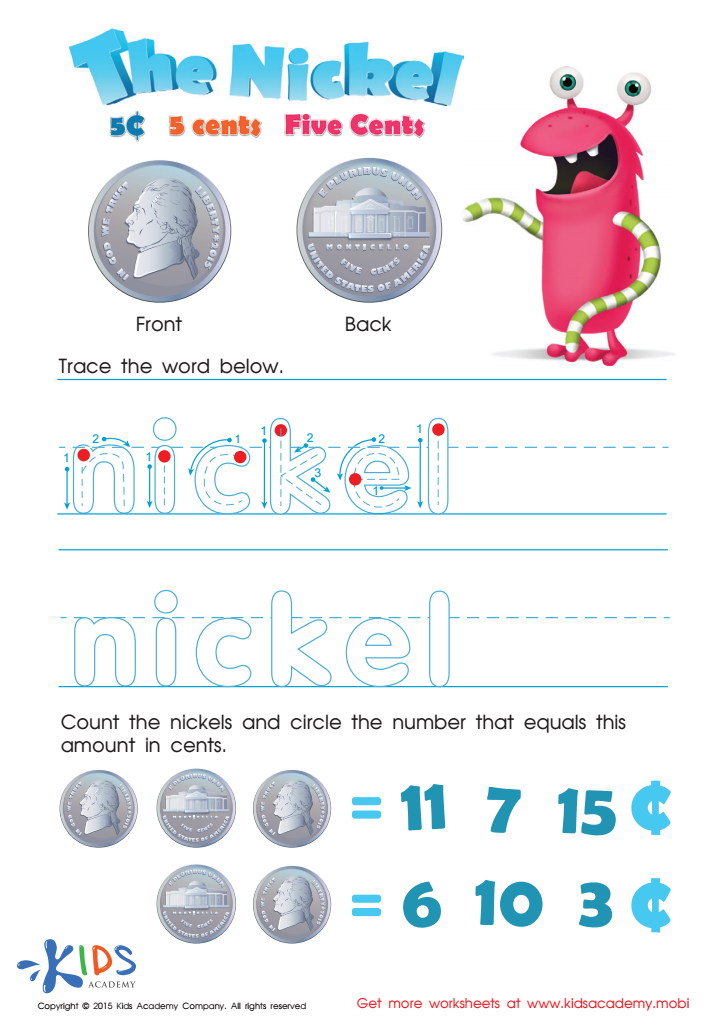
Five Cents or the Nickel Money Worksheet
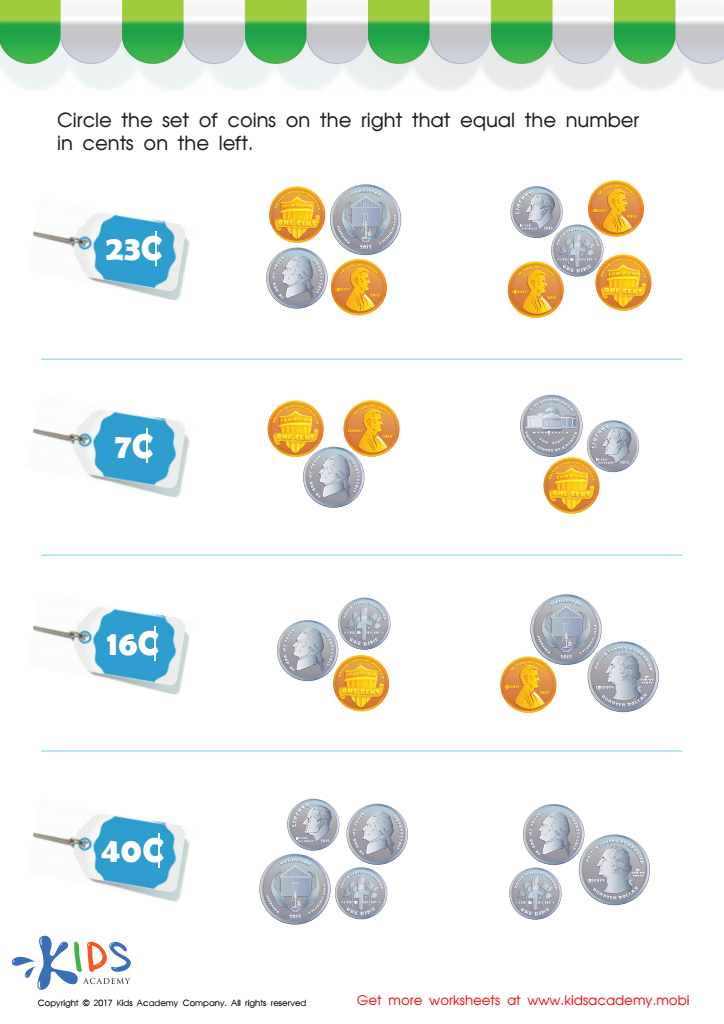
Picking the Coins You Need Money Worksheet








Financial literacy is crucial for children aged 7-9 as it lays the groundwork for smart money management in adulthood. At this age, children are beginning to understand the value of money, making it an ideal time to introduce concepts like saving, spending, and budgeting. When parents and teachers prioritize financial literacy, they empower children to develop healthy financial habits early on.
Financial skills foster independence and confidence. By learning to make informed choices about money, children can grasp the importance of saving for future goals or making wise spending decisions. These skills also help them understand the consequences of debt and the benefits of living within one's means.
Moreover, equipping children with financial knowledge encourages critical thinking and decision-making. It opens discussions about wants versus needs, helping children prioritize and make responsible choices. Parents and teachers can use real-life scenarios, like managing allowances or spending their money, to teach these lessons effectively.
In a world where financial literacy is becoming increasingly vital, fostering these skills in young children ensures they grow into economically responsible adults, capable of navigating financial challenges confidently. As stakeholders in their education and future, both parents and teachers play a pivotal role in this essential aspect of life skills.








