Visual representation comprehension Fractions of Shapes Worksheets for Ages 7-9
3 filtered results
-
From - To
Discover engaging Visual Representation Comprehension Worksheets focused on Fractions of Shapes, designed for children ages 7-9. These worksheets help young learners enhance their understanding of fractions through visual aids and hands-on activities. Students will explore various shapes divided into equal parts, sharpening their skills in recognizing and interpreting fractions. With colorful illustrations and interactive exercises, children will develop essential mathematical concepts while having fun! Ideal for reinforcing classroom lessons or as additional practice at home, these worksheets provide a solid foundation for future math success. Foster a love for learning and strengthen comprehension skills with our engaging and educational resources.
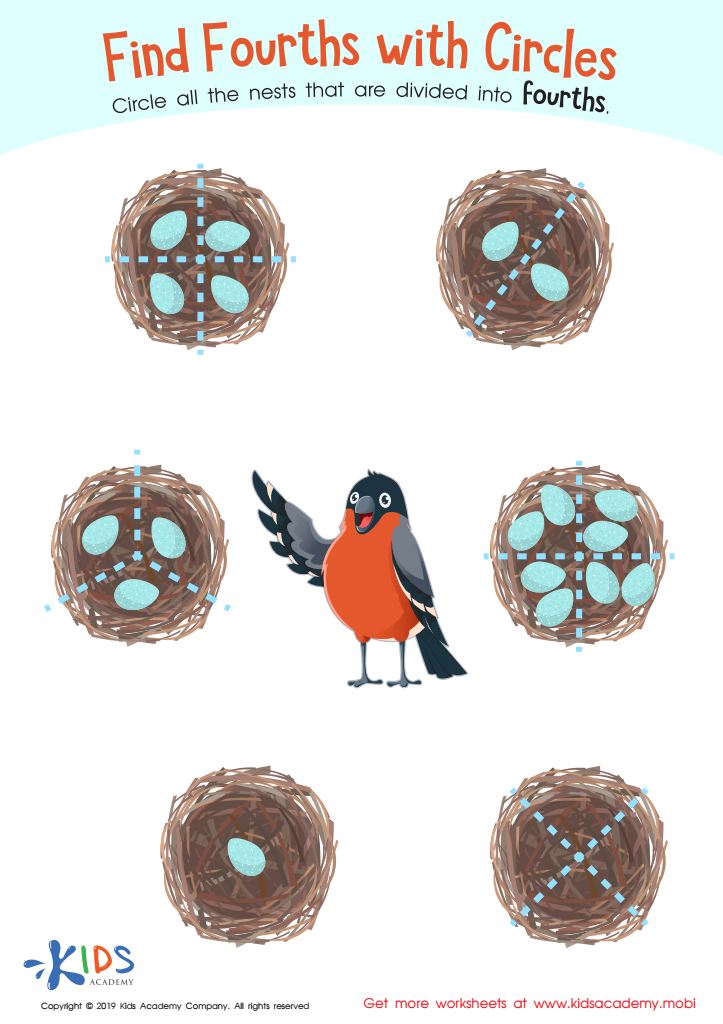
Find Fourths Circles Worksheet
 Assign to My Students
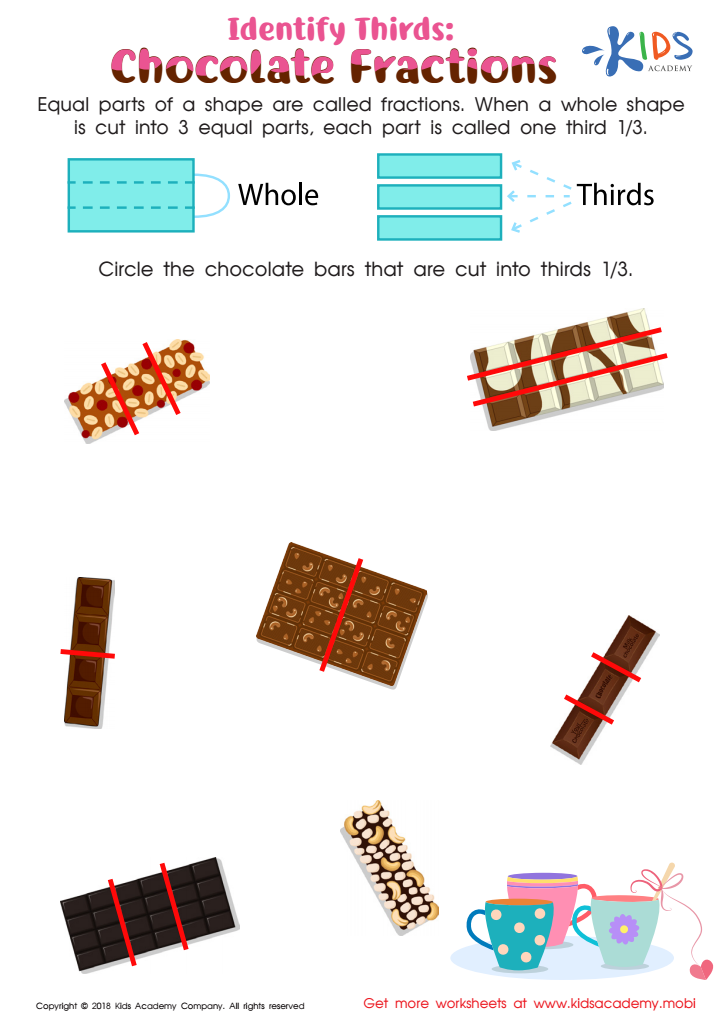
Identify Thirds: Chocolate Fractions Worksheet
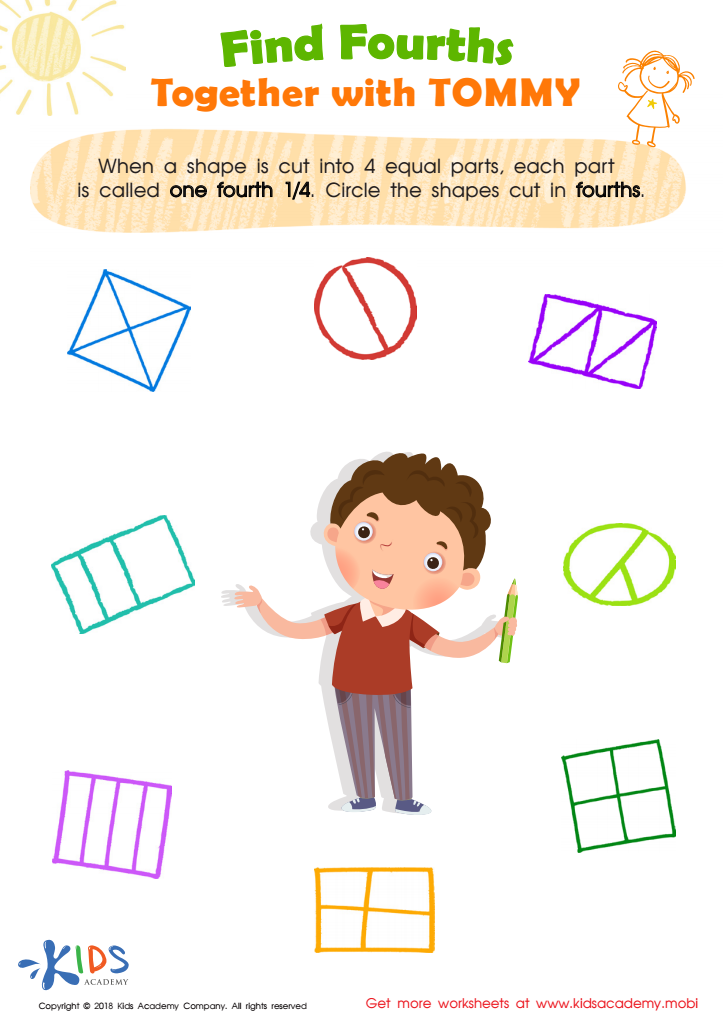
Find Fourths Together with Tommy Worksheet








Understanding visual representation comprehension of fractions, especially of shapes, is crucial for children aged 7-9 as it lays the foundation for their mathematical learning and problem-solving skills. At this age, children are experiencing significant cognitive growth, and representing fractions through visuals helps them conceptualize abstract ideas. By associating fractions with shapes—such as pie charts or area divisions—students can better grasp how parts relate to a whole.
Parents and teachers should recognize that this understanding is essential not just for mathematics but for developing critical thinking and spatial reasoning. Engaging with visual representations allows children to explore solving not just fraction problems but a variety of mathematical concepts through a more intuitive method, fostering curiosity and enhancing retention.
Additionally, fractional understanding impacts real-life decision-making and problem-solving scenarios. Whether using fractions in cooking, distributing items, or measuring, contemplating shapes visually provides a practical insight into the application of math in everyday life.
Encouraging mastery of visual fractions equips children with skills that build their confidence, empower them to tackle more complex mathematical challenges, and support overall academic achievement. Thus, promoting visual representation comprehension is a worthwhile investment in a child’s educational journey.