Data analysis Graphs Worksheets for Ages 7-9
3 filtered results
-
From - To
Discover our engaging Data Analysis Graphs Worksheets designed specifically for children ages 7 to 9! These interactive resources help young learners develop essential skills in interpreting and analyzing data through fun activities involving bar graphs, pictographs, and pie charts. Our worksheets promote critical thinking while making mathematics enjoyable. Ideal for classrooms and homework, each activity encourages kids to gather information, create their graphs, and draw conclusions. With colorful visuals and easy-to-follow instructions, these worksheets ensure that children build a strong foundation in data analysis, preparing them for future academic success. Start exploring the world of data today!
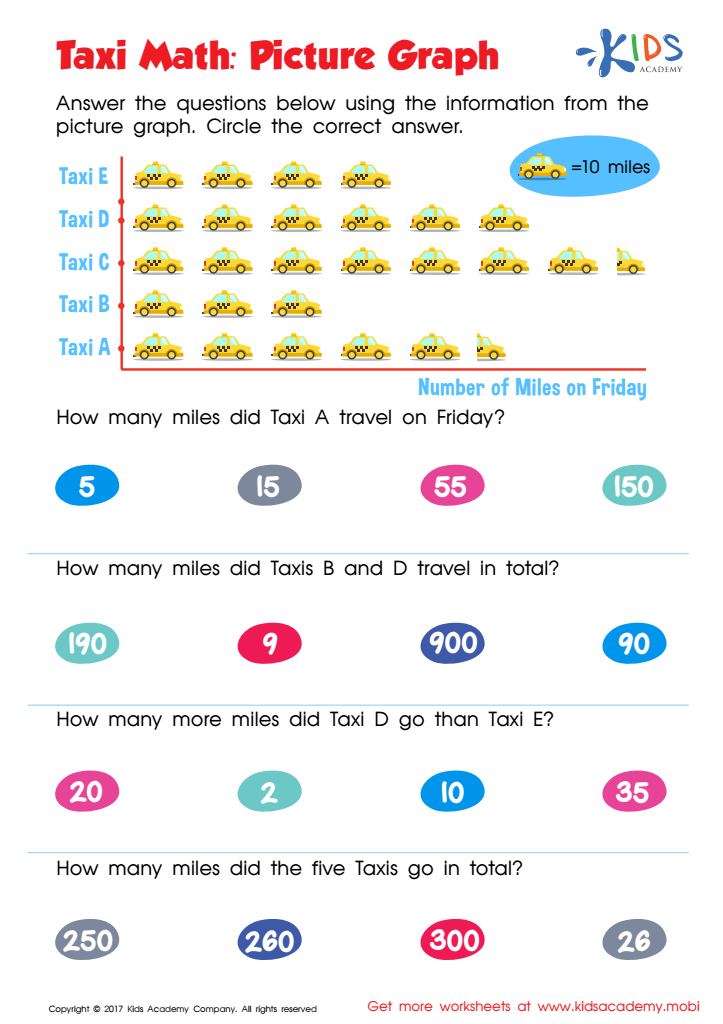
Taxi Math Worksheet
 Assign to My Students
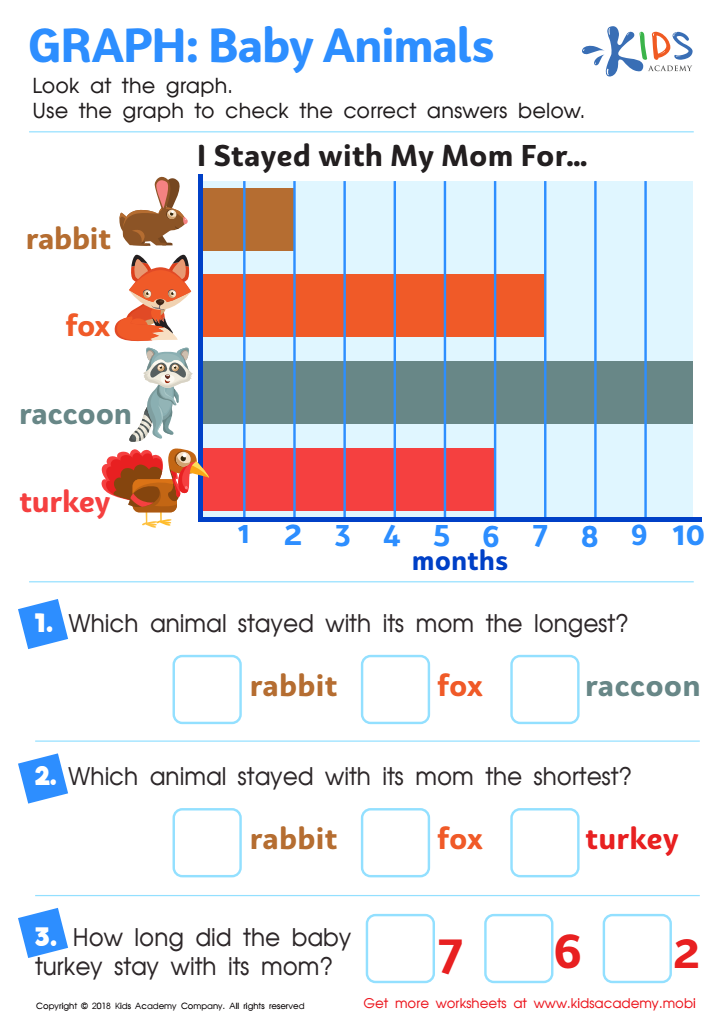
Graph: Baby Animals Worksheet
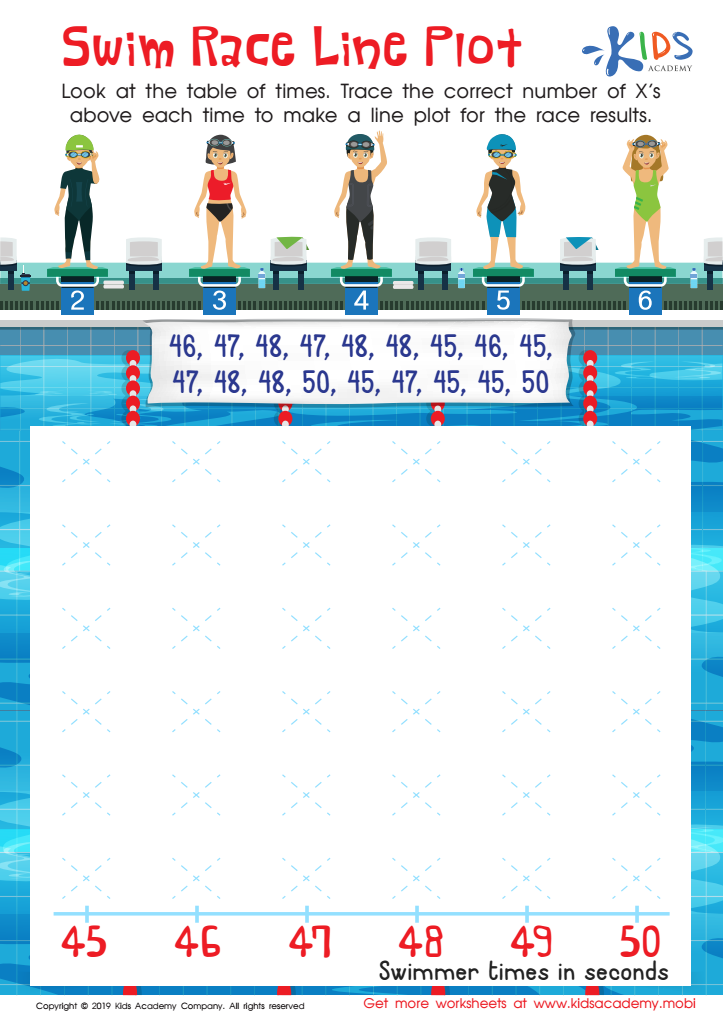
Swim Race Line Plot Worksheet








Parents and teachers should care about data analysis graphs for children aged 7-9 because these tools foster essential skills for academic growth and everyday life. At this developmental stage, children's cognitive abilities are expanding, and they begin to think critically and make connections. Learning to interpret data through graphs enhances their analytical thinking, enabling them to derive insights from information.
Graphs simplify complex data, making it easier for young learners to understand trends and patterns. This skill is invaluable for subjects like mathematics and science, where data interpretation is frequently required. Additionally, engaging with graphs promotes discussions around numerical relationships, comparisons, and predictions, which can enhance language development and reasoning skills.
Furthermore, introducing children to data analysis cultivates curiosity and encourages inquiry-based learning. When children visualize information, they are more likely to engage with the content, sparking interest in subjects like math and statistics that they may otherwise find daunting.
Ultimately, fostering an early understanding of graphs empowers children to become informed decision-makers and adept problem-solvers, preparing them for more complex academic challenges in the future. Supporting this learning helps instill a love for data, laying the ground for lifelong skills crucial in our increasingly data-driven world.








