Shape Recognition Numbers Worksheets for Ages 7-9
3 filtered results
-
From - To
Our "Shape Recognition Numbers Worksheets for Ages 7-9" are expertly designed to combine fun and learning for young students. These engaging worksheets help children recognize numbers and shapes, enhancing their visual-spatial skills and number sense. Each activity promotes critical thinking and problem-solving through interactive exercises. Ideal for classroom or home use, these printables boost confidence in math through enjoyable practice. Tailored for ages 7-9, our worksheets provide a solid foundation in early numeracy and geometric concepts, ensuring young learners develop essential math skills in an entertaining and effective way. Start shaping your child's future in math today!
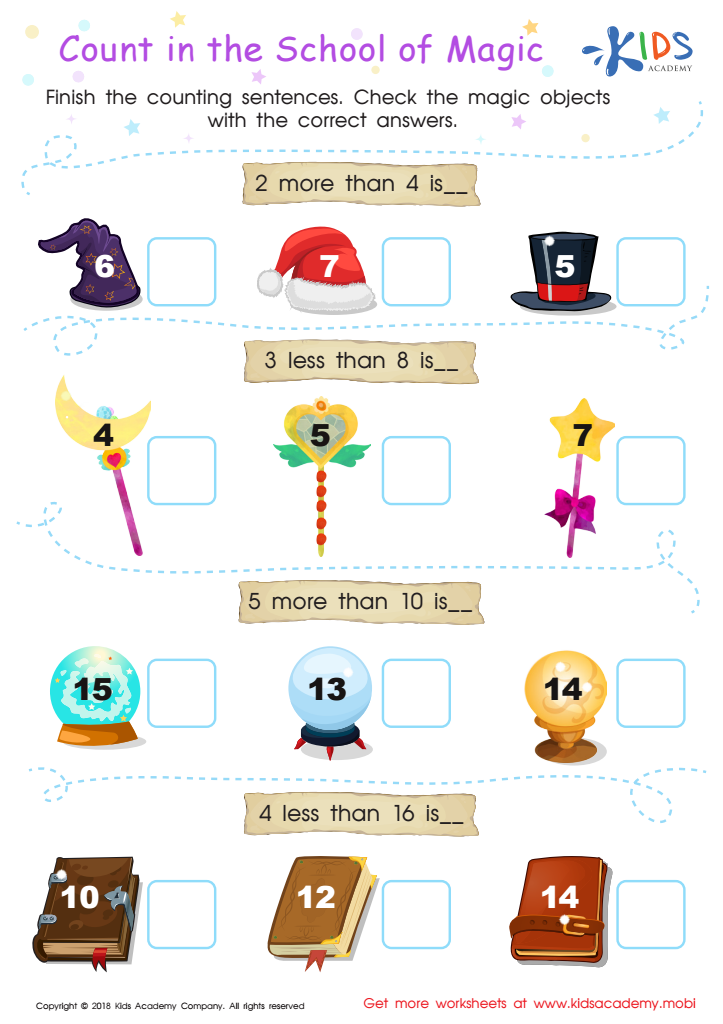
Count in the School of Magic Worksheet
 Assign to My Students
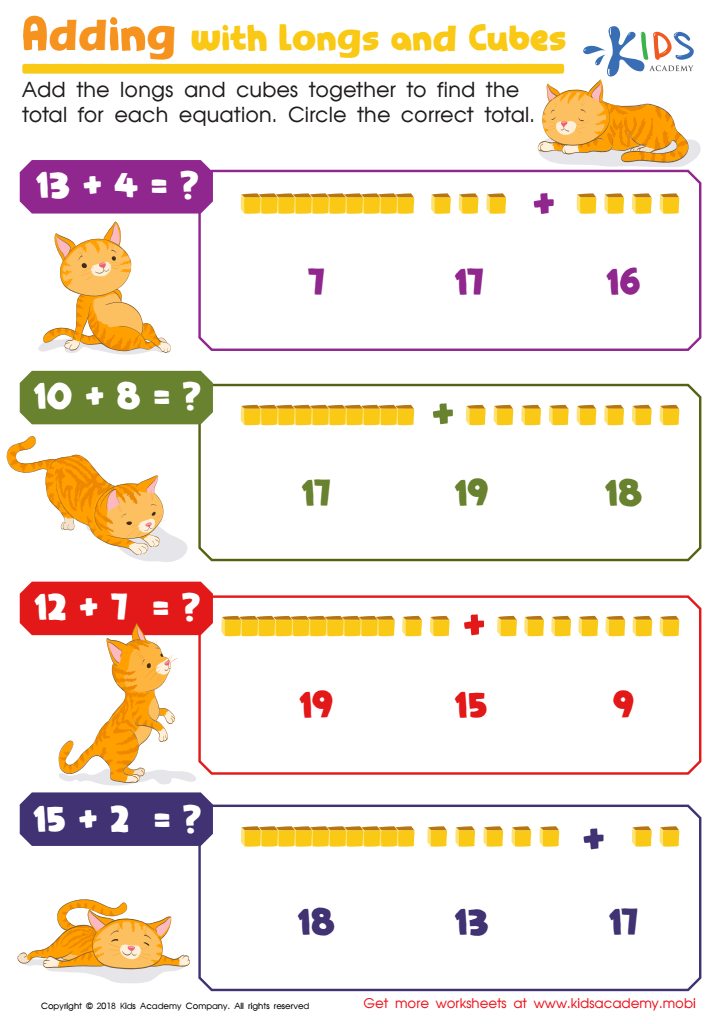
Adding With Longs and Cubes Worksheet
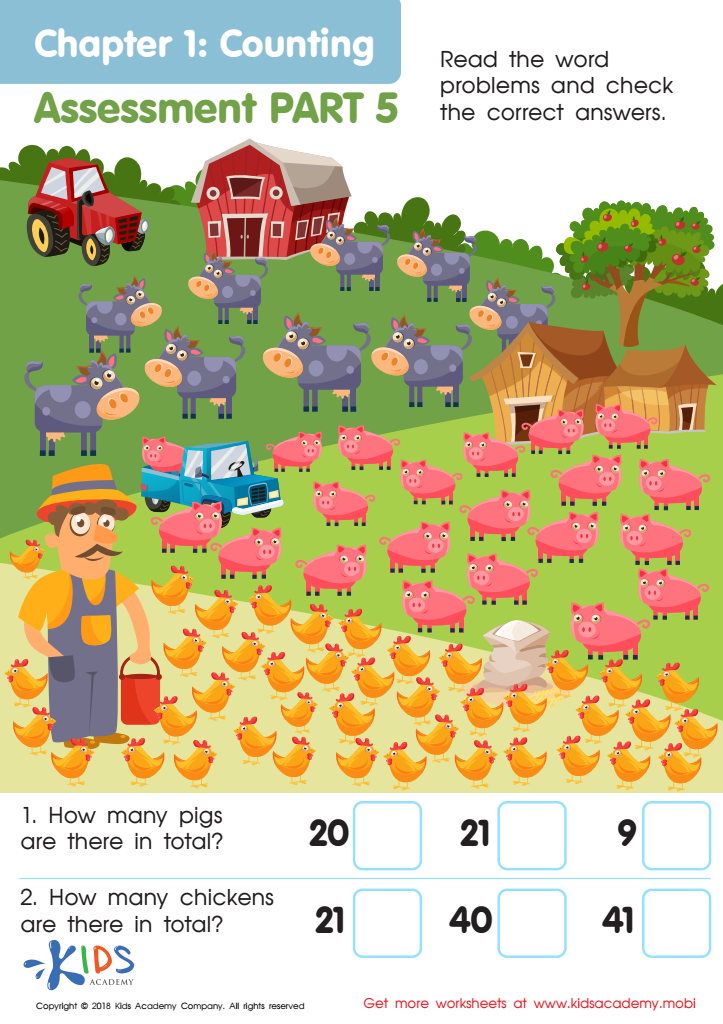
Counting: Assessment 5 Worksheet








Shape recognition and numbers are foundational components of early mathematics and cognitive development. Teaching children aged 7–9 about shape recognition numbers enriches their understanding of both geometry and arithmetic, addressing key learning areas and enhancing overall problem-solving skills.
Firstly, shape recognition nurtures spatial awareness. When children learn to identify and differentiate between various shapes, they develop the ability to comprehend and navigate their physical world. This spatial awareness is crucial for tasks such as reading maps, understanding patterns, and even in activities like sports.
Secondly, merging shape recognition with numbers fosters mathematical skills. Associating shapes with numbers introduces children to concepts like symmetry, measurement, and area calculation. For instance, identifying a square and knowing it has four sides naturally leads into understanding simpler concepts of perimeter and area.
Additionally, shape number recognition bolsters cognitive abilities and critical thinking. It encourages children to observe and analyze patterns, enhancing their logical reasoning skills. This mental exercise translates to better academic performance across subjects, including science and arts.
Lastly, it offers practical life skills. Recognizing shapes and their properties is applicable in various real-life scenarios, including cooking (measuring ingredients) and construction (understanding blueprints).
In summary, emphasizing shape recognition numbers equips children aged 7–9 with essential mathematical understanding, improves cognitive functions, and provides practical skills crucial for daily life.








