Addition Practice Math Worksheets for Ages 7-9 - Page 5
100 filtered results
-
From - To
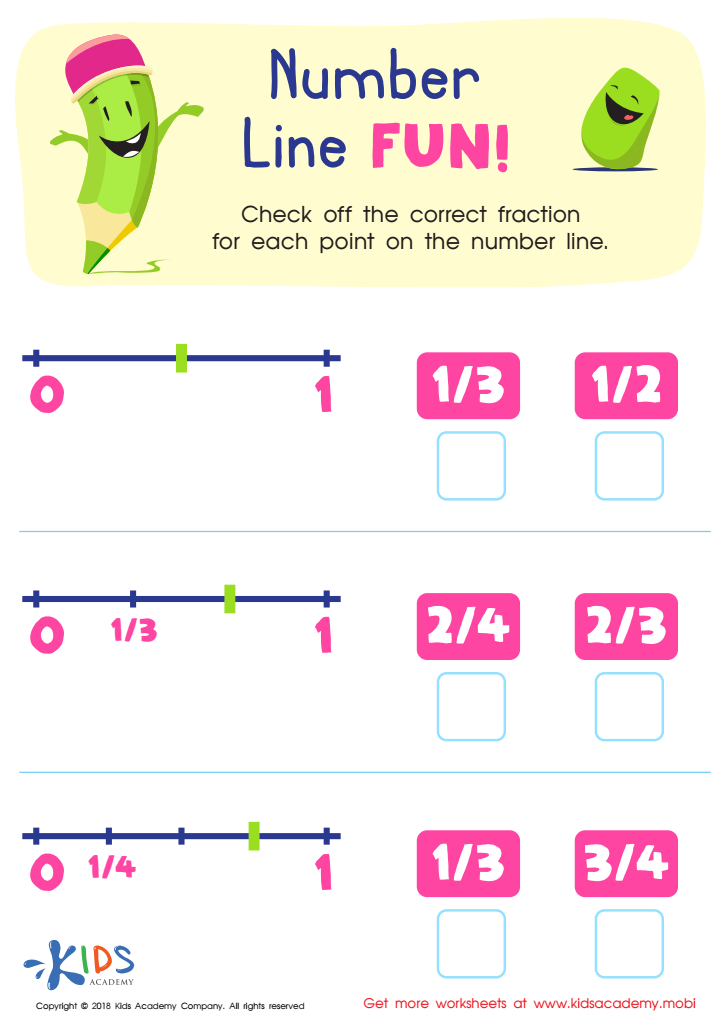
Number Line Fun Worksheet
 Assign to My Students


.jpg)




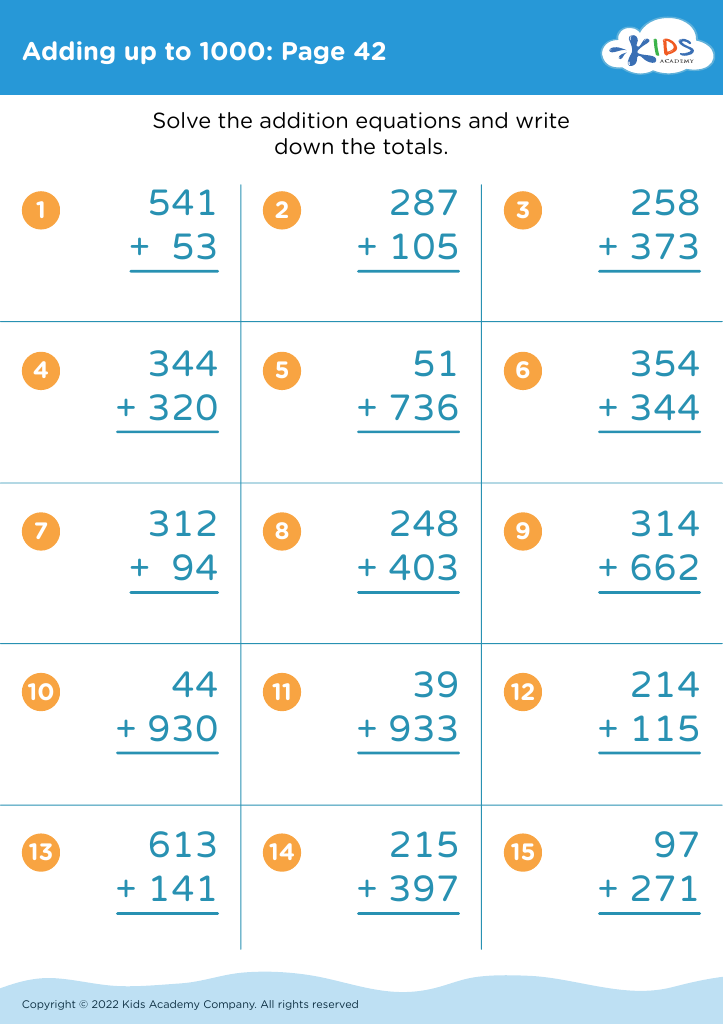
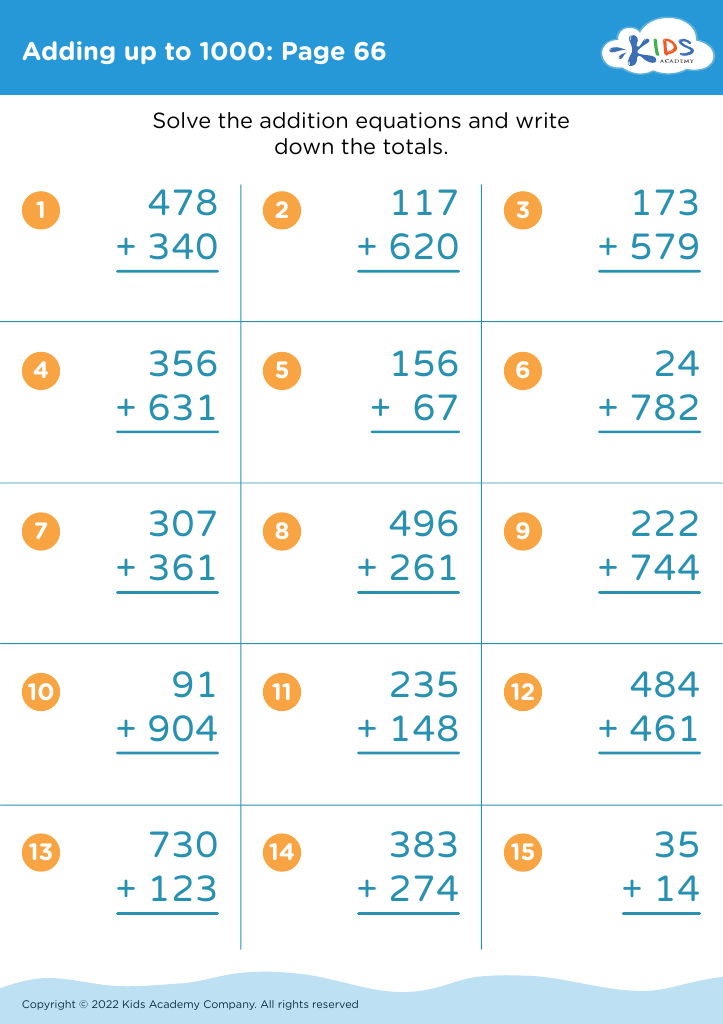
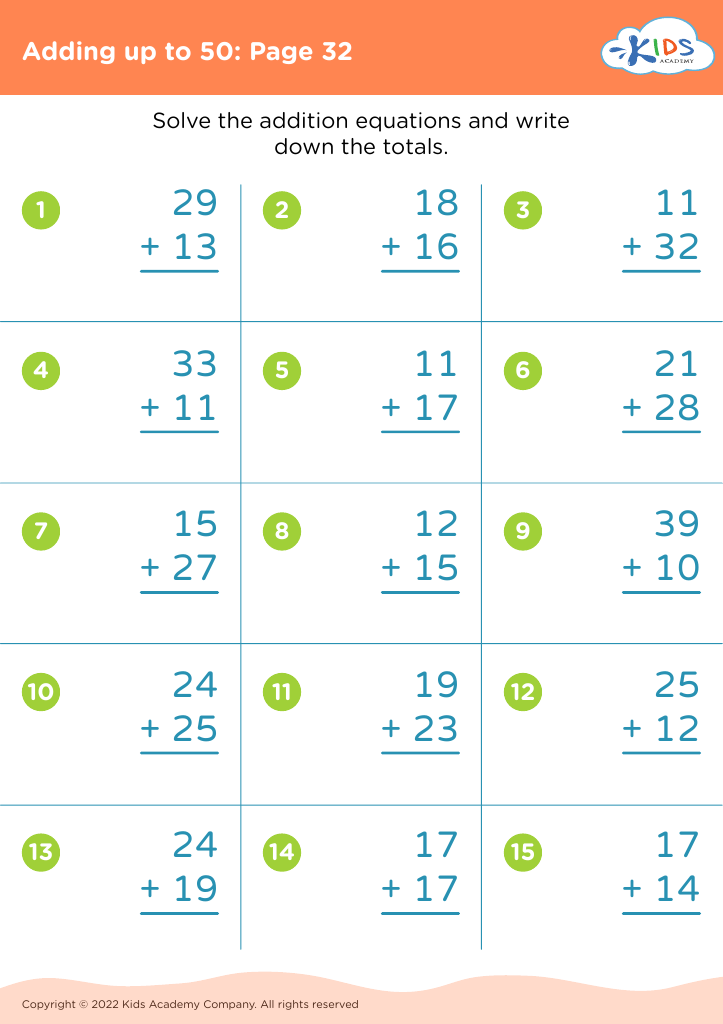
Addition practice for children aged 7-9 is crucial for their cognitive development and foundational math skills. At this age, children are transitioning from basic arithmetic to more complex problem-solving tasks. Mastery of addition provides a solid groundwork for future math concepts such as multiplication, division, and even early algebra.
Practicing addition helps to reinforce numerical fluency, enabling children to perform calculations quickly and accurately, which is essential for mathematical confidence and competence. Furthermore, consistent practice helps to instill persistence and discipline as children learn to tackle challenging problems.
Encouraging a supportive environment for math practice can also help reduce math anxiety, promoting positive attitudes toward the subject. Engaging in addition games or activities can make learning enjoyable, encouraging healthy competition among peers and enhancing collaboration skills.
Moreover, strong addition skills are not just academically beneficial but are also useful in daily life situations, such as budgeting or cooking, empowering children to apply math in practical scenarios. Overall, supporting addition practice not only enhances academic performance but also builds confidence, critical thinking, and essential life skills that will serve children well into the future.








