Analog Clock Understanding Math Worksheets for Ages 7-9
3 filtered results
-
From - To
Explore our vibrant and engaging "Analog Clock Understanding Math Worksheets" designed specifically for children ages 7-9. These worksheets provide an interactive way for young learners to grasp the fundamental concepts of telling time on an analog clock. Through a variety of fun and creative exercises, students will enhance their skills in reading clock faces, understanding minute and hour hand movements, and solving time-related problems. Perfect for classroom or home use, these worksheets encourage independent learning while reinforcing essential math competencies. Help your child master telling time with our comprehensive resources, making learning both enjoyable and effective!
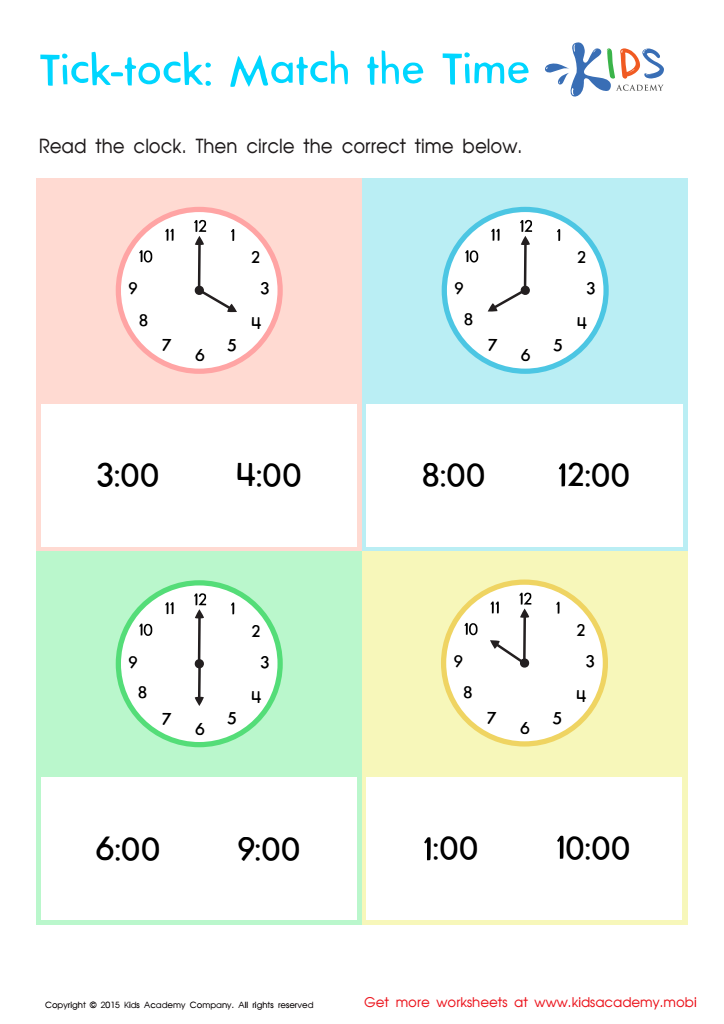
Telling The Time Worksheet: Part 4
 Assign to My Students
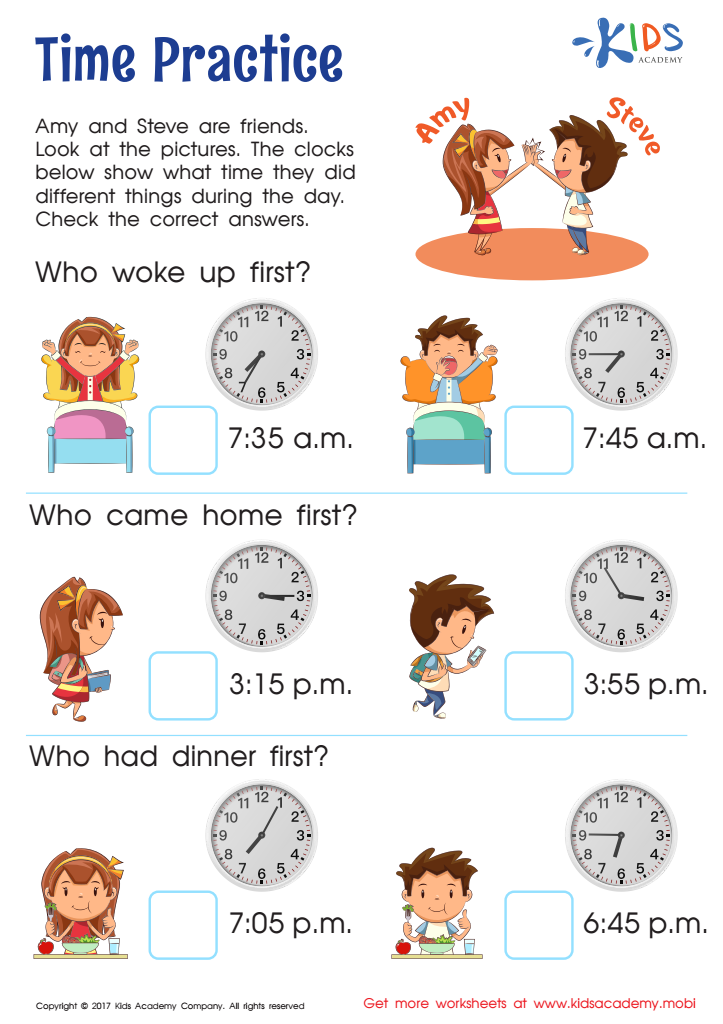
Time Practice Worksheet
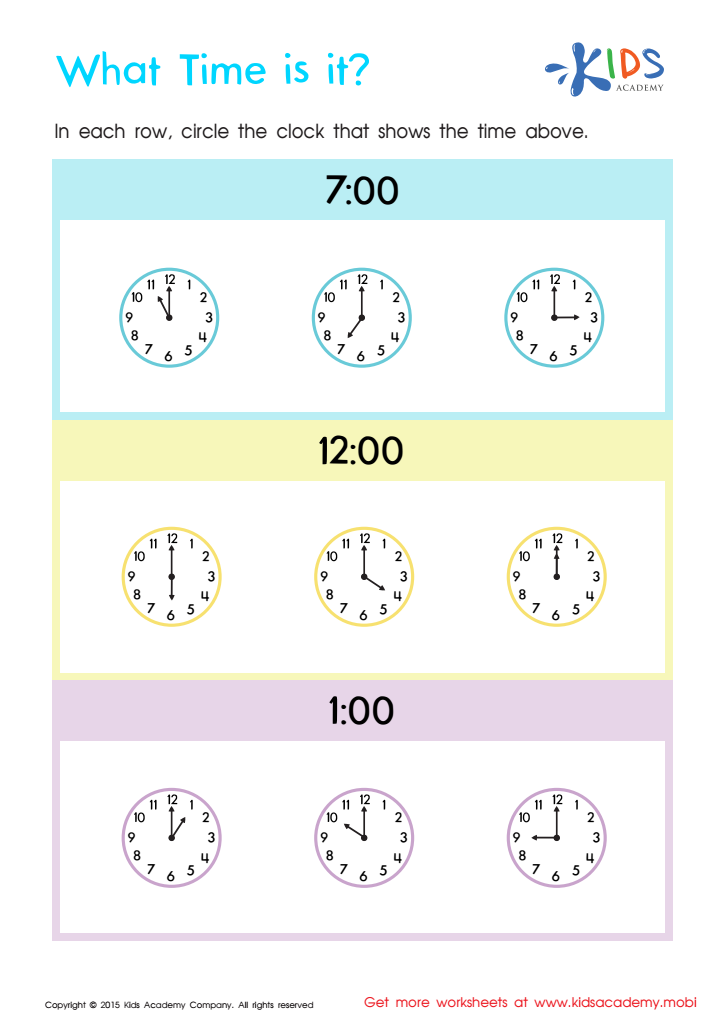
Telling The Time Worksheet: Part 3






%20(1).jpg)
Understanding analog clocks is essential for children aged 7 to 9 as it serves multiple educational and practical purposes. First, it enhances their mathematical skills, particularly in concepts of time, fractions, and division. Learning to read an analog clock helps children understand the divisions of the hour—12 divisions for hours and 60 for minutes. This foundational knowledge fosters a deeper comprehension of numbers and their relationships.
Furthermore, being able to read an analog clock empowers children in their daily lives. It cultivates self-sufficiency, as students can manage their time for various activities, whether it's transitioning between classes or completing homework. This time management skill contributes to their overall academic success and personal responsibility.
Analog clock learning also nurtures critical thinking and problem-solving skills. Children must engage in visual and spatial reasoning to decipher the position of the hands and tell time accurately, a cognitive process that benefits them across other subjects.
Finally, this understanding bridges a generational gap, as many adults still prefer analog clocks. By teaching children this skill, parents and educators foster communication and connection within families. Thus, emphasis on this learning area is vital for holistic development.








