Artistic Expression Math Worksheets for Ages 7-9
3 filtered results
-
From - To
Discover the joy of learning with our Artistic Expression Math Worksheets for Ages 7-9 by Kids Academy. These engaging printable worksheets masterfully combine creativity and education, designed to enhance math skills while fostering a love for art. Children will explore fundamental math concepts through vibrant activities that promote critical thinking, problem-solving, and artistic expression. Perfect for both classroom and home use, our worksheets provide a fun, interactive way to develop multiplication, division, geometry, and more. Encourage your child’s mathematical journey and creativity today with Kids Academy's expertly crafted resources. Download and start their adventure now!
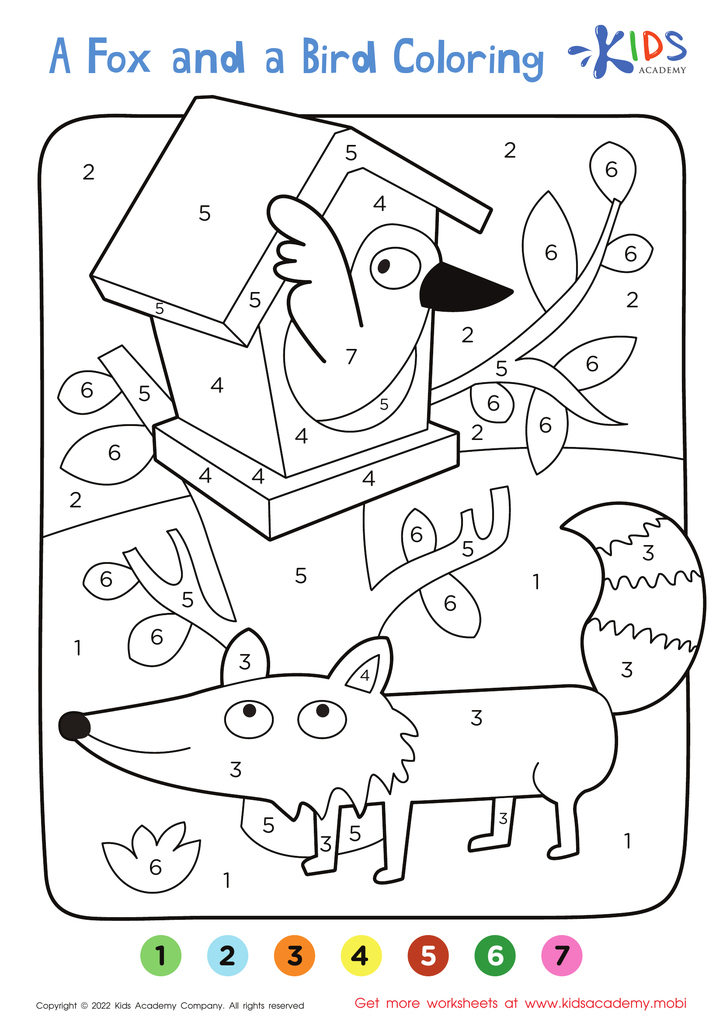
A Fox and a Bird – Coloring by Numbers






Artistic Expression Math integrates creativity into learning, making it especially impactful for children aged 7-9. This age is crucial for cognitive and emotional development, and incorporating art with math can significantly enhance these areas.
Firstly, Artistic Expression Math promotes engagement and motivation. Children in this age group often learn best through play and creativity. Combining artistic activities with math problems helps maintain their interest and makes learning more fun. This approach can reduce math anxiety, fostering a more positive attitude towards learning numbers and solving problems.
Secondly, it supports multiple learning styles. Not all children grasp mathematical concepts through traditional methods. Visual learners, for example, can better understand geometry and spatial concepts through drawing and modeling. Kinesthetic learners benefit from hands-on activities like building shapes or painting patterns, making abstract concepts more tangible.
Moreover, Artistic Expression Math enhances critical thinking and problem-solving skills. Creating art requires planning, pattern recognition, and symmetry – all important mathematical principles. This dual engagement can help children see the real-world application of mathematics, making abstract concepts more concrete.
Lastly, it nurtures emotional and social development by encouraging self-expression and collaboration. Collaborative projects in Artistic Expression Math teach children teamwork and communication skills, which are vital for their overall development.
In essence, integrating art with math makes learning dynamic, ensuring that educational experiences are enjoyable, inclusive, and effective.








