Basic measurement skills Math Worksheets for Ages 7-9
3 filtered results
-
From - To
Enhance your child's foundational math abilities with our engaging Basic Measurement Skills Worksheets, designed specifically for ages 7-9. These worksheets cover essential concepts such as length, weight, and volume, making measurement fun and accessible. Each activity fosters critical thinking and problem-solving skills, enabling students to grasp measurements through hands-on practice. Tailored to cater to diverse learning styles, our worksheets incorporate colorful illustrations and practical examples. Ideal for classroom use or at-home learning, these resources promote confidence and independence in measurement tasks. Support your child's math journey today with our comprehensive collection of measurement worksheets that encourage exploration and mastery!
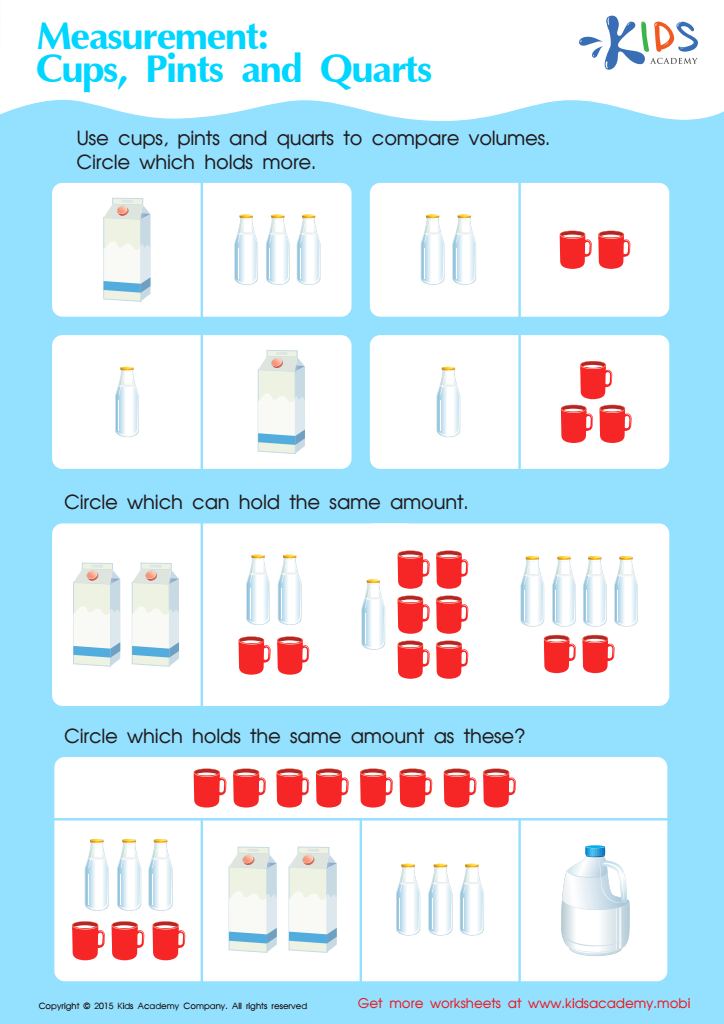
Measurement: Compare Volumes Worksheet
 Assign to My Students
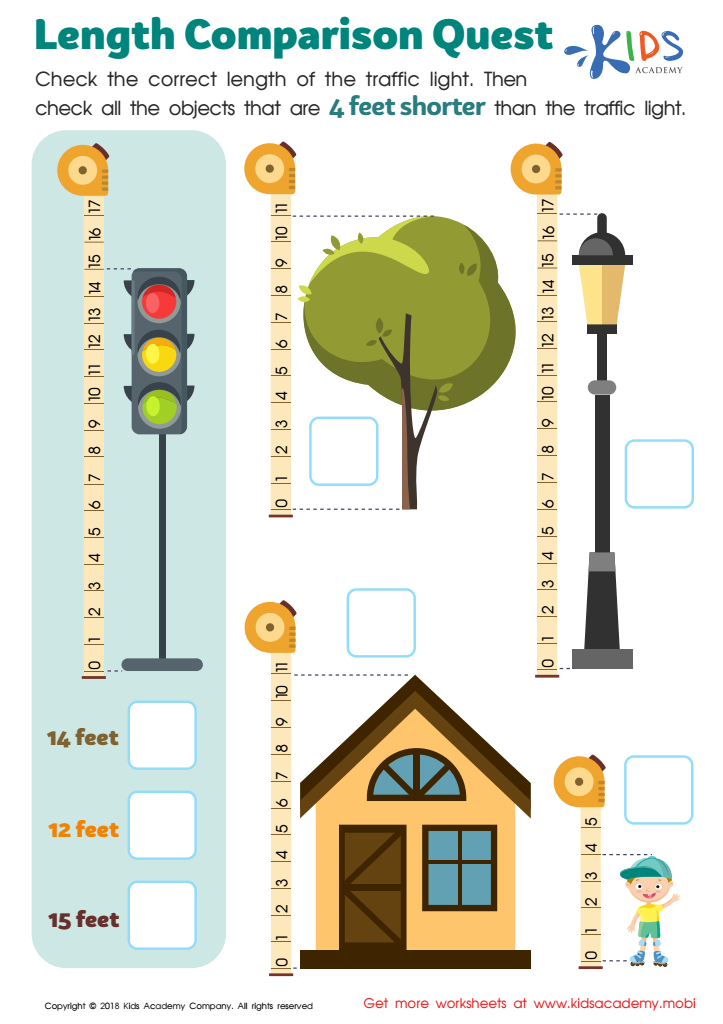
Length Comparison Quest Worksheet
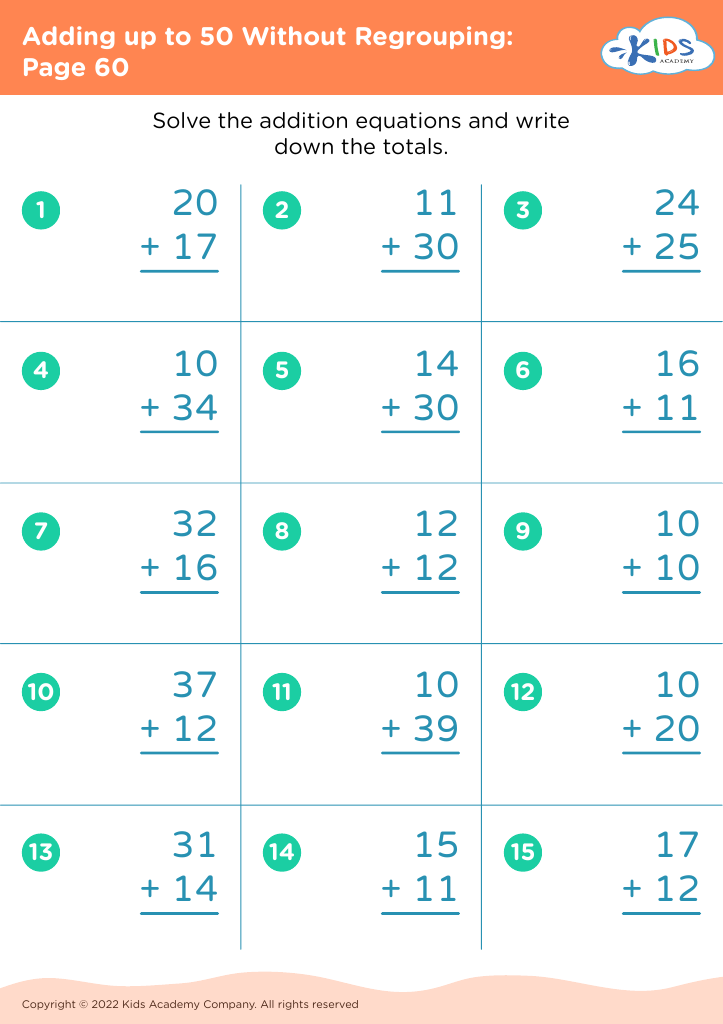






Parents and teachers should prioritize basic measurement skills in math for ages 7-9 because these foundational skills are crucial for a child’s overall development. At this age, children are beginning to think logically and analytically, and understanding measurement concepts enhances their problem-solving abilities. Measurement skills foster spatial awareness, which is essential not only for mathematics but also for art, science, and everyday tasks.
Moreover, mastery of measurement principles helps children grasp more complex mathematical concepts in the future, such as geometry, and fractions. By learning to measure lengths, areas, and volumes, they develop an intuitive sense of quantity and size, crucial for making sense of the world around them.
In everyday life, measurement skills empower children to engage with practical situations, from cooking to shopping, encouraging independence and confidence. They are also pivotal in STEM fields, where precise measurement is key to experiments and technology.
By nurturing these skills early on, parents and teachers set the foundation for academic success and practical life skills, ensuring that children are well-equipped to tackle the challenges in their education and beyond. Engaging them in interactive, real-world measuring activities fosters a love for math and turns learning into an enjoyable, meaningful experience.








