Following directions Math Worksheets for Ages 7-9
3 filtered results
-
From - To
Enhance your child’s math skills with our "Following Directions Math Worksheets" for ages 7-9! These engaging worksheets are designed to improve comprehension and critical thinking while supporting math learning. Young learners will practice essential math concepts by carefully following instructions to solve problems and complete activities. With various fun exercises, children will boost their attention to detail and increase confidence in their ability to tackle math challenges. Perfect for classroom or home use, these worksheets provide a vital foundation in following directions, a key skill for academic success. Explore our unique math resources today to inspire and empower your young mathematicians!
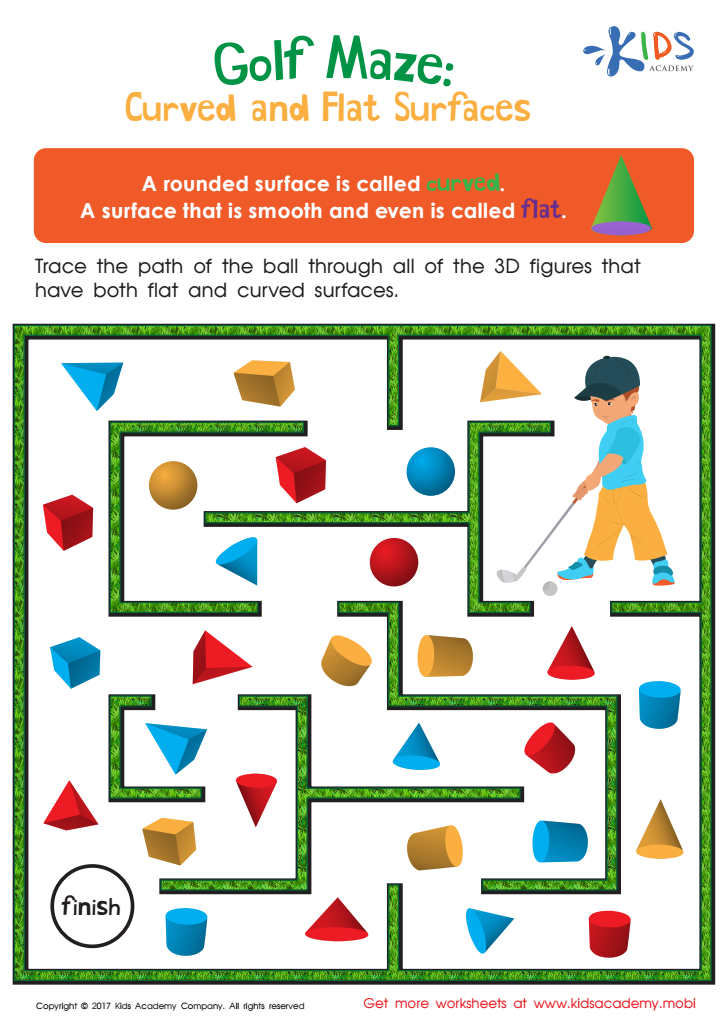
Golf Maze: Curved and Flat Surfaces Worksheet
 Assign to My Students
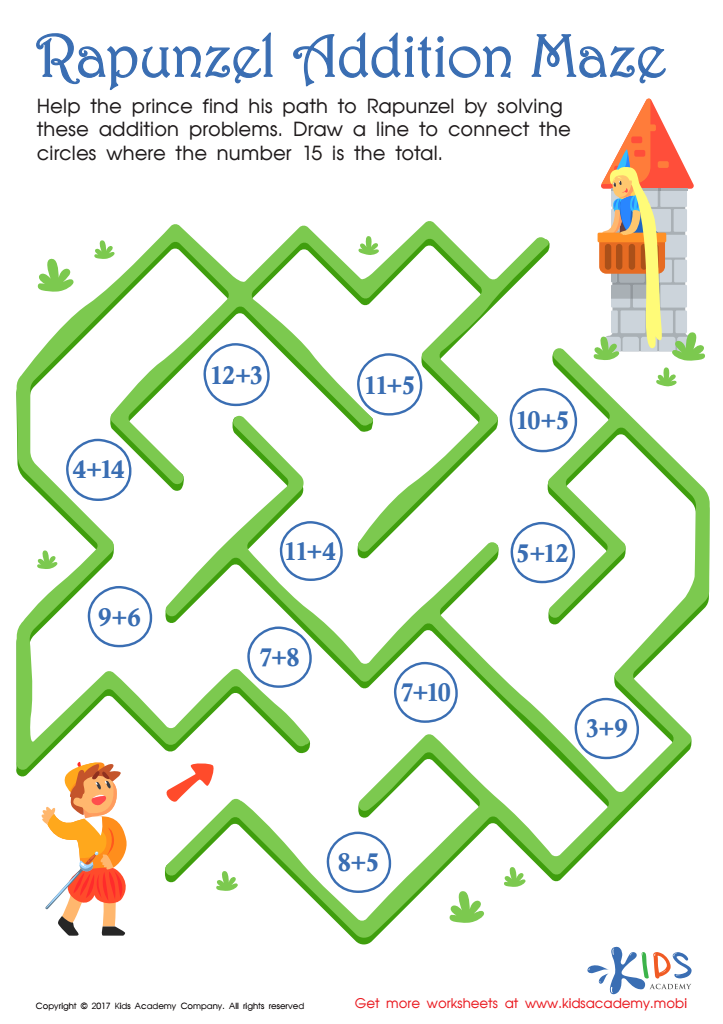
Rapunzel Addition Maze Worksheet
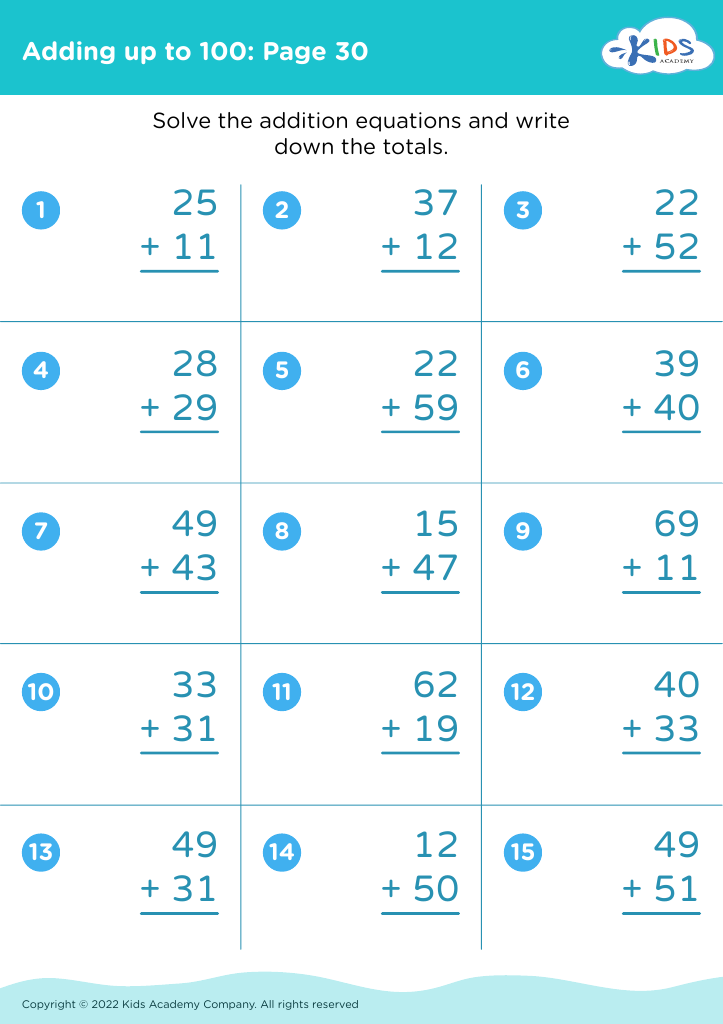








Parents and teachers should care about teaching children ages 7-9 how to follow directions in math for several reasons. First, the ability to systematically follow instructions is a critical skill that aids not only in mathematics but in all areas of learning. This age group is developing cognitive skills essential for problem-solving, and paying attention to directions reinforces their ability to understand and process complex information.
Second, math is often built on sequential steps; missing a single instruction can lead to incorrect answers and frustration. By learning to adhere to directions, children enhance their confidence and competence in math, fostering a positive attitude toward the subject.
Moreover, strong directional following skills promote good study habits and discipline. These skills transfer to other subjects and areas of life, including reading comprehension, science experiments, and even daily tasks at home.
Incorporating tasks that require direction-following in math also encourages communication between educators and students and enhances critical thinking skills. Ultimately, nurturing this skill early on can lead to improved academic performance, making it an essential focus for parents and teachers alike. Building these foundations can pave the way for a lifetime of successful learning experiences.








