
Improve problem-solving Math Worksheets for Ages 7-9
4 filtered results
Difficulty Level
Grade
Age
-
From - To
Subject
Activity
Standards
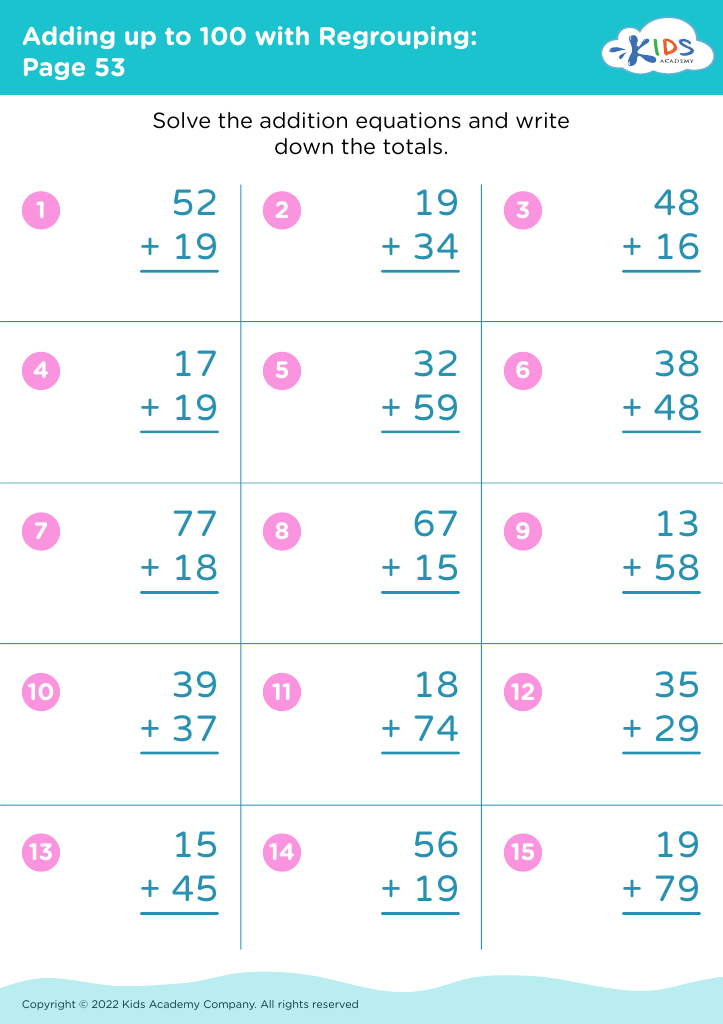
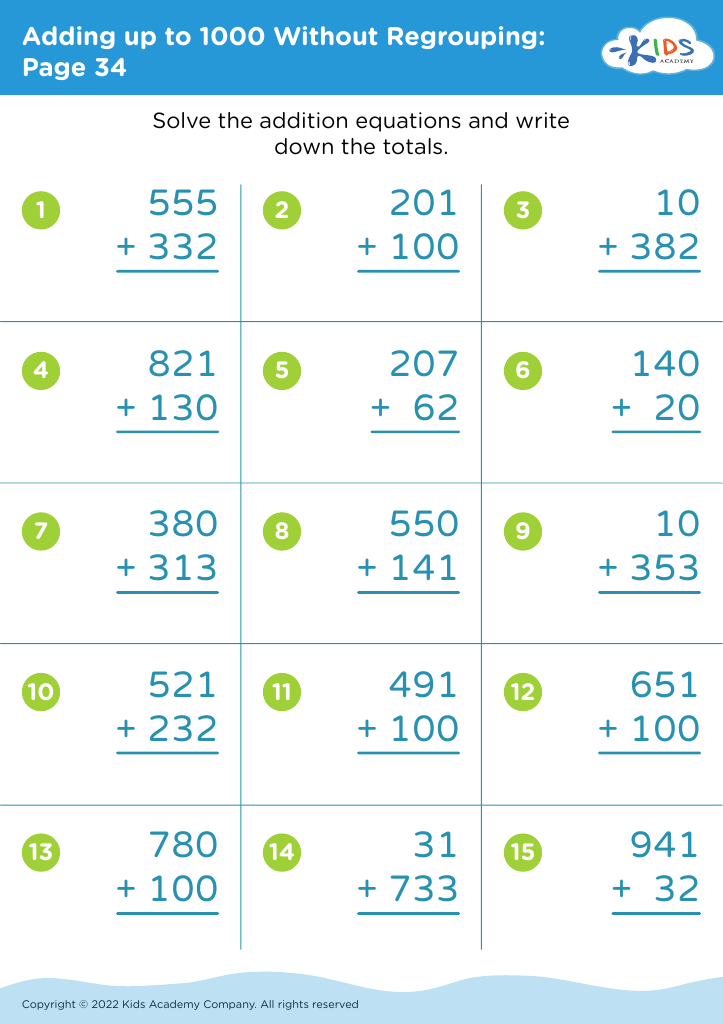
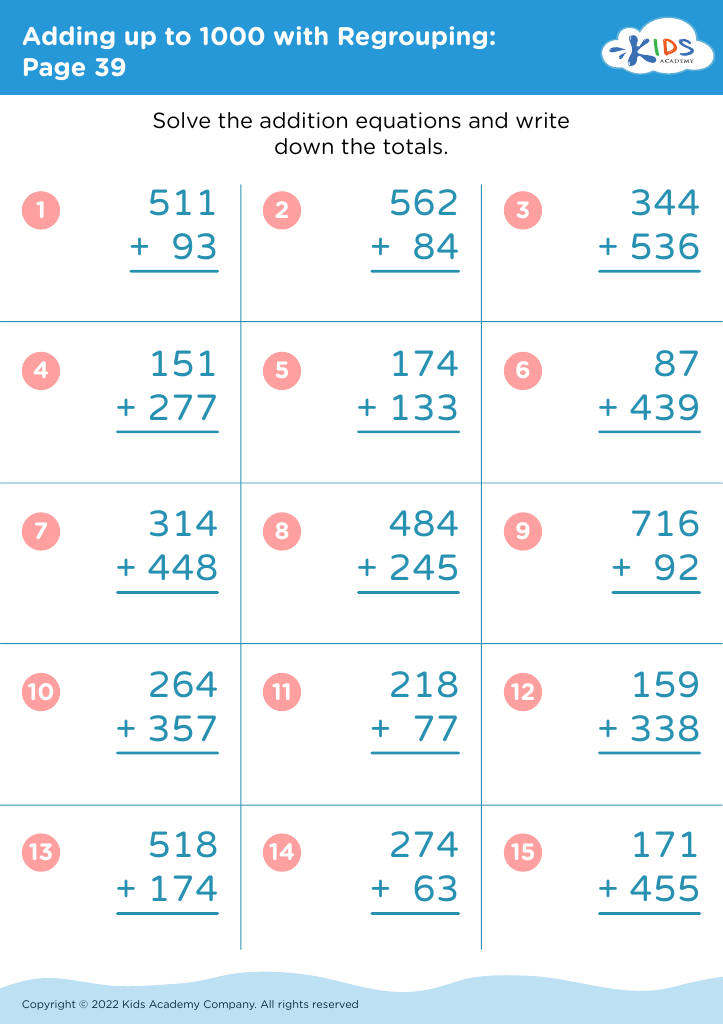
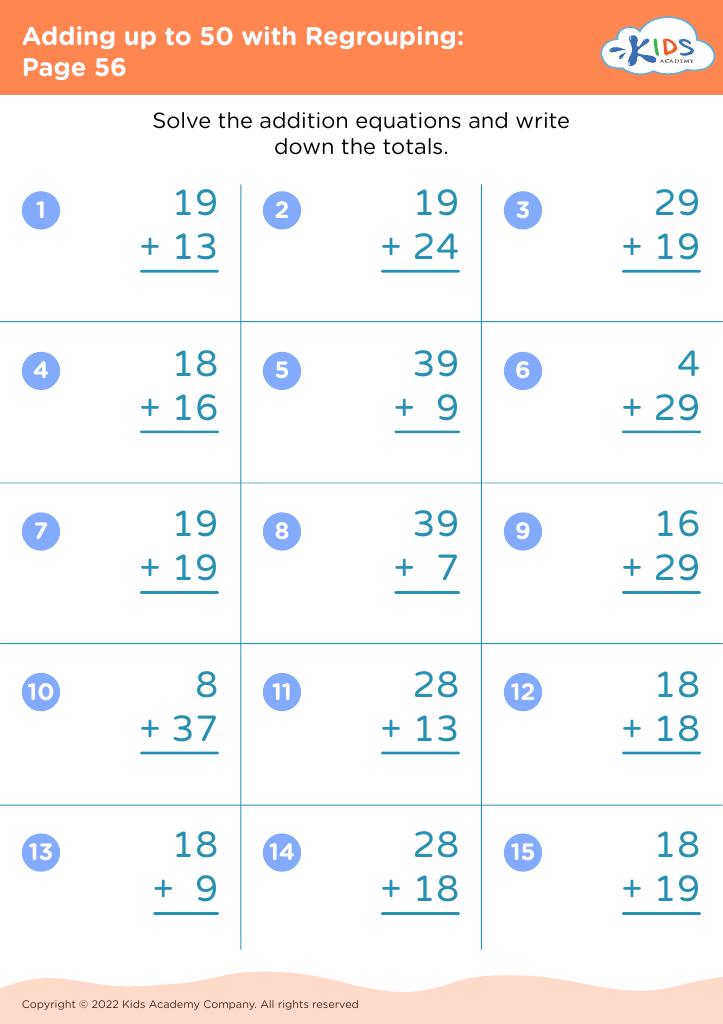
Enhance your child's critical thinking and problem-solving skills with our engaging math worksheets designed for ages 7-9. These worksheets provide a variety of fun, interactive activities that help reinforce essential math concepts through real-life scenarios and challenging problems. Perfect for both classroom use and at-home practice, each worksheet encourages logical reasoning and analytical skills in a playful way. Whether your child is struggling with math or looking to strengthen their abilities, our thoughtfully crafted resources cater to every learning style. Explore our collection today and support your child's math journey while making learning enjoyable and effective!
Favorites
With answer key
Interactive
Join Kids Academy for Free
Who is primarily going to use this learning content?








Parents and teachers should prioritize improving problem-solving skills in math for children aged 7-9 for several vital reasons. First, this developmental stage is crucial as children's cognitive abilities are rapidly evolving, allowing them to grasp more complex mathematical concepts. Cultivating strong problem-solving skills lays a solid foundation for future learning, helping students approach increasingly challenging math problems with confidence.
Additionally, enhancing problem-solving skills promotes critical thinking and analytical abilities, essential not just in mathematics but in everyday life scenarios as well. These skills enable children to break down problems into manageable parts, evaluate strategies, and develop coherent solutions—competencies that are essential for success in various academic arenas and in real-world situations.
Moreover, instilling a love for math during these formative years can lead to positive attitudes towards the subject, significantly impacting students' career choices in fields like science, technology, engineering, and mathematics (STEM). The ability to solve problems fosters resilience and persistence, traits that are beneficial in any area of life. Lastly, when parents and teachers work together to boost these skills, they create a supportive learning environment that reinforces the importance of education, encouraging lifelong learning and curiosity in children.








