Improve problem-solving abilities Math Worksheets for Ages 7-9
3 filtered results
-
From - To
Equip your child with essential problem-solving skills using our expertly designed Math Worksheets for Ages 7-9. These engaging, age-appropriate worksheets cover various key concepts, from basic arithmetic to more complex word problems, fostering critical thinking and analytical skills. Each worksheet is crafted to challenge young minds in a fun and supportive way, promoting confidence and mastery in math. With vibrant visuals and interactive exercises, our printable resources make learning enjoyable and effective. Perfect for both classroom and home use, these worksheets are an invaluable resource for any child ready to enhance their mathematical abilities. Download now and watch your child thrive!
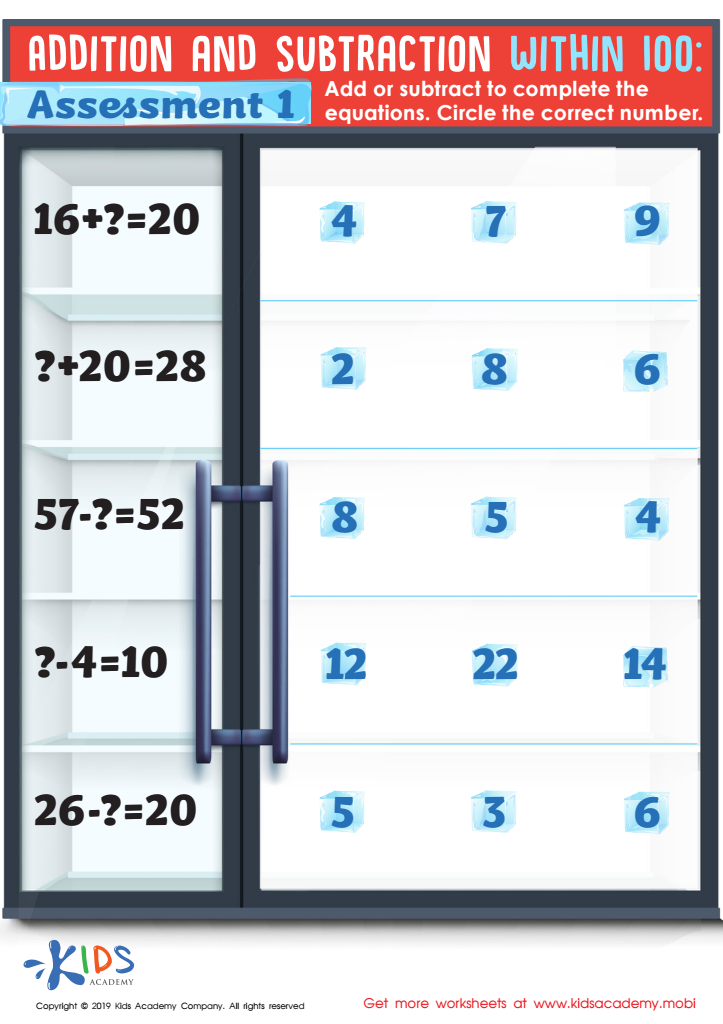
Addition and Subtraction within 100: Assessment 1 Worksheet
 Assign to My Students
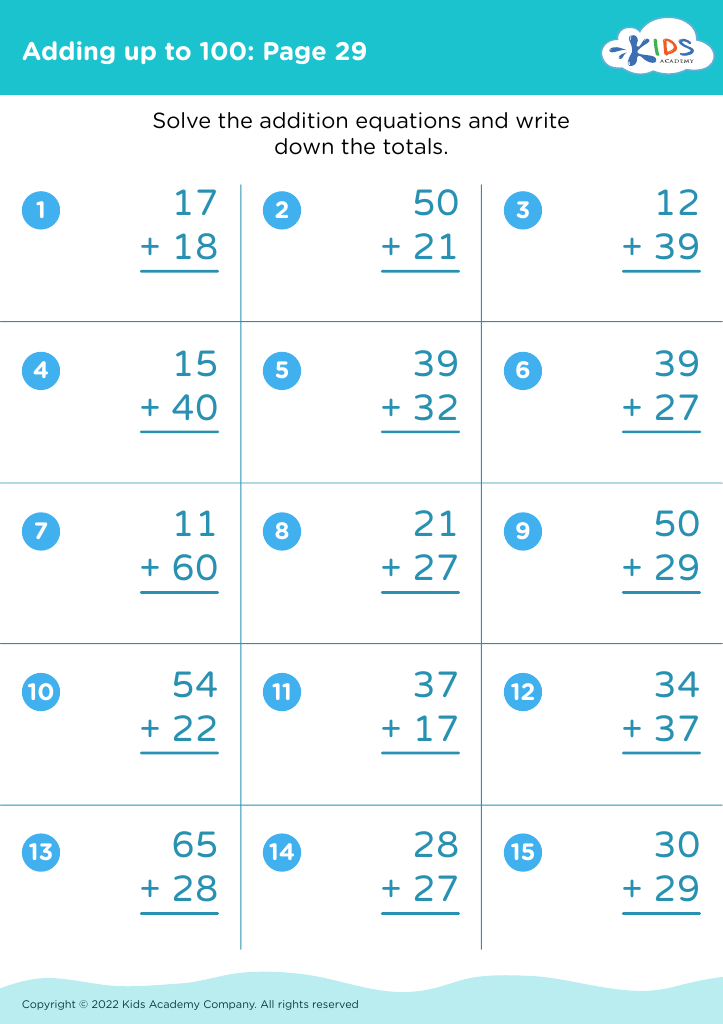
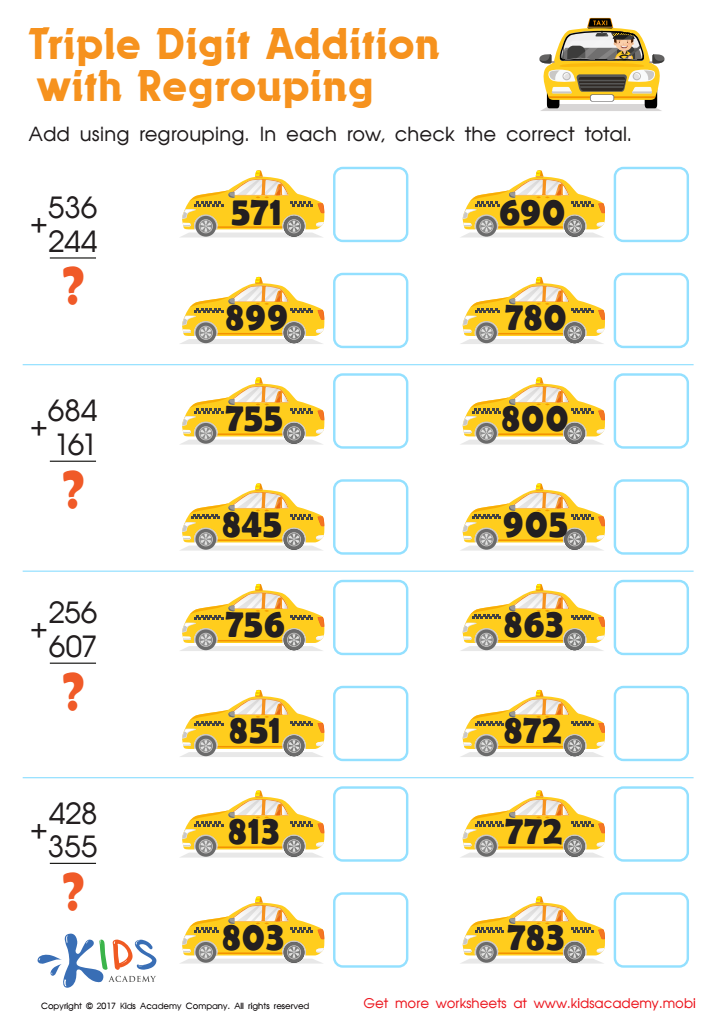
Triple Digit Addition with Regrouping Worksheet








Improving problem-solving abilities in math for children aged 7-9 is crucial for both parents and teachers because it lays a strong foundation for future academic success and practical life skills. At this age, children's cognitive development is at a stage where they can grasp mathematical concepts more effectively. Enhancing their problem-solving skills not only makes them proficient in math but also boosts their critical thinking, analytical abilities, and logical reasoning, which are essential for all subjects.
Problem-solving in math helps children learn how to approach challenges methodically and persistently. It fosters a growth mindset, encouraging them to view difficulties as opportunities to learn rather than reasons to become discouraged. This attitude is beneficial both in school and in real-world situations.
Additionally, proficiency in math is linked to better performance in science, technology, engineering, and mathematics (STEM) fields, which are critical areas in today’s job market. Early math skills are strong predictors of later academic achievement, even in subjects unrelated to math, because they build general cognitive skills that facilitate learning.
For parents and teachers, investing in a child’s math problem-solving abilities means providing them with tools for lifelong learning and success. Activities like puzzles, games, and real-life problem scenarios can make this process enjoyable and effective, helping children develop a love for learning and a robust intellectual toolkit.








