Mathematical thinking Math Worksheets for Ages 7-9
4 filtered results
-
From - To
Unlock your child's potential with our engaging Mathematical Thinking Math Worksheets for ages 7-9! Designed to stimulate critical thinking and problem-solving skills, these worksheets offer a variety of fun activities that deepen understanding of basic math concepts. Children will explore patterns, relationships, and logic through interactive exercises that enhance their cognitive abilities while building confidence in their math skills. Our curriculum-aligned materials are perfect for use at home or in the classroom, providing a well-rounded approach to learning mathematics. Help your child develop a solid foundation in math with our thoughtfully crafted worksheets that make learning enjoyable and effective!
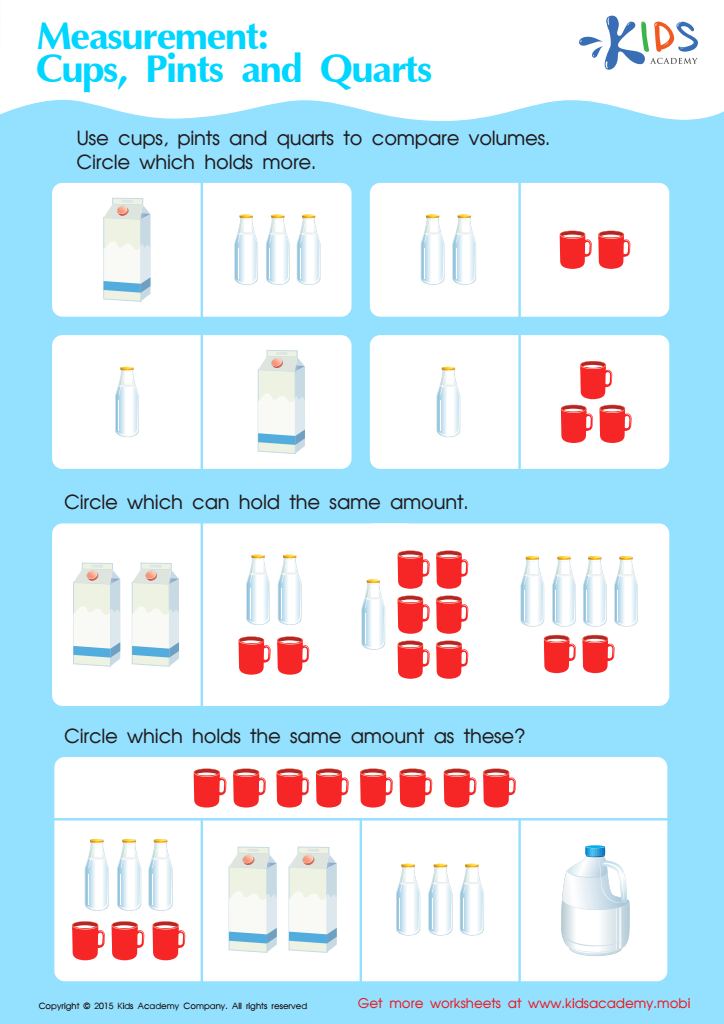
Measurement: Compare Volumes Worksheet
 Assign to My Students
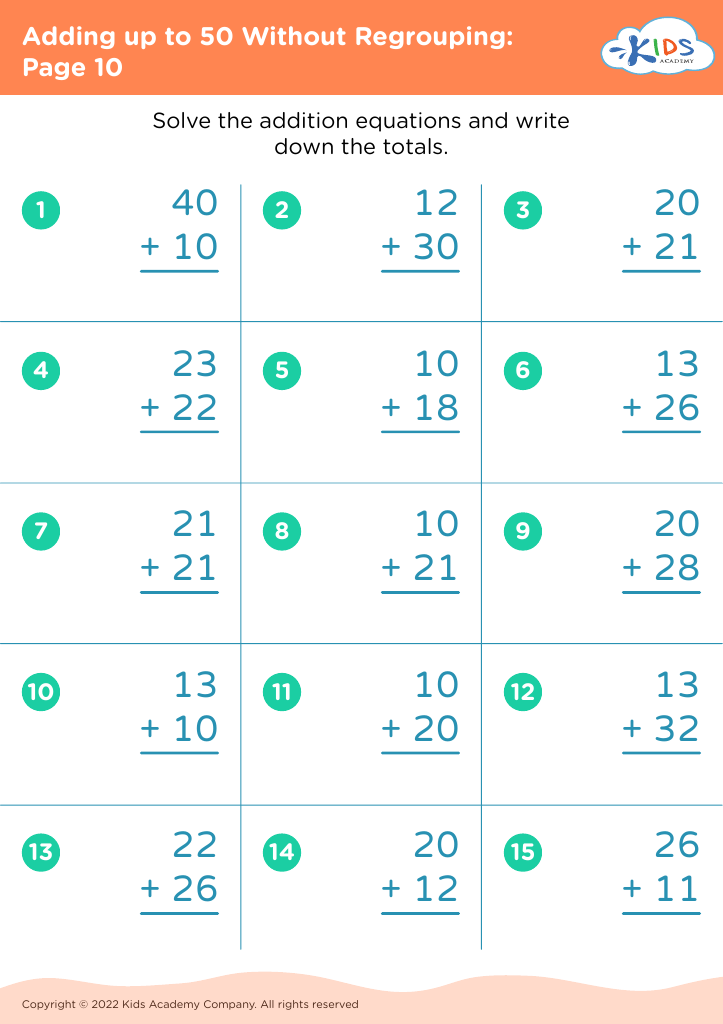
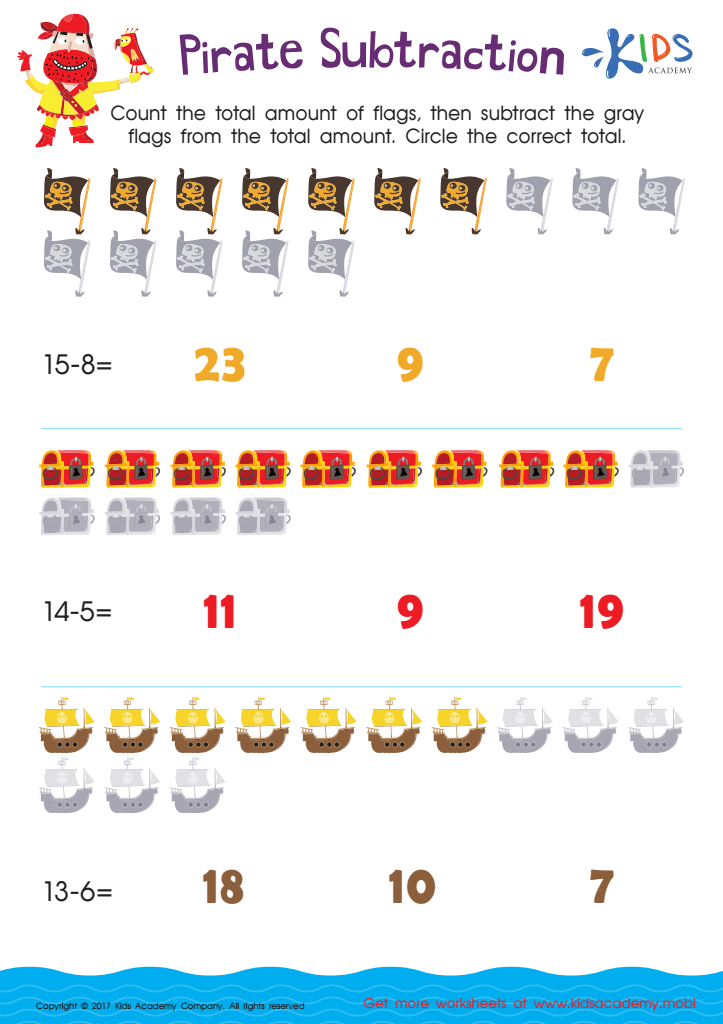
Pirate Subtraction Substraction Worksheet
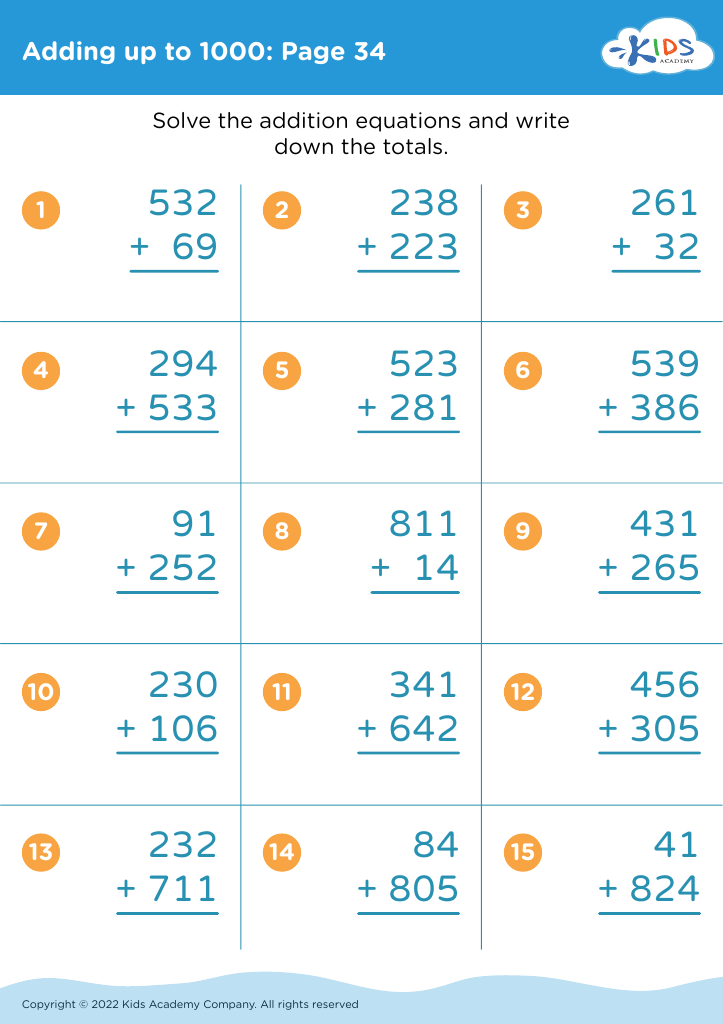








Mathematical thinking is crucial for children aged 7 to 9 as it lays the foundation for their overall academic success and everyday problem-solving abilities. During these formative years, children begin to develop critical reasoning and numerical skills that influence their understanding of more complex mathematical concepts in later grades. Engaging with math helps them cultivate logical thinking, pattern recognition, and spatial awareness, all of which are essential skills not just in mathematics but in science, technology, engineering, and even art.
Moreover, fostering a positive attitude towards math at this stage can significantly reduce the anxiety often associated with the subject in later years. When parents and teachers emphasize the relevance of math in daily life—such as budgeting allowance, cooking, or playing games—they help students make concrete connections that deepen understanding and stimulate interest. Additionally, through collaborative problem-solving activities, children enhance their communication and teamwork skills, which are vital life competencies. By prioritizing mathematical thinking, adults not only prepare children for academic challenges but also empower them to become confident, capable individuals who can navigate the complexities of the modern world. Thus, investing in mathematical thinking during these crucial years is essential for holistic development.








