Number writing Math Worksheets for Ages 7-9
3 filtered results
-
From - To
Introduce your child to the world of numbers with our Number Writing Math Worksheets for Ages 7-9. These engaging and educational worksheets are meticulously designed to enhance math learning by focusing on essential number writing skills. Perfect for kids in this age group, the exercises feature even and odd numbers, counting, and patterns, providing a solid mathematical foundation. Each worksheet is an excellent resource to support your child in mastering number formations, boosting their confidence and accuracy in mathematics. Ideal for both classroom activities and at-home practice, these worksheets inspire young learners through fun and interactive activities.
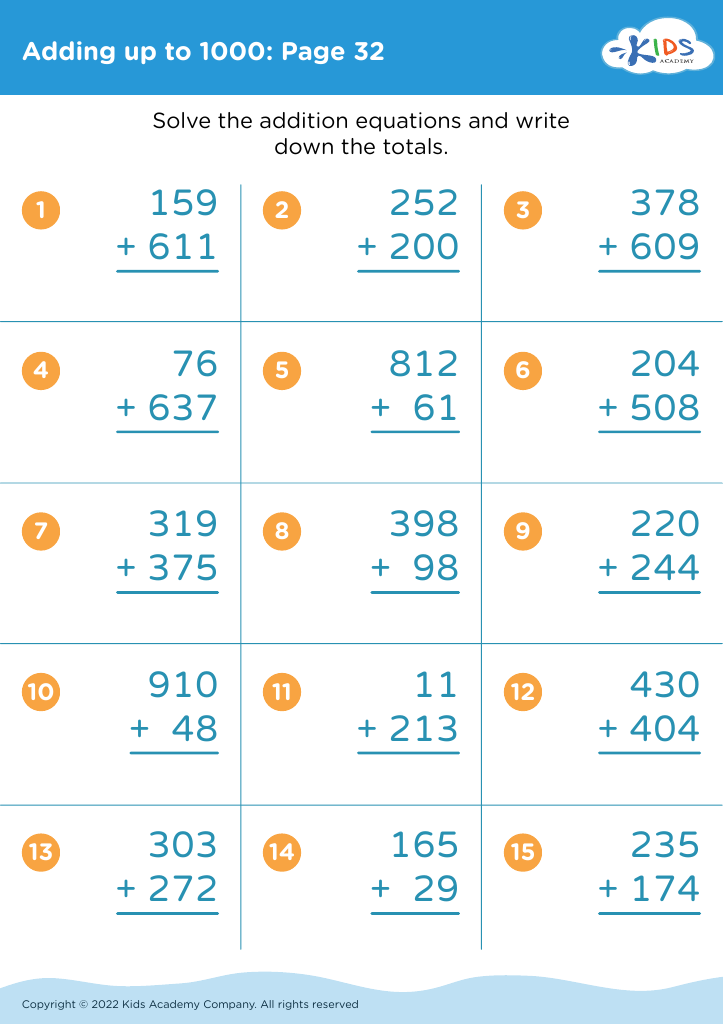
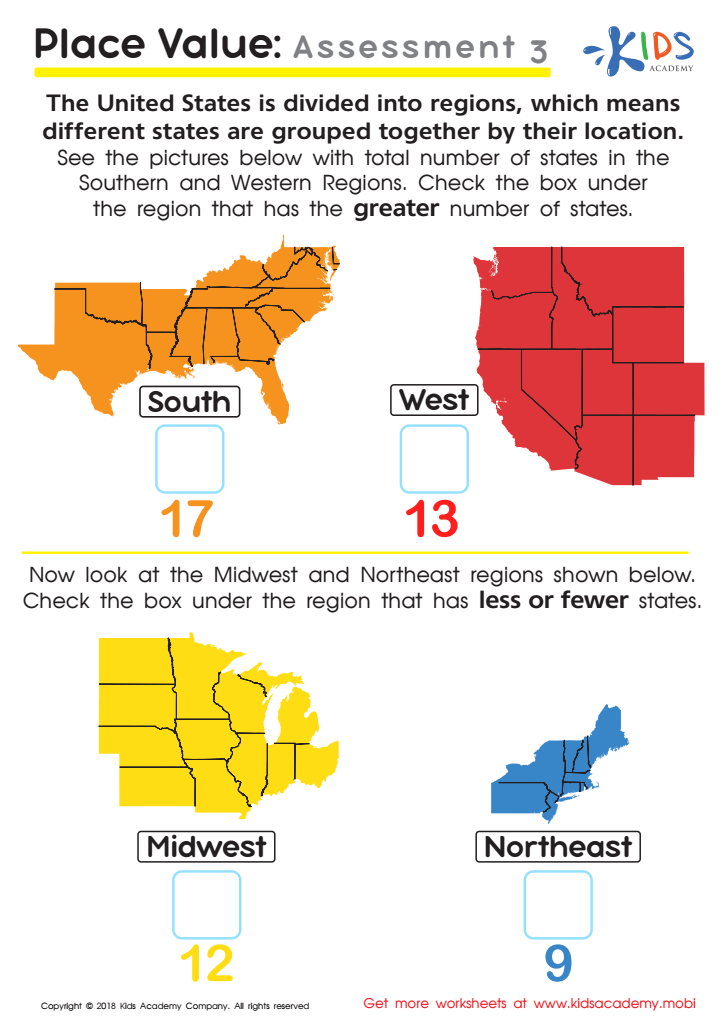
Place Value: Assessment 3 Worksheet
 Assign to My Students
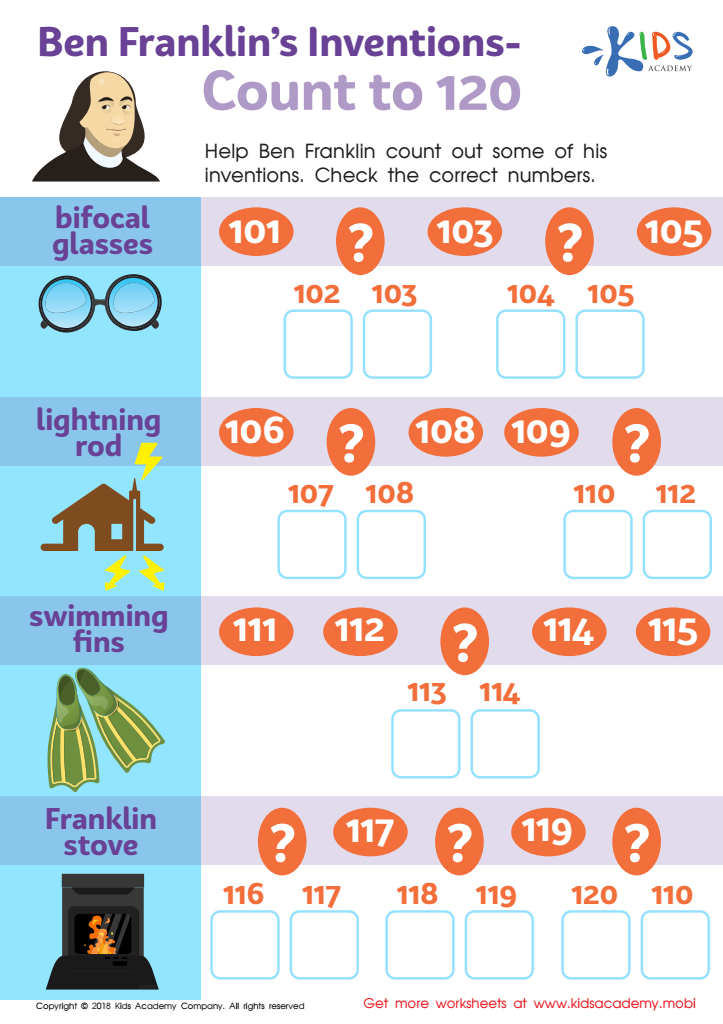
Ben Franklin’s Inventions – Count to 120 Worksheet








Parents and teachers should care about number writing math for ages 7-9 because it lays a critical foundation for future mathematical understanding and problem-solving skills. At this age, children transition from relying on visual representations and manipulatives to more abstract thinking and written methods. Clear, correct number writing helps them accurately communicate mathematical ideas, minimize errors, and build confidence in their abilities.
Number writing also reinforces fine motor skills and hand-eye coordination, which are crucial for overall academic performance. Skills developed through easy-to-read, correctly-positioned numbers translate into success in various subjects beyond math, such as science and computer programming, where precision is key.
Furthermore, fostering both procedural and conceptual competencies in number writing instills a growth mindset. When children see their progress in neatly and correctly writing numbers, they associate effort with achievement, leading to increased perseverance and a love for learning.
Lastly, early intervention to correct habits and misunderstandings can prevent the frustration and anxiety often linked to math difficulties later on. By attending to number writing now, educators and parents give children a strong start in mathematics, crucial for advanced topics and everyday tasks in their future lives. Thus, the importance of number writing for young learners cannot be overstated.








