
Sorting skills Math Worksheets for Ages 7-9
6 filtered results
Difficulty Level
Grade
Age
-
From - To
Subject
Activity
Standards
Enhance your child’s sorting skills with our engaging and interactive math worksheets designed specifically for ages 7-9! These worksheets provide a fun and educational way for students to develop critical thinking and organizational abilities. With a variety of sorting activities, your child will tackle tasks like categorizing items, understanding patterns, and improving their classification skills. Our resources promote hands-on learning and help reinforce essential math concepts through enjoyable exercises. Perfect for home or classroom use, these worksheets make learning math enjoyable and effective. Explore our collection and give your child a head start in their educational journey today!
Favorites
With answer key
Interactive
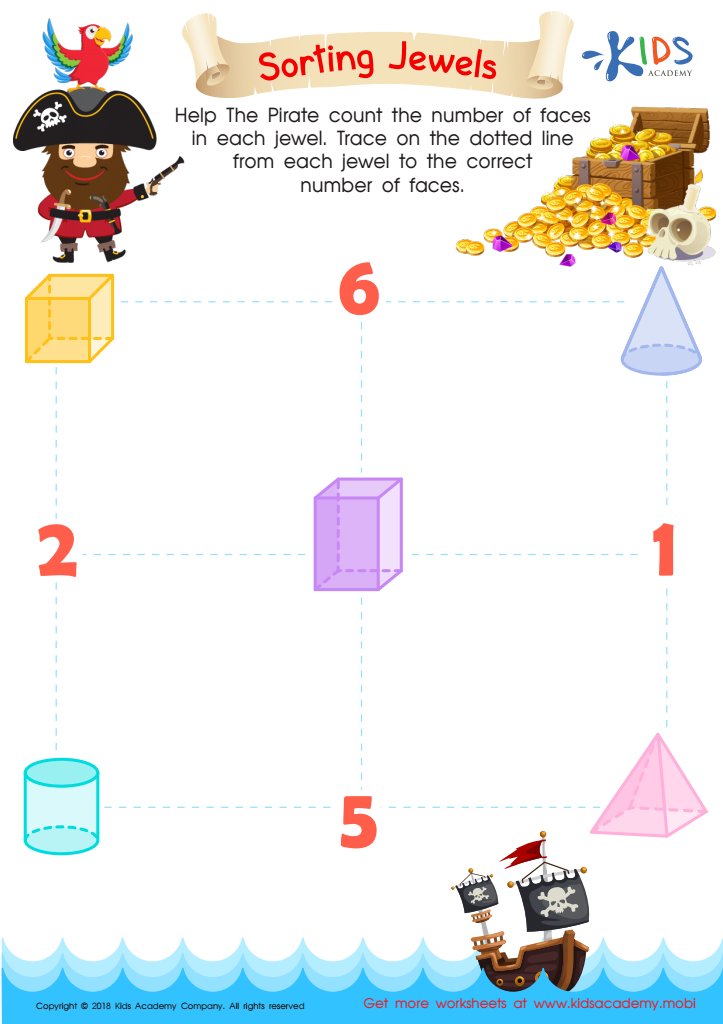
Sorting Jewels Worksheet
Help your kids explore their pirate fantasies with this tracing sheet. Ask them to count the number of faces in each jewel and then trace the dotted line to the correct number. How many faces does a rectangle have? What about a triangle and a cone? This fun worksheet is a great way to teach your kids the basics of identifying the number of faces on shapes.
 Assign to My Students
Sorting Jewels Worksheet
Worksheet
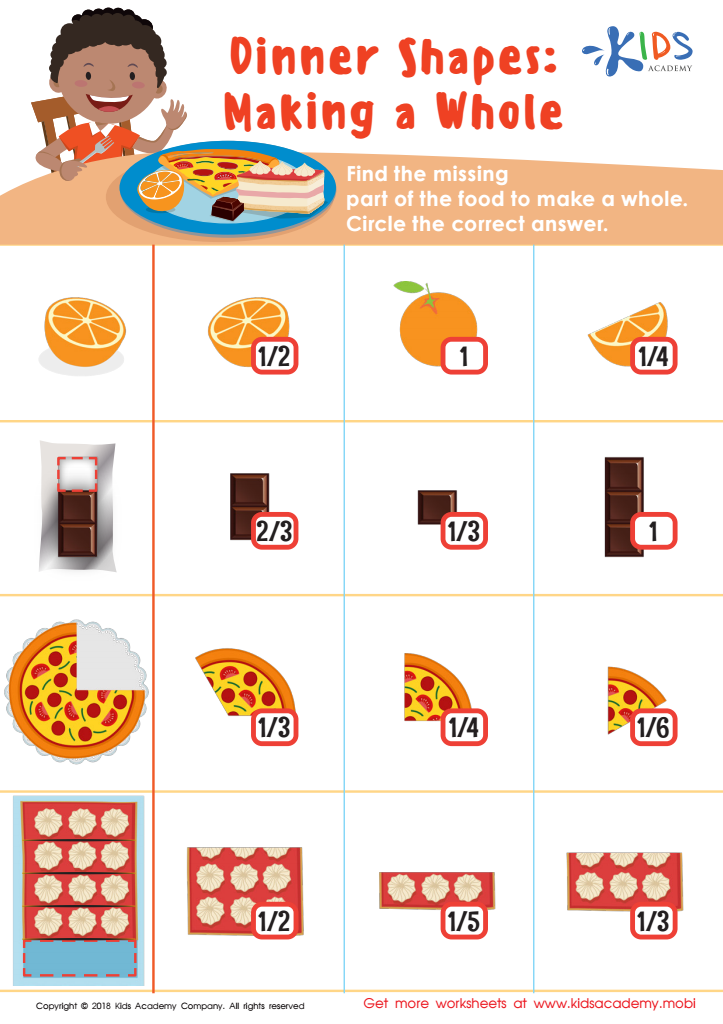
Dinner Shapes: Making a Whole Worksheet
Using food and snacks to stimulate learning and interest in topics is a great strategy. Fractions can prove tricky, but this worksheet can help your child become an expert. Have them look for the missing parts of the food to make a whole, then circle the answer.
Dinner Shapes: Making a Whole Worksheet
Worksheet
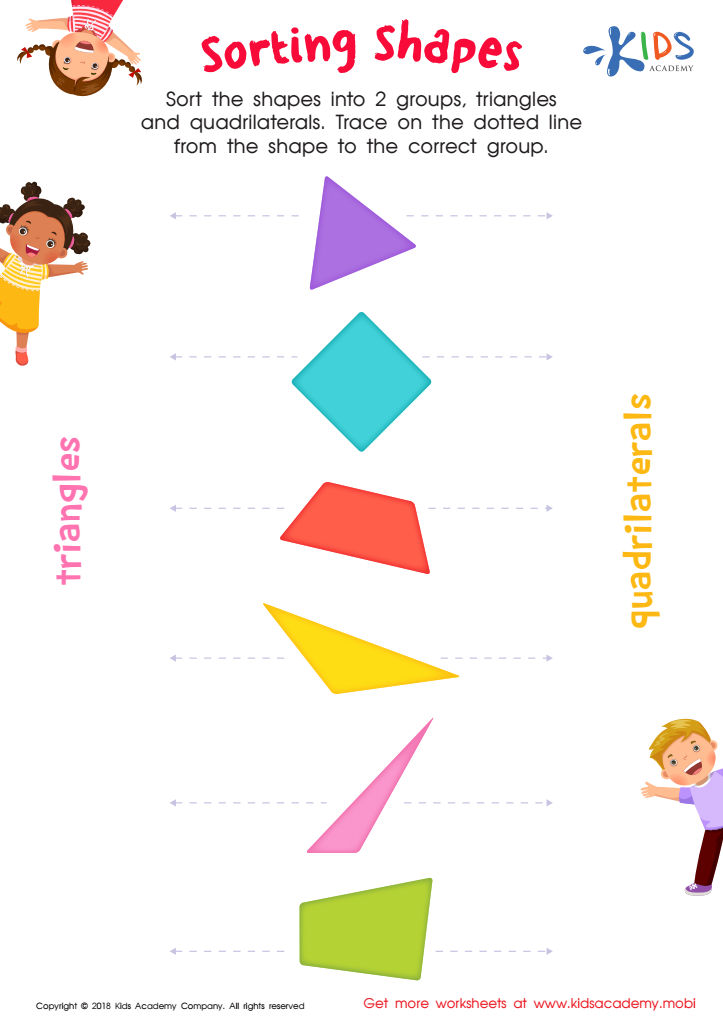
Sorting Shapes Worksheet
Before beginning, ensure your child is familiar with quadrilaterals (4 sides) and triangles (3 sides). This tracing exercise is easy: sort the shapes into the two groups and trace the dotted lines to the correct group.
Sorting Shapes Worksheet
Worksheet
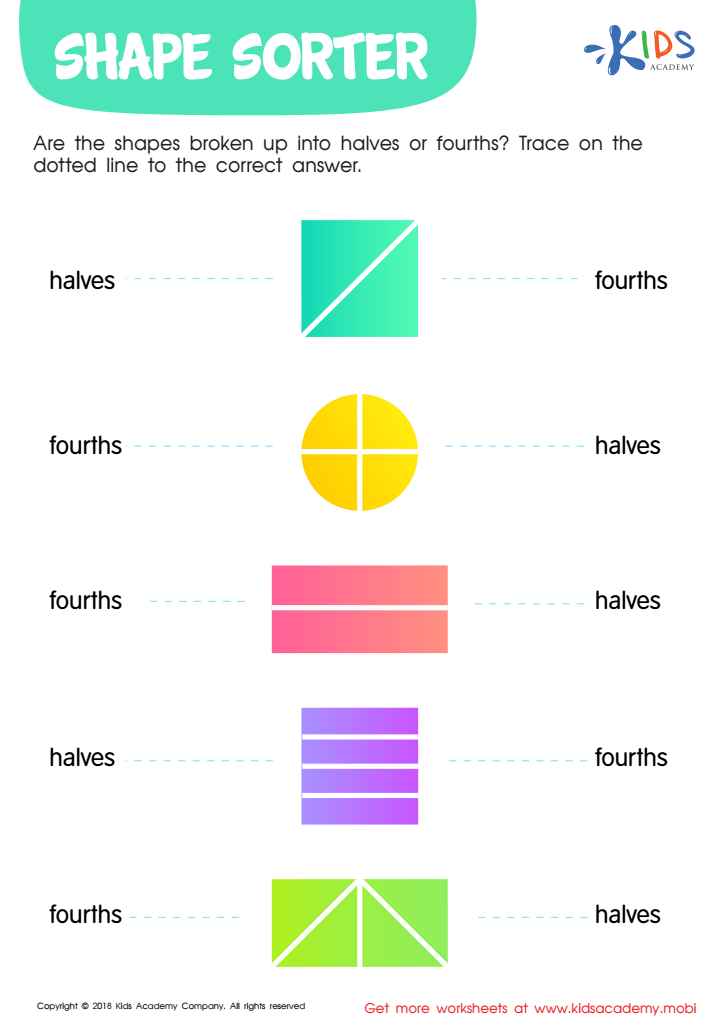
Shape Sorter Worksheet
Ask your child if they know halves and fourths. If not, explain that halves are when a shape is divided into two equal parts and fourths is when a shape is divided into four equal parts. Look through this worksheet with your child and let them trace the dotted lines to the correct answer to show whether the shapes are cut into halves or fourths.
Shape Sorter Worksheet
Worksheet
Join Kids Academy for Free
Who is primarily going to use this learning content?






Sorting skills are crucial for children aged 7-9 as they lay the foundation for essential mathematical concepts and critical thinking. At this developmental stage, children's cognitive abilities are rapidly expanding, making it an ideal time to introduce and reinforce sorting. When children engage in sorting activities, they practice classifying objects based on attributes like color, size, shape, or function. This not only enhances their observational skills but also helps them recognize patterns, which is vital for future mathematical concepts such as data analysis, multiplication, and understanding functions.
Additionally, sorting promotes logical reasoning. By determining how to organize objects, children learn to analyze relationships, make comparisons, and develop problem-solving strategies. These skills are transferrable to various academic areas, aiding in their overall cognitive development.
Furthermore, sorting activities foster fine motor skills and support language development, as children often discuss their sorting criteria and reasoning with peers or adults. This collaborative approach encourages communication and enhances social skills.
Ultimately, emphasizing sorting skills in early education contributes to building a strong mathematical foundation, enabling children to confidently tackle more complex mathematical challenges as they progress through their education. Parents and teachers play a vital role in nurturing these skills, ensuring children are well-equipped for future learning.








