Understanding equations Math Worksheets for Ages 7-9
7 filtered results
-
From - To
Unlock your child's mathematical potential with our "Understanding Equations" math worksheets tailored for ages 7-9. Designed to make learning engaging and fun, these worksheets introduce young learners to the foundational concepts of equations. Each worksheet features age-appropriate problems that encourage critical thinking and problem-solving skills. From simple addition and subtraction equations to more complex scenarios, children will gain confidence in their math abilities. Perfect for home practice or classroom use, our interactive resources are crafted to enhance understanding and boost enthusiasm for learning. Explore the joy of math with our comprehensive, ready-to-use worksheets today!
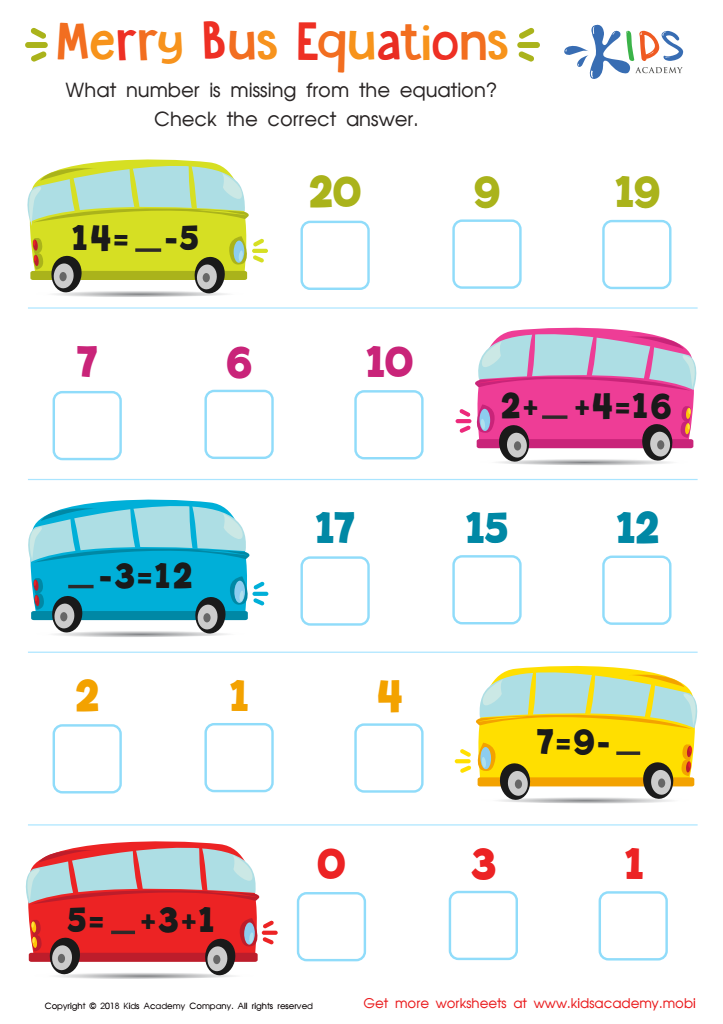
Merry Bus Equations Worksheet
 Assign to My Students
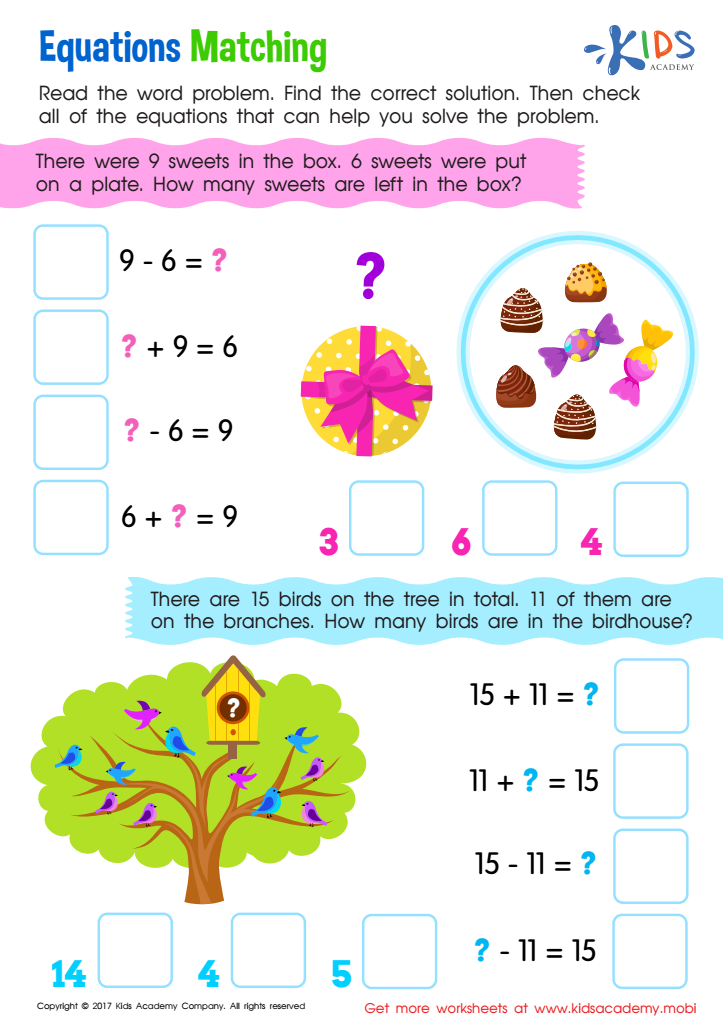
Equations Matching Word Problems Worksheet
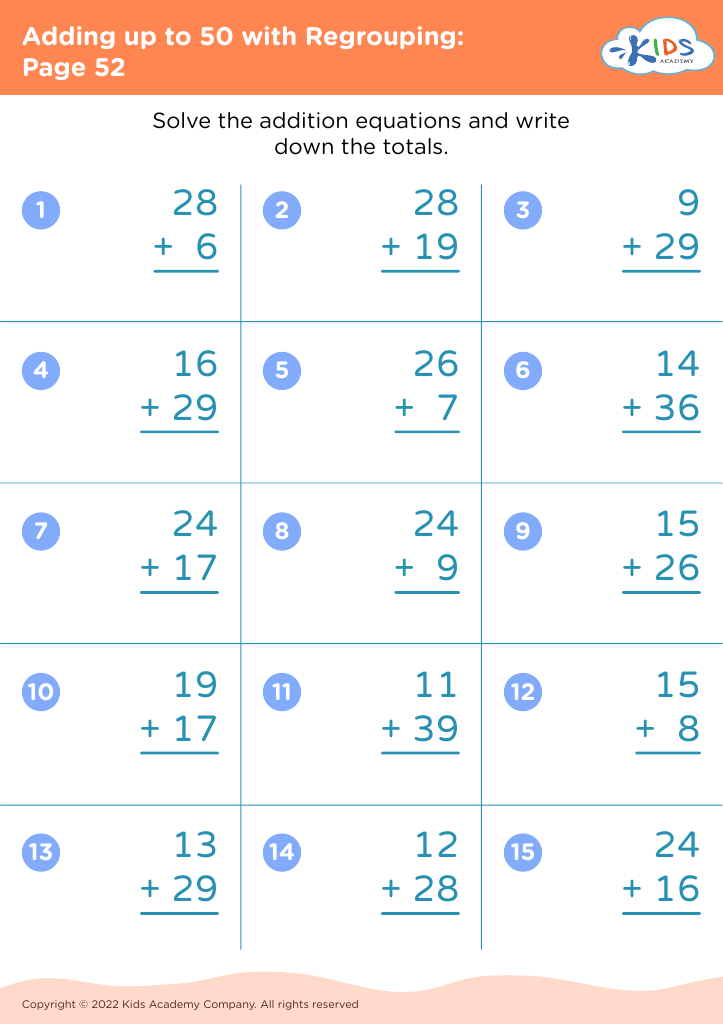
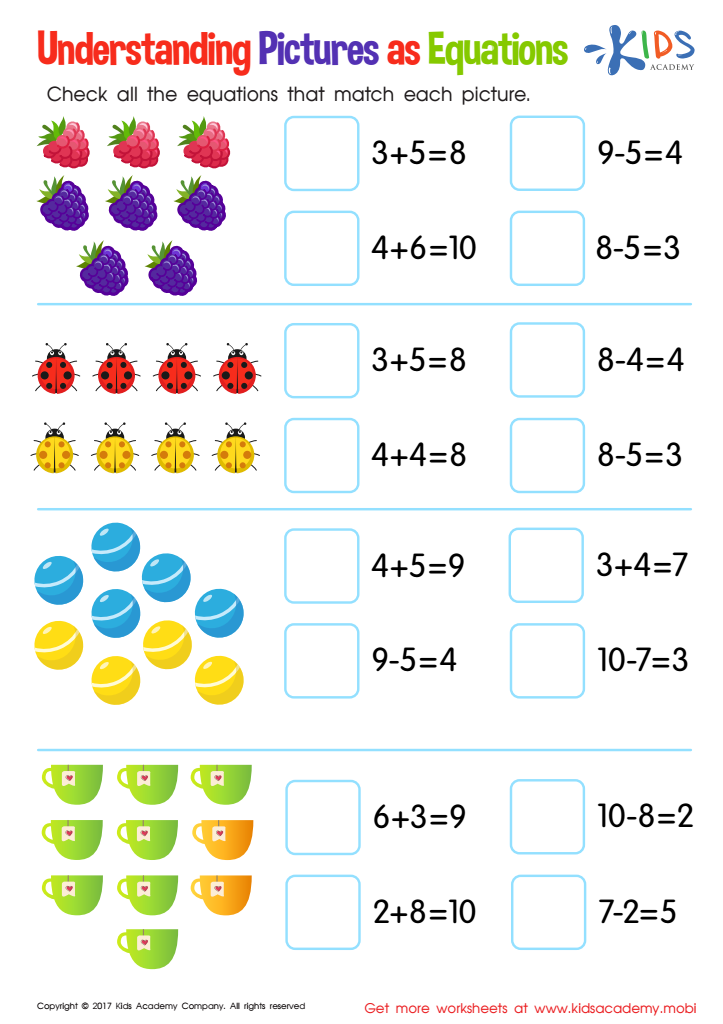
Understanding Pictures as Equations Worksheet
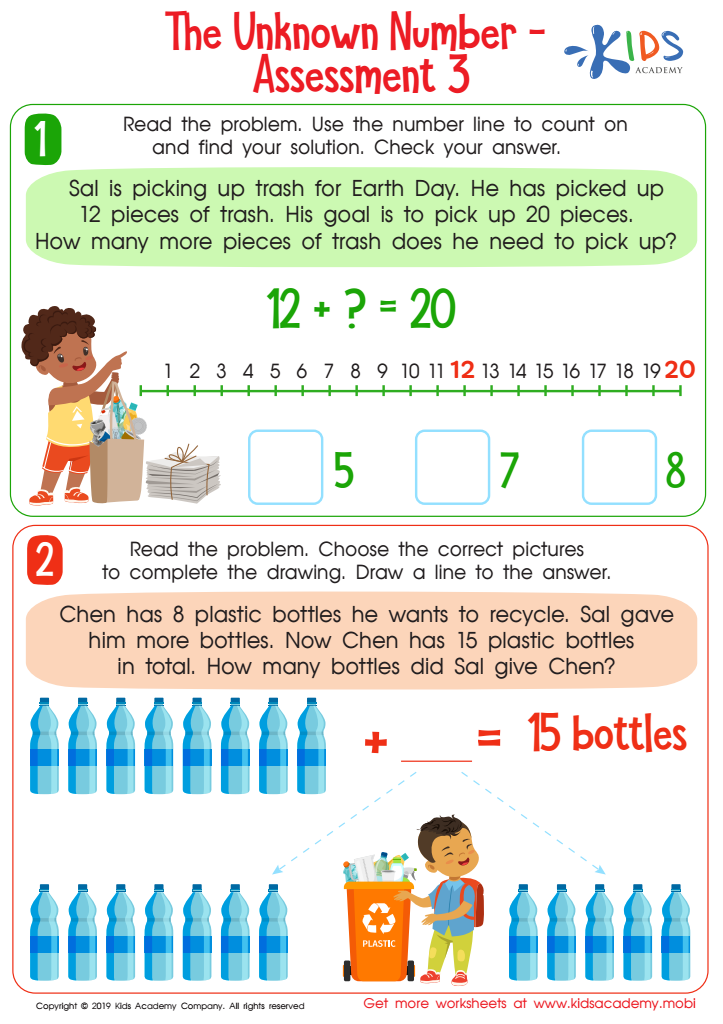
The Unknown Number - Assessment 3 Worksheet
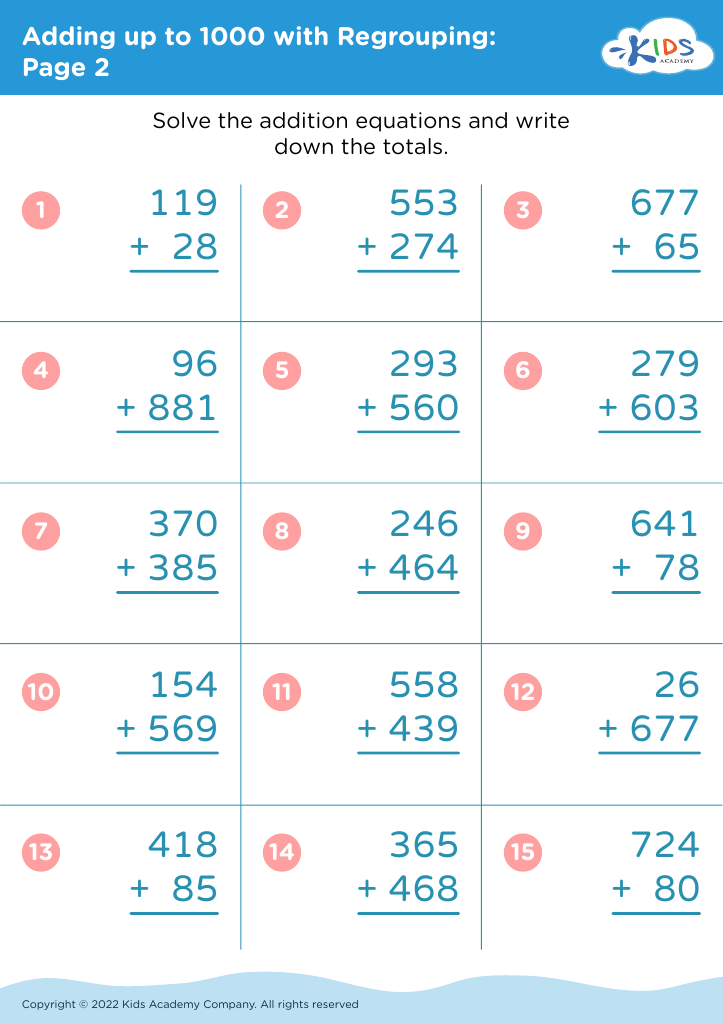
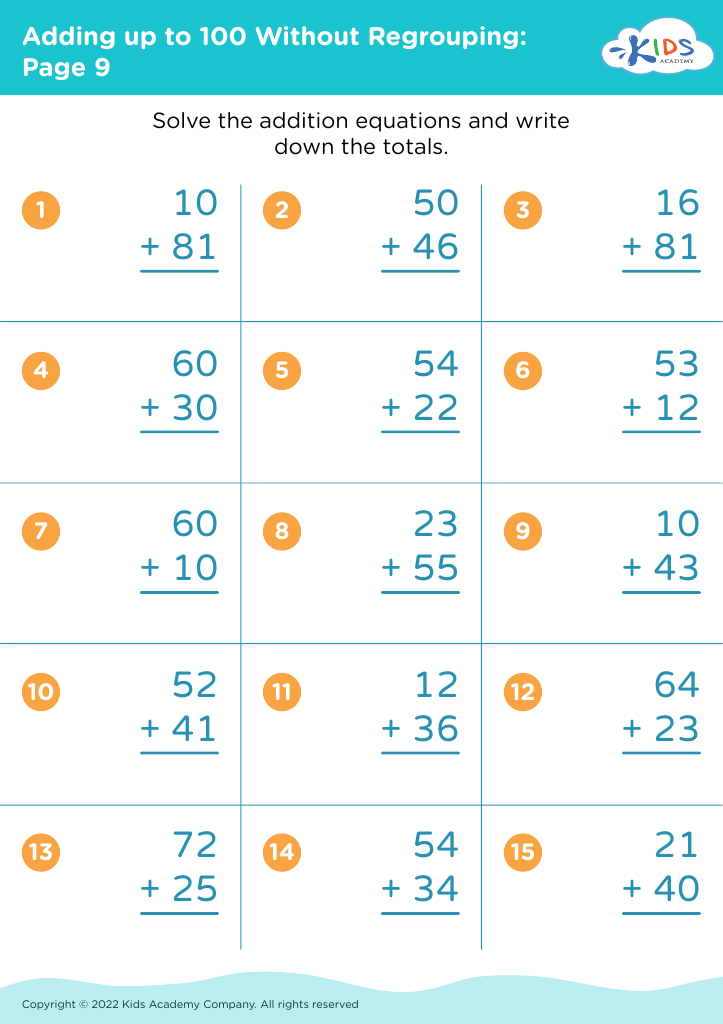








Understanding equations is a critical skill for children aged 7-9 as it lays the foundation for more complex mathematical concepts in later years. At this age, students begin to expand their numeracy skills, making it essential for parents and teachers to engage them in understanding equations, which are building blocks of mathematics.
Equations introduce children to reasoning and problem-solving skills, helping them see relationships between numbers and operations. By comprehending how to balance and manipulate equations, children gain confidence and develop an analytical mindset that is crucial not just in math, but across various subjects, enhancing their overall academic performance.
Furthermore, a strong grasp of equations prepares students for future topics such as algebra, geometry, and beyond, ensuring they do not struggle as curriculum demands increase. This foundation fosters a positive attitude toward math and encourages critical thinking, nurturing lifelong learners.
By advocating for understanding equations at this formative stage, parents and teachers not only prepare students for future academic challenges but also empower them with essential life skills, promoting logical thinking and problem-solving capabilities that will benefit them well beyond the classroom.








