Visual representation comprehension Math Worksheets for Ages 7-9
8 filtered results
-
From - To
Enhance your child's math skills with our engaging Visual Representation Comprehension Worksheets designed for ages 7-9! These printable resources focus on helping young learners understand mathematical concepts through visual aids such as graphs, charts, and diagrams. By integrating visual representation with problem-solving techniques, children will develop critical thinking skills essential for their math education. Each worksheet is thoughtfully crafted to encourage exploration and boost confidence in tackling math challenges. Perfect for home or classroom use, our worksheets provide a fun and effective way to foster a love for math. Start your journey towards math mastery today!
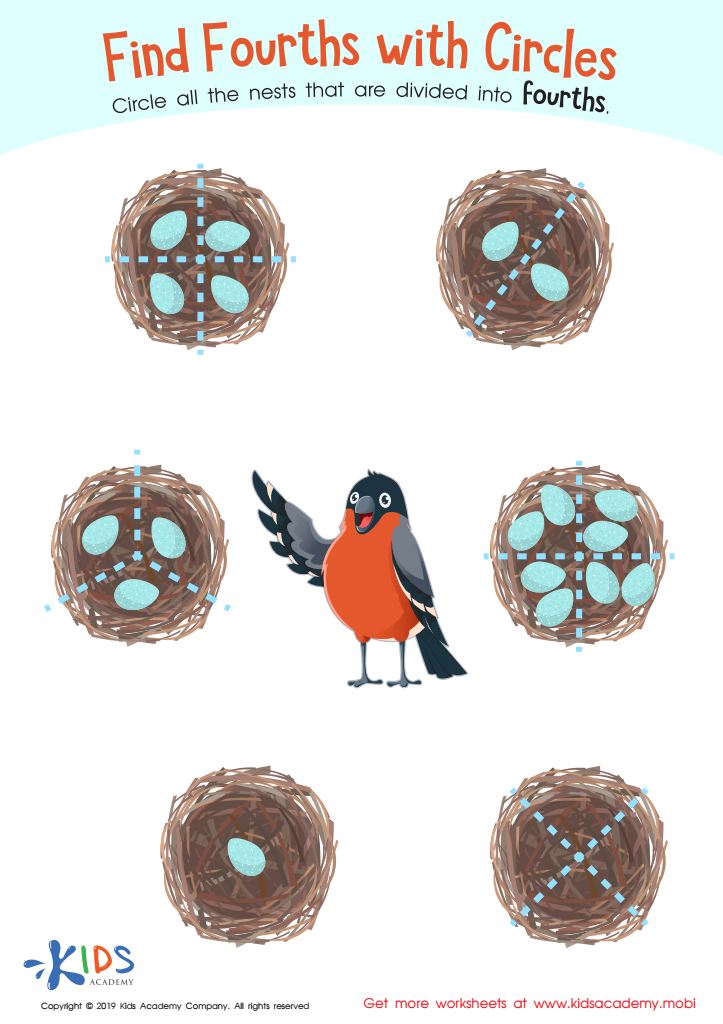
Find Fourths Circles Worksheet
 Assign to My Students
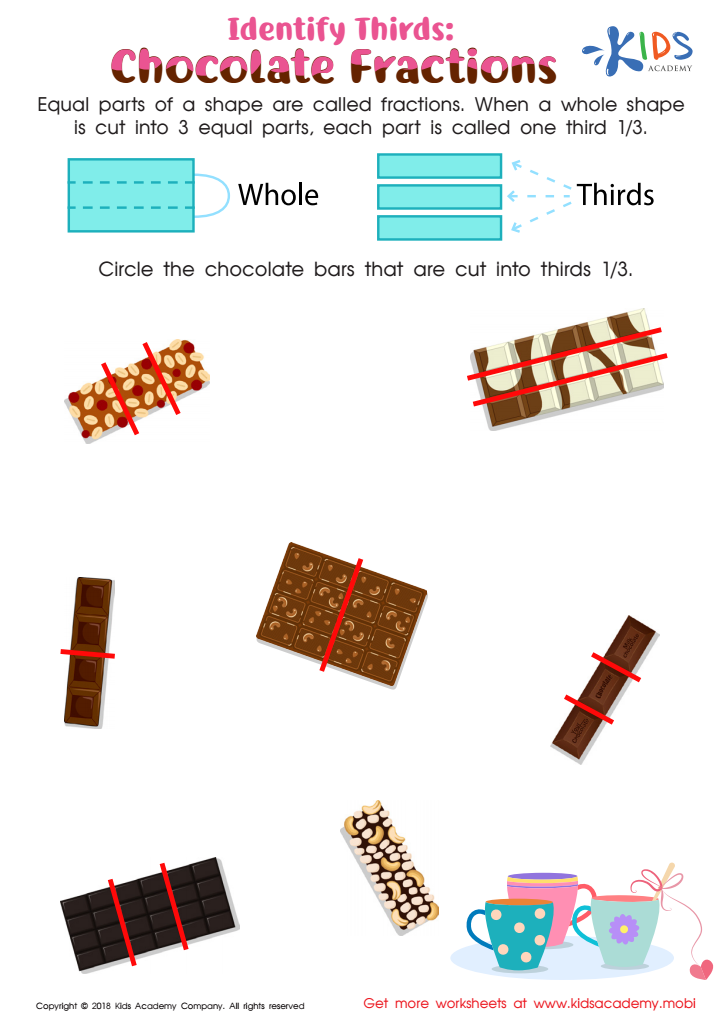
Identify Thirds: Chocolate Fractions Worksheet
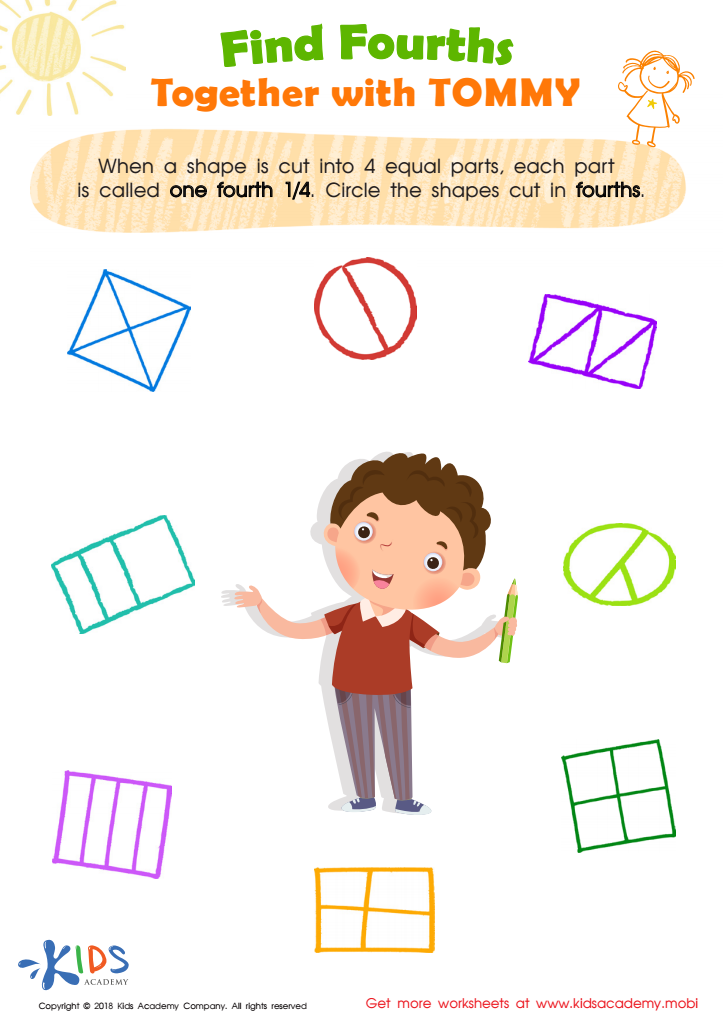
Find Fourths Together with Tommy Worksheet








Visual representation comprehension in math is crucial for children aged 7-9 as it significantly enhances their understanding and retention of mathematical concepts. During these formative years, kids transition from basic arithmetic to more complex ideas, such as geometry and problem-solving. Incorporating visual representations—like diagrams, graphs, and number lines—helps children make sense of abstract ideas by giving them tangible forms.
When children can visualize problems, they boost their ability to identify patterns, develop critical thinking skills, and make connections between different mathematical concepts. These skills are not only vital for classroom success but also for everyday problem-solving. Furthermore, visual tools cater to various learning styles, ensuring that children who struggle with traditional methods can still grasp essential concepts.
Moreover, fostering visual representation skills also builds a child’s confidence in math, reducing anxiety associated with the subject. Encouraging parents and teachers to focus on this aspect can help create stronger foundational skills, leading to improved performance in higher-grade math. As mathematics underpins many aspects of life, ensuring children understand it visually prepares them for future academic and personal challenges, fostering a lifelong appreciation and competency in math.








