Visualization skills Math Worksheets for Ages 7-9
3 filtered results
-
From - To
Enhance your child's mathematical experience with our Visualization Skills Math Worksheets, designed specifically for ages 7-9. These engaging worksheets focus on developing critical visualization abilities that are essential for problem-solving and comprehension in math. Through a variety of fun exercises, kids will learn to interpret data, recognize patterns, and understand geometric concepts. Our user-friendly format encourages independent learning while building confidence in their math skills. Perfect for both classroom and home use, these worksheets provide valuable practice that helps young learners visualize and tackle math concepts effectively. Empower your child with the tools they need to succeed in their mathematical journey!
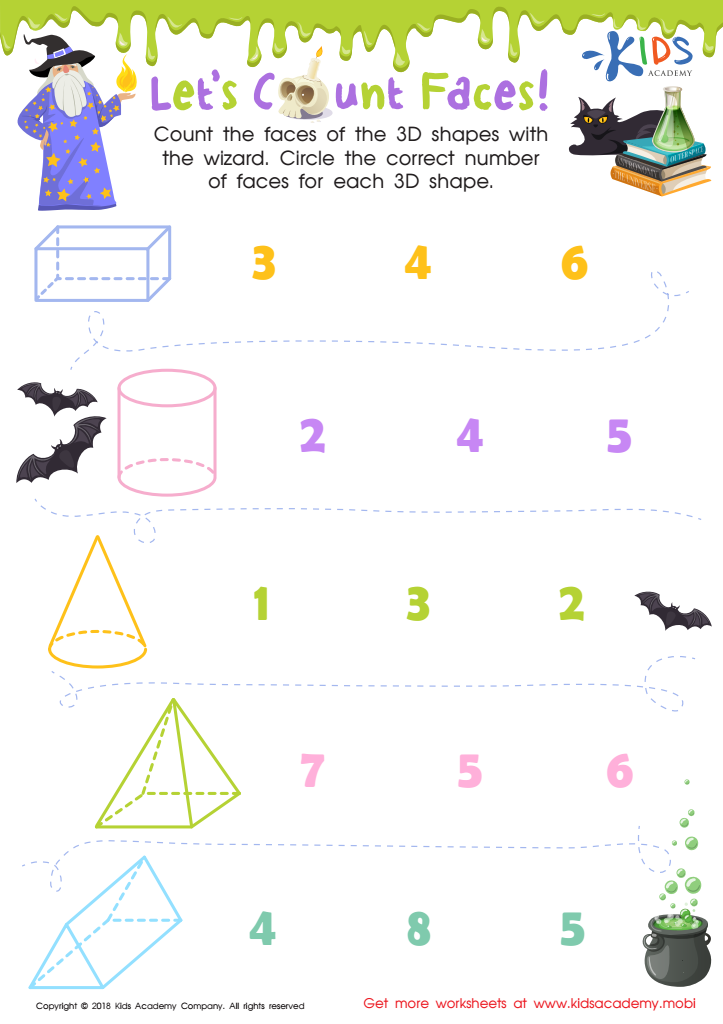
Let's Count Faces! Worksheet
 Assign to My Students
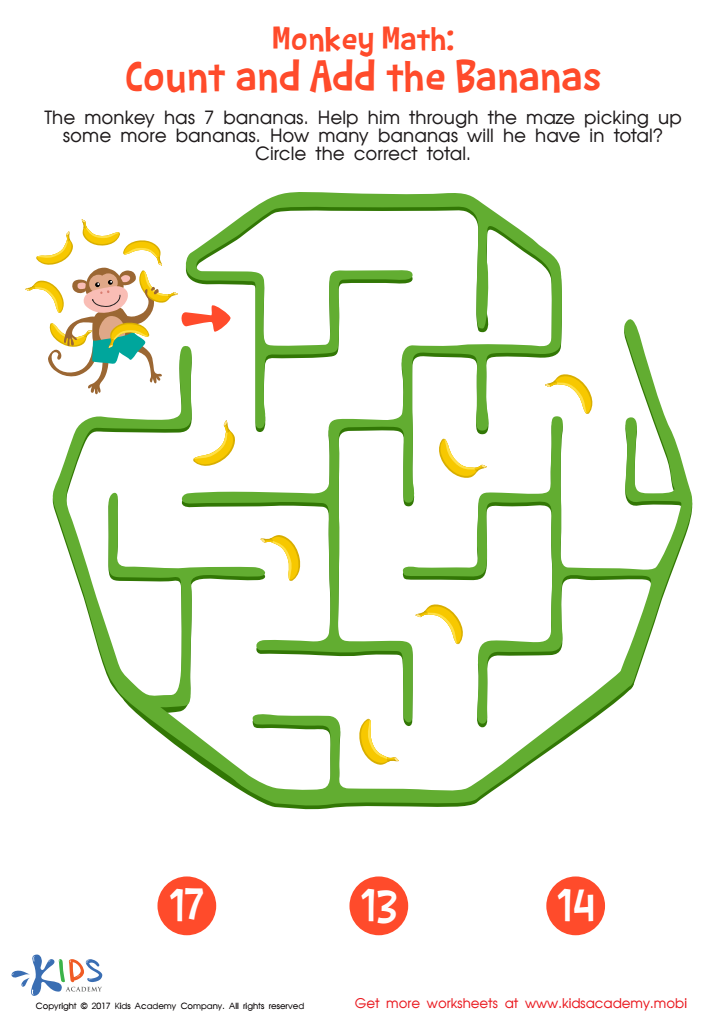
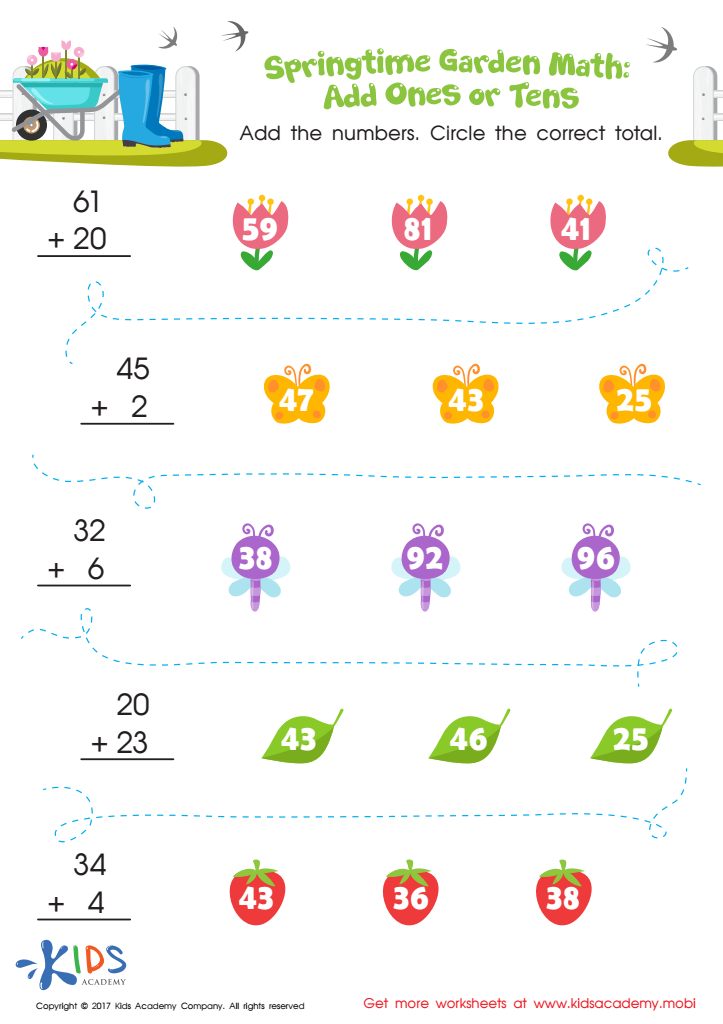
Springtime Garden Math Worksheet








Visualization skills in math are crucial for children aged 7 to 9, as they form a foundational part of mathematical understanding and problem-solving. At this age, children are transitioning from concrete, hands-on learning to more abstract concepts. Developing strong visualization skills helps them mentally manipulate numbers and shapes, making complex ideas more accessible. This not only aids in comprehension but also enhances critical thinking and reasoning abilities, which are essential as they progress in their education.
Furthermore, effective visualization in math assists children in grasping relationships between numbers and geometric concepts, leading to improved performance in tasks such as addition, subtraction, multiplication, and division, as well as in geometry and measurement. Engaging teaching methods that incorporate visual aids like drawings, diagrams, and interactive tools can captivate students, making learning enjoyable and stimulating.
From a parental perspective, encouraging visualization skills can nurture confidence and resilience in math. Children who visualize concepts are more likely to approach challenges analytically rather than with anxiety. Consequently, by prioritizing visualization skills, both parents and teachers play a vital role in developing well-rounded, adept learners who are not only prepared for subsequent educational challenges but are also equipped with lifelong problem-solving tools.








