
Mathematical reasoning Measurement Worksheets for Ages 7-9
3 filtered results
Difficulty Level
Grade
Age
-
From - To
Subject
Activity
Standards
Boost your child's problem-solving skills with our Mathematical Reasoning Measurement Worksheets for ages 7-9! Designed to enhance young learners' understanding of measurements, these engaging activities cover a range of topics such as length, weight, and volume. Each worksheet is crafted by educational experts and aims to develop critical thinking abilities, logical reasoning, and practical math applications. Tailored to align with school curricula, these printables make learning fun and effective. Perfect for classroom use or at-home practice, our worksheets ensure a solid foundation in math that will benefit your child for years to come. Download them today and explore math in a new and exciting way!
Favorites
With answer key
Interactive
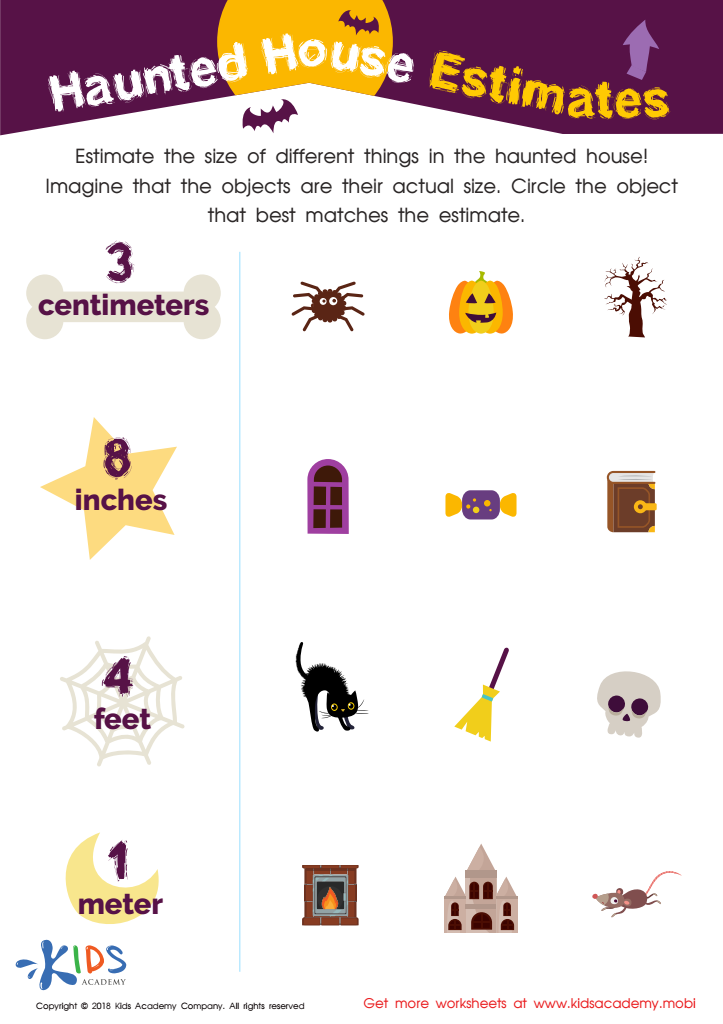
Haunted House Estimates Worksheet
Enliven your kid's learning with this printable worksheet! Have them estimate the size of objects and creatures in a haunted house, then circle the ones that match their estimates. They'll need to understand different measuring units beforehand. It's an exciting way to learn!
 Assign to My Students
Haunted House Estimates Worksheet
Worksheet
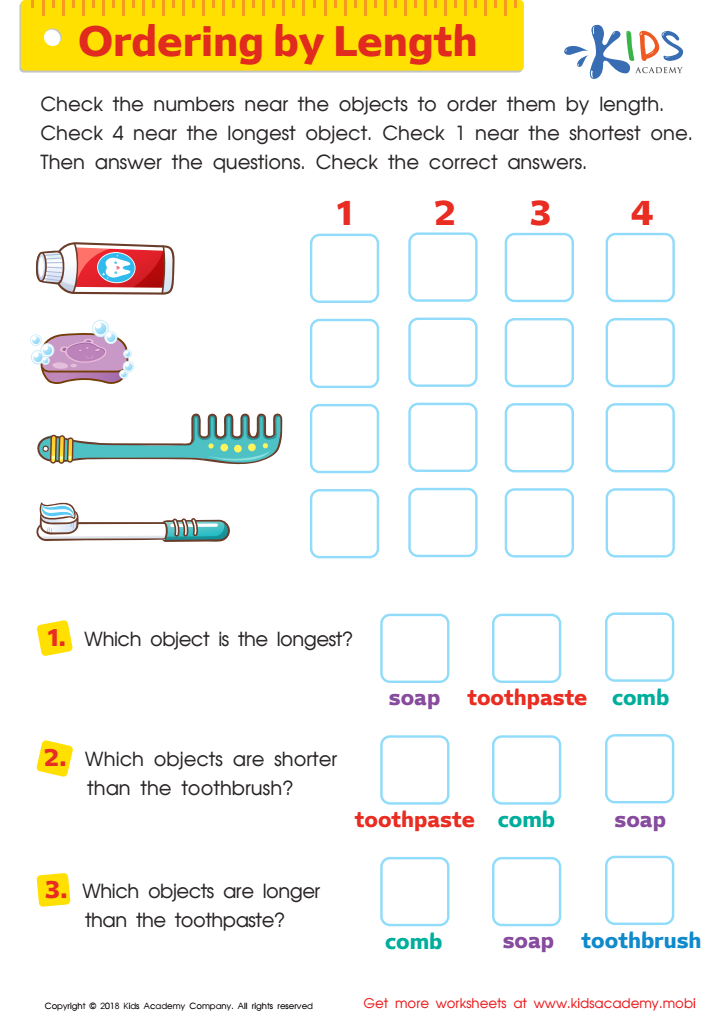
Ordering by Length Worksheet
Compare objects to learn about measurement! Before purchasing a ruler, get kids to understand length by comparing objects and labeling them as longer or shorter than others. Use this printable math worksheet to help children think about measurement. It will show pictures of objects and ask children to categorize them by length.
Ordering by Length Worksheet
Worksheet
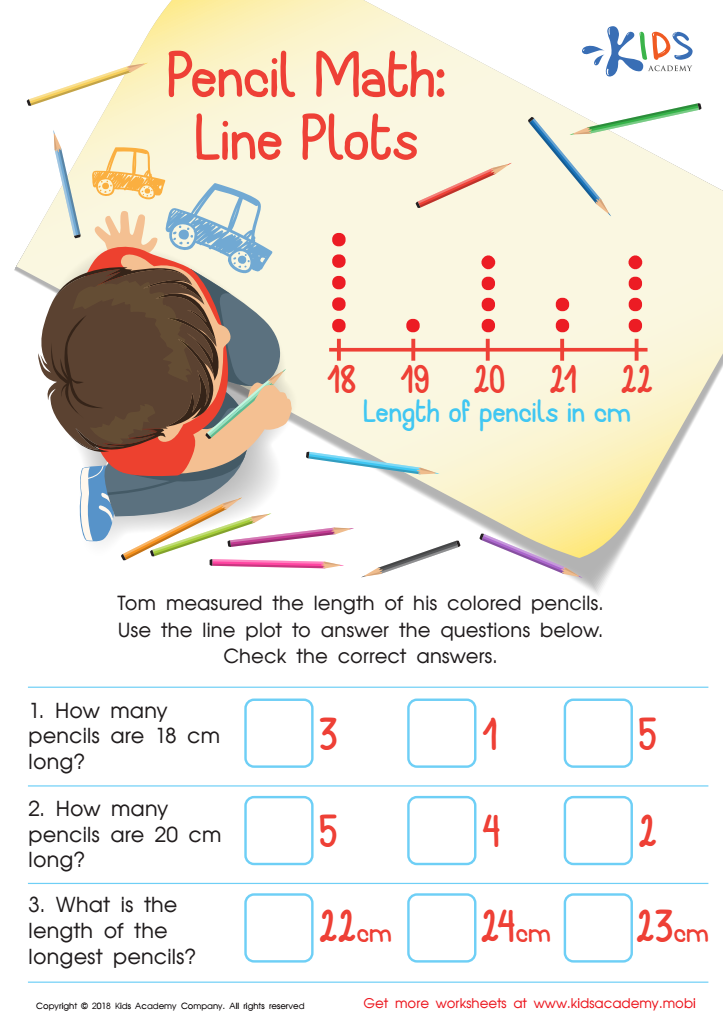
Pencil Math: Line Plots Worksheet
Your child will meet Tom in this worksheet, helping him find the length of his colored pencils. Tom has written the lengths in cm, and the line plot will help your kids answer the questions. Check the correct answers for each, including how many pencils are of a certain length. The line plot makes it easy to find the answers.
Pencil Math: Line Plots Worksheet
Worksheet
Join Kids Academy for Free
Who is primarily going to use this learning content?








Mathematical reasoning and measurement skills are foundational elements of a child’s education, especially for ages 7-9, a period marked by significant cognitive development. This stage is when children begin to transition from concrete to more abstract thinking, and well-developed mathematical reasoning and measurement skills are critical to support this growth.
Firstly, these skills enhance problem-solving abilities. Through activities involving measurements and logical reasoning, children learn to strategize, compare, and analyze situations, leading to more effective decision-making both academically and in daily life. For example, grasping the basics of measurement helps children understand quantities, lengths, and volumes, which are vital for sciences and real-world tasks such as cooking or even understanding time.
Moreover, cultivating these skills early builds a strong foundation for future learning. Mathematics is cumulative; early competence in basic reasoning and measurement guess equips students with the confidence and skills needed for more complex math concepts they will encounter later. This fosters a positive attitude toward mathematics, reducing math anxiety, and encouraging continuous engagement and curiosity.
Additionally, these skills intersect with other subjects. Measurement, for instance, ties into geography with map skills, science with experiments, and art with spatial awareness. Ultimately, a strong emphasis on mathematical reasoning and measurement encourages well-rounded intellectual development, preparing children to become adept learners and problem-solvers.








