
Time recognition Time Worksheets for Ages 7-9
3 filtered results
Difficulty Level
Grade
Age
-
From - To
Subject
Activity
Standards
Boost your child’s time-telling skills with our interactive and engaging Time Recognition Time Worksheets, designed specifically for ages 7-9. These expertly crafted worksheets help young learners master the essentials of reading clocks, understanding hours and minutes, and recognizing various time formats. Fun activities and vibrant visuals make learning to tell time enjoyable and accessible, ensuring kids develop confidence and proficiency. Perfect for classroom use or at-home practice, our worksheets align with educational standards and enhance foundational math skills. Start your child's journey to time mastery with Kids Academy’s comprehensive collection today!
Favorites
With answer key
Interactive
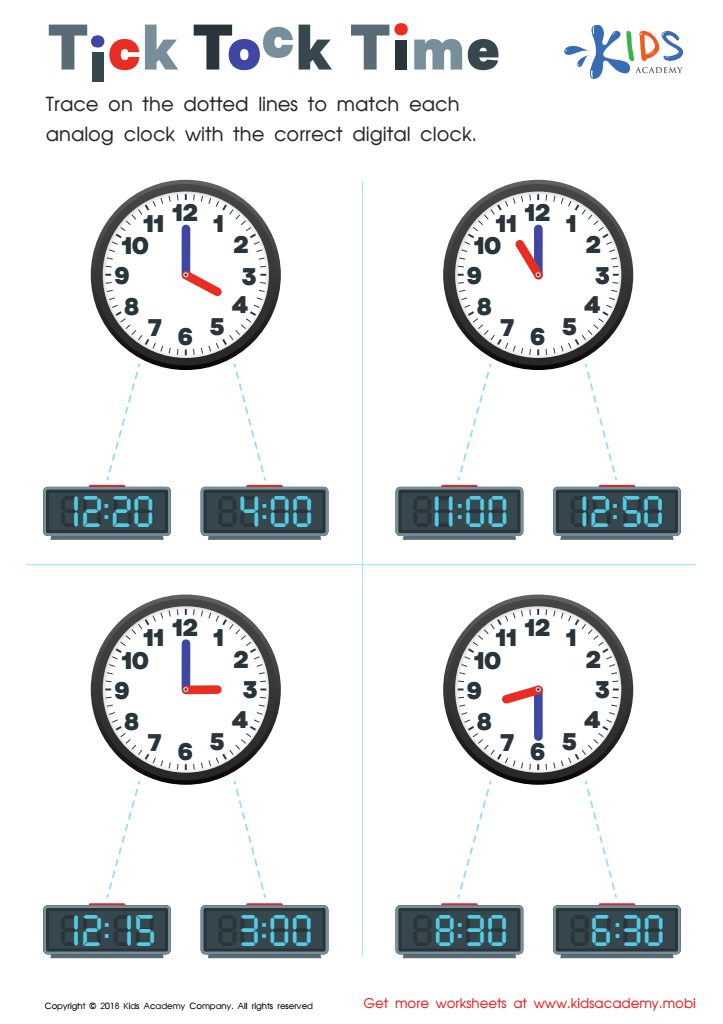
Tick Tock Time Worksheet
Trace the dotted lines on this worksheet to match analog and digital clocks! It's a great way to help your kids learn time-telling. They'll get better at converting analog to digital, and vice versa. Get your children to try it - it's a fun way to practice!
 Assign to My Students
Tick Tock Time Worksheet
Worksheet
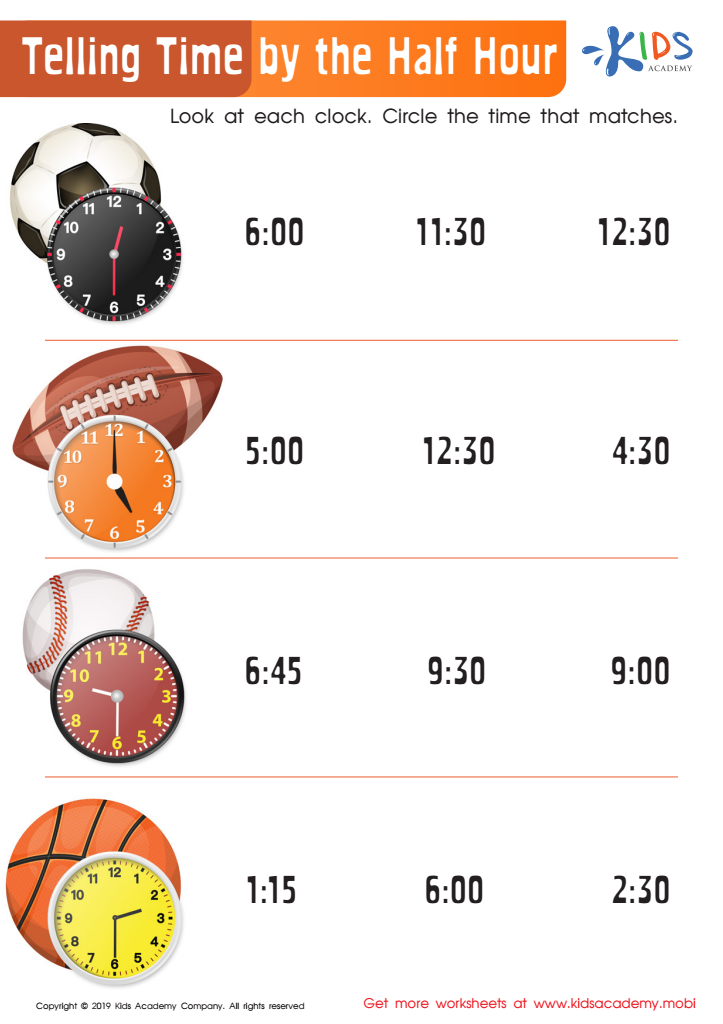
Telling Time by the Half Hour Worksheet
Teach kids to tell time with this worksheet! Four clocks are labeled with different times; help your child circle the right one. It's a great way to teach them to read analog and digital clocks, watches, and written times. Easy and fun learning!
Telling Time by the Half Hour Worksheet
Worksheet
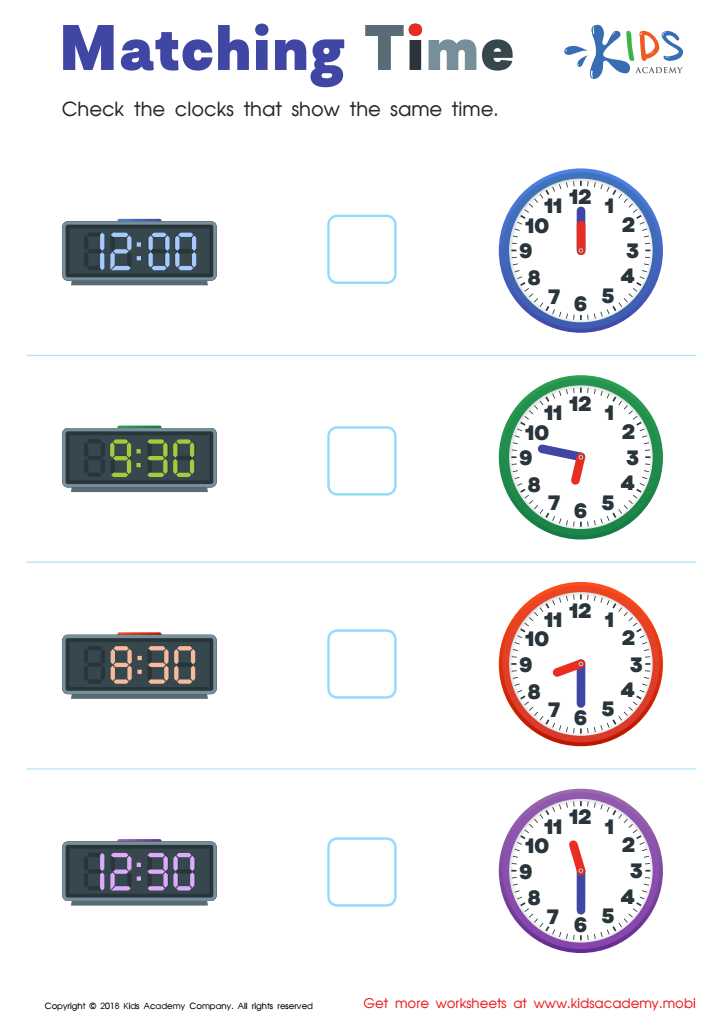
Matching Time Worksheet
Teach your child to read time in both digital and analog formats with this helpful printout. They'll identify clocks that match in both formats and check them off. Colorful and engaging, it's a great way to help your child understand the concept of time-telling.
Matching Time Worksheet
Worksheet
Join Kids Academy for Free
Who is primarily going to use this learning content?








Time recognition is a critical skill that lays foundational groundwork for children aged 7-9. During these developmental years, understanding the concept of time helps children gain a sense of order and predictability in their daily lives. Recognizing and telling time promotes independence, enabling kids to manage simple routines like knowing when it's time to wake up, go to school, or complete a task. Time management skills cultivated during this phase support academic success and foster responsibility and self-discipline.
Time recognition also enhances mathematical abilities. Reading clocks requires an understanding of numbers, sequence, and intervals, which are core arithmetic principles. Learning to differentiate between hours and minutes fosters critical thinking and problem-solving skills, while interpreting a schedule or calendar helps in understanding broader concepts like days, weeks, and months, building a basis for history and geography studies linked to timelines and events.
Moreover, grasping time concepts aids social skills development. Children learn to respect others' time, understanding the importance of punctuality and the consequences of delays. Over time, this nurtures empathy and cooperative behavior.
In summary, parents and teachers should prioritize time recognition at this age to encourage structured living, academic proficiency, and essential life skills that will benefit children throughout their lives and into adulthood.








