Enhancing math skills Times Tables Worksheets for Ages 7-9
3 filtered results
-
From - To
Unlock your child's mathematical potential with our "Enhancing Math Skills: Times Tables Worksheets for Ages 7-9." Designed to provide engaging, interactive learning experiences, these worksheets help children master multiplication in a fun and effective way. Our resources cater to various learning styles, ensuring comprehension and retention through practice. By incorporating games, puzzles, and visual aids, students gain confidence in their skills, making math a more enjoyable subject. Suitable for homeschool or classroom use, these printable worksheets are perfect for reinforcing key concepts and preparing your child for more advanced math challenges. Join us in making math mastery an exciting journey!
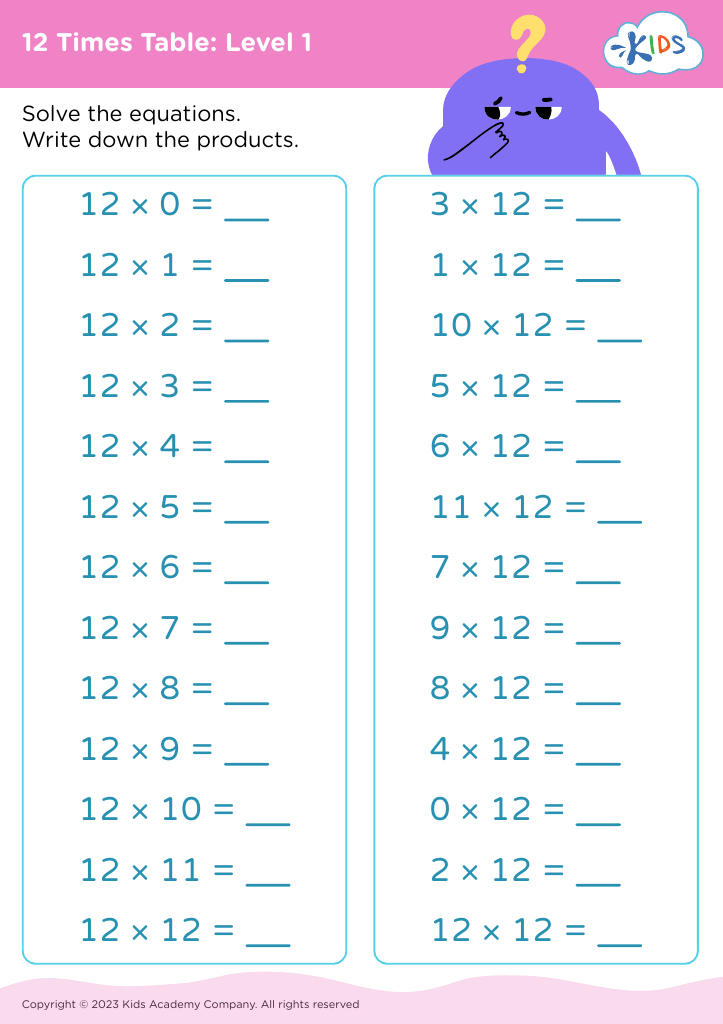
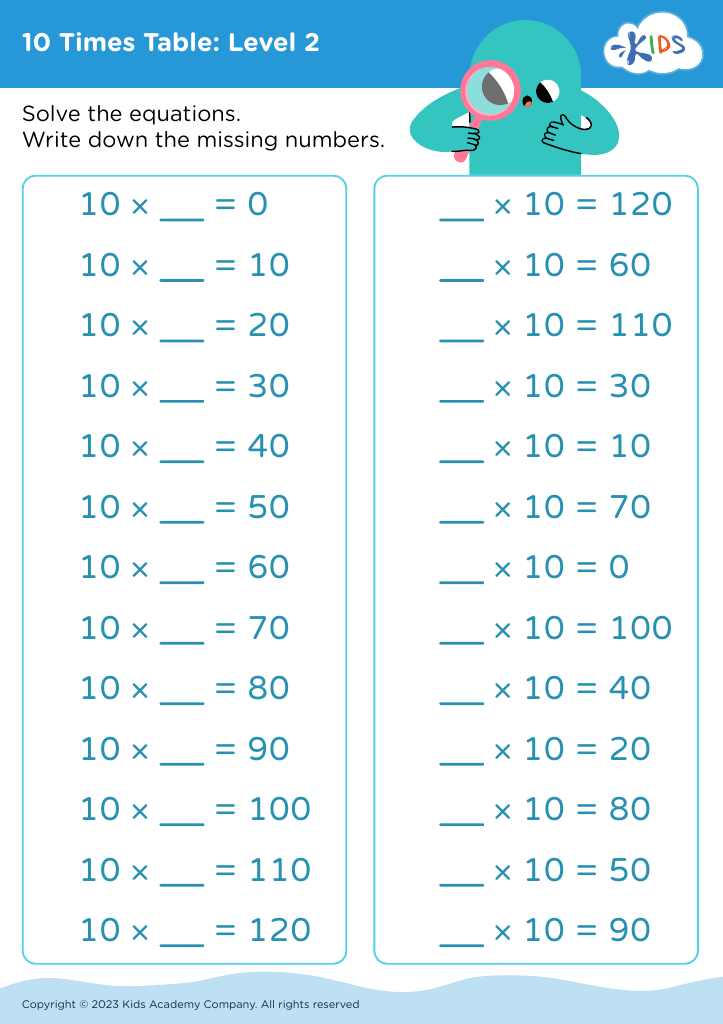
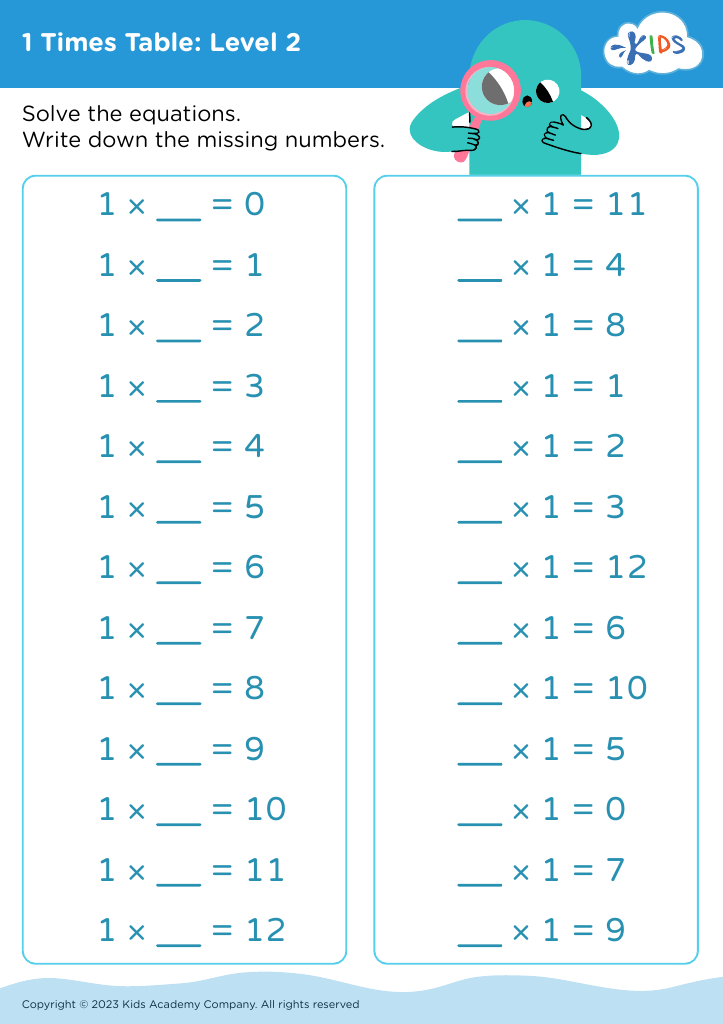





Enhancing math skills, particularly through mastering times tables, is crucial for children aged 7-9. During this developmental stage, children are building a foundation for future mathematical understanding. Times tables are essential because they improve fluency in multiplication, enabling children to solve more complex problems with confidence. When children know their times tables, they can focus on higher-level concepts, such as division, fractions, and algebra, which are introduced later.
Moreover, solid math skills foster critical thinking and problem-solving abilities, skills that are invaluable not only in academics but in everyday life. They encourage a positive attitude toward math, reducing math anxiety and allowing students to engage more actively in their learning.
Parents and teachers play a pivotal role in supporting this enhancement. Engaging children in fun and interactive ways to practice times tables—through games, songs, or hands-on activities—can make learning enjoyable and memorable. Furthermore, celebrating small achievements can boost self-esteem and motivation.
In summary, fostering strong multiplication skills in young learners not only equips them academically but also instills a lifelong love for learning. Therefore, prioritizing the enhancement of times tables should be a collective goal for both parents and educators.








