Reading comprehension Building Vocabulary Worksheets for Ages 7-9 - Page 4
79 filtered results
-
From - To
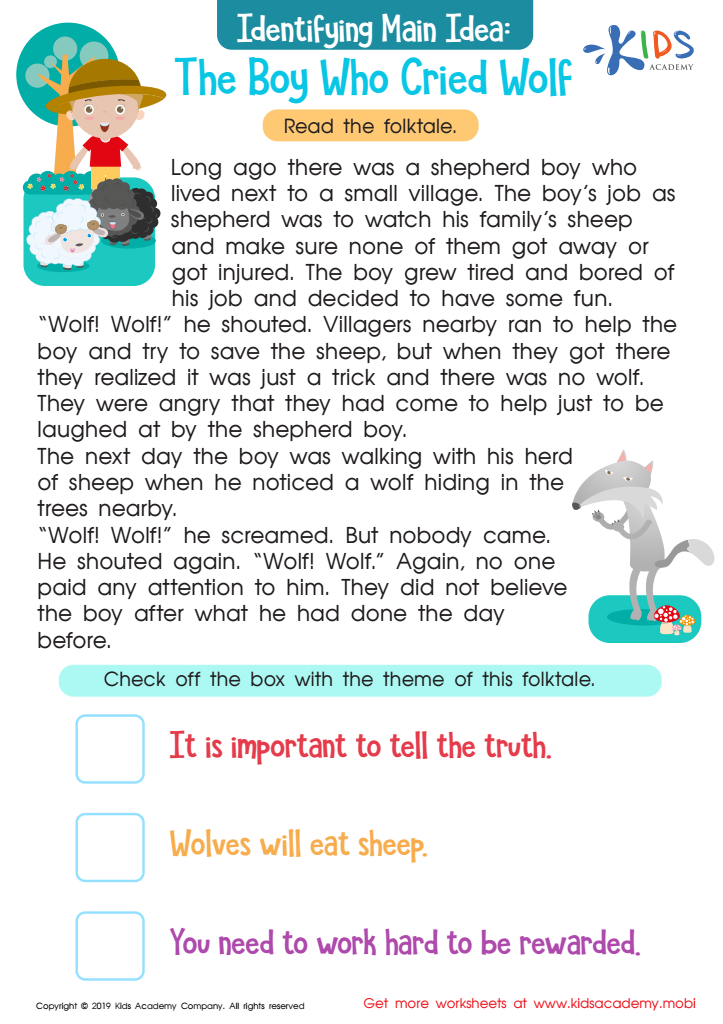
The Boy Who Cried Wolf Part 2 Worksheet
 Assign to My Students











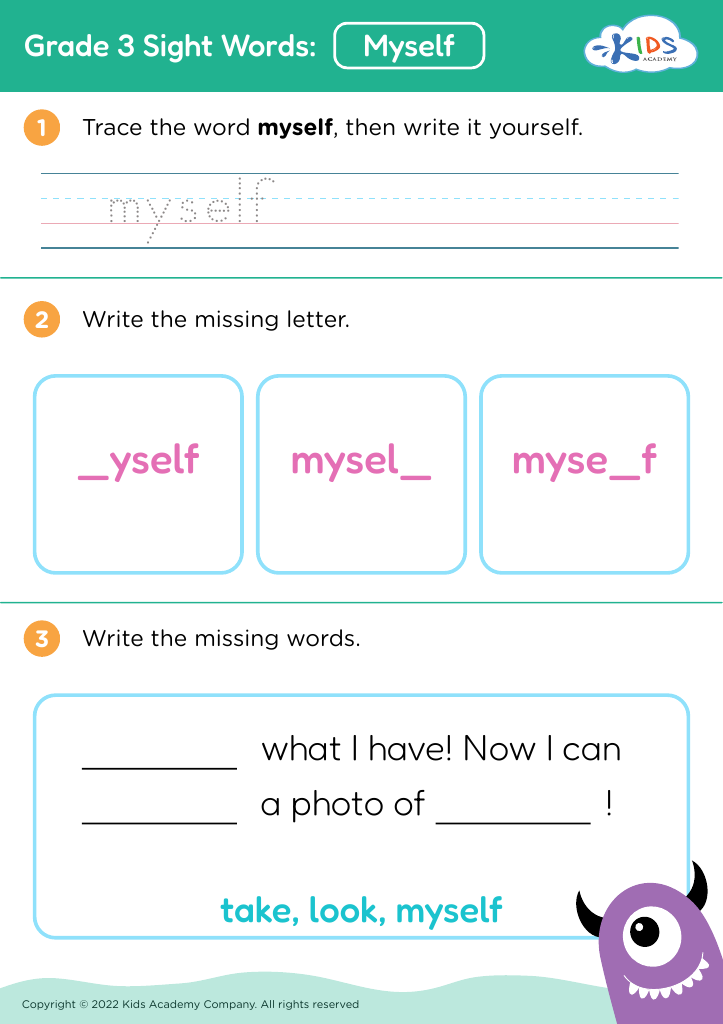
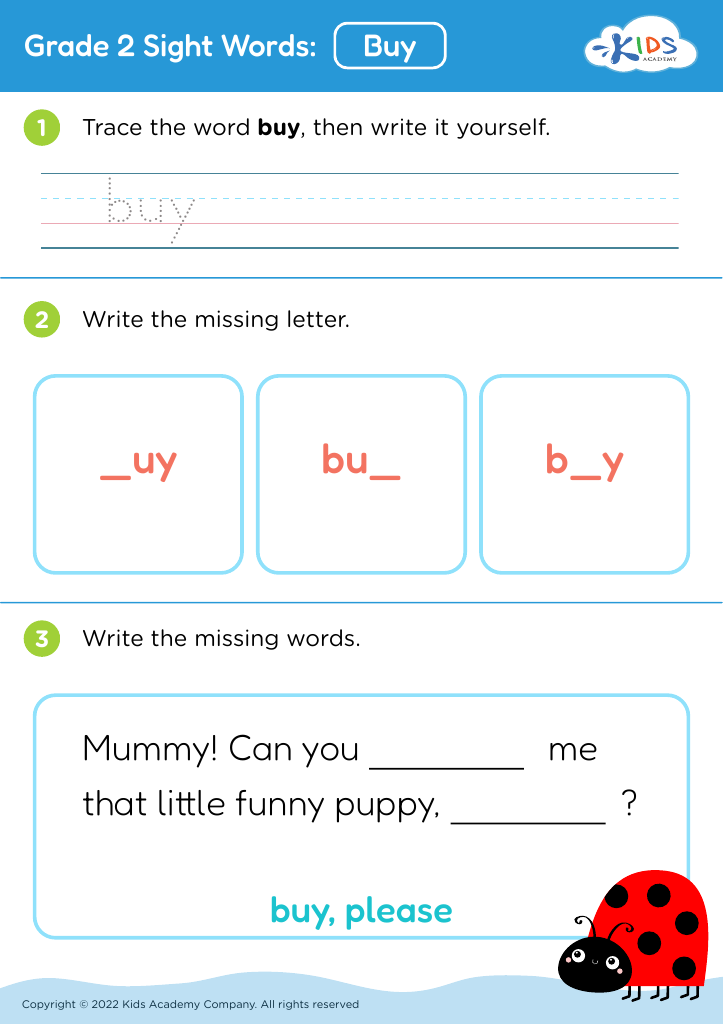
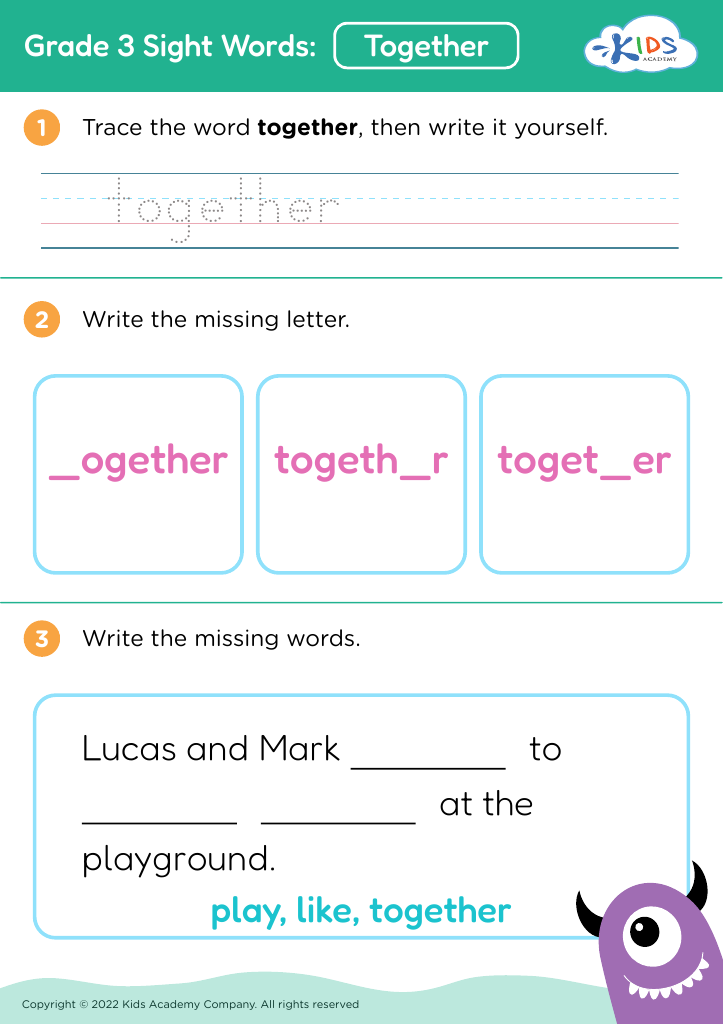
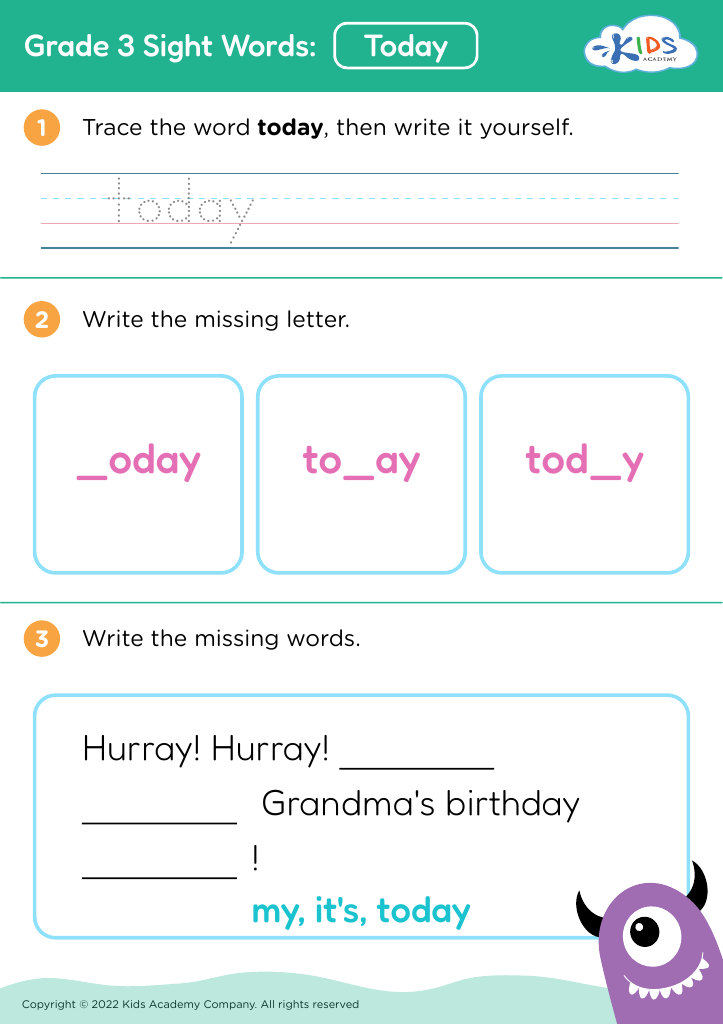
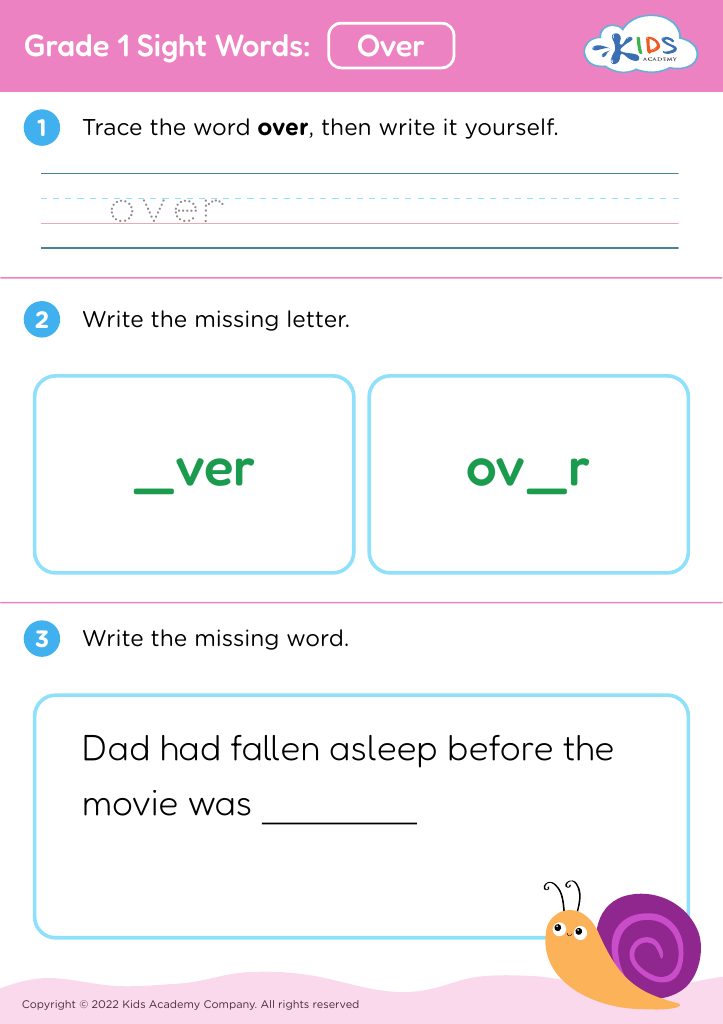
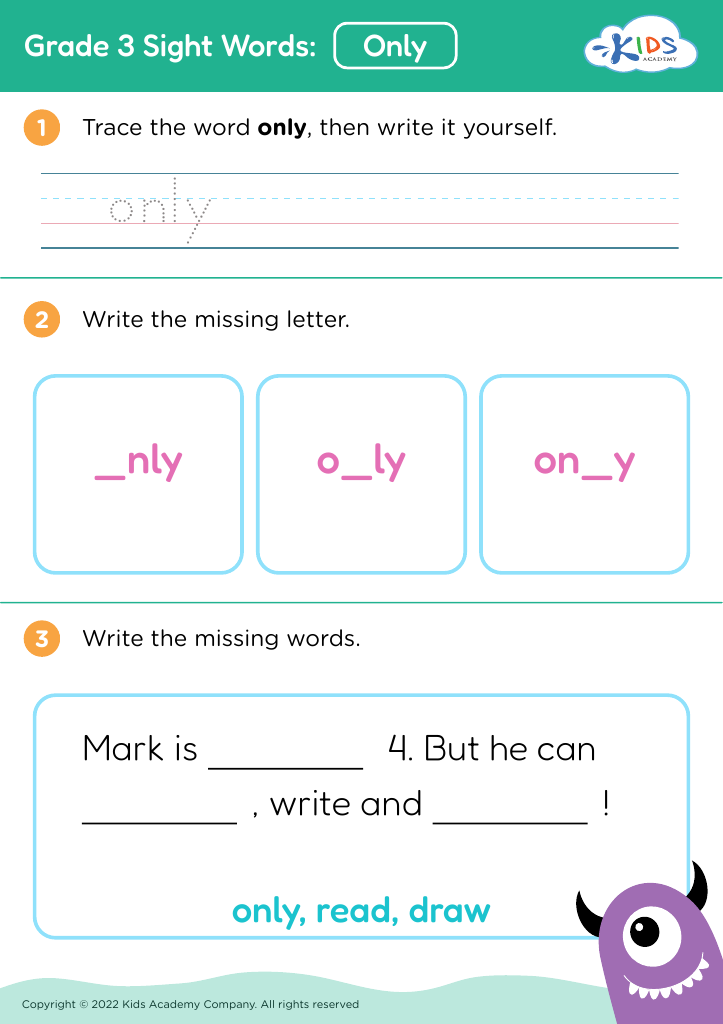







Reading comprehension and vocabulary building are crucial skills for children aged 7 to 9, serving as foundational elements that enhance overall literacy and academic success. At this age, children transition from learning to read to reading to learn, making it essential that they develop a strong understanding of the texts they encounter.
Parents and teachers play a key role in fostering these skills because proficient reading comprehension goes beyond decoding words; it involves the ability to understand, analyze, and engage with the material. Improved vocabulary is directly linked to better comprehension, as a robust vocabulary allows children to grasp complex ideas and make connections within the text. When children can understand and articulate what they've read, they are more likely to retain information, participate in discussions, and develop critical thinking skills.
Encouraging rich vocabulary through diverse reading materials, discussions, and contextual learning also promotes expressive language skills, enabling children to communicate their thoughts more effectively. By prioritizing reading comprehension and vocabulary building, parents and teachers equip children with essential tools for academic achievement and lifelong learning, setting them on a path to success in both school and beyond.








