
Reading Improvement Building Vocabulary Worksheets for Ages 7-9
5 filtered results
Difficulty Level
Grade
Age
-
From - To
Subject
Activity
Standards
Enhance your child's vocabulary and reading skills with our "Reading Improvement Building Vocabulary Worksheets for Ages 7-9". These engaging and educational printables are designed to support young learners in expanding their word knowledge. Each worksheet offers fun activities that challenge students and foster a deeper understanding of language. Perfect for classroom or home use, our resources help children become more confident readers and communicators. By integrating these worksheets into your child's routine, you’ll pave the way for a successful and enriched learning experience. Discover effective and enjoyable methods to boost your child’s vocabulary today!
Favorites
With answer key
Interactive
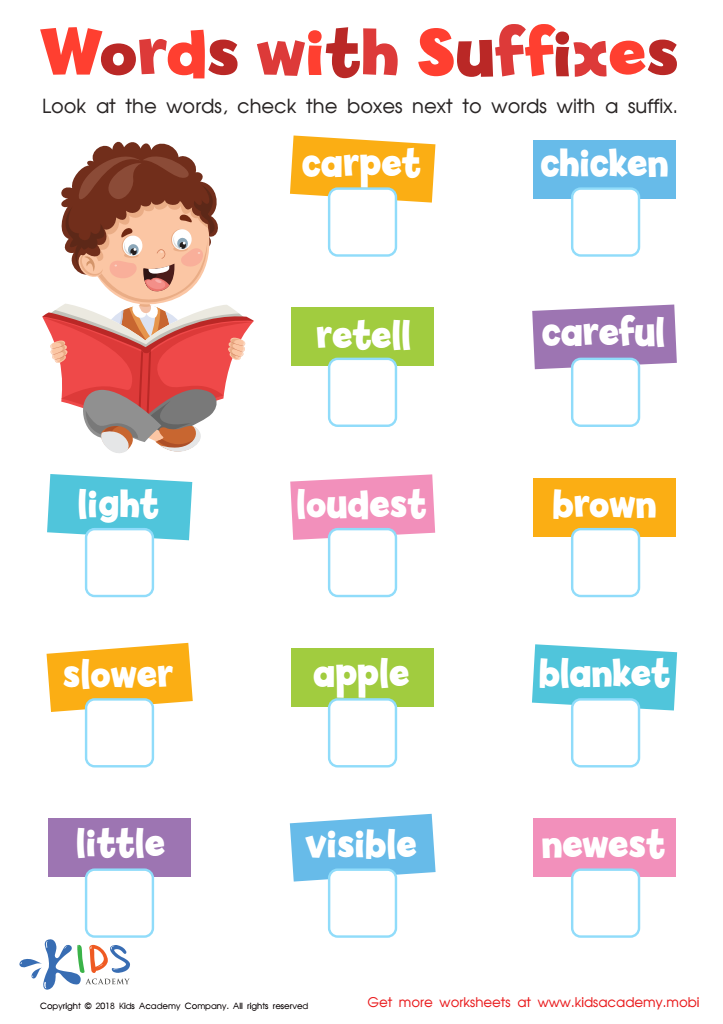
Reading: Words With Suffixes Worksheet
Help your students understand suffixes and build reading fluency with this worksheet. Have them read each word, then choose the ones with a suffix. Practicing this will lead to better comprehension and more confident reading. Save it for future use in language and reading classes.
 Assign to My Students
Reading: Words With Suffixes Worksheet
Worksheet











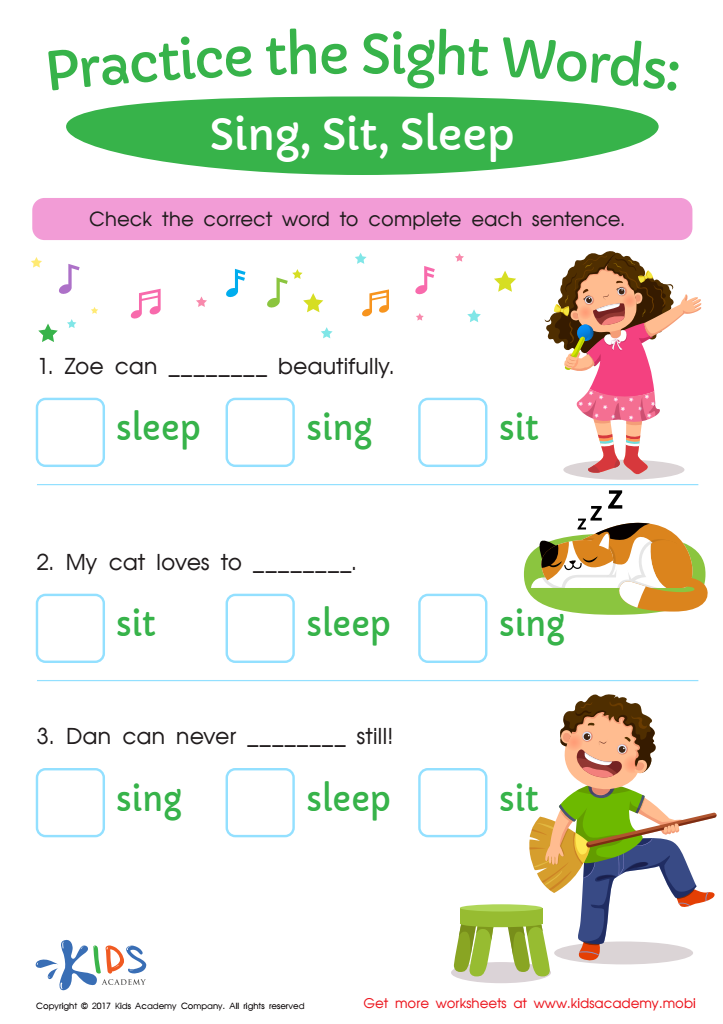
Sing, Sit, Sleep Sight Words Worksheet
Practice sight words with this printable worksheet featuring sing, sit, sleep! Confusing at first, these words can be mastered with the help of simple sentences and fun illustrations.
Sing, Sit, Sleep Sight Words Worksheet
Worksheet
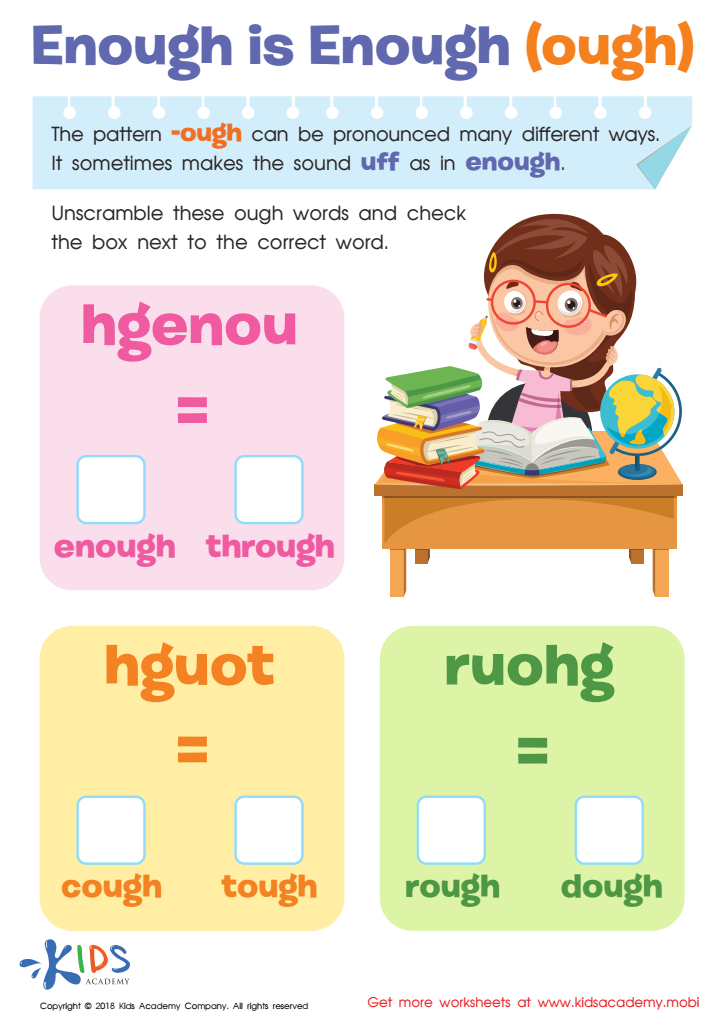
Enough Is Enough (ough) Worksheet
As your students learn more about reading and pronouncing words, they can explore how some word patterns can be said differently. The 'ough' pattern, for instance, can be pronounced several ways. 'Enough' has the 'uff' sound. Provide your students with examples of words pronounced similarly and help them unscramble 'ough' words on this worksheet, ticking the box for the correct word.
Enough Is Enough (ough) Worksheet
Worksheet
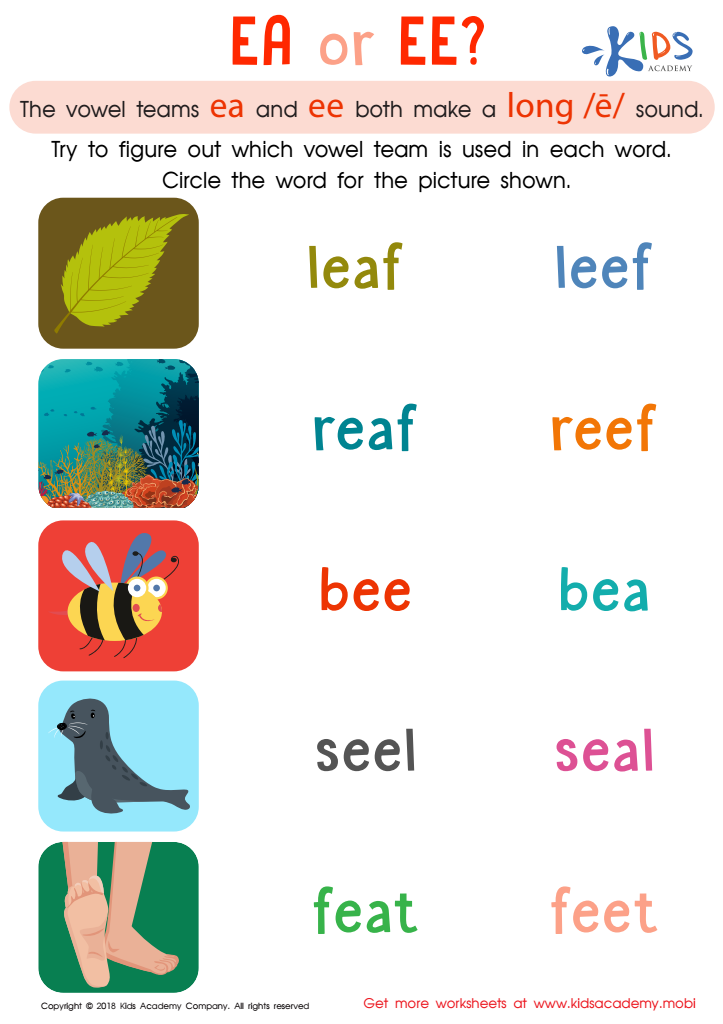
Reading: EA and EE Worksheet
Confused by the long E sound's varying spellings? Give students practice with this printable. It will improve their reading and spelling skills by helping them identify the correct spellings for words with the /ee/ and /ea/ vowel teams. Clear up the confusion and sharpen their skills.
Reading: EA and EE Worksheet
Worksheet
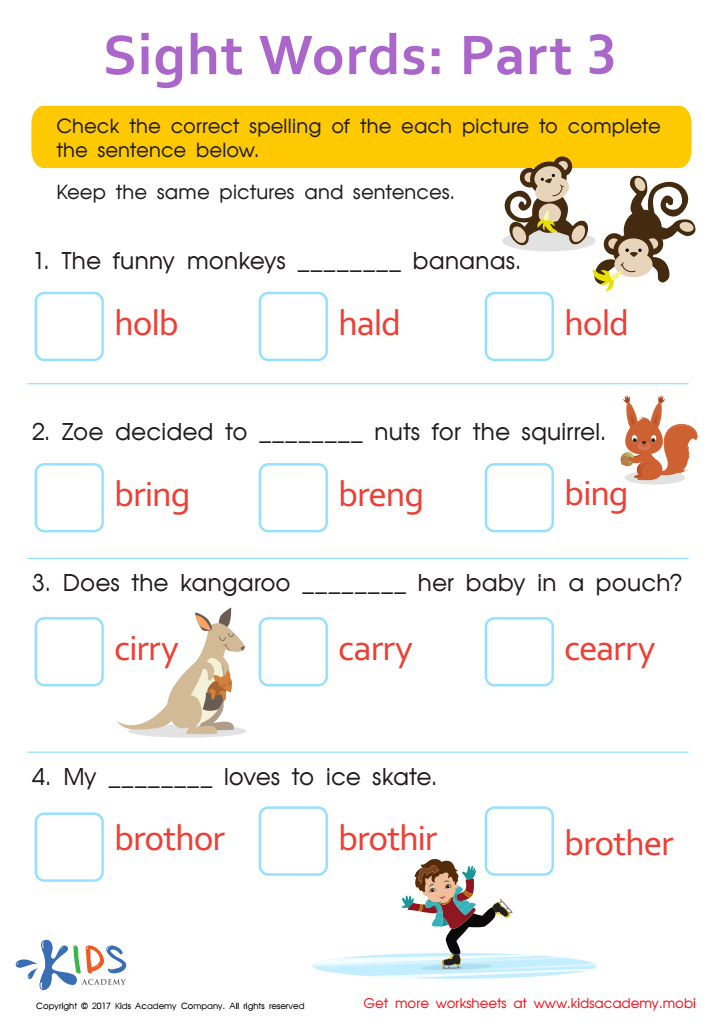
Hold, Bring, Carry, Brother Sight Words Worksheet
This sight words worksheet has fun illustrations to engage kids. They must read each sentence, then fill in the missing word, selecting from: hold, bring, carry, brother!
Hold, Bring, Carry, Brother Sight Words Worksheet
Worksheet
Join Kids Academy for Free
Who is primarily going to use this learning content?








Parents and teachers should prioritize Reading Improvement and Building Vocabulary for children ages 7-9 because it lays a critical foundation for their future academic success and overall cognitive development. At this stage, children transition from "learning to read" to "reading to learn," meaning their ability to understand and absorb new information hinges on strong reading and vocabulary skills.
Enhanced vocabulary allows children to better comprehend reading materials across all subjects—whether it’s understanding math problems, science concepts, or history facts. A rich vocabulary equips them with the language tools needed to express thoughts clearly and accurately, enhancing both oral and written communication skills.
Reading improvement and vocabulary building also boost cognitive abilities such as critical thinking, problem-solving, and logical reasoning. With a robust vocabulary, children can make connections between concepts and ideas more easily, facilitating deeper understanding and more meaningful learning experiences.
Socially, a good command of language helps children interact more effectively with peers and adults, fostering healthy relationships and empathy. It instills a love for reading and learning that can lead to lifelong educational and personal growth.
In essence, strong reading and vocabulary skills set the stage for future success by opening up worlds of knowledge and imagination, making it crucial for parents and teachers to nurture these abilities during the formative years of ages 7-9.








