
Critical thinking skills Reading Fiction Worksheets for Ages 7-9
3 filtered results
Difficulty Level
Grade
Age
-
From - To
Subject
Activity
Standards
Enhance your child's critical thinking skills with our engaging Reading Fiction Worksheets designed for ages 7-9! These worksheets encourage young readers to analyze story elements, make predictions, and draw logical conclusions from their readings. By interacting with compelling narratives, children learn to question, infer, and interpret, building a strong foundation for analytical thinking. Suitable for both home and classroom use, our resources aim to develop comprehension skills while making reading an enjoyable experience. Foster a love for literature and critical analysis in your child with our thoughtfully crafted worksheets that promote deeper understanding and thoughtful engagement with fiction. Explore today!
Favorites
With answer key
Interactive
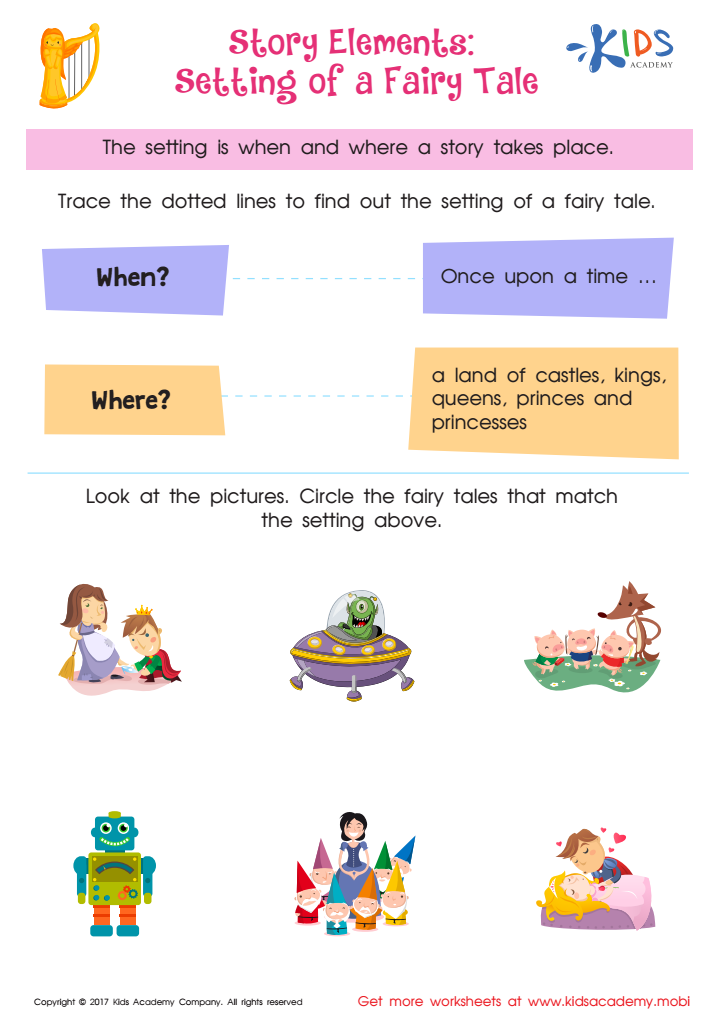
Story Elements: Setting of a Fairy Tale Printable
Help your child learn to analyze stories starting with setting. Use Story Elements worksheet to break down setting into two parts. This will help your child recognize setting quickly and understand its importance in the plot.
 Assign to My Students
Story Elements: Setting of a Fairy Tale Printable
Worksheet
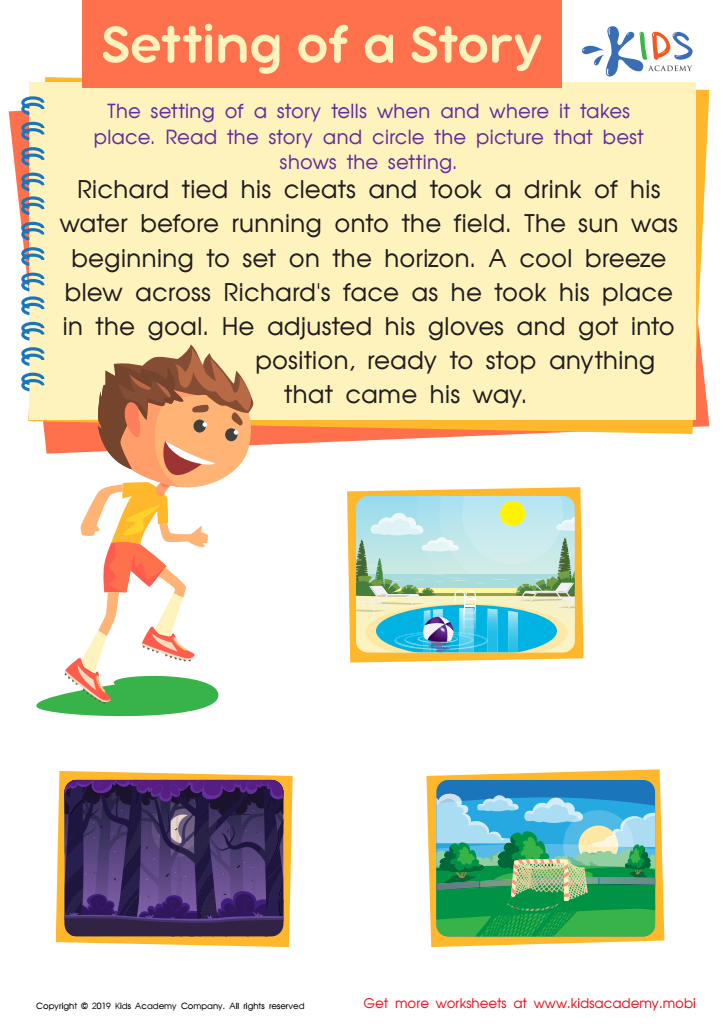
Setting of a Story Worksheet
You need characters, theme, POV, plot and setting to tell a good story. Ask your kids to explain them and use this worksheet with a story to teach them about setting. Read the story with your kids, then have them circle the picture that best shows the setting.
Setting of a Story Worksheet
Worksheet
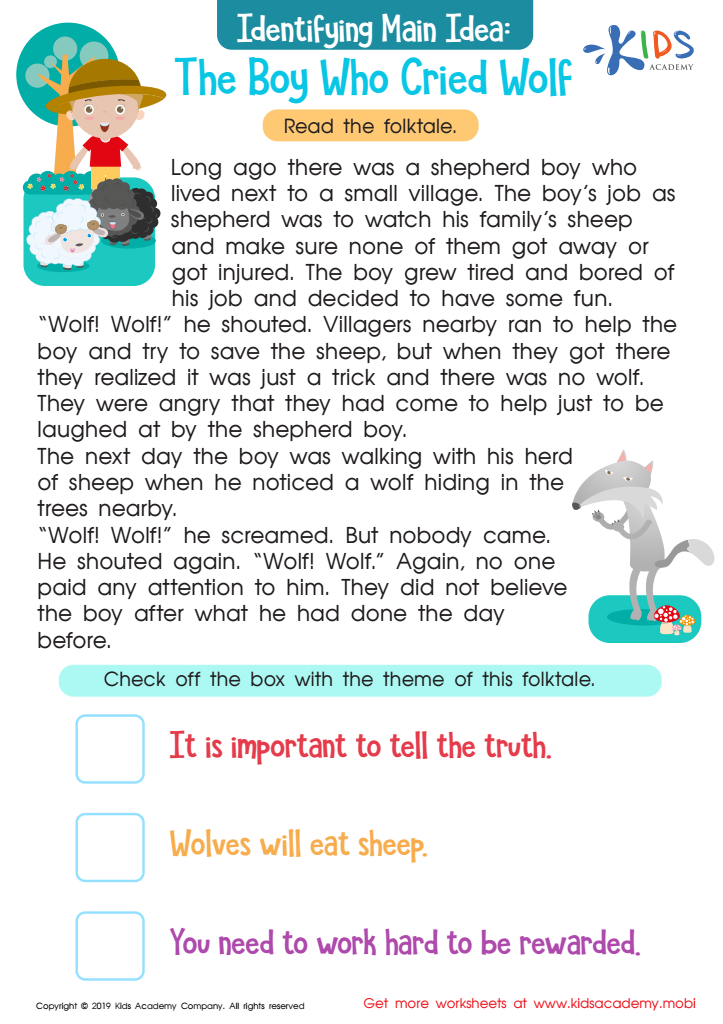
The Boy Who Cried Wolf Part 2 Worksheet
Kids love story time - no doubt they know their favorites! This worksheet tells a story with a theme or main idea. Read it carefully with your kids and ensure they understand every word. Then, help them answer the simple questions at the bottom of the page.
The Boy Who Cried Wolf Part 2 Worksheet
Worksheet
Join Kids Academy for Free
Who is primarily going to use this learning content?


.jpg)





Parents and teachers should care about developing critical thinking skills through reading fiction for children ages 7-9 because these skills are foundational for academic achievement and lifelong learning. At this age, children are transitioning from learning to read to reading to learn, making fiction an engaging avenue for nurturing their analytical abilities. When children read fiction, they are exposed to diverse characters, plots, and settings, which encourage them to evaluate different perspectives and understand complex situations.
Fiction allows children to practice empathy by connecting emotionally with characters, prompting them to question motives and actions. This process encourages them to analyze scenarios, anticipate outcomes, and make judgments based on the information presented. Additionally, reading fiction enhances vocabulary and language skills, both of which are crucial for articulating thoughts and ideas thoughtfully.
Moreover, critical thinking cultivates a child's ability to reason, solve problems, and make decisions – skills invaluable in school and daily life. By prioritizing fiction reading, parents and teachers empower children to think independently and creatively, laying the groundwork for confident, informed thinkers who can navigate the complexities of the world around them. In essence, fostering critical thinking through fiction equips young learners with the tools necessary for future success.








