Shape Recognition Sight Words Worksheets for Ages 7-9
5 filtered results
-
From - To
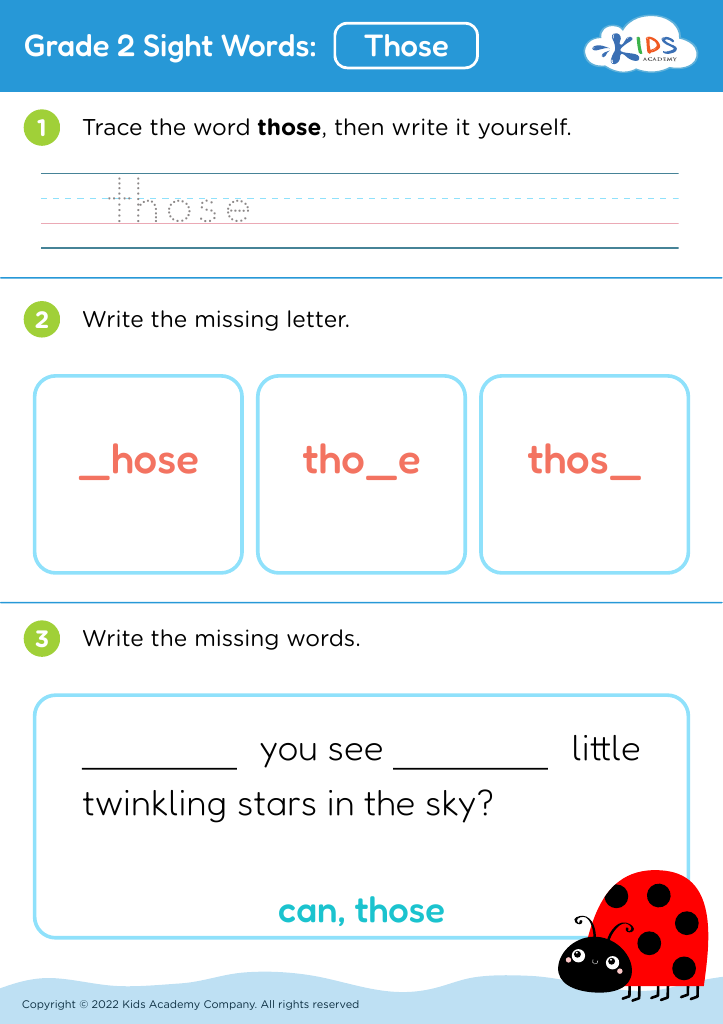
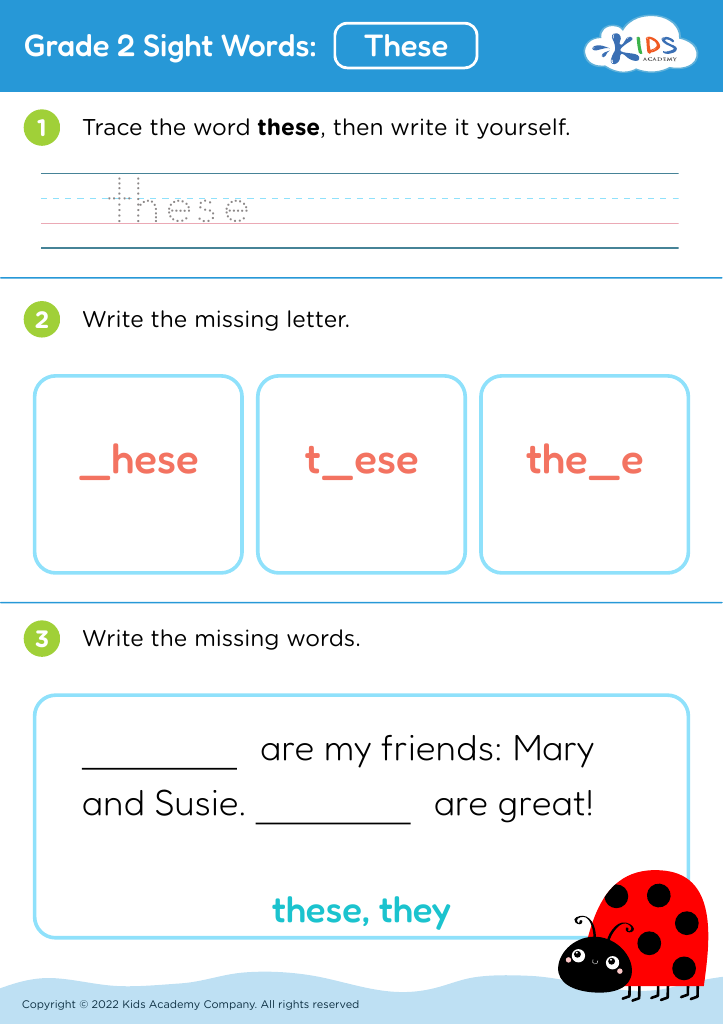
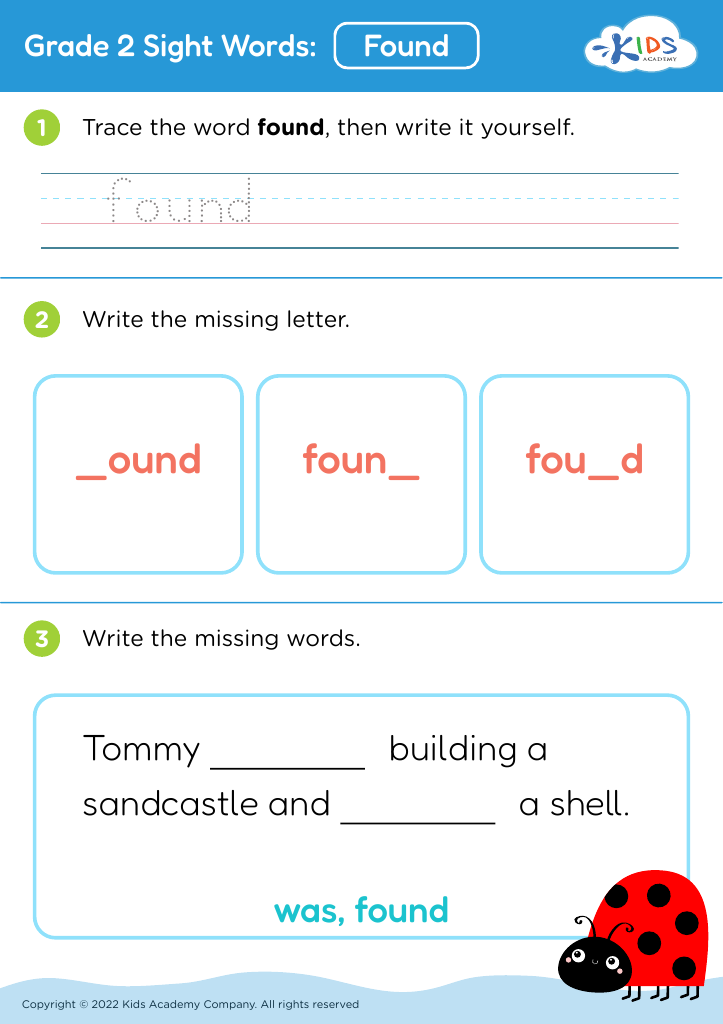
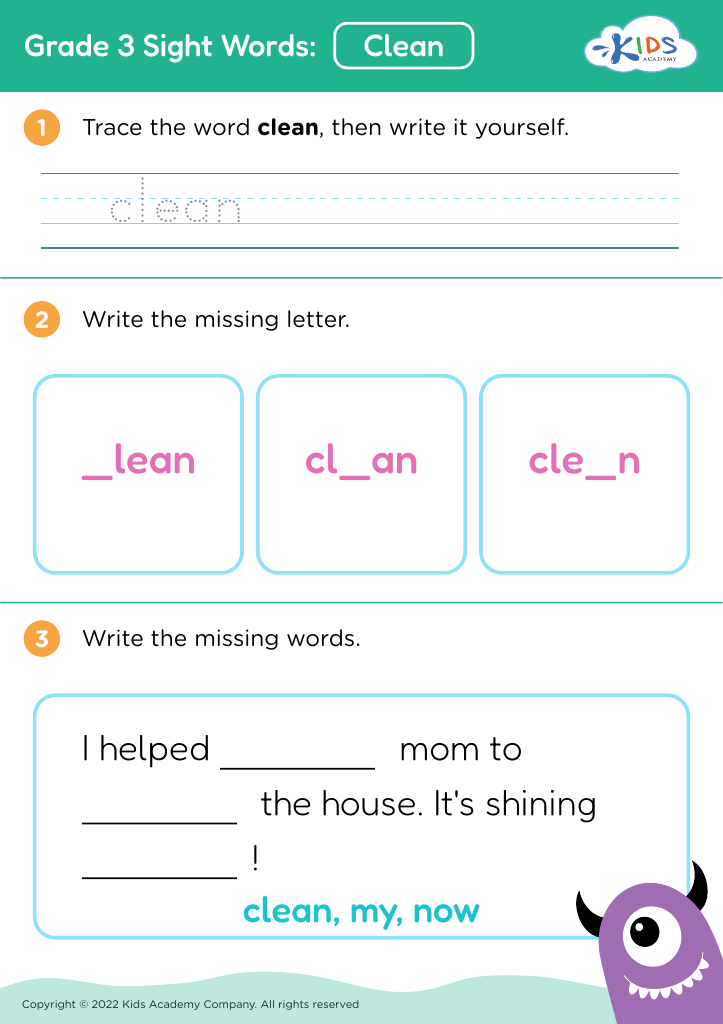
Enhance your child’s reading skills with our engaging Shape Recognition Sight Words Worksheets, designed specifically for ages 7-9. These worksheets seamlessly integrate shape recognition with essential sight word practice, making learning both fun and effective. Kids will enjoy identifying various shapes while reinforcing their vocabulary skills through interactive exercises. Each worksheet is thoughtfully crafted to boost comprehension, promote spatial awareness, and encourage independent learning. Perfect for both classroom settings and at-home activities, these resources offer a comprehensive approach to literacy development. Help your child gain confidence in reading and shape identification today with our versatile and educational worksheets!
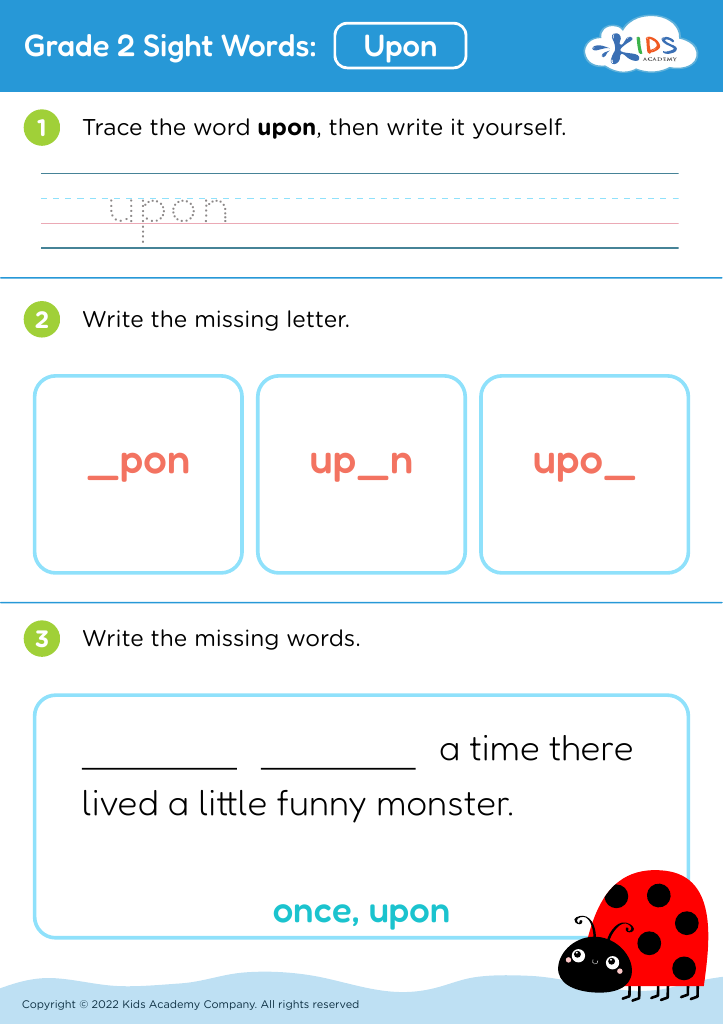











Shape recognition sight words play a crucial role in the literacy development of children aged 7-9, and both parents and teachers should prioritize them for several reasons. First, knowing shape words enhances a child's vocabulary and aids in reading fluency. Sight words, especially those associated with shapes like "circle," "square," and "triangle," serve as building blocks for more complex language and mathematical concepts.
Additionally, integrating shape recognition with sight words supports cognitive development. Children as they age learn to associate shapes with their properties and uses in the real world. Understanding these connections fosters critical thinking and problem-solving skills.
Moreover, strong shape recognition:
-
Enhances comprehension: It allows children to better navigate texts that explain spatial relationships in math, science, and storytelling.
-
Supports STEM learning: A foundational understanding of shapes leads to skills essential for future subjects in science, technology, engineering, and math.
-
Promotes confidence: Mastering sight words makes reading less daunting, increasing children's desire to engage with books and ultimately fostering a love for learning.
Parents and teachers can work together to incorporate shape recognition in everyday activities, creating engaging learning experiences that benefit overall educational growth.