Understanding food chains Animals Worksheets for Ages 7-9
3 filtered results
-
From - To
Enhance your child's understanding of ecosystems with our "Understanding Food Chains Animals Worksheets" designed for ages 7-9. These engaging, educational resources introduce the concept of food chains, illustrating how energy flows through different animal species. Our worksheets combine colorful illustrations and fun activities to captivate young learners while reinforcing critical thinking skills. Children will explore producers, consumers, and decomposers, helping them grasp the interconnectedness of life in nature. Perfect for classroom or home use, these worksheets make learning about wildlife biology enjoyable and informative. Equip your child with the knowledge needed to appreciate the balance within our environment!
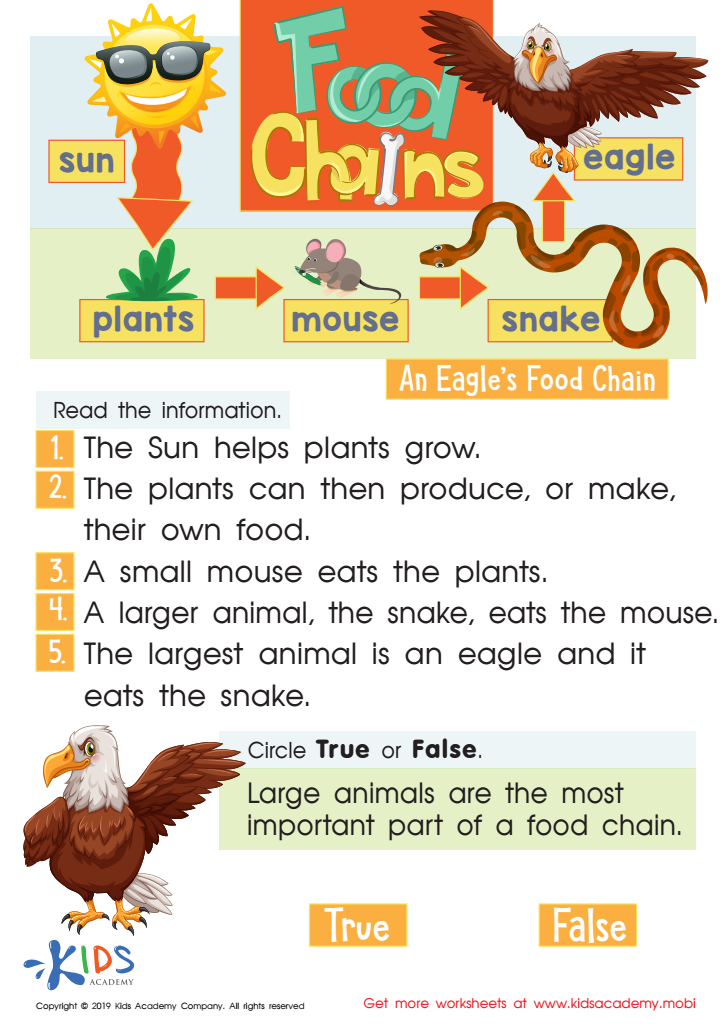
Food Chains Worksheet
 Assign to My Students
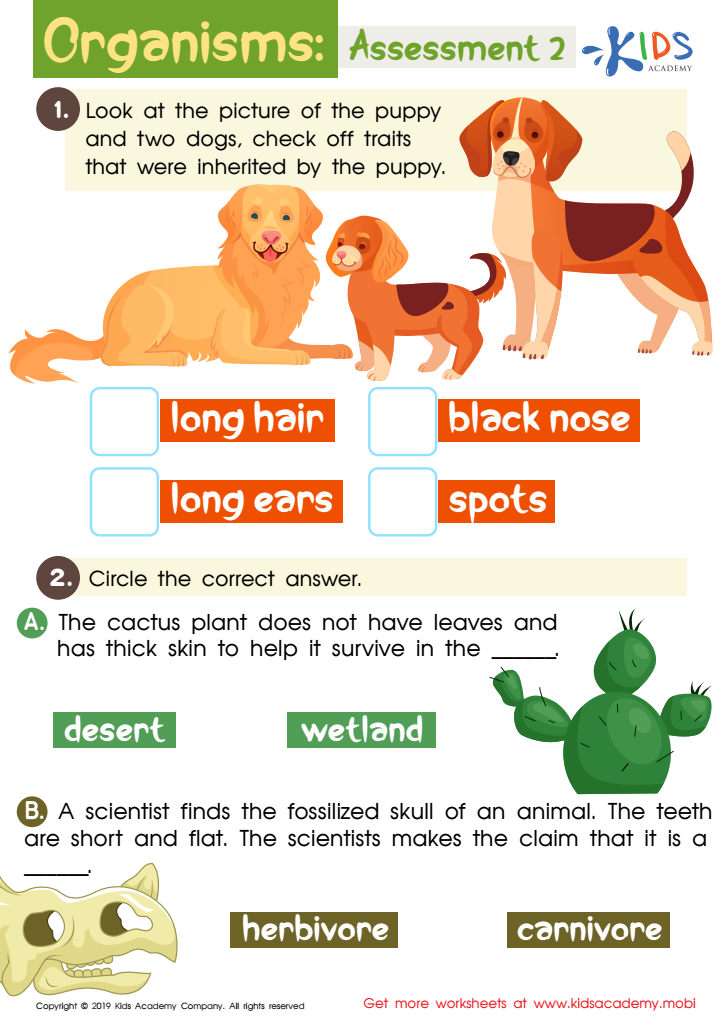
Organisms: Assessment 2 Worksheet
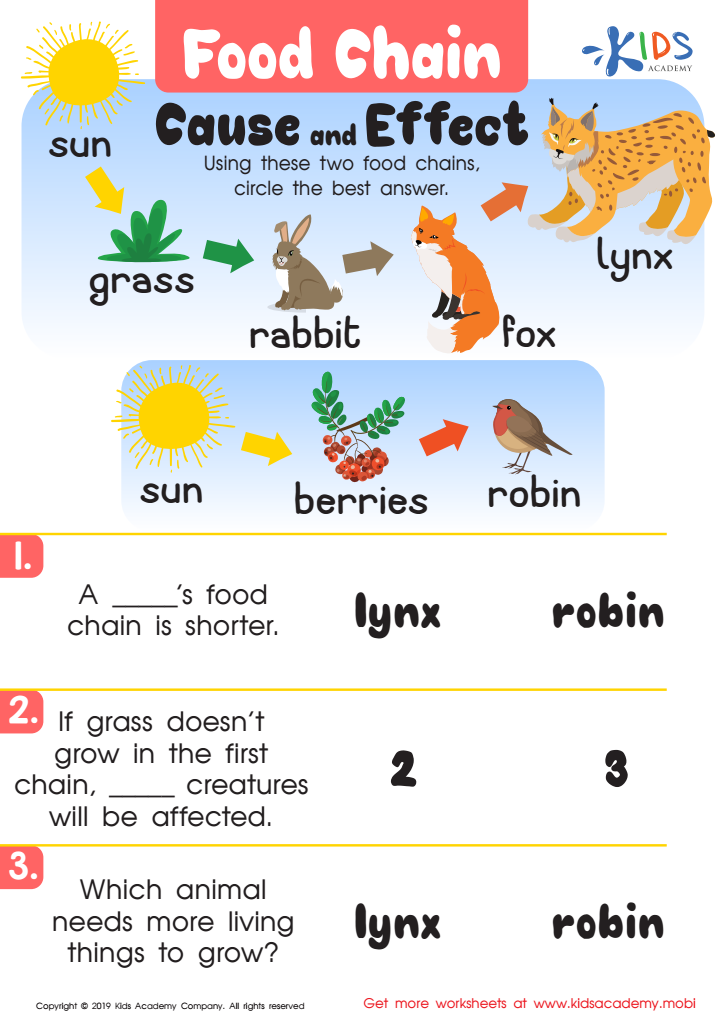
Food Chain Cause Worksheet








Understanding food chains is crucial for children aged 7-9 as it fosters a foundational appreciation for ecosystems and the interdependence of life. Parents and teachers play a vital role in this learning process, as food chains illustrate how energy and nutrients flow from one organism to another, showcasing the delicate balance of nature.
By exploring food chains, children learn about various animals and plants, broadening their knowledge of biodiversity. This knowledge encourages curiosity about different species and their habitats, which can enhance their empathy towards living creatures and the environment. Recognizing the importance of each organism—be it producers, consumers, or decomposers—helps children understand that even small species play significant roles in maintaining ecological balance.
Moreover, learning about food chains can drive conversations about sustainability and environmental care. As young learners grasp how human actions impact ecosystems, they develop a sense of responsibility for the planet. This education can lead to proactive behaviors toward conservation and informed choices regarding food consumption.
Ultimately, when parents and teachers inspire an understanding of food chains, they equip children with the knowledge to appreciate nature's complexities and cultivate habits that respect and protect the environment for future generations.