Noun identification Grammar Worksheets for Ages 7-9
7 filtered results
-
From - To
Unlock the world of nouns with our engaging Noun Identification Grammar Worksheets designed specifically for children ages 7-9. These worksheets provide fun and interactive activities that help young learners master noun identification skills, enhancing their writing and comprehension abilities. Kids will practice recognizing different types of nouns, including common, proper, singular, and plural, through a variety of exercises, such as fill-in-the-blanks and matching games. Tailored to align with educational standards, our resources make learning grammar enjoyable and effective. Perfect for both classroom use and home practice, these worksheets will boost your child's confidence and readiness for more advanced language concepts!
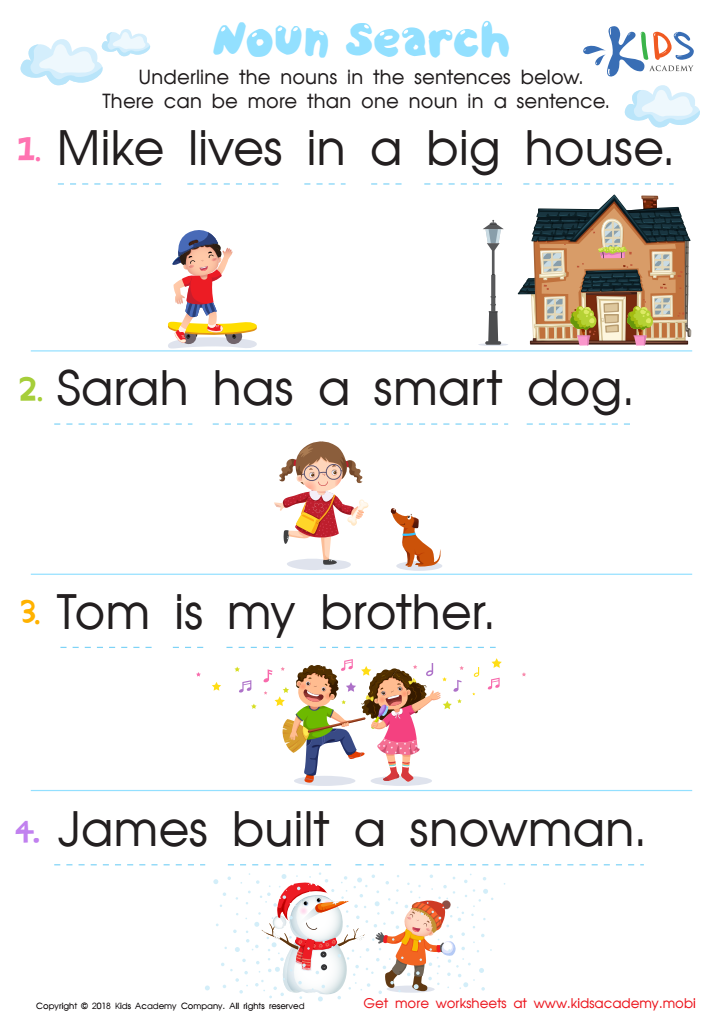
Noun Search Worksheet
 Assign to My Students
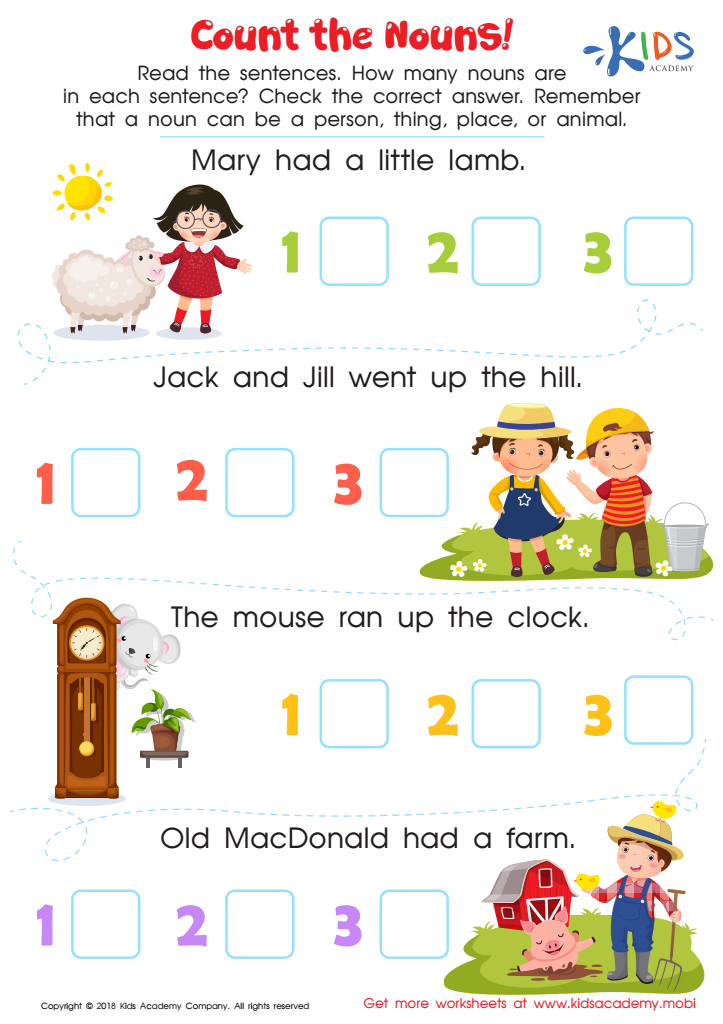
Count the Nouns Worksheet
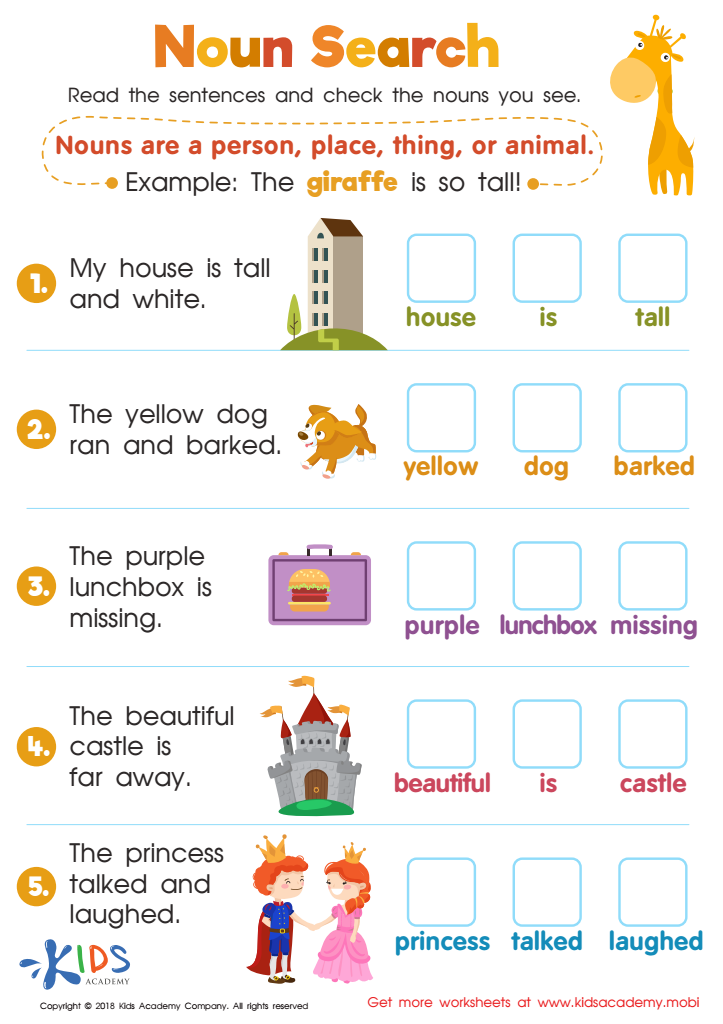
Noun Search Worksheet
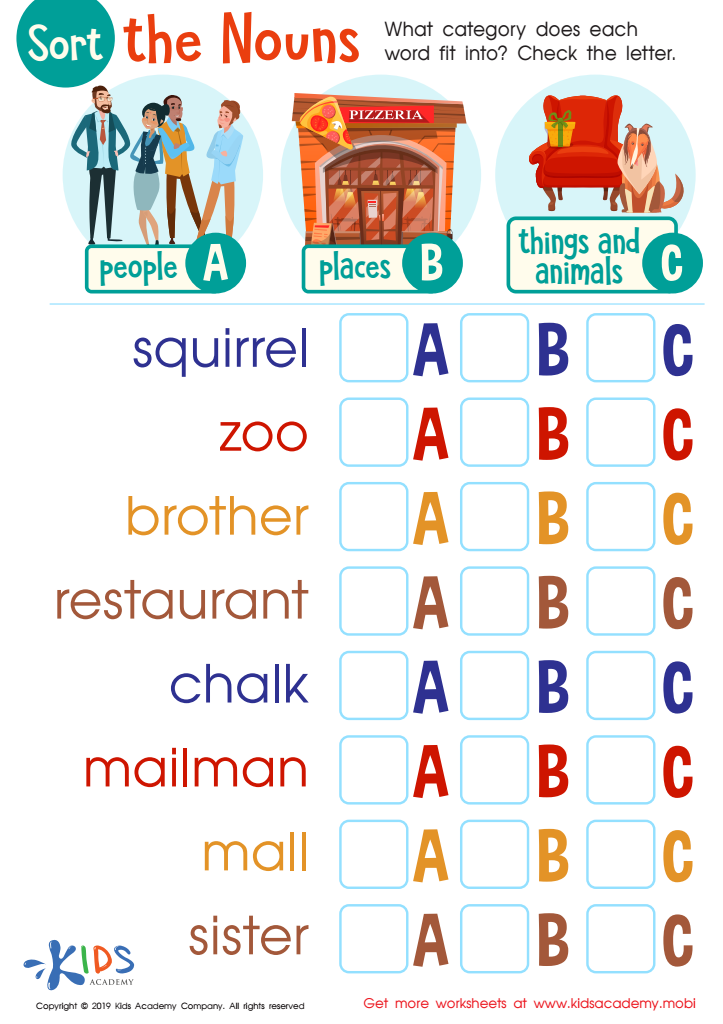
Sort the Nouns Worksheet
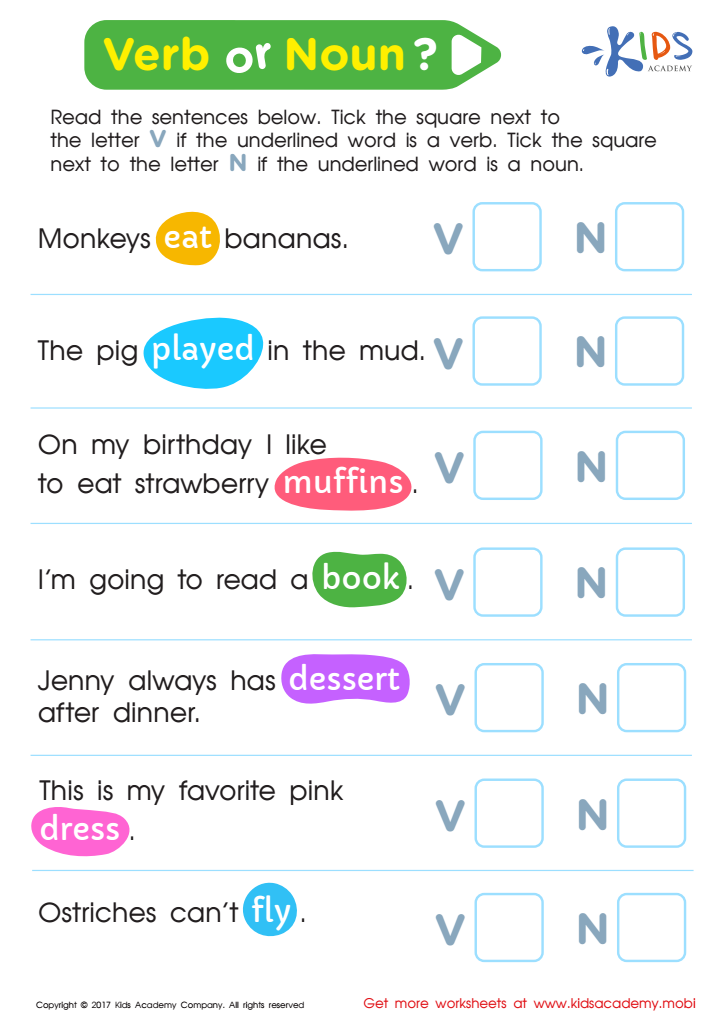
Verb or Noun Worksheet
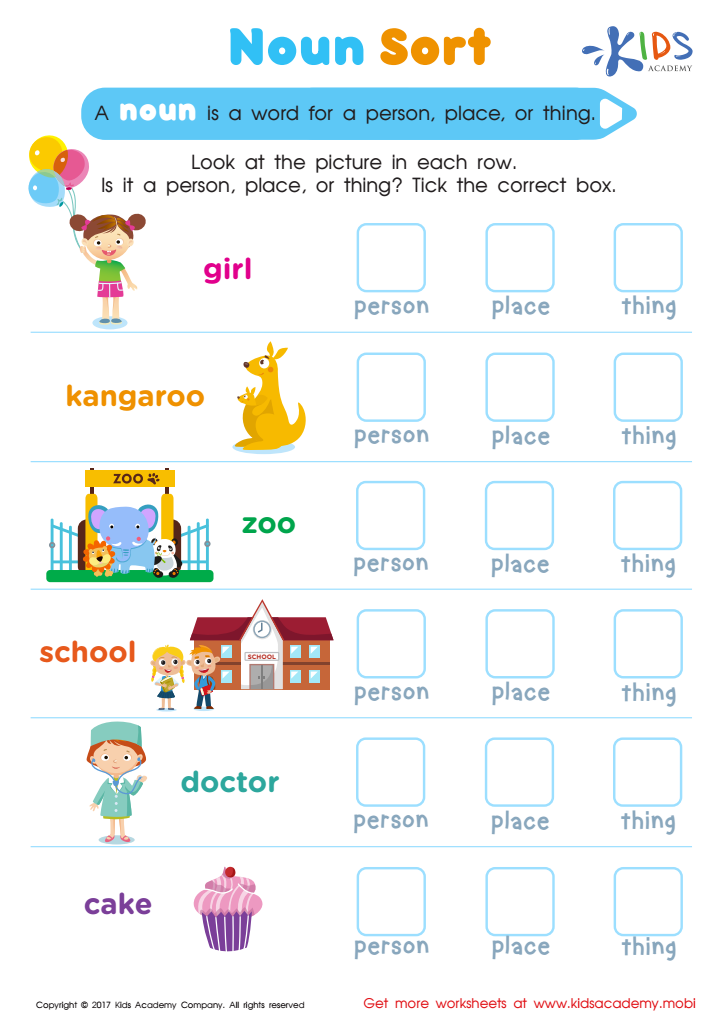
Noun Sort Printable
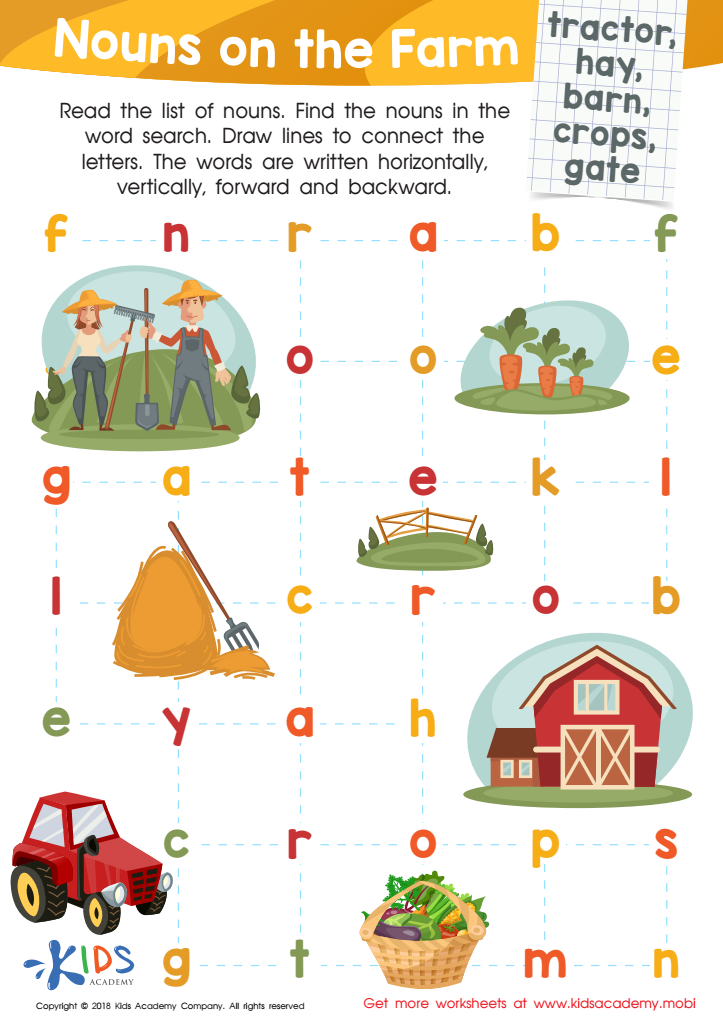
Nouns on the Farm Worksheet




.jpg)



Noun identification is a vital element of grammar that plays a significant role in language development for children aged 7-9. Understanding nouns helps children to construct coherent sentences and enhances their communication skills, both oral and written. At this developmental stage, children are increasingly engaging with complex texts and expressing their thoughts clearly; thus, a solid grasp of nouns—such as proper nouns, common nouns, and collective nouns—allows them to identify and categorize people, places, objects, and ideas effectively.
Moreover, mastering noun identification also supports overall literacy development. It facilitates reading comprehension by enabling children to identify key concepts within texts, leading to better retention and understanding of the material they encounter. With a foundation in nouns, children can expand their vocabulary and become expressive in their writing, which boosts their confidence in language arts.
Parents and teachers should prioritize noun identification because it not only impacts language skills but also lays the groundwork for future learning in advanced grammar concepts. By focusing on nouns at this crucial age, caregivers can foster enhanced communication abilities, critical thinking, and a lifelong love for language, ultimately preparing children for more complex language tasks in their educational journey.








