Rhyme recognition Alphabet Worksheets for 7-Year-Olds
3 filtered results
-
From - To
Enhance your 7-year-old's literacy skills with our engaging Rhyme Recognition Alphabet Worksheets! Designed to support young learners, these worksheets help children identify rhyming words while reinforcing their understanding of the alphabet. Each fun activity encourages creativity and critical thinking as kids match words, complete sentences, and explore phonetic patterns. Perfect for both classroom use and home learning, our printable resources make phonics enjoyable and interactive. With a focus on building vocabulary and confidence, these worksheets are ideal for aspiring readers. Empower your child's learning journey with our inventive approach to rhyme recognition and literacy skill development today!
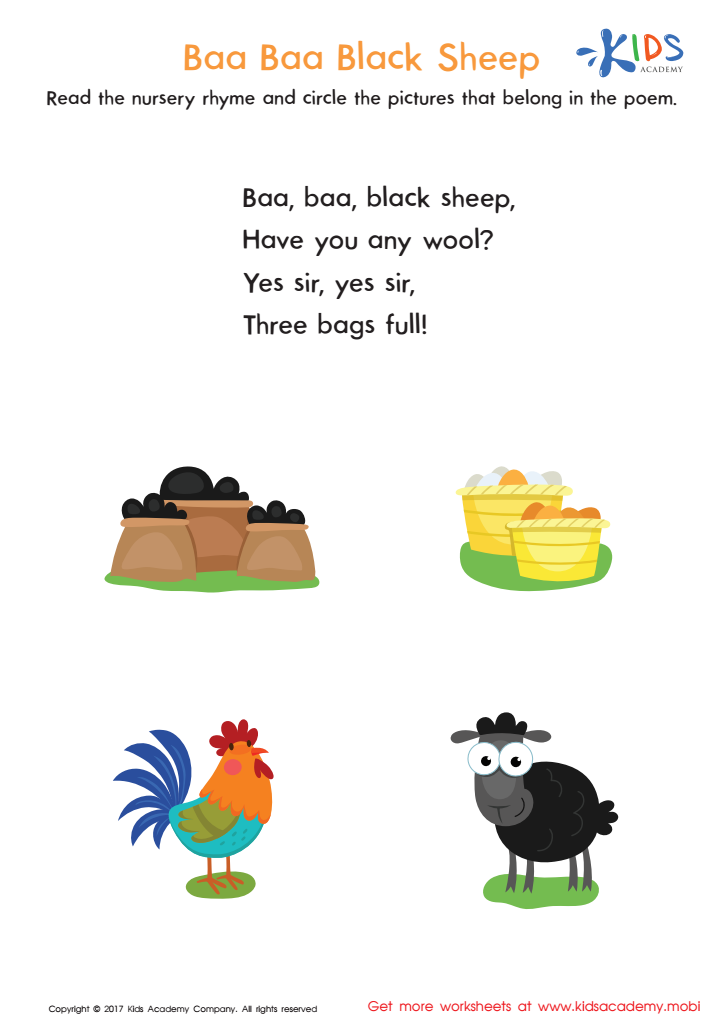
Baa Baa Black Sheep Printable
 Assign to My Students
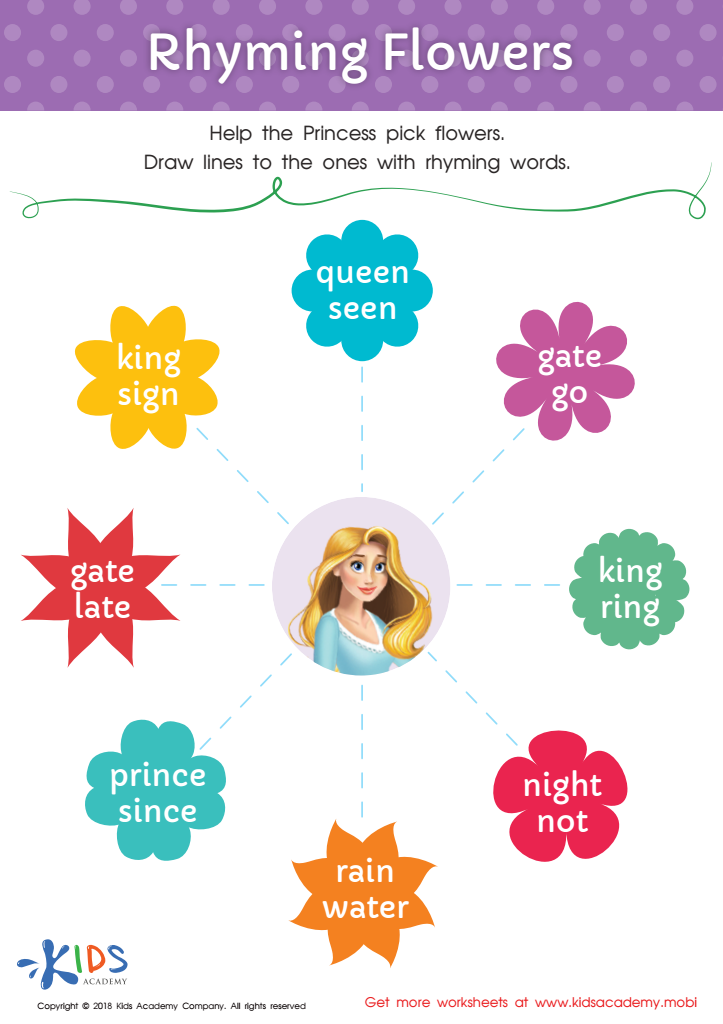
Rhyming Flowers Worksheet
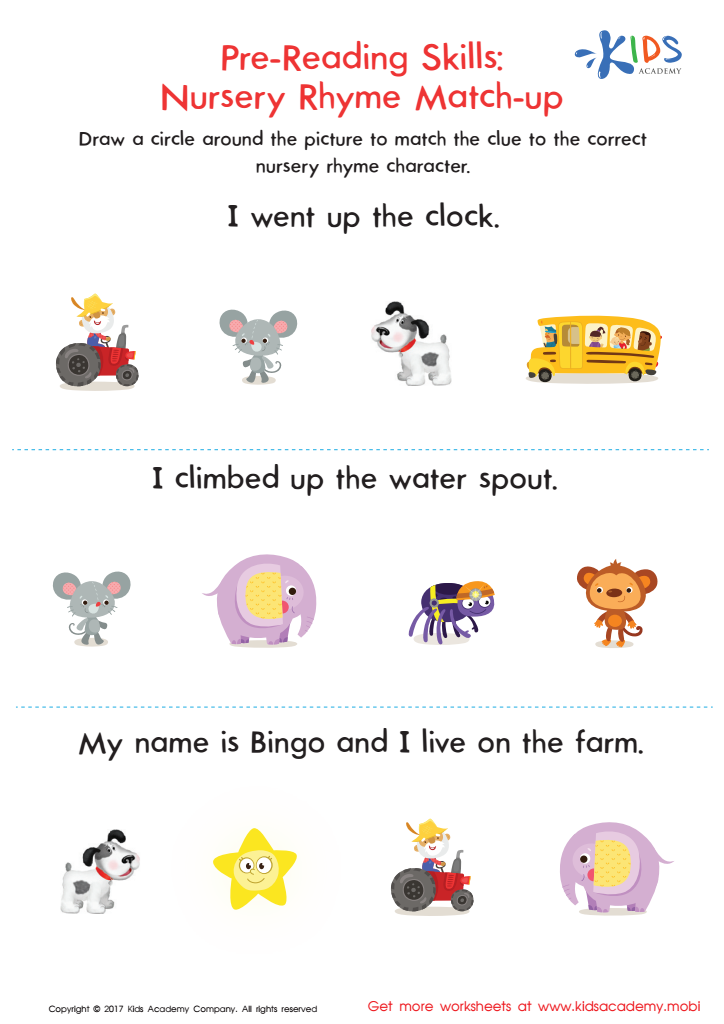
Nursery Rhyme Match–Up Worksheet






Rhyme recognition and understanding the alphabet are foundational skills in early literacy development, and it's important for parents and teachers to prioritize these aspects for 7-year-olds. Rhyming helps children develop phonemic awareness, which is the ability to hear, identify, and manipulate individual sounds in words. This skill is crucial for learning to read, as it enhances their ability to decode words by sounding them out.
Rhyme recognition also strengthens vocabulary and enhances memory skills, as children become more familiar with word patterns and sounds. Engaging with rhymes through songs, poems, and storytelling encourages a love for language, making reading enjoyable and stimulating.
Moreover, mastering the alphabet at this age expands a child's ability to spell, write, and articulate their thoughts effectively. When children are proficient in recognizing letters and their corresponding sounds, they build confidence in their literacy skills, which influences their overall academic success.
Incorporating rhyme recognition and alphabet practice into daily activities helps create a supportive learning environment. By emphasizing these skills, both parents and teachers play a vital role in fostering essential literacy development that will benefit children academically and personally throughout their lives.







