Letter recognition Letter G Worksheets for 7-Year-Olds
3 filtered results
Difficulty Level
Grade
Age
-
From - To
Subject
Activity
Standards
Discover our engaging Letter G Worksheets designed for 7-year-olds to enhance their letter recognition skills! Tailored for young learners, these worksheets offer a variety of fun activities including tracing, coloring, and matching exercises to reinforce the ability to identify the letter G in both upper and lower case. Whether used at home or in the classroom, these resources create an exciting learning experience that boosts literacy and fine motor skills. Help your child or student master letter recognition with our thoughtfully crafted, educational worksheets. Explore more today at Kids Academy!
Favorites
With answer key
Interactive
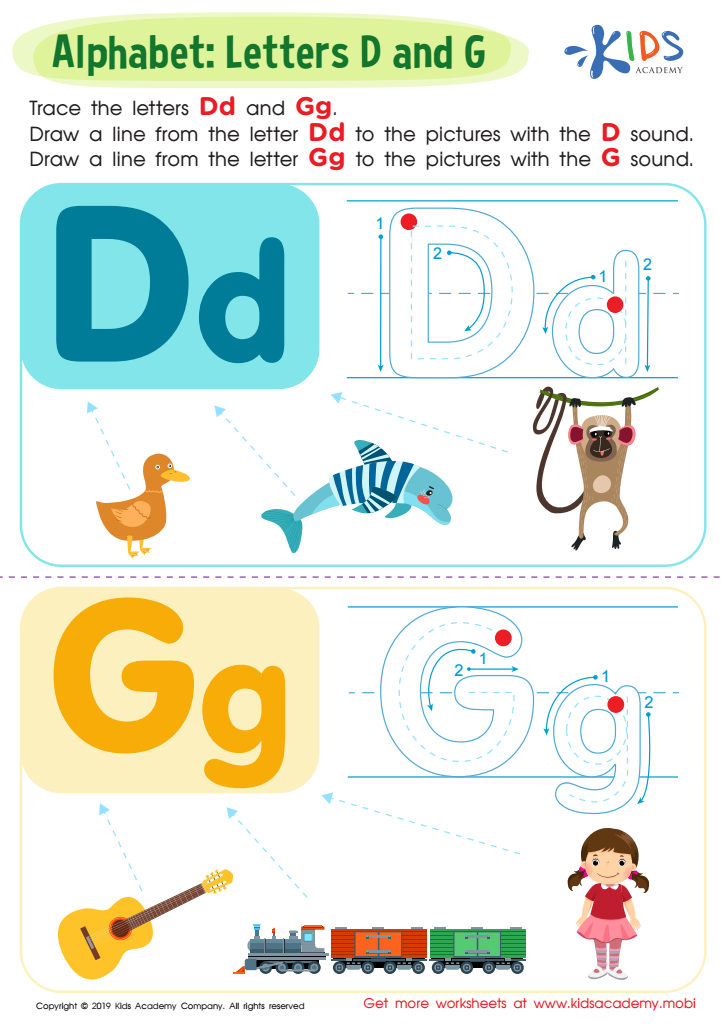
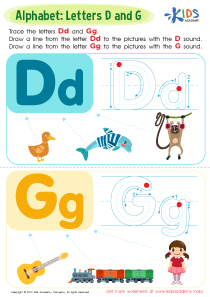
Letter D and G Tracing Worksheet
Kids can explore their imagination with the 'Alphabet: Letters D and G' worksheet! They'll trace capital and lowercase "D" and "G" and trace a line from the words. Colorful animals and objects make the task more fun and entertaining!
Letter D and G Tracing Worksheet
Worksheet
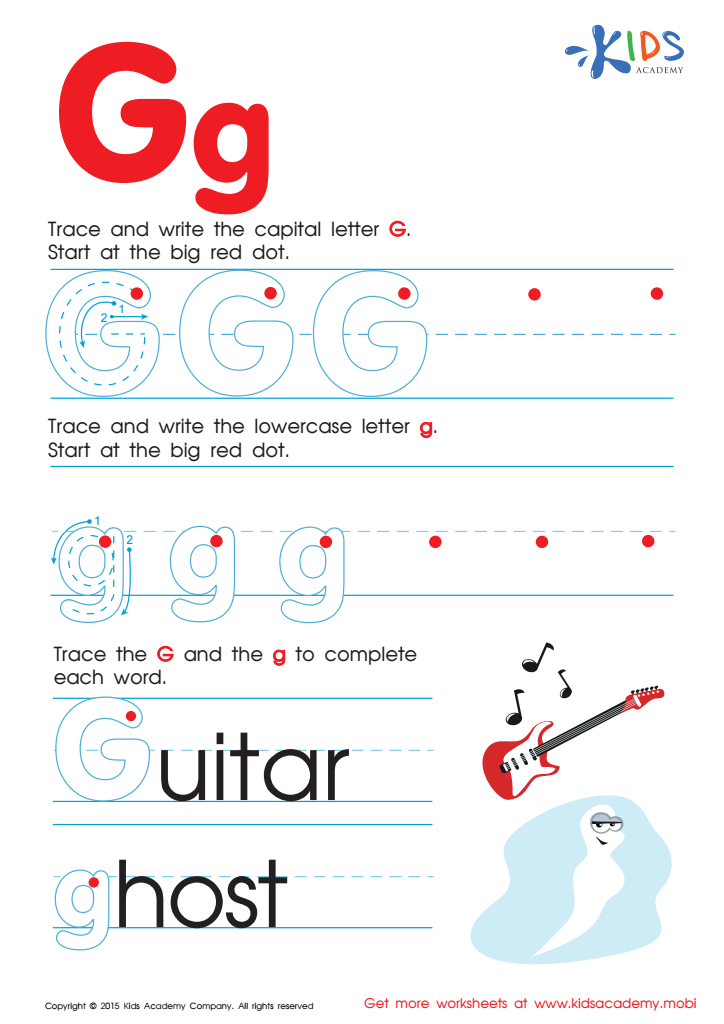
Letter G Tracing Page
Get ready to trace the letter "G" – with a big red spot as the starting point, trace the lines and watch the letter appear. Uppercase and lowercase letters are both easy and fun to write. Give it a go and finish the word "go". Play the guitar and say "hello" to a funny ghost!
Letter G Tracing Page
Worksheet
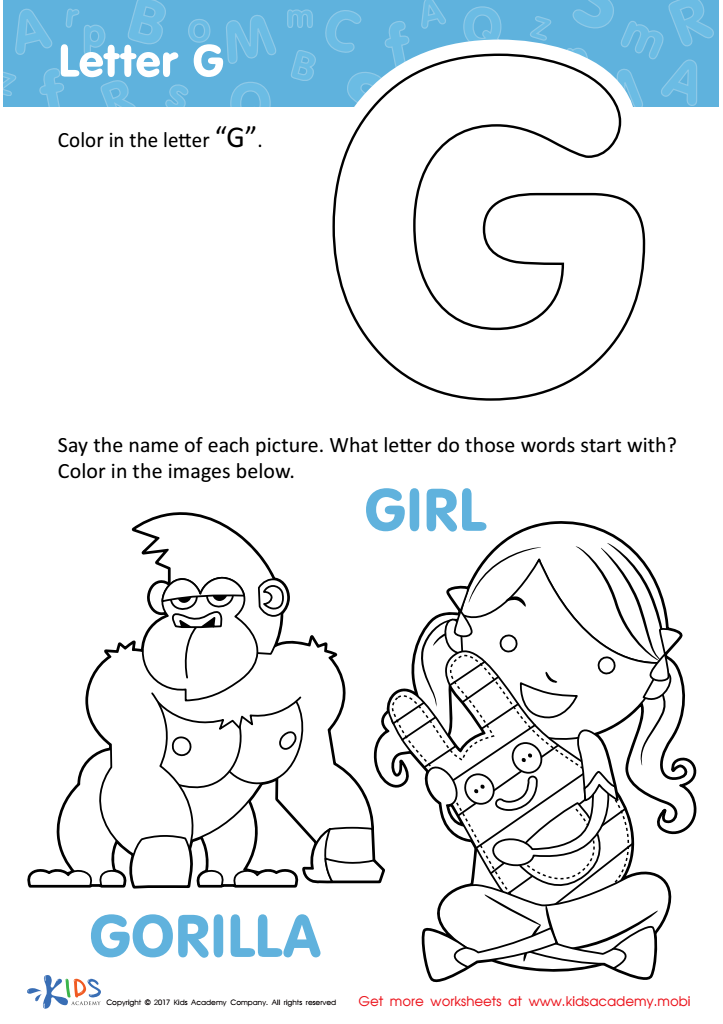
Letter G Coloring Sheet
This "G" coloring page encourages creativity and teaches kids the letter "G" sound. With its fun visuals and familiar words, it's sure to excite your child. Plus, you can talk about the letter’s sound with the pictures given.
Download (PDF)
 Assign to My Students
Assign to My Students
Letter G Coloring Sheet
Worksheet
Join Kids Academy for Free
Who is primarily going to use this learning content?






Letter recognition, including the recognition of the letter G, is a crucial foundational skill for young children, and there are several reasons why parents and teachers should spotlight its importance for 7-year-olds.
Firstly, letter recognition is the first step toward learning to read and write effectively. At age 7, children typically transition from recognizing letters to blending sounds and forming words. Proficiency in letter recognition ensures they can easily identify, understand, and use each letter when reading and writing, greatly aiding literacy development.
Secondly, recognizing letters and their corresponding sounds, like the "g" sound in "goat" or "gym," teaches children phonemic awareness, a key component of learning to spell. Without this foundational skill, children might struggle with decoding words and understanding their structures, hindering reading fluency and comprehension.
Additionally, letter recognition fosters children's confidence and excitement about learning. Successfully identifying letters and associating them with sounds and words provides a sense of achievement and motivates further learning.
Lastly, early literacy skills are strong indicators of future academic success. Children proficient in letter recognition tend to perform better in school and exhibit a stronger command of language arts.
In essence, prioritizing letter recognition, such as the letter G, lays a robust groundwork for children's literacy, academic success, and long-term educational outcomes.