
Color Identification Phonics Worksheets for 7-Year-Olds
3 filtered results
Difficulty Level
Grade
Age
-
From - To
Subject
Activity
Standards
Enhance your child’s learning experience with our engaging Color Identification Phonics Worksheets designed specifically for 7-year-olds! These fun, interactive worksheets help young learners explore the relationship between colors and letters while developing essential phonics skills. Through vibrant illustrations and age-appropriate exercises, children will recognize colors and improve their reading comprehension simultaneously. Perfect for home or classroom use, these worksheets make learning enjoyable, fostering a love for education. Encourage creativity and critical thinking as kids identify colors, sound out letters, and more. Download our Color Identification Phonics Worksheets today to set your child on a path to reading success!
Favorites
With answer key
Interactive
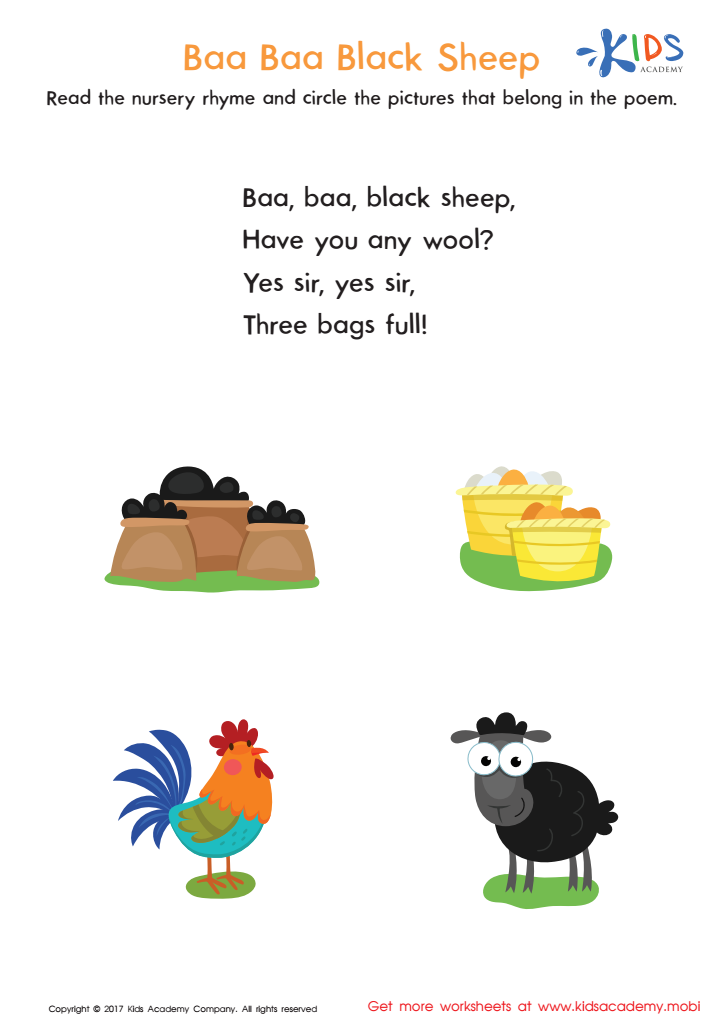
Baa Baa Black Sheep Printable
Jumpstart your child's reading skills with this printable Baa Baa Black Sheep worksheet! Recite the lines with them, then have them select the pictures associated with the poem to test comprehension. Fun and educational!
Baa Baa Black Sheep Printable
Worksheet
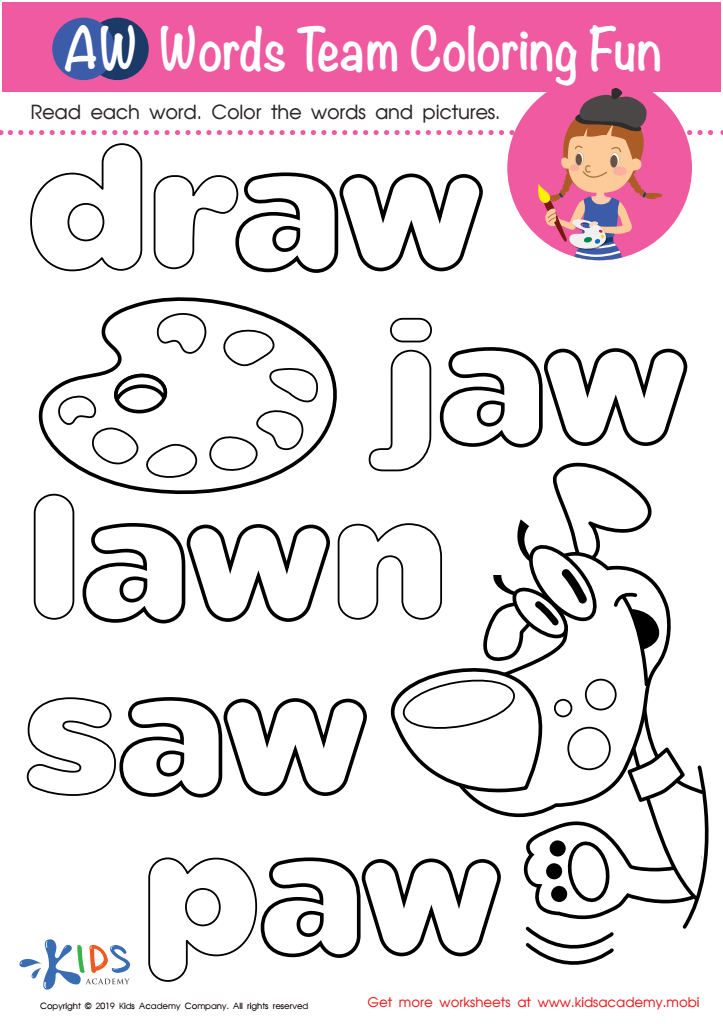
AW Words Team Coloring Fun Worksheet
Coloring words they can read is a blast for little learners! This worksheet offers emerging readers the chance to practice and gain confidence in reading words from the -aw family, while also improving fine-motor and creativity skills. Without knowing it, they'll learn about phonetic teams along the way!
Download (PDF)
 Assign to My Students
Assign to My Students
AW Words Team Coloring Fun Worksheet
Worksheet
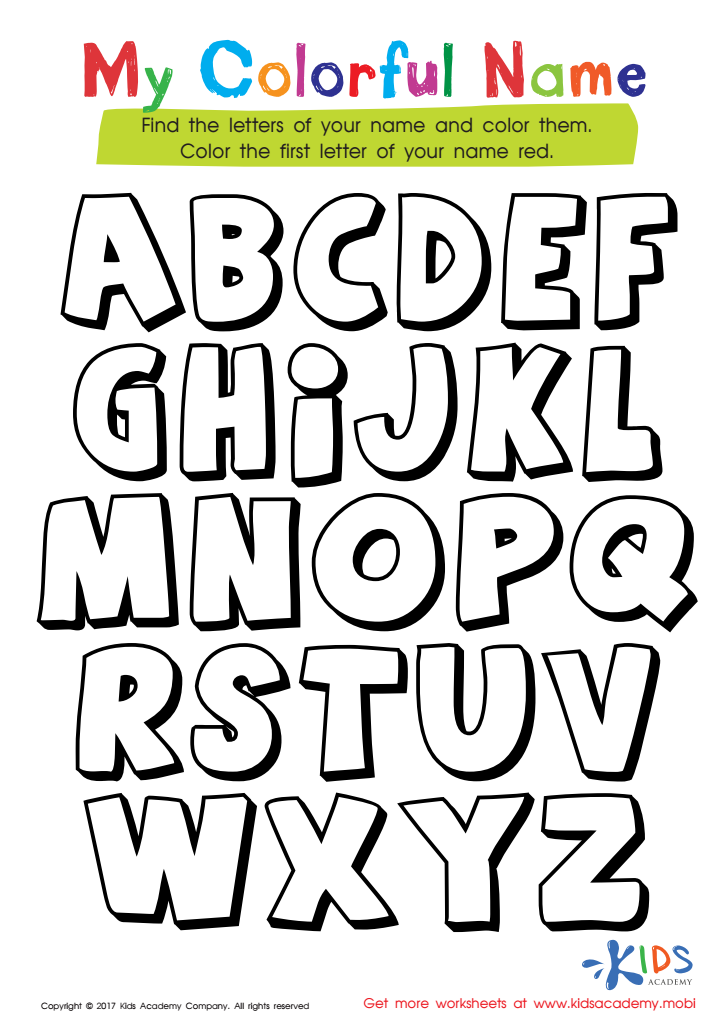
My Colorful Name Worksheet
Writing their names is a milestone for children. With this worksheet, they recall the letters in their name and color the letters one at a time. Spelling and alphabet order are reinforced as they find each letter. Use this fun printable to help kids learn to write their names!
Download (PDF)
Assign to My Students
Assign to My Students
My Colorful Name Worksheet
Worksheet
Join Kids Academy for Free
Who is primarily going to use this learning content?








Color Identification Phonics is an essential tool for teaching 7-year-olds, blending visual learning with literacy skills. At this stage, children are not just learning to read; they are also developing vocabulary and phonetic awareness. Understanding colors can enhance their cognitive abilities, providing a playful context for phonics instruction.
First, colors are inherently engaging for children, helping to maintain their interest and motivation in learning. By associating letters and sounds with colors, educators can create memorable connections that reinforce phonetic skills, making reading more interactive and enjoyable.
Moreover, teaching color identification alongside phonics can aid in enhancing children’s observational skills and encouraging creative thinking. This dual approach supports the development of language abilities and comprehension, as children describe colors and relate them to the world around them.
Parents and teachers should care about this combination because it supports holistic development. It not only reinforces reading readiness but also helps children articulate their thoughts and observations, promoting deeper understanding and communication. By engaging children with fun, colorful phonics activities, adults can instill a lifelong love of learning and foster essential literacy skills necessary for academic success.







