
Reading skills improvement Phonics Worksheets for 7-Year-Olds
3 filtered results
Difficulty Level
Grade
Age
-
From - To
Subject
Activity
Standards
Unlock your child's reading potential with our engaging Phonics Worksheets designed specifically for 7-year-olds! These expertly crafted resources focus on enhancing reading skills through interactive phonics activities. Kids will enjoy fun exercises that not only promote letter-sound recognition but also improve their decoding abilities, essential for confident reading. Our worksheets are tailored to cater to various learning paces, ensuring all children can thrive. With colorful illustrations and thought-provoking tasks, each worksheet captures attention while reinforcing essential phonics concepts. Set your child on the path to reading success today and watch them enjoy the journey into the world of words!
Favorites
With answer key
Interactive
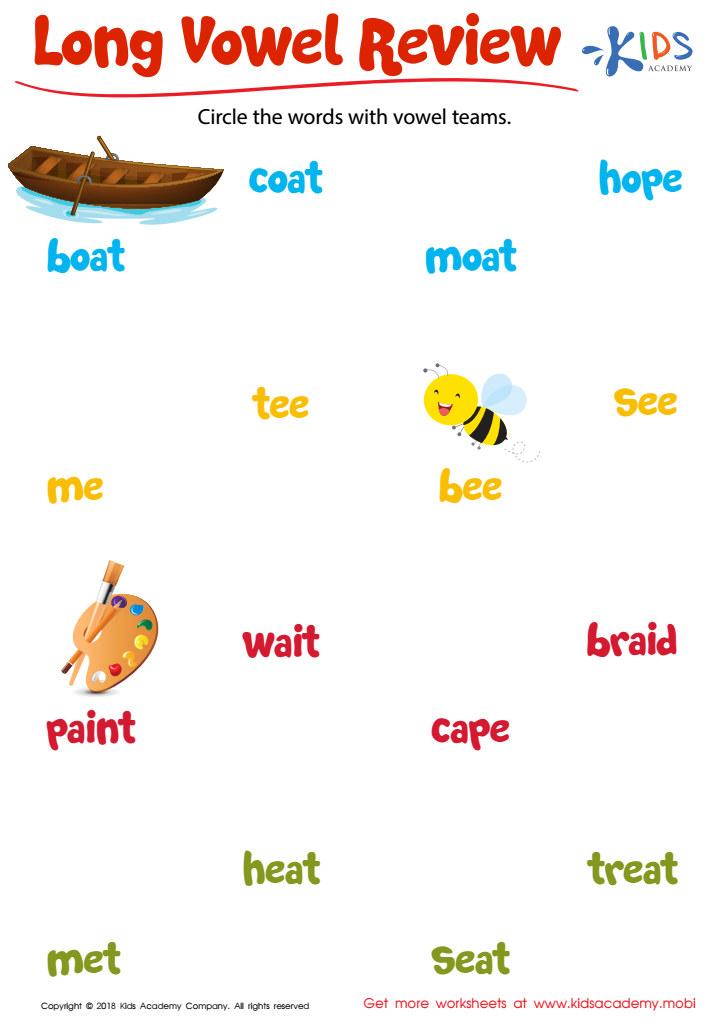
Long Vowel Review Worksheet
Vowel teams like "ea" and "ai" help us make words, and understanding these patterns aids emerging readers in becoming more fluent. This review worksheet has students finding words with vowel teams that make the long vowel sound, and helps them recognize high-frequency words.
 Assign to My Students
Long Vowel Review Worksheet
Worksheet
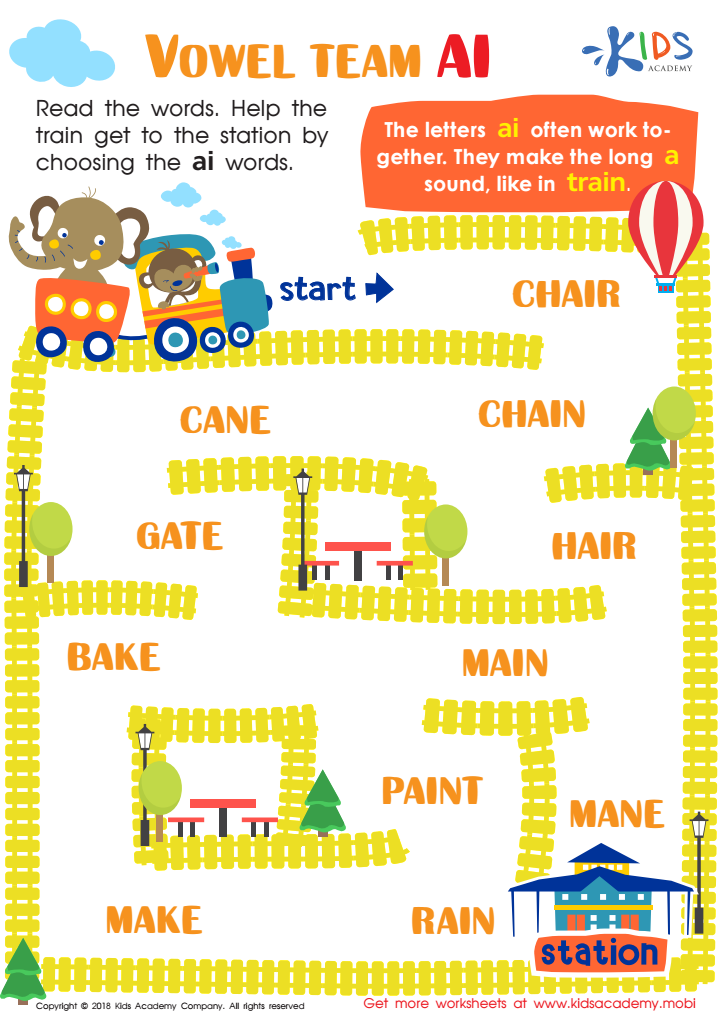
Vowel team ai Worksheet
Kids will have a blast learning about the -ai digraph with this fun worksheet. They'll read words with it and practice their motor skills as they help the animal duo get back to the train station. With success, they'll smile and enjoy the activity!
Vowel team ai Worksheet
Worksheet
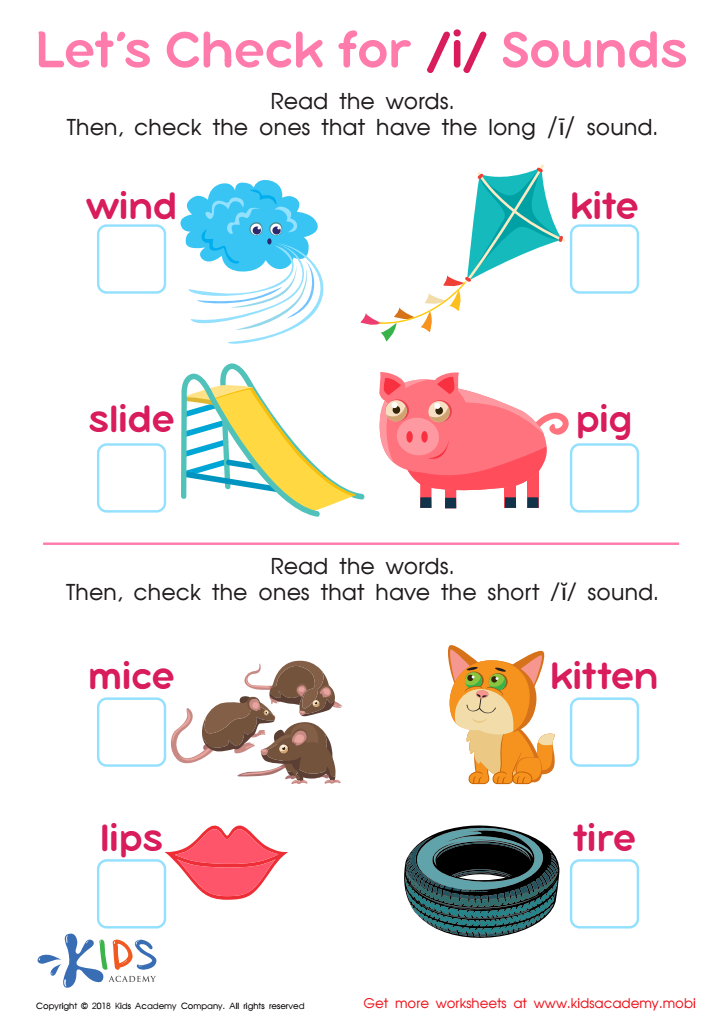
Let's Check for «i» Sounds Worksheet
This fun worksheet with pictures boosts phonics skills - differentiating between long «ī» and short «i» sounds in 1- and 2-syllable words. Kids use picture clues to read words, then check off the correct ones. It's a great way for new readers to practice early reading skills and find success on their own.
Let's Check for «i» Sounds Worksheet
Worksheet
Join Kids Academy for Free
Who is primarily going to use this learning content?








Reading skills, particularly phonics, play a critical role in a child's development, especially for 7-year-olds who are typically mastering basics of literacy. Phonics instruction, which focuses on the relationship between letters and their sounds, helps children decode words, thereby enhancing their reading fluency and comprehension. When parents or teachers prioritize phonics, they are equipping children with essential tools to unlock not only literacy but also a love for reading.
The ability to read confidently impacts a child’s academic success across subjects, as reading is foundational for learning in every discipline. Strong reading skills are linked to higher self-esteem, increased engagement, and better performance in school. Moreover, focusing on phonics during these formative years can prevent future reading difficulties, setting up children for long-term success.
Engaging parents in promoting phonics reinforces learning at home, fostering a supportive environment that values reading. Teachers can implement structured phonics programs that cater to different learning styles, ensuring every child acquires these skills. By collectively investing time and resources into reading proficiency, both parents and teachers can nurture confident readers who are prepared for future academic challenges and lifelong learning. This collaborative approach is essential for the holistic development of children.







