Rhyme recognition Phonics Worksheets for 7-Year-Olds
3 filtered results
-
From - To
Discover our engaging Rhyme Recognition Phonics Worksheets, specially designed for 7-year-olds! These fun and interactive worksheets help young learners enhance their phonemic awareness and improve reading skills by focusing on rhyming words. Engaging activities include matching illustrations, filling in missing rhymes, and identifying similar sounds, making learning enjoyable and effective. Our worksheets cater to varied learning styles, ensuring every child develops confidence in their reading abilities. With colorful designs and age-appropriate content, these phonics resources are perfect for classroom use or homeschooling. Start your child's journey to literacy today with our comprehensive Rhyme Recognition Phonics Worksheets!
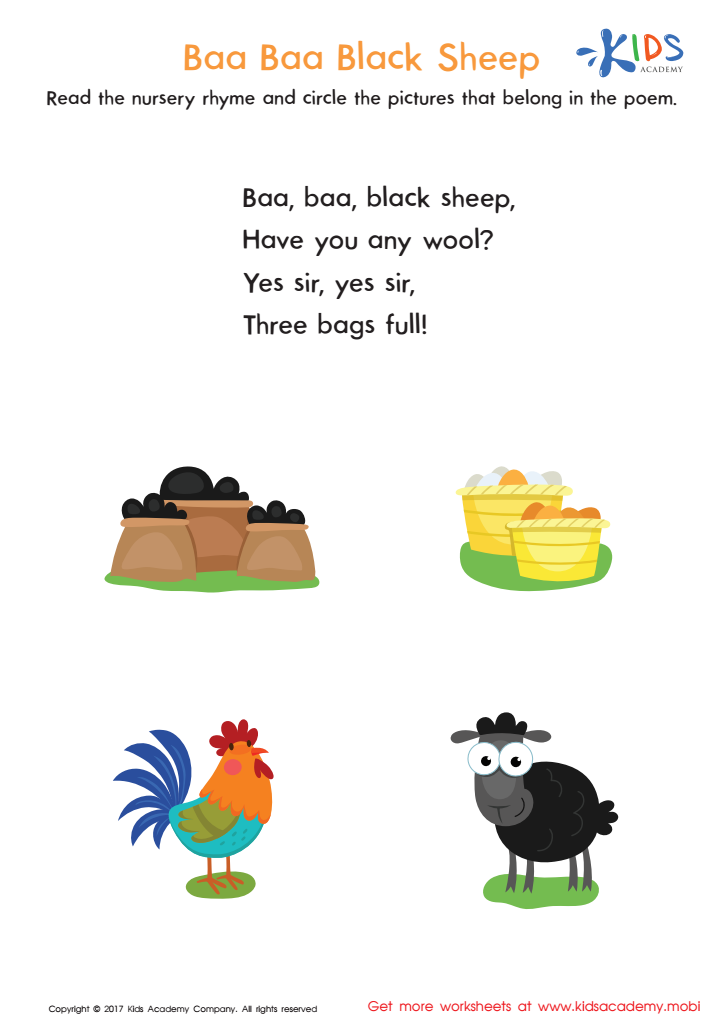
Baa Baa Black Sheep Printable
 Assign to My Students
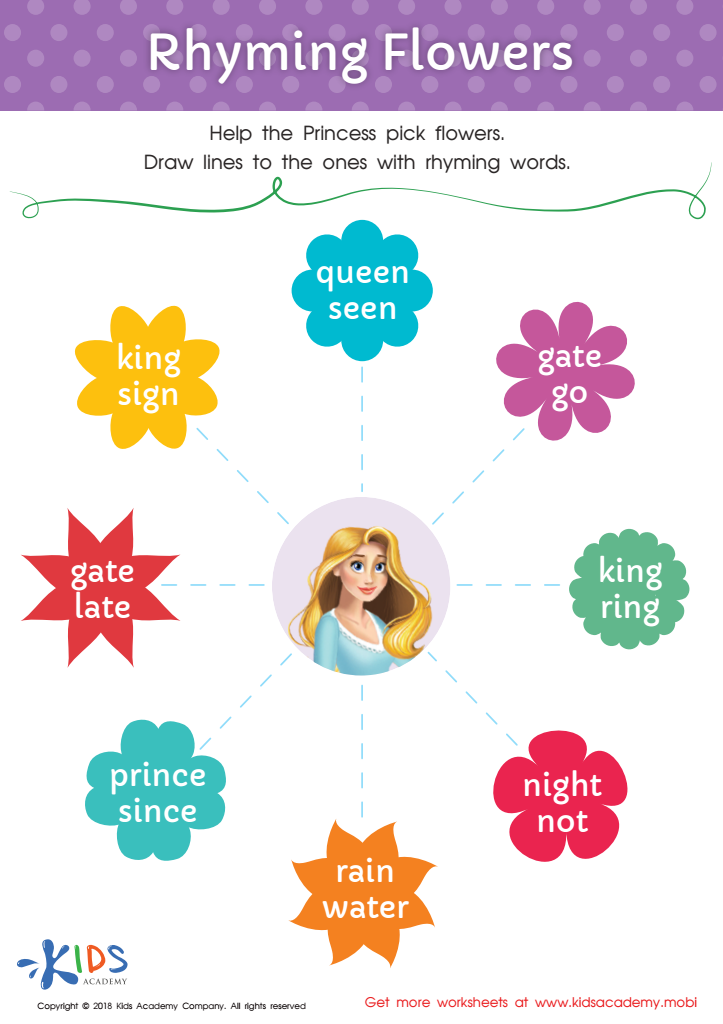
Rhyming Flowers Worksheet
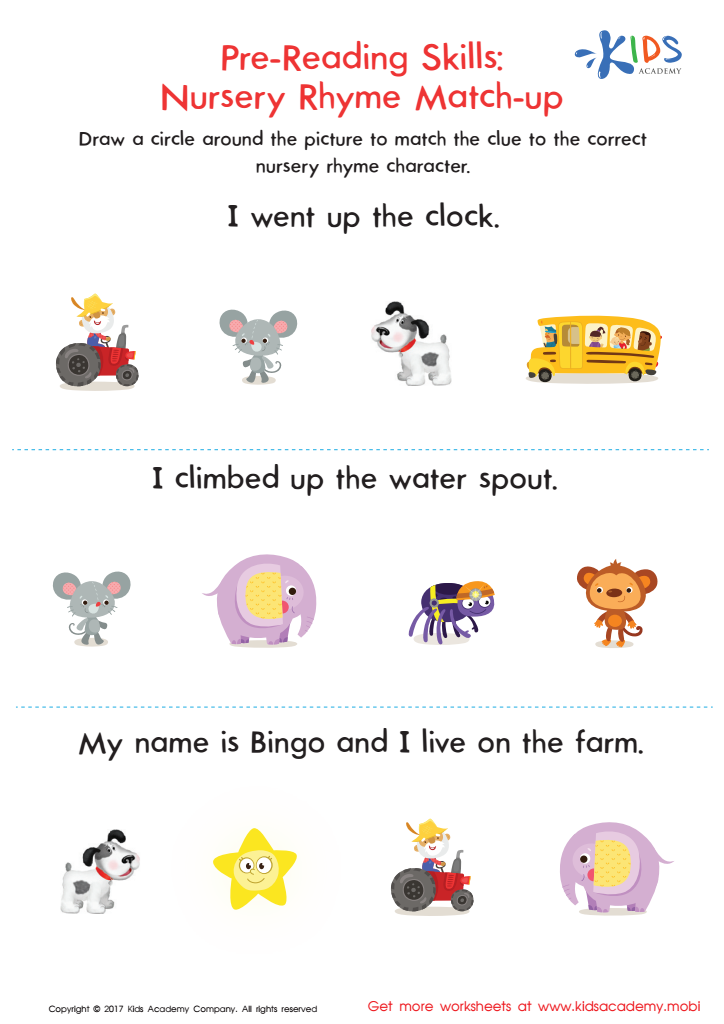
Nursery Rhyme Match–Up Worksheet








Rhyme recognition phonics is a crucial component of early literacy development for 7-year-olds, as it fosters reading, writing, and language skills essential for academic success. When children engage with rhymes, they develop phonemic awareness, the ability to hear and manipulate sounds in words. This foundational skill enhances their ability to decode unfamiliar words, making reading more accessible and enjoyable.
Furthermore, rhyming activities encourage vocabulary expansion and comprehension. As children explore words that sound alike, they better understand language patterns, which can boost their spelling and writing abilities. Recognizing rhymes also aids memory retention, allowing kids to recall information more effectively.
Additionally, incorporating rhymes into daily reading activities can build a child’s confidence and enthusiasm for learning. When children encounter engaging rhyme schemes and rhythmic patterns, they develop a positive attitude toward reading, which can impact their long-term academic journey.
For teachers and parents, understanding the significance of rhyme recognition in phonics is essential for promoting literacy skills and encouraging a love for reading. Whether through books, songs, or games, fostering an environment rich in rhymes can make a significant difference in a child’s educational experience.







