Phonics practice Short Vowels Worksheets for 7-Year-Olds
3 filtered results
-
From - To
Boost your child's reading skills with our engaging Phonics Practice Short Vowels Worksheets for 7-Year-Olds. Designed for young learners, these worksheets help children identify, pronounce, and use short vowel sounds accurately. Each activity combines fun and education to enhance phonemic awareness and build a strong foundation in reading. Whether it's "cat," "beg," or "pig," our worksheets make learning interactive and enjoyable. Perfect for classroom settings or home practice, our resources ensure your child masters short vowels with ease. Let your 7-year-old practice, learn, and succeed with our expertly crafted phonics worksheets today!
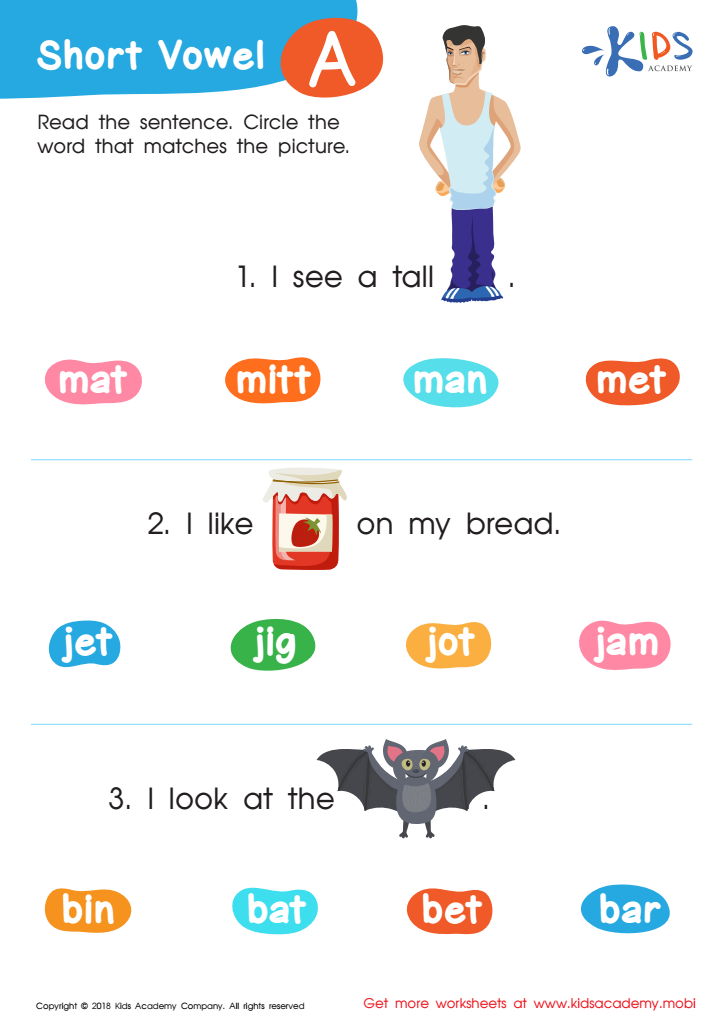
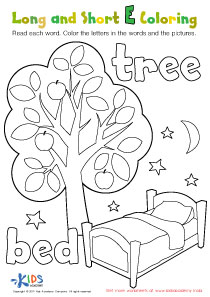
Short Vowel /a/ Worksheet
 Assign to My Students
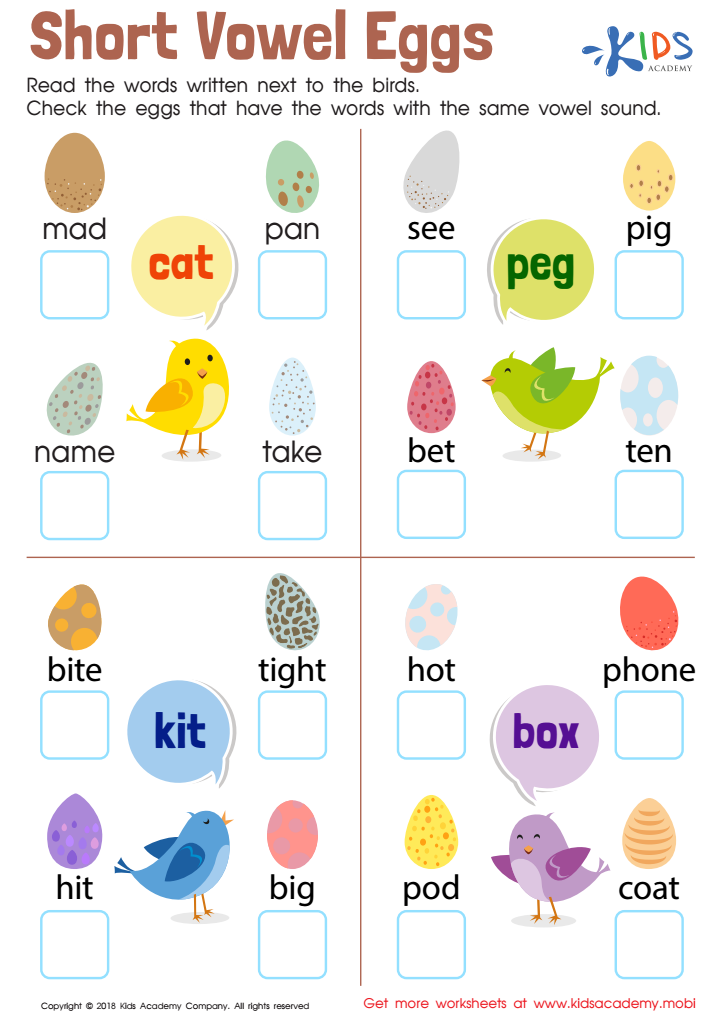
Short Vowel Eggs Worksheet
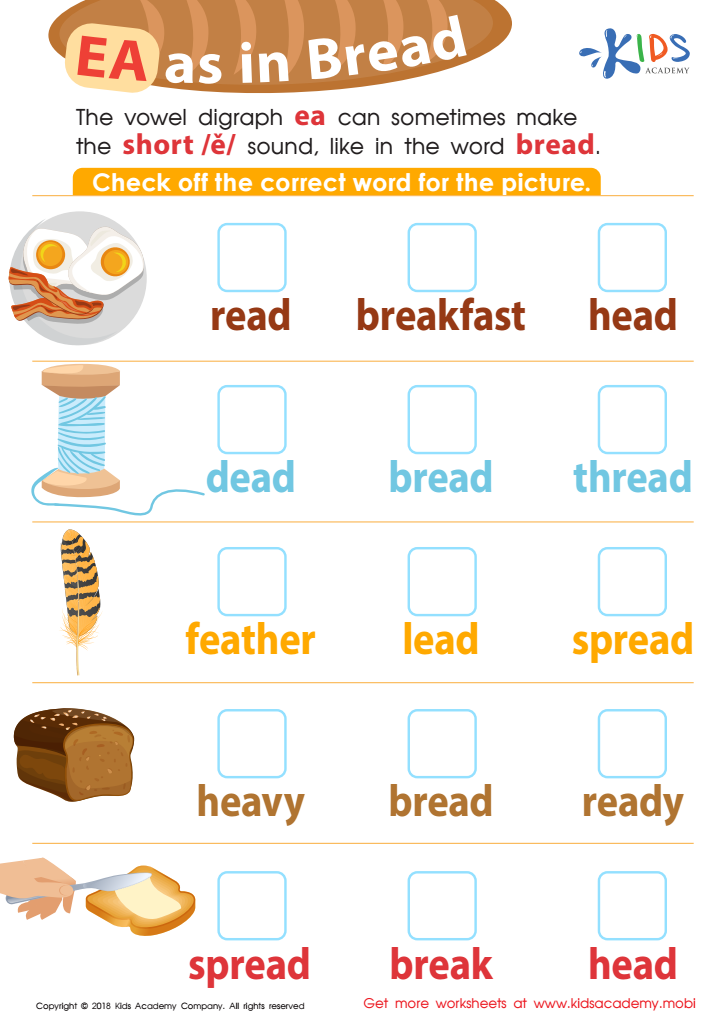
Reading: EA as in Bread Worksheet



Phonics practice focusing on short vowels is foundational for 7-year-olds as it significantly aids literacy development. At this age, children transition from recognizing letters and sounds to blending them into words. Short vowels, which include the sounds /a/, /e/, /i/, /o/, and /u/ as in "cat," "bed," "sit," "cot," and "cup," are integral components of numerous simple English words young readers frequently encounter.
Understanding these vowel sounds enables children to decode (read) and encode (spell) a variety of words, building essential reading fluency. When parents and teachers emphasize short vowel practice, they empower children with tools to recognize patterns in words, such as CVC (consonant-vowel-consonant) structures. This, in turn, boosts word recognition and confidence in reading.
Moreover, proficiency in short vowels paves the way for understanding more complex phonetic patterns students will encounter later. It also enhances listening and pronunciation skills, contributing to effective communication. Consistent phonics practice develops critical thinking and problem-solving skills as children strategize how to sound out new words. Overall, dedicated short vowel practice equips 7-year-olds with a strong linguistic foundation, promotes a love for reading, and sets the stage for future academic success.