Alphabet understanding Tracing Letters Worksheets for 7-Year-Olds
4 filtered results
-
From - To
Enhance your child’s alphabet skills with our Alphabet Understanding Tracing Letters Worksheets for 7-Year-Olds. Perfect for young learners, these engaging worksheets help children master the alphabet through tracing activities designed to improve fine motor skills and letter recognition. Each worksheet provides fun exercises that guide children step-by-step, reinforcing the shape and structure of each letter. Ideal for both classroom and at-home practice, these resources ensure a strong foundational understanding of the alphabet. Visit Kids Academy today to explore these top-quality worksheets and watch your child’s confidence in letter formation grow!
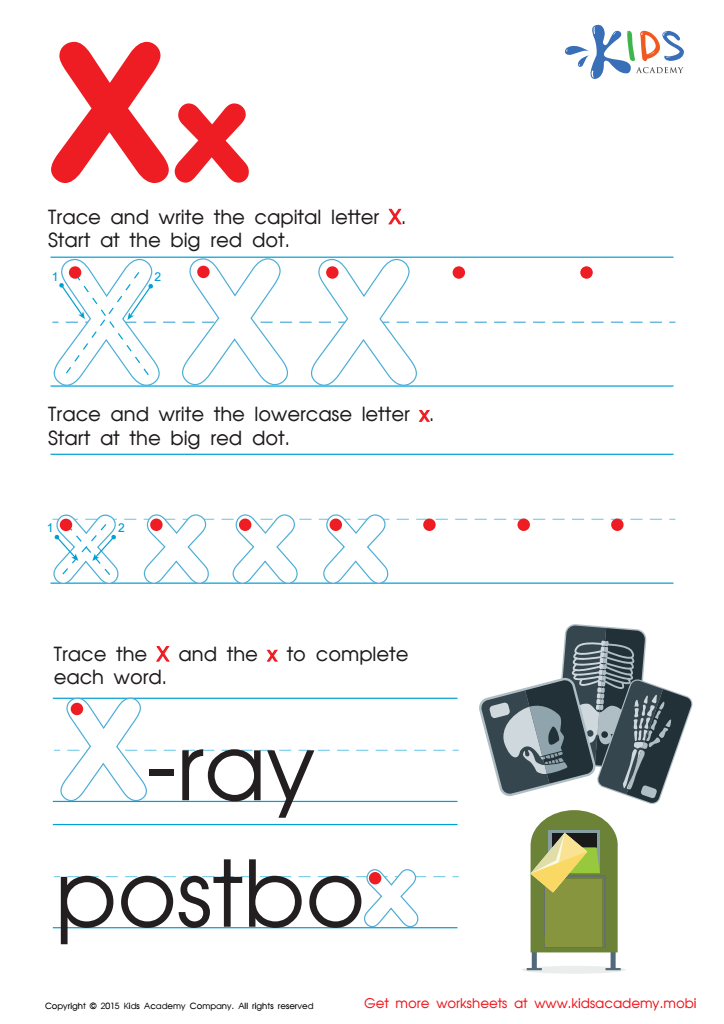
Letter X Tracing Page
 Assign to My Students
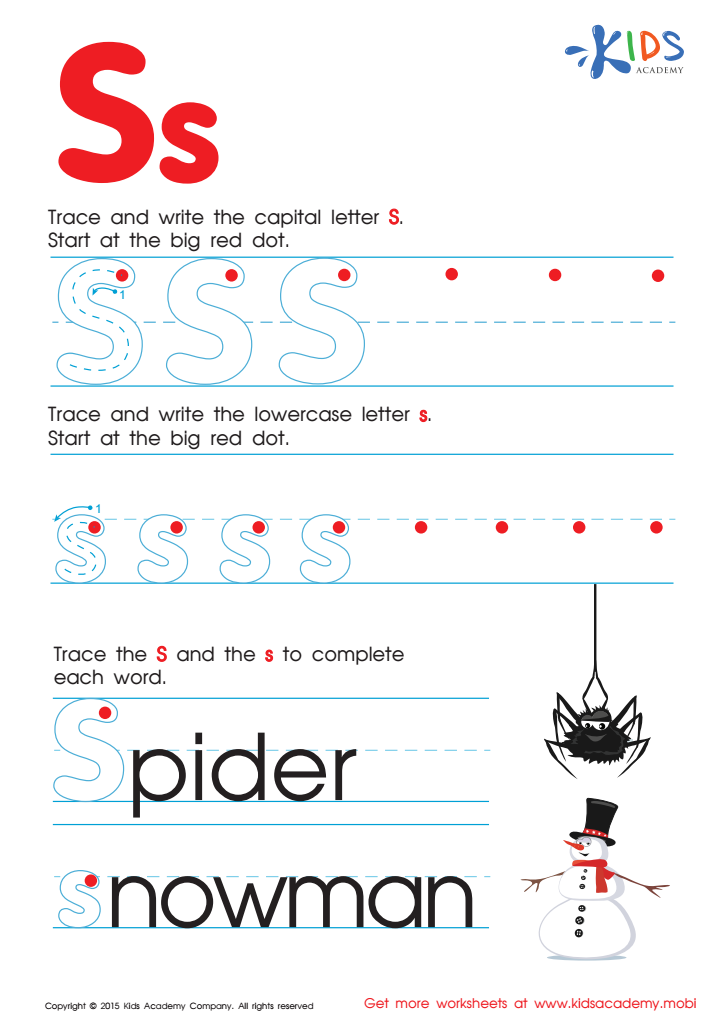
Letter S Tracing Page
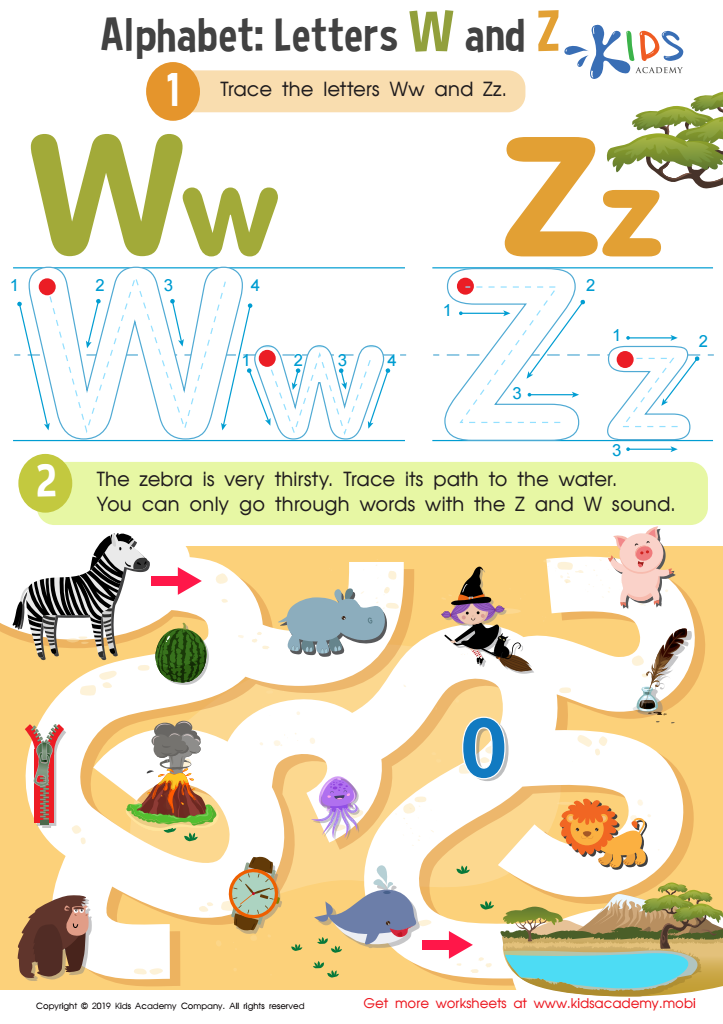
Letters W and Z Tracing Worksheet
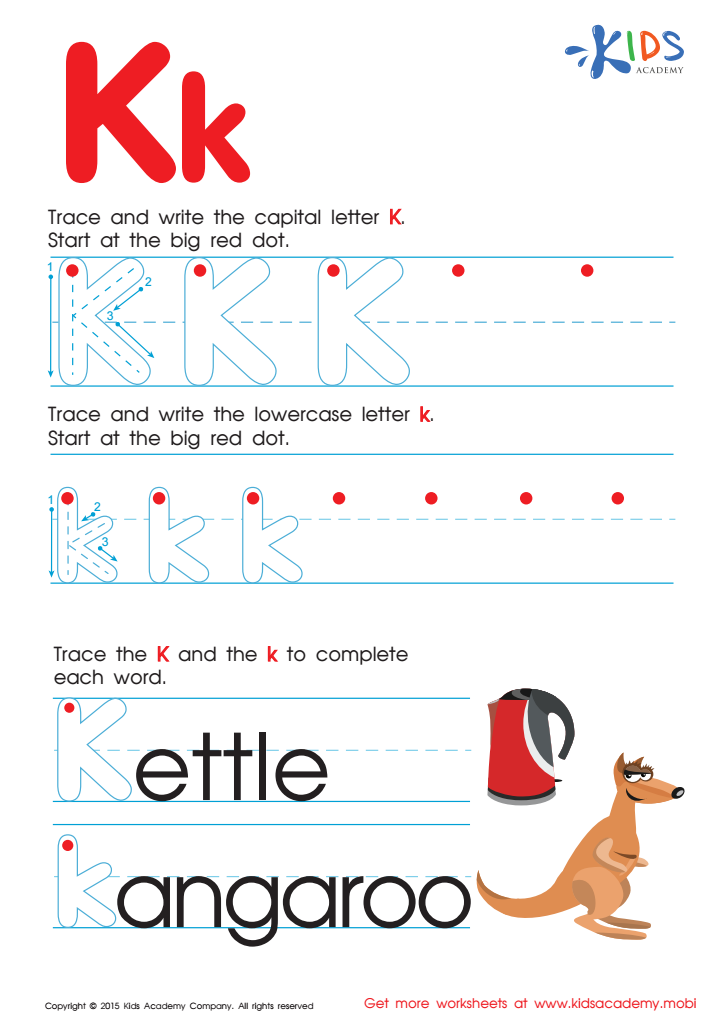
Letter K Tracing Page








Alphabet understanding and tracing letters are fundamental skills that contribute significantly to a child's literacy development, particularly for 7-year-olds. Around this age, children transition from early childhood into more complex stages of learning, making it crucial for parents and teachers to support these foundational skills.
First, mastering the alphabet is essential for reading proficiency. Recognizing and being able to name each letter swiftly leads to better word recognition and ultimately smoother reading experiences. As children become more familiar with letters, they more easily grasp the corresponding sounds, laying the groundwork for phonics—a critical aspect of early reading.
Tracing letters helps refine fine motor skills necessary for writing. The repetitive motion involved in tracing strengthens hand-eye coordination and muscle memory, making it easier for children to progress to freehand writing. This skill is not only important for academic success but also enhances overall cognitive development.
Additionally, alphabet understanding and letter tracing boost confidence and motivation. As children realize they can effectively engage with written language, their enthusiasm for reading and writing blossoms. This positive reinforcement encourages consistent practice, promoting a lifelong love for learning.
Ultimately, investing time in these activities fosters a supportive home and school environment that values literacy, ensuring children are well-equipped for future educational endeavors.








