Handwriting improvement Tracing Letters Worksheets for 7-Year-Olds
3 filtered results
-
From - To
Enhance your 7-year-old's handwriting with our expert-designed Tracing Letters Worksheets! These engaging and educational printables are tailored to make letter formation and penmanship fun and easy. Each worksheet focuses on individual letter tracing, helping young learners build confidence and improve their handwriting skills. With clear guidelines and plenty of practice, kids will develop better hand-eye coordination and master the art of writing. Perfect for both classroom settings and at-home learning, our worksheets make handwriting improvement enjoyable and effective. Visit our website today to give your child a strong foundation in writing!
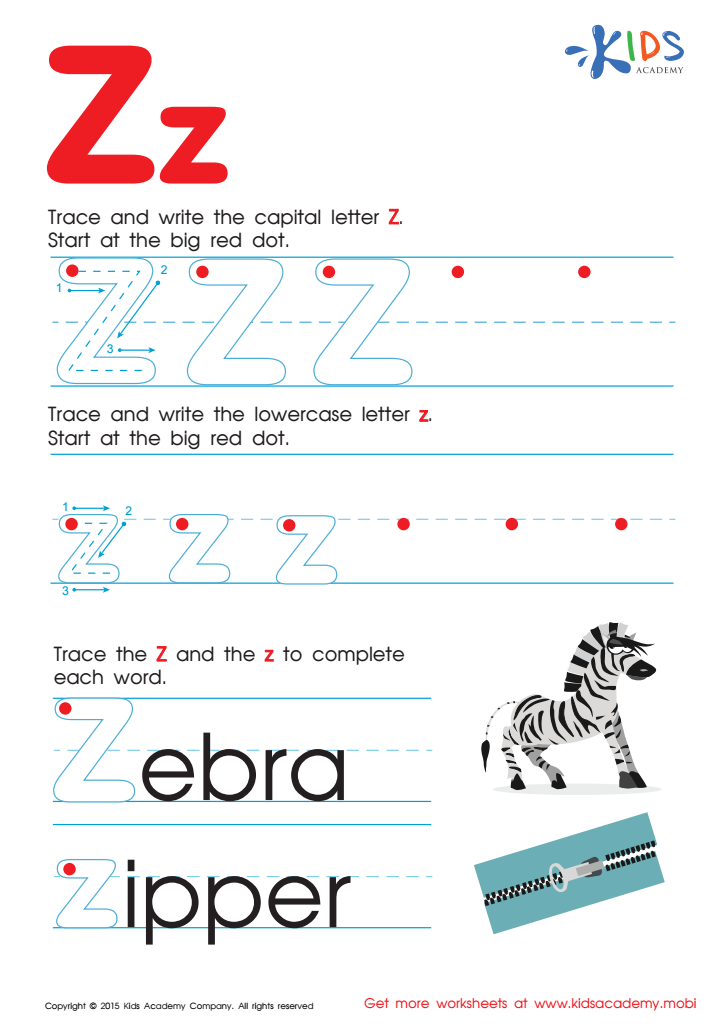
Letter Z Tracing Page
 Assign to My Students
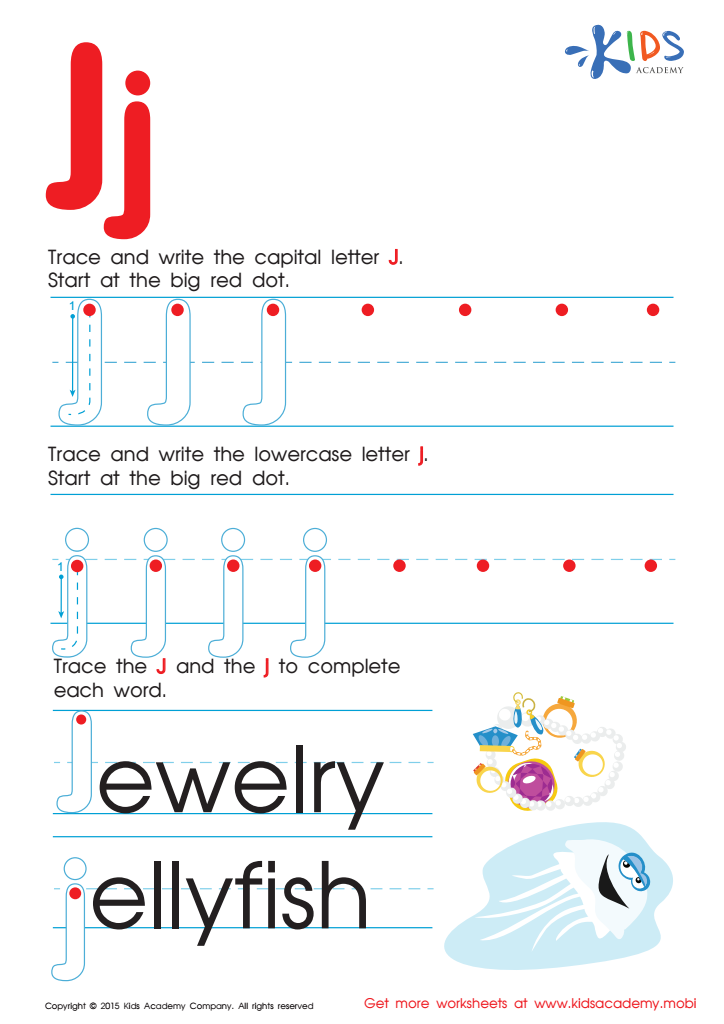
Letter J Tracing Page
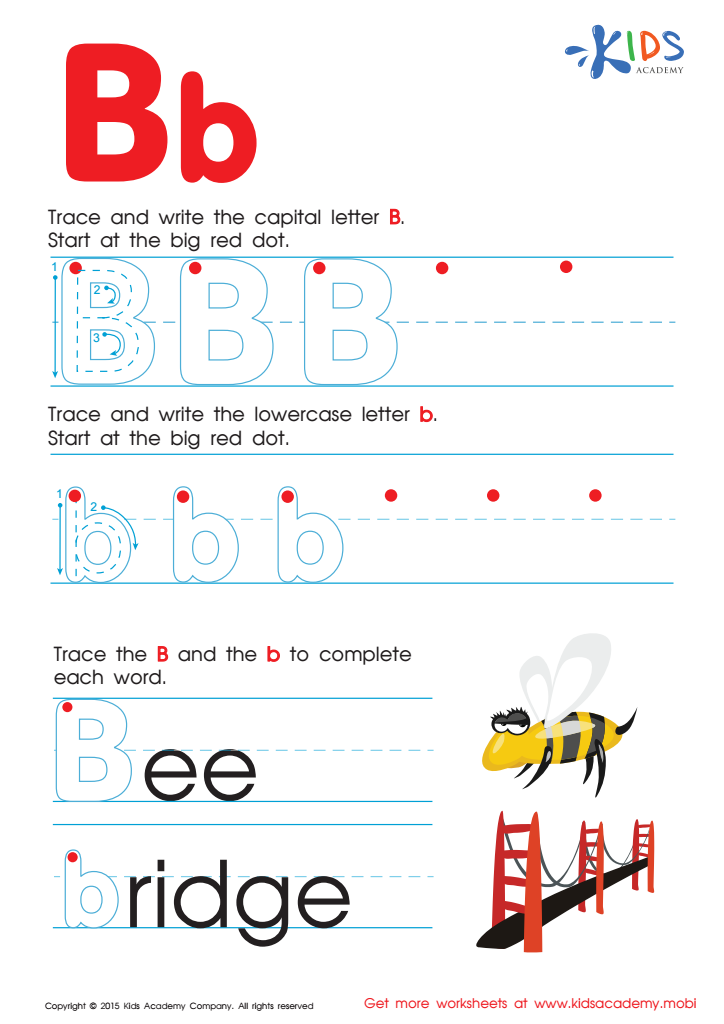
Letter B Tracing Page








Handwriting improvement and tracing letters are essential activities for 7-year-olds as they play a crucial role in a child's academic and personal development. At this age, children are developing fine motor skills and coordination, which are fundamental for writing legibly and efficiently. When parents and teachers focus on improving handwriting, they ensure children are able to express their thoughts clearly on paper, which boosts their confidence and academic performance.
Tracing letters, in particular, helps children understand the shape and structure of each letter, reinforcing correct letter formation. This practice also encourages muscle memory, making it easier for children to write letters consistently and without straining. Furthermore, neat handwriting is often connected to better spelling and reading skills since children can recognize letters and words more accurately.
Engaging in handwriting and tracing activities also nurtures patience and attention to detail. It encourages children to complete tasks methodically, instilling a sense of discipline. For parents and teachers, observing these practices provides opportunities for positive reinforcement and shared achievements, fostering a supportive learning environment. Ultimately, these skills lay the foundation for future academic success and everyday communication.








